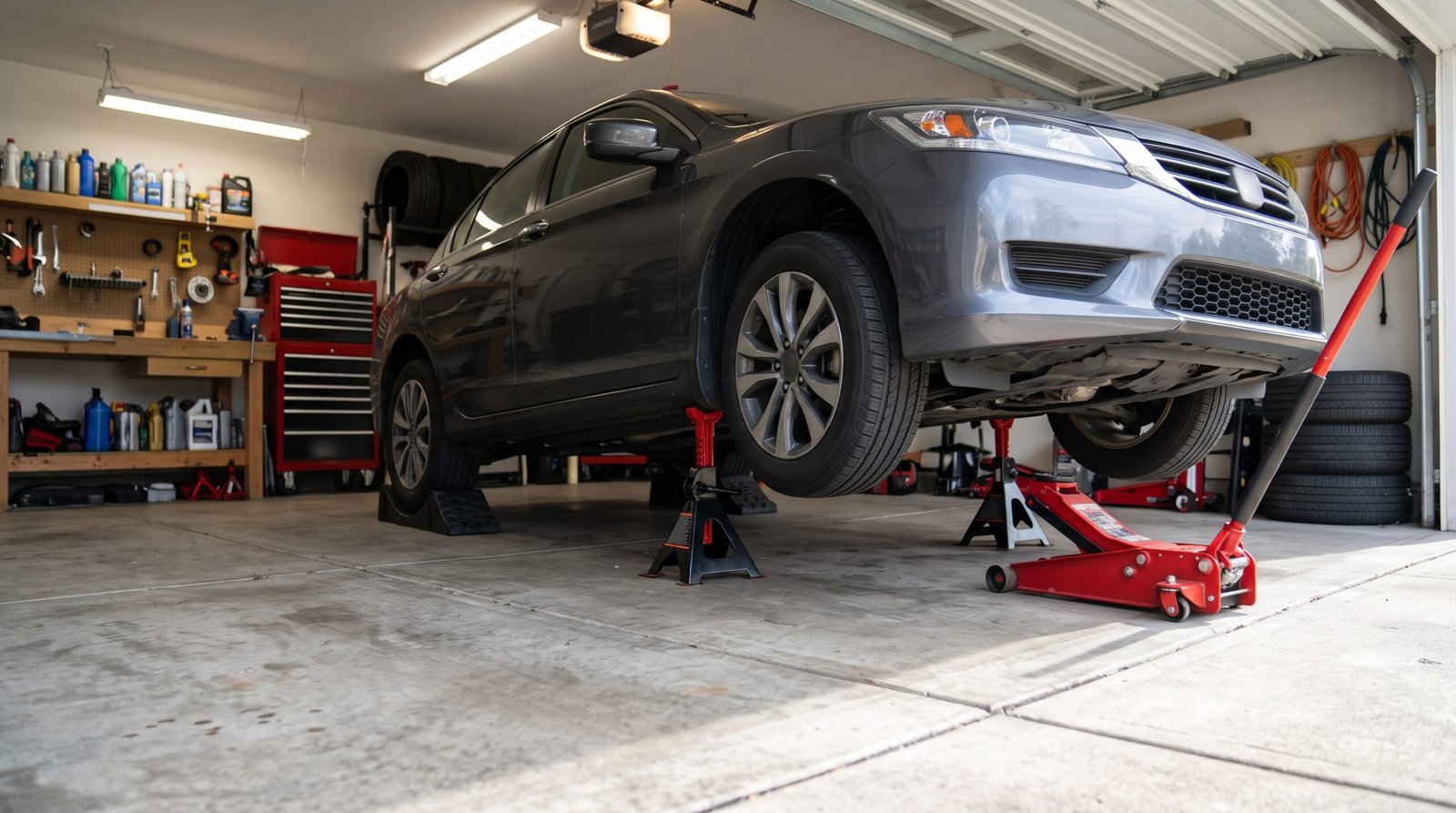
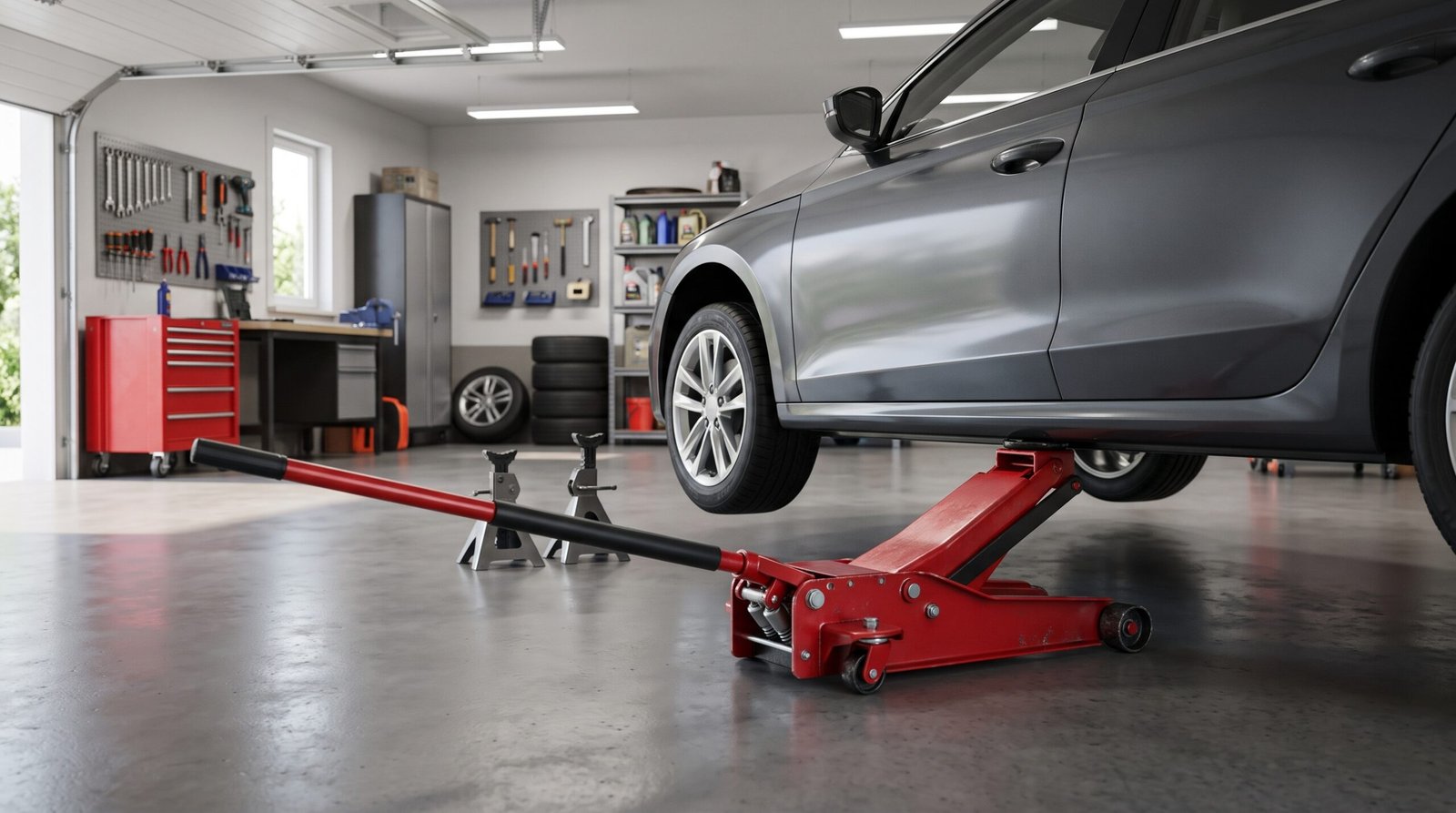
A floor jack is only meant to lift a car. It is not meant to hold one while you’re underneath. That job belongs to jack stands, and the gap between a good pair and a bad pair is the difference between a boring Saturday and a trip to the emergency room.
Most home mechanics own a jack long before they own decent stands. Maybe you borrowed a pair from a neighbor once, or you picked up the cheapest set on the shelf. Then you slid under a two-ton sedan with nothing between you and the floor but a ratchet pawl the size of your thumb. This guide fixes that. It covers the best jack stands for a home garage, how to match them to your vehicle, and which ones are worth the money.
If you’re still shopping for the lifting side of the setup, start with our best floor jacks for the home garage guide, then come back here to pick the stands that go with it.
⚡ Quick Answer
Best overall: Torin AT43005AB 3-Ton Double-Lock Jack Stands. Ratchet plus backup pin, a wide base, and a sensible height range for cars, crossovers, and small SUVs.
Best budget: Pro-Lift T-6903D 3-Ton Jack Stands. A double-lock design with an attached pin at an entry-level price.
Best premium: ESCO 10498 3-Ton Pin-Type Jack Stands. A pin-lock tripod with a powder-coated finish, a rubber-cushioned saddle, and one of the tallest ranges among 3-ton stands.
Best for trucks and SUVs: US Jack D-41610 6-Ton Garage Stands.
Best lightweight and low-profile: Torin Big Red T43004 Aluminum 3-Ton Jack Stands.
Rule of thumb: buy a pair rated for at least your vehicle’s full curb weight, and never go under a car supported only by a jack.
Why Jack Stands Matter More Than Most Garage Gear
Plenty of garage upgrades are about comfort or convenience. Garage lighting makes work easier, and a good tool chest keeps you organized. Jack stands are different because they’re a life-safety item.
A hydraulic jack holds weight with a seal and fluid. Seals leak, release valves get bumped, and a car can settle or shift while you’re working. A jack stand is a mechanical support. It takes the load off the hydraulics and puts it on steel, which is why every service manual tells you the same thing: lift with a jack, support with stands, then work.
Most jack stand accidents come from misuse, not from the stand itself. People set them on soft ground, put them under the wrong part of the car, or lift only one corner and crawl under. Still, build quality matters. In 2020, Harbor Freight recalled roughly 1.7 million 3-ton and 6-ton ratchet stands because the pawl could disengage under load. It’s a good reminder that price alone doesn’t tell you which stand deserves your trust.
If you’re building out a safer workspace, pair your stands with the basics covered in our garage fire safety guide, a well-stocked first aid kit, and a pair of proper safety glasses. Rust, grease, and falling debris don’t announce themselves.
How We Picked These Jack Stands
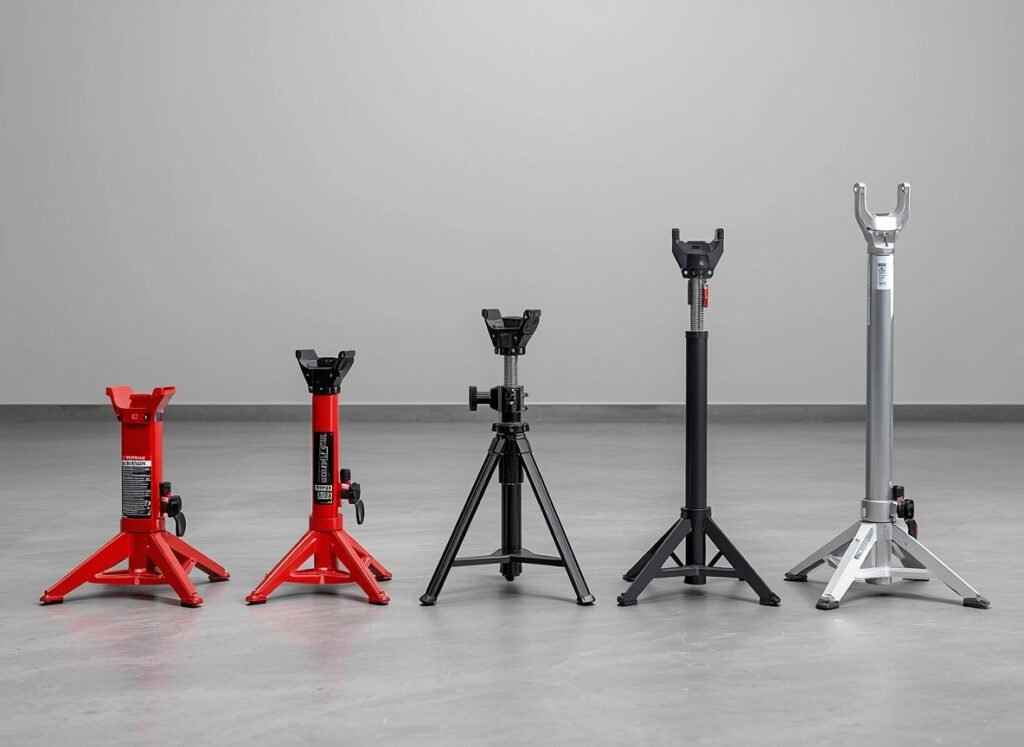
We cross-checked current published reviews, manufacturer specifications, and long-term owner feedback, and we shortlisted stands that met these criteria:
- A real safety track record: known brands, recognized testing standards where listed (such as ASME PASE), and no major recalls on the model.
- Locking design: pin, double-lock, or well-reviewed ratchet mechanisms.
- Useful height range for typical home garage vehicles.
- Stable base design: wide footprint, flat pads, or a solid base.
- Availability: products you can buy today from major retailers.
We did not include any product that we couldn’t verify as currently sold.
Quick Comparison Table
| Model | Best For | Capacity (Pair) | Height Range | Weight (Each) | Lock Type | Material |
|---|---|---|---|---|---|---|
| Torin AT43005AB | Best Overall | 3 ton | 11.3″–16.9″ | 8.1 lb | Ratchet + pin | Forged/welded steel |
| Pro-Lift T-6903D | Best Budget | 3 ton | 11.4″–16.8″ | 6.9 lb | Ratchet + attached pin | Steel + ductile iron bar |
| ESCO 10498 | Best Premium | 3 ton | 13.2″–21.5″ | ~12 lb | Pin | Powder-coated steel |
| US Jack D-41610 | Trucks & SUVs | 6 ton | 16.0″–25.5″ | 15.5 lb | Double ratchet lock | Steel + ductile iron |
| Torin T43004 | Lightweight / Low | 3 ton | 10.8″–15.6″ | 4.6 lb | Pin | Aluminum |
Always confirm capacity, height, and listing details on the product page and the stand’s label before you buy. Manufacturers sometimes update models.
The 5 Best Jack Stands for a Home Garage
1. Torin AT43005AB Heavy Duty 3-Ton Jack Stands: Best Overall
Key features
- 3-ton pair rating (6,000 lb per pair)
- Double lock: sawtooth ratchet plus a locking pin through the column
- Reinforced pyramid base of roughly 7.95″ x 7.2″
- Height range of about 11 5/16″ to 16 7/8″
The Torin AT43005AB is the sweet spot for most home garages. It’s the newer, beefier cousin of the famous Torin “Big Red” stand, with a wider base and a built-in backup. You get the quick, one-handed height adjustment of a ratchet, and then a pin slides through the column as a second layer of protection. If the pawl ever slipped, the pin would still be holding the load.
The base is the other standout. A wider pyramid foot with steel bars under the feet resists shifting and sinking, which matters on a slightly imperfect slab. The larger saddle also gives more contact area under frame rails and support points.
Pros
- Two independent locking methods
- Wider, more stable base than basic Torin stands
- Good height range for sedans, crossovers, and compact SUVs
- Good value for the build quality
Cons
- Tops out just under 17″, so full-size trucks need taller stands
- The large saddle takes a moment to position under some support points
Who should buy it: Anyone with a car, crossover, or small SUV who wants a safe, simple default. If you do tire rotations, brake jobs, and oil changes in a home garage, this is the pair to buy first.
2. Pro-Lift T-6903D Double-Pin 3-Ton Jack Stands: Best Budget
Key features
- 3-ton pair rating
- Cast ductile iron ratchet bar on a stamped steel base
- Counterweighted pawls, a lock on the release handle, and an attached pin
- Height range of about 11 3/8″ to 16 3/4″
Budget jack stands are where shoppers get nervous, and they should. The T-6903D earns its spot because it doesn’t skip the safety features. It uses counterweighted pawls to hold the ratchet bar, a lock on the release handle, and a pin that slides through as a second support point. Because the pin is attached to the stand, it won’t wander off into a drawer.
It’s also light, at about 7 pounds per stand, which makes it a good second set for quick jobs and tire swaps.
Pros
- One of the least expensive pairs on this list
- Double-lock design with a tethered pin
- Cleanly cast ratchet teeth
- Easy to carry and store
Cons
- Some owners report rough welds, so inspect your pair before first use
- Max height under 17″, so it’s not a truck stand
- Stamped steel base is less sturdy than heavier forged designs
Who should buy it: Budget-conscious DIYers, anyone who needs a second set for seasonal tire changes, and new car owners building a starter kit. Inspect the welds and test every height setting when they arrive.
3. ESCO 10498 3-Ton Pin-Type Jack Stands: Best Premium
Key features
- 3-ton rating, with ESCO rating each stand individually, which is more conservative than most brands that rate the pair
- Pin-type height lock with no ratchet pawl to wear out
- Powder-coated steel tripod design
- Flat top with a removable rubber saddle cushion
- Height range of about 13.2″ to 21.5″
The ESCO 10498 is the stand people recommend when someone says, “I want the ones I’ll never worry about.” A solid steel pin passes through the column, so there’s no moving lock that has to engage correctly. The powder-coated finish holds up to rust better than the standard enamel paint on many stands, which matters in a damp garage. If humidity is a problem where you live, our garage dehumidifier guide and rust remover roundup cover the other half of the fight.
The rubber saddle cushion is a nice touch too. It’s easier on pinch welds and painted frame parts than bare steel.
Pros
- The most positive lock on this list
- Rust-resistant powder-coated finish
- Rubber saddle protects the vehicle
- Tall range for a 3-ton stand, good for SUVs and light trucks
Cons
- The 13.2″ minimum is too tall for many lower cars
- Pin adjustment is slower than ratchet adjustment
- Costs more than basic stands
- A few buyers have reported poorly drilled pin holes, so test every height on arrival
Who should buy it: SUV and light-truck owners, anyone who wants a pin-lock design, and buyers who value finish and fit over the lowest price. If you drive a sedan, check ESCO’s lower-profile version of this stand instead.
4. US Jack D-41610 6-Ton Garage Stands: Best for Trucks and SUVs
Key features
- 6-ton pair rating (12,000 lb)
- Height range of about 16″ to 25.5″
- 11-inch square base with a welded perimeter ring
- Double-lock system using two ductile iron castings that engage the load bar
- Built in the USA from US steel and castings
If you own a full-size pickup, a three-quarter-ton truck, or a lifted SUV, the 3-ton stands above are the wrong tool. Not only is the capacity borderline, but the height range is too short. The US Jack D-41610 fills the gap between standard 3-ton stands and the giant high-lift stands used on farm equipment.
The wide square base and welded ring give it a very stable footprint, and the double lock adds redundancy to the ratchet. This is the pair for people who want American-made, government-contract-grade steel under their truck.
Pros
- 6-ton capacity and a tall range for trucks and SUVs
- Stable, wide base
- American-made construction
- Double-lock ratchet design
Cons
- The 16″ minimum is too tall for most cars
- No separate backup pin
- Costs more than imported 6-ton stands
- At 15.5 lb each, heavier than car-sized stands
Who should buy it: Truck and large-SUV owners, anyone who works on heavier vehicles regularly, and buyers who prefer domestic manufacturing. Check that your floor jack can lift high enough to place the stands. Our floor jack buying guide explains lift range.
5. Torin Big Red T43004 Aluminum 3-Ton Jack Stands: Best Lightweight and Low-Profile
Key features
- 3-ton rating
- Aluminum construction at about 4.6 lb each
- Pin-through lock with six height positions
- Height range of about 10.75″ to 15.6″
- Piston-style design with a cast aluminum base and flanged top
These stands look different. Instead of the classic pyramid, the T43004 resembles the body of a hydraulic jack, with a large flat base. That flat base spreads weight across a bigger area, which is gentler on epoxy coatings and garage floor tiles than four narrow feet. If you’ve invested in a nice floor, you’ll care. See our guides to epoxy floor coating kits and garage floor mats.
The 10.75″ minimum is the lowest on our list, so it suits lowered and sports cars. And since aluminum doesn’t rust, these stands stay smooth and easy to operate. They’re also popular with track and autocross drivers because they’re so easy to carry.
Pros
- Lowest minimum height of the group
- Very lightweight and rust-free
- Pin lock is positive and doesn’t rely on a ratchet pawl
- Flat base is gentle on coated floors
Cons
- Limited maximum height, so not for trucks or SUVs
- The unconventional look takes some getting used to
- Fewer height positions than ratchet stands
Who should buy it: Owners of low cars, track-day drivers, and anyone who moves stands around a lot or protects a finished floor.
How to Choose the Right Jack Stands
Weight Capacity: 2-Ton vs. 3-Ton vs. 6-Ton
Jack stands are usually rated per pair, and that pair is meant to hold one end of the vehicle, not the whole thing. A 3-ton pair is rated for 6,000 lb in total. Some brands, like ESCO, rate each stand on its own, so read the fine print.
Pick a pair rated for at least your vehicle’s full curb weight. You’ll find it in the owner’s manual or on the driver’s door sticker. As a rough guide:
- 2-ton pairs: compact cars
- 3-ton pairs: midsize sedans, crossovers, minivans, and most half-ton pickups
- 6-ton pairs: full-size SUVs, heavier trucks, and lifted vehicles
For trucks, extra height often matters more than extra tons.
Height Range: Check Both Ends
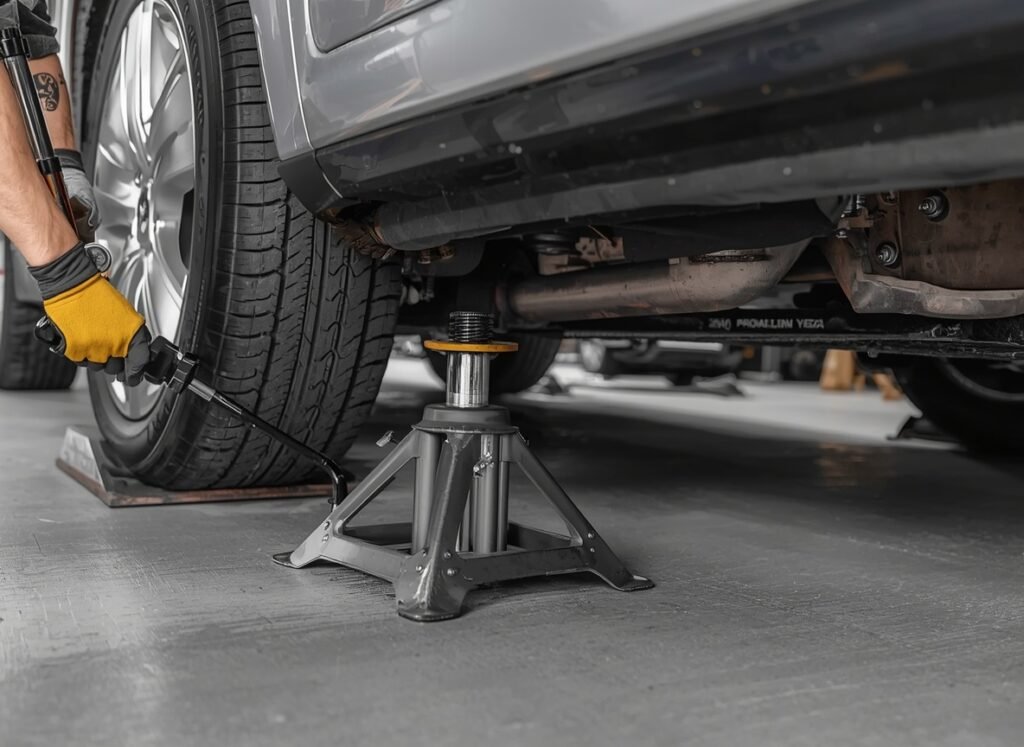
The minimum height decides whether the stand fits under your car at all. If you drive a lower vehicle, a 13″ minimum can be a problem. The maximum height decides how much working room you get.
Here’s the part many people miss: your floor jack has to lift the vehicle a couple of inches above the height you set the stands to, because you lower the car onto them. Check your jack’s maximum lift before you buy tall stands. If you’re upgrading both pieces, our floor jack guide is the best place to start.
To size stands, measure from the floor to your vehicle’s support points, add 2 to 3 inches to get the tires off the ground, and make sure that number lands in the lower half of the stand’s range.
Locking Design: Ratchet, Pin, or Double-Lock
- Ratchet: the fastest to adjust. A pawl drops into teeth on the column. The pawl does all the work, so build quality matters.
- Pin: a steel pin passes through the column. It’s the most positive lock, but adjustment is slower and the steps are bigger.
- Double-lock: a ratchet plus a backup pin. You get quick adjustment and a second layer of protection. For most home garages, this is the best balance.
Steel vs. Aluminum
Steel is heavier, cheaper, and available in every size, but it can rust once the paint chips. Aluminum weighs about half as much and doesn’t rust, but it costs more and mostly comes in car-sized 2- and 3-ton versions.
Base and Saddle Design
A wider base is more stable, but it needs more room. If you work on asphalt, look for flat foot pads or a solid base so the stand won’t sink. The saddle touches your vehicle, so a notched design cradles frame rails and a rubber pad protects pinch welds.
How to Use Jack Stands Safely
A great stand won’t save you from bad technique. Follow these steps every time:
- Work on level concrete. Skip gravel, dirt, and soft asphalt. If you must use asphalt, set the stands on a steel plate or thick plywood.
- Chock the wheels that stay on the ground and set the parking brake.
- Find the correct support points in your owner’s manual. That’s usually the pinch weld on most cars and the frame rails on trucks. Never use the oil pan, a suspension arm, or a plastic panel.
- Lift with the jack, then position the stands at matched heights on both sides.
- Lower the vehicle slowly onto the stands. Don’t drop it.
- Leave the jack under the car lightly snugged as a backup, but never rely on it.
- Give the car a firm shove at a safe distance before you slide under. If it moves, lift it and reset.
- Inspect your stands before every use. Look for bent legs, cracked welds, worn ratchet teeth, and rust.
Never substitute cinder blocks, wood stacks, or milk crates. They have no load rating and can fail without warning.
Cleanup matters here too. Oil and coolant on the floor make stands and jacks slip, so keep a containment mat under your work area and use a proper oil stain remover for old spills. A good shop vacuum keeps grit off the floor where your stand feet sit.
Setting Up a Safer Lifting Station
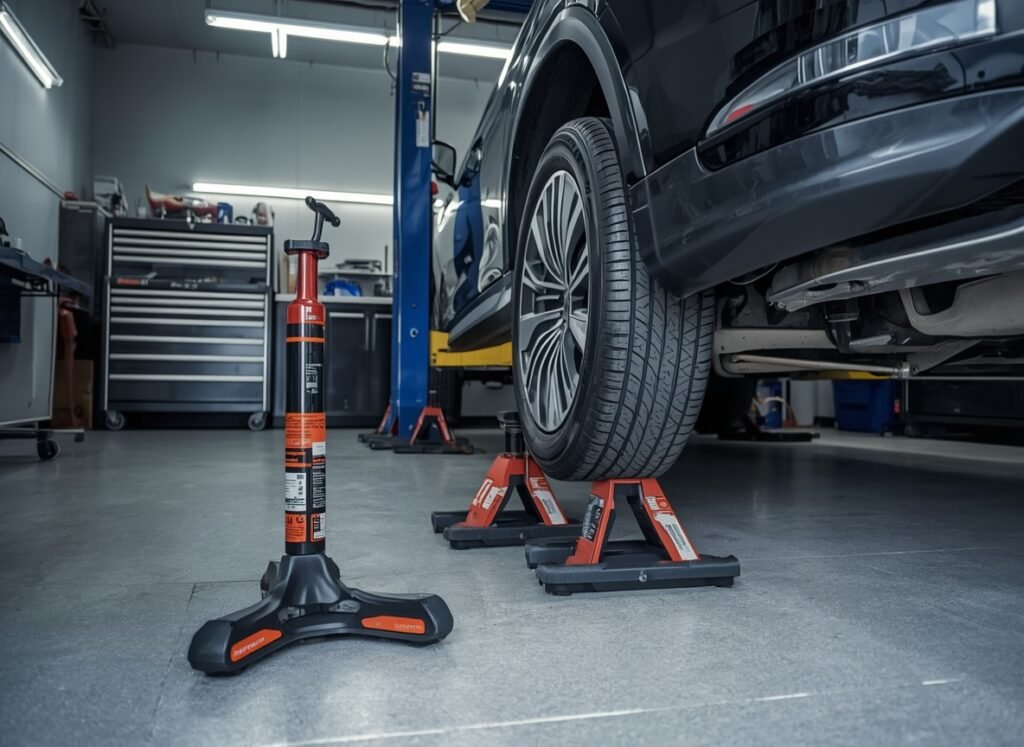
Jack stands work best as part of a system. Here’s what a complete home setup looks like:
- A floor jack with enough lift height for your stands, covered in our floor jack guide
- A matched pair of stands, with a second pair if you want to lift both ends
- Wheel chocks and a flat, clean floor, ideally protected by a floor mat or coating
- Bright light so you can see support points, which our LED garage lights guide covers
- A decent tool set, since a wrench that slips under a lifted car is a hazard. See our garage hand tool sets and keep them organized on a clean workbench
- A fire extinguisher within reach, which our garage fire extinguisher guide helps you pick
- A battery maintainer or jump starter for when the car sits for days. See our portable jump starters and battery chargers picks
If you’re running an engine in a closed garage after the work is done, review our guide to carbon monoxide safety in the garage first.
Finally, jack stands are bulky. Once you’re done, hang or shelve them off the floor using a wall storage system or heavy-duty shelving, and fold them into your seasonal garage deep clean.
Final Buyer’s Verdict
Best Overall: Torin AT43005AB 3-Ton Double-Lock Jack Stands. It has two locking methods, a wide, stable base, and a height range that suits most cars, crossovers, and small SUVs. If you only buy one pair, this is the safest default.
Best Budget: Pro-Lift T-6903D 3-Ton Jack Stands. You still get a double-lock design and a tethered pin at an entry-level price. Inspect the welds on arrival.
Best Premium: ESCO 10498 3-Ton Pin-Type Jack Stands. If you want a pin-lock stand with a rust-resistant finish, a rubber saddle, and a taller range, ESCO is the one to own.
Best for Trucks and SUVs: US Jack D-41610 6-Ton Stands. Choose these when you have a heavier vehicle that needs the capacity and height.
Best Lightweight and Low-Profile: Torin Big Red T43004 Aluminum Stands. These are ideal for lowered cars, track days, and anyone protecting a finished floor.
Whichever pair you buy, check capacity against your vehicle’s curb weight, verify the minimum height fits under your support points, and inspect the stands before each use.
Frequently Asked Questions
How many jack stands do I need?
A pair is enough to support one end of a vehicle. To lift the whole car off the ground, you need four, which means two pairs. For most home jobs like oil changes and brake work, one pair is fine.
What size jack stands do I need for my car?
Pick a pair rated for at least your vehicle’s curb weight. Compact cars can use 2-ton pairs. Most sedans, crossovers, and half-ton pickups work well with 3-ton pairs, and full-size SUVs or heavy trucks should use 6-ton pairs.
Are ratchet or pin jack stands safer?
Pin stands have no moving lock that has to engage, so many people consider them the most positive design. Ratchet stands are faster to adjust. Double-lock stands combine both, which is why they suit most home garages.
Can I leave my car on jack stands for days?
Short projects and weekends are normal. Manufacturers warn against leaving vehicles on stands for extended periods, so if the project drags on, check the stands often or put the car back on its wheels.
Where do I place jack stands under my car?
Use the support points in your owner’s manual. On most cars that’s the pinch weld near each wheel, and on trucks it’s the frame rail. A slotted pinch weld adapter protects the seam. Never place stands under the oil pan, suspension arms, or plastic panels.
Can I use jack stands on asphalt or gravel?
Concrete is best. Asphalt can soften in heat and let narrow legs sink, so use stands with flat pads or a round base, or place them on a steel plate or thick plywood. Don’t use stands on gravel or dirt.
Are ramps safer than jack stands?
Both are safe when used correctly. Ramps have no lock to slip, but they can slide on smooth floors, and they keep the wheels on the ground, so they won’t work for tire, brake, or suspension jobs.
Do jack stands expire?
They don’t have a set expiration date, but they do wear out. Retire any stand with bent legs, cracked welds, damaged ratchet teeth, or heavy rust, and check manufacturer recall notices on stands you already own.
Can I use cinder blocks or wood instead of jack stands?
No. Cinder blocks and wood have no load rating and can crack, split, or slide without warning. A rated pair of stands is inexpensive insurance.
Can I use any jack with these stands?
Mostly yes, but your jack must be able to lift the vehicle a couple of inches higher than your stand’s chosen height. Check your jack’s maximum lift before buying tall stands.
Final Thoughts
Jack stands are one of the cheapest safety upgrades you can make to a home garage, and one of the most important. Choose a pair that fits your vehicle’s weight and height, use them on solid ground, and treat inspection as part of the job. Combined with a good jack, clear floor, and bright lighting, a quality pair of stands lets you work under your car with confidence.