Before cabinets, before overhead racks, most garages start their organization journey with a simple shelving unit — and it’s still the most flexible, budget-friendly way to get things off the floor. The problem is that “shelving” covers an enormous range of products, from a $40 wire rack to an $800 heavy-duty steel system, and picking the wrong one means either wasted money or a unit that sags under the first row of paint cans.
This guide breaks down the main types of garage shelving, how to match capacity to what you’re actually storing, and the installation details that keep a unit stable for years instead of leaning within a season. If you’ve already tackled overhead storage or cabinets, shelving is usually the next piece that ties the whole system together.
Quick Answer
The best garage shelving depends on budget and load. Wire shelving is the cheapest and easiest to install, ideal for light to medium loads and good airflow. Plastic/resin shelving handles moisture well and needs zero assembly tools in some cases, but has lower weight capacity. Wood shelving offers the highest customization and a finished look but needs sealing in humid garages. Heavy-duty steel shelving is the strongest option, built for power tools, paint cans, and bulk storage, and is worth the extra cost if you’re storing genuinely heavy items rather than lightweight boxes.
Table of Contents
- Why Shelving Is the Foundation of Garage Storage
- How to Choose the Right Shelving Type
- Best Garage Shelving Options
- Comparison Table
- Shelving for Different Garage Situations
- How to Install Garage Shelving Correctly
- Common Mistakes
- Expert Tips
- Final Thoughts
- FAQ
Why Shelving Is the Foundation of Garage Storage {#why-foundation}
Shelving works because it’s the most adaptable storage type in a garage — it doesn’t require the ceiling clearance of an overhead rack, the enclosed design of a cabinet, or a dedicated wall like pegboard. A single unit can hold anything from paint cans to sports equipment to seasonal decorations, and most systems let you adjust shelf height as your needs change.
It’s also usually the first purchase homeowners make when tackling garage clutter, which means getting it right early prevents a cycle of buying, outgrowing, and replacing units every year or two. Pairing shelving with a broader plan — like the one in our garage organization guide — makes it far more likely the system still works six months from now.
How to Choose the Right Shelving Type {#choose-type}
How much weight per shelf are you actually storing? Weigh a representative box the way you would for overhead storage — most homeowners underestimate combined shelf weight until they’ve stacked several full totes.
Do you need mobility or a fixed install? Wire and plastic units are often freestanding and easy to reposition; heavy-duty steel and built-in wood shelving are usually anchored and meant to stay put.
What’s your garage’s humidity level? Wood shelving needs sealing or a moisture-resistant finish in humid climates, while wire and plastic units handle dampness without extra prep — a factor worth weighing alongside our garage ventilation guide if moisture is a recurring issue in your space.
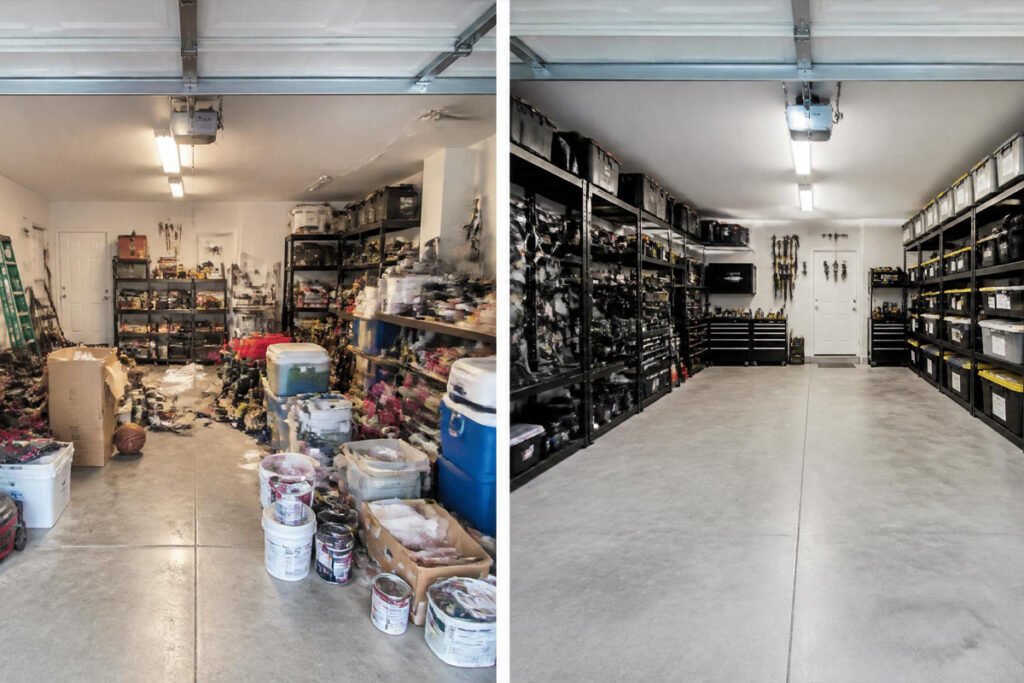
Best Garage Shelving Options {#best-methods}
Wire Shelving
Overview: The most common entry-level shelving type, built from chrome or epoxy-coated steel wire, widely available at any home improvement store.
Key Features:
- Open design allows airflow and visibility
- Typically rated 150–350 lbs per shelf
- Easy tool-free or minimal-tool assembly
- Wide range of adjustable heights
Best For: General storage, first-time garage organizers, budget setups.
Pros: ✅ Affordable ✅ Fast to assemble ✅ Good visibility of stored items
Cons: ❌ Small items can fall through gaps ❌ Lower capacity than steel shelving
Our Verdict: A great starting point for most garages, especially paired with bins to prevent small items slipping through the wire gaps.
Plastic & Resin Shelving
Overview: Molded plastic shelving units are fully waterproof and require no sealing, making them a strong choice for damp or unconditioned garages.
Key Features:
- Fully moisture and rust-proof
- Typically rated 100–250 lbs per shelf
- Lightweight and easy to reposition
- Resistant to most household chemicals
Best For: Humid, coastal, or unconditioned garages.
Pros: ✅ Never rusts ✅ Easy to hose down outdoors ✅ No assembly tools needed for some models
Cons: ❌ Lower weight capacity than steel or wood ❌ Can crack under heavy point loads
Our Verdict: The lowest-maintenance option by far — ideal if your garage already deals with mold or moisture issues that make wood or bare steel a riskier choice.
Wood Shelving
Overview: Built-in or freestanding wood shelving offers the most finished look and the highest degree of customization, since it can be cut and configured to fit any space.
Key Features:
- Fully customizable dimensions
- High weight capacity when properly built
- Needs sealing in humid environments
- Common in finished or semi-finished garages
Best For: Custom-built storage walls and finished garage spaces.
Pros: ✅ Highly customizable ✅ Strong load capacity when built correctly ✅ Matches a finished garage aesthetic
Cons: ❌ Requires more building skill ❌ Vulnerable to moisture damage if unsealed
Our Verdict: Best suited to garages already set up with insulation or climate control, where humidity swings are less of a concern.
Heavy-Duty Steel Shelving
Overview: Boltless or bolted steel shelving units built for serious loads — power tools, bulk supplies, paint, and anything a lighter-duty unit would sag under.
Key Features:
- Typically rated 500–1,000+ lbs per shelf
- Boltless designs assemble without hardware
- Often includes reinforced steel decking
- Higher price point than wire or plastic
Best For: Workshop garages storing heavy tools, bulk materials, or automotive supplies.
Pros: ✅ Highest weight capacity ✅ Very durable long-term ✅ Ideal for workshop garages
Cons: ❌ More expensive ❌ Heavier and harder to reposition once loaded
Our Verdict: Worth the investment for anyone storing genuinely heavy items — a fully loaded steel shelf near a workbench is one of the most functional combinations in a workshop garage.
Comparison Table {#comparison}
| Shelving Type | Best For | Typical Capacity/Shelf | Moisture Resistance | Relative Cost |
|---|---|---|---|---|
| Wire | General storage, budget setups | 150–350 lbs | Good | $ |
| Plastic/Resin | Humid or coastal garages | 100–250 lbs | Excellent | $ |
| Wood | Custom, finished garages | Varies (build-dependent) | Poor unless sealed | $$ |
| Heavy-Duty Steel | Workshop, bulk/heavy storage | 500–1,000+ lbs | Good | $$$ |
Shelving for Different Garage Situations {#situations}
Budget-Conscious Households
Wire or plastic units deliver the most storage per dollar and require little to no assembly skill. Start with one or two units near the most cluttered area, and expand as needed rather than buying a full wall system upfront.
Workshop & Heavy Tool Storage
Garages set up as a dedicated workshop need heavy-duty steel shelving rated well above what a standard unit offers — bulk materials and power tools add up faster than most people expect.
Small or Narrow Garages
Compact wire or plastic units, mounted flush against the least-used wall, free up floor space without sacrificing much storage. Pairing with overhead storage for less-used items keeps the floor plan open in a tight garage.
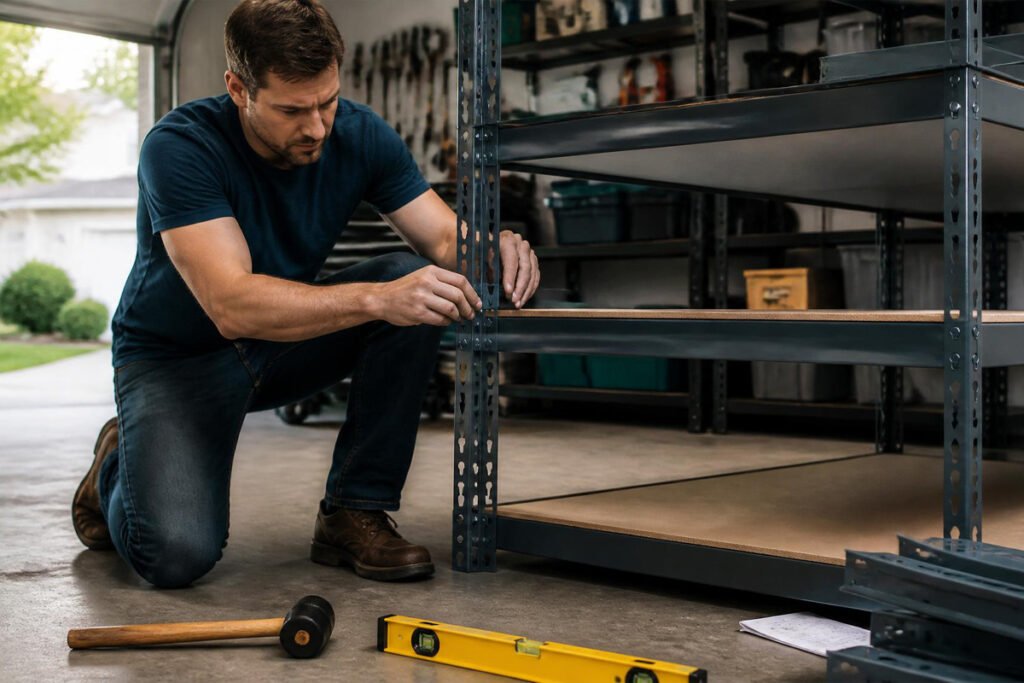
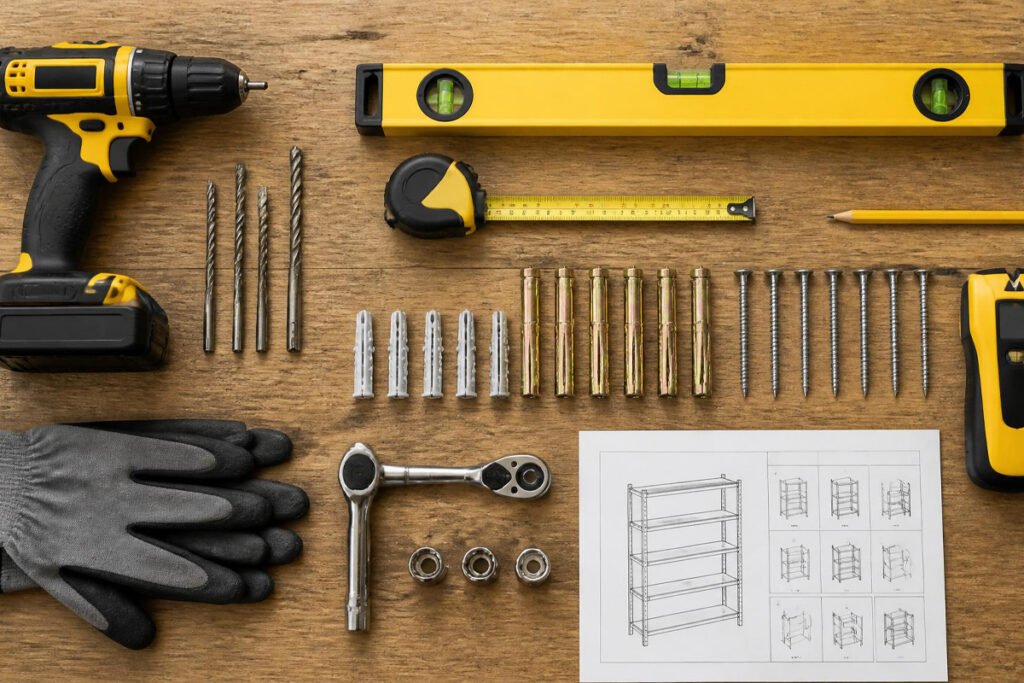
How to Install Garage Shelving Correctly {#how-to}
Step 1: Prepare
Clear the wall area and measure available space, accounting for door swing and walkway clearance around parked vehicles.
Step 2: Clean/Setup
Assemble the unit on a flat, level section of floor before loading anything, following the manufacturer’s weight ratings per shelf rather than a single total figure.
Step 3: Apply/Execute
Anchor freestanding units to the wall wherever possible — even lightweight wire shelving is safer secured, especially in households with kids or pets nearby.
Step 4: Wait/Cure/Process
Load gradually, heaviest items on the bottom shelves to keep the unit’s center of gravity low and stable.
Step 5: Finish/Review
Recheck stability after the unit is fully loaded, and adjust shelf height if needed once you see how your actual items fit.
Common Mistakes {#mistakes}
Ignoring per-shelf weight ratings. A unit’s total capacity is usually split across shelves — overloading one shelf while others sit empty is a common cause of sagging or collapse.
Not anchoring freestanding units. Even wire shelving can tip if loaded unevenly or bumped. A simple wall strap or anchor bracket takes minutes and prevents a serious accident.
Buying based on floor space alone, without planning for growth. Garages tend to accumulate more, not less, over time — leaving room to add a second unit later avoids a full re-do down the line.
Expert Tips {#tips}
Match shelf height to what you’re storing, not a fixed default. Taller items need more vertical clearance than the standard spacing most units ship with — adjust before loading rather than after.
Use clear or labeled bins on wire shelving. This solves the small-item-falls-through-gaps problem without giving up the airflow and visibility that makes wire shelving useful in the first place.
Reassess your shelving setup whenever you add a new storage system. Adding overhead racks or a workbench often shifts what belongs on shelving versus elsewhere — a quick seasonal check keeps the whole system working together instead of overlapping.
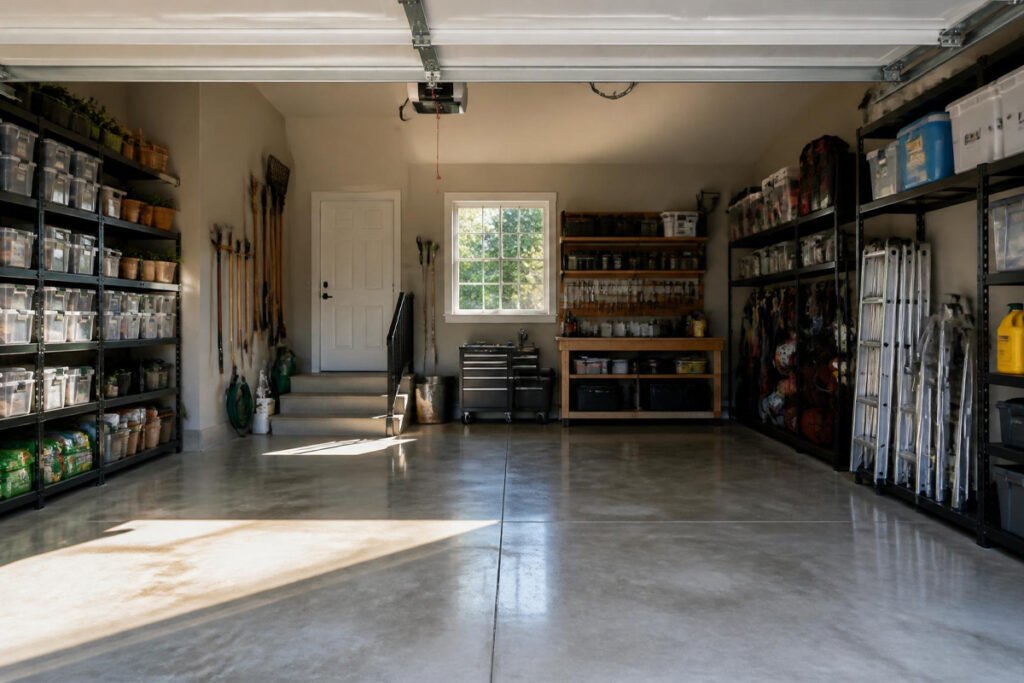
Final Thoughts / Final Verdict {#final}
Best overall: Wire shelving for most households — affordable, versatile, and easy to expand. Best for heavy storage: Heavy-duty steel shelving for workshop garages storing real weight. Best for humid climates: Plastic/resin shelving, which needs zero maintenance against moisture.
Shelving is the backbone that ties the rest of a garage storage system together. Once it’s in place, round out the space with overhead storage for bulky seasonal items and a dedicated workbench for active projects.
Frequently Asked Questions {#faq}
How much weight can garage shelving hold? It varies widely by type and build quality — wire and plastic units typically handle 100–350 lbs per shelf, while heavy-duty steel units can rate 500–1,000+ lbs per shelf.
Is wire or plastic shelving better for a garage? Wire offers higher capacity and better airflow; plastic offers full moisture resistance and needs no sealing. Choose based on whether load capacity or moisture protection matters more for your space.
Do I need to anchor garage shelving to the wall? Yes, whenever possible — even lightweight units are safer secured, especially with uneven loading or households with children or pets.
Can I put heavy items on wood shelving? Yes, if the shelving is built with adequate support and sealed against moisture, but wood generally needs more structural planning than steel to hold comparable weight safely.
How far apart should garage shelving units be spaced? Leave enough clearance for comfortable walking and door swing — typically at least 36 inches of clear walkway between units and any parked vehicle.
What’s the difference between boltless and bolted steel shelving? Boltless units use interlocking rivets for faster, tool-free assembly, while bolted units are generally more rigid and suited to the heaviest loads.
Can garage shelving be used outdoors or in an unheated space? Plastic and coated wire shelving handle temperature swings and moisture well; untreated wood is the least suited to unconditioned or outdoor-adjacent spaces.
How do I stop small items from falling through wire shelving? Use bins, trays, or shelf liners on wire units — this keeps small hardware and loose items contained while preserving the airflow wire shelving offers.
Should I choose adjustable or fixed-height shelving? Adjustable shelving is worth the small extra cost for most households, since storage needs change over time and fixed shelves can’t adapt to taller or shorter items later.
How many shelving units does a typical two-car garage need? Most two-car garages do well with two to four units total, combined with overhead or cabinet storage for anything shelving alone can’t handle efficiently.
Author: Danial Marquez Last Updated: July 2026