
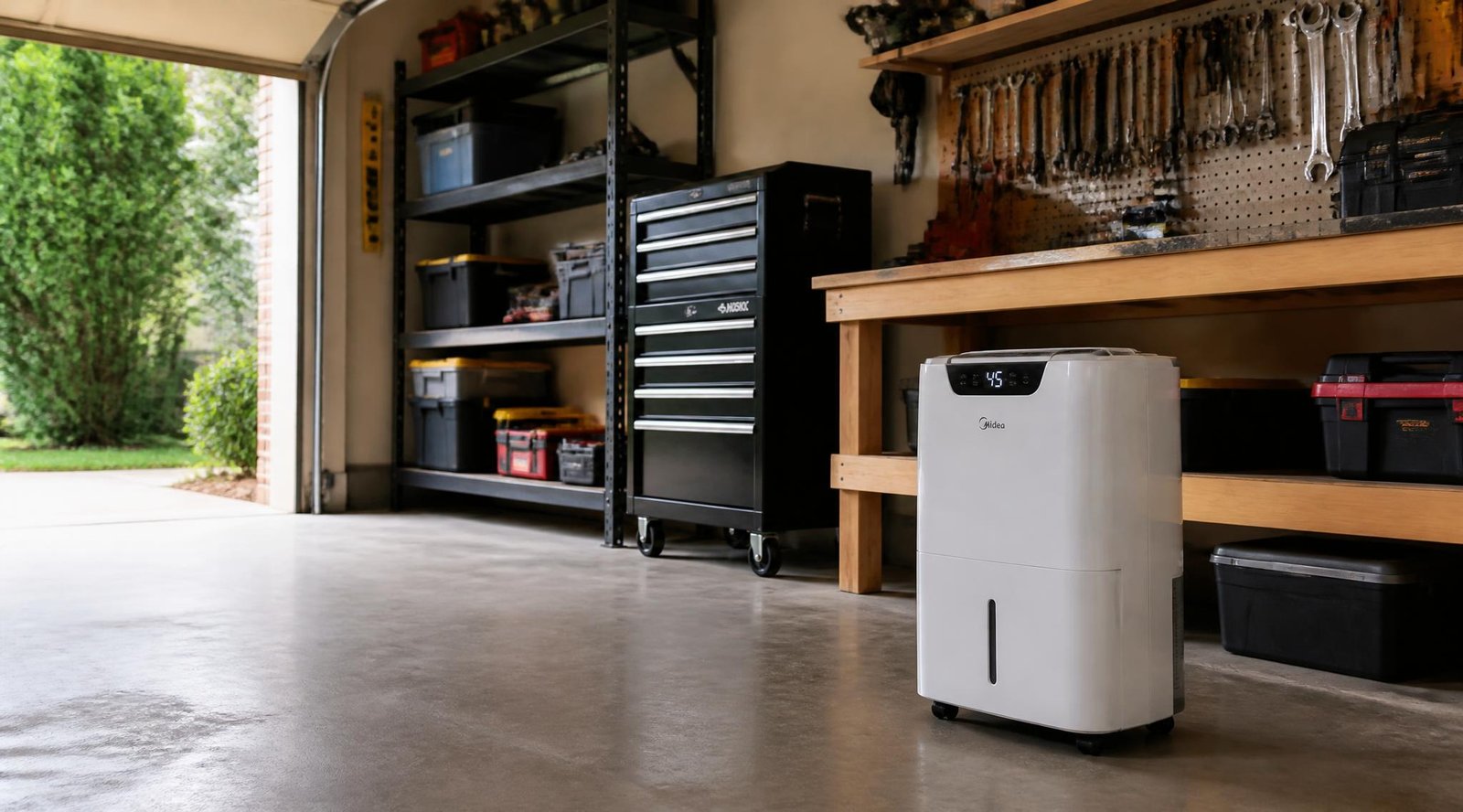
Rust on tools, a musty smell that never quite goes away, cardboard boxes that feel damp no matter the season — that’s humidity, not dirt, and no amount of cleaning fixes it. A garage dehumidifier addresses the actual cause instead of the symptoms, which is also why it pairs well with good garage ventilation and helps prevent the conditions that lead to mold growth.
Quick answer: for most single or two-car garages, a 50-pint unit with a gravity drain option is the best all-around pick. But before you buy anything, there’s one critical detail most buying guides skip: pint ratings are measured in warm, humid lab conditions that don’t match a cold garage — buy based on real-world performance, not the number on the box. More on that below.
We compared products on real-world tested capacity (not just the rated number), minimum operating temperature, drainage options, build quality, and price-to-capacity value — specifically for unheated or semi-conditioned garage spaces, which behave differently than the basements and living rooms most dehumidifier reviews are written for.
The One Thing Most Buying Guides Get Wrong
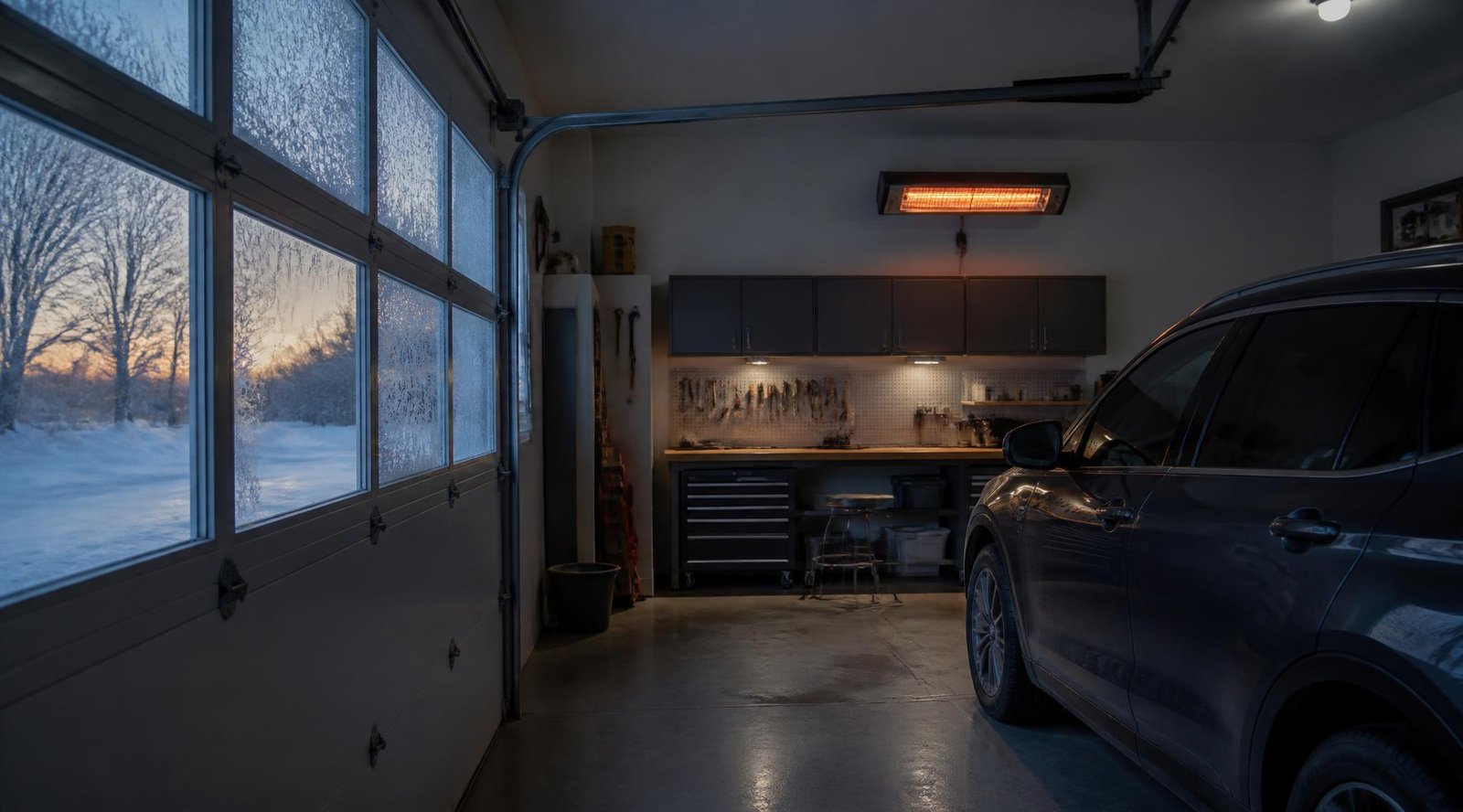
Dehumidifiers are rated by how many pints of water they remove per day, tested at a standardized 80°F and 60% relative humidity. Garages rarely match that — they’re typically cooler and often larger than the test environment, which means a “50-pint” unit can perform closer to 30 pints in a genuinely cold garage. Worse, most residential dehumidifiers use refrigerant coil technology that loses effectiveness below 65°F and can shut off entirely below 41°F. If your garage regularly sits below that threshold in winter, check a unit’s minimum operating temperature before buying, and oversize your pint rating by at least 50% above what the room’s square footage alone would suggest.
Quick Comparison
| Product | Best For | Capacity / Coverage | Approx. Price |
| hOmeLabs 50-Pint | Best Overall | 50 pt real-world tested, up to 4,500 sq ft | ~$180–$220 |
| Waykar 80-Pint Energy Star | Best for Large/Two-Car Garages | 80 pt rated | ~$220–$280 |
| ALORAIR 120-Pint Commercial | Best for Chronic Moisture/Workshop | 120 pt, metal casing, built-in pump | ~$500–$650 |
| GE 25-Pint Portable | Best Budget/Small Garage | 25 pt rated, compact | ~$130–$160 |
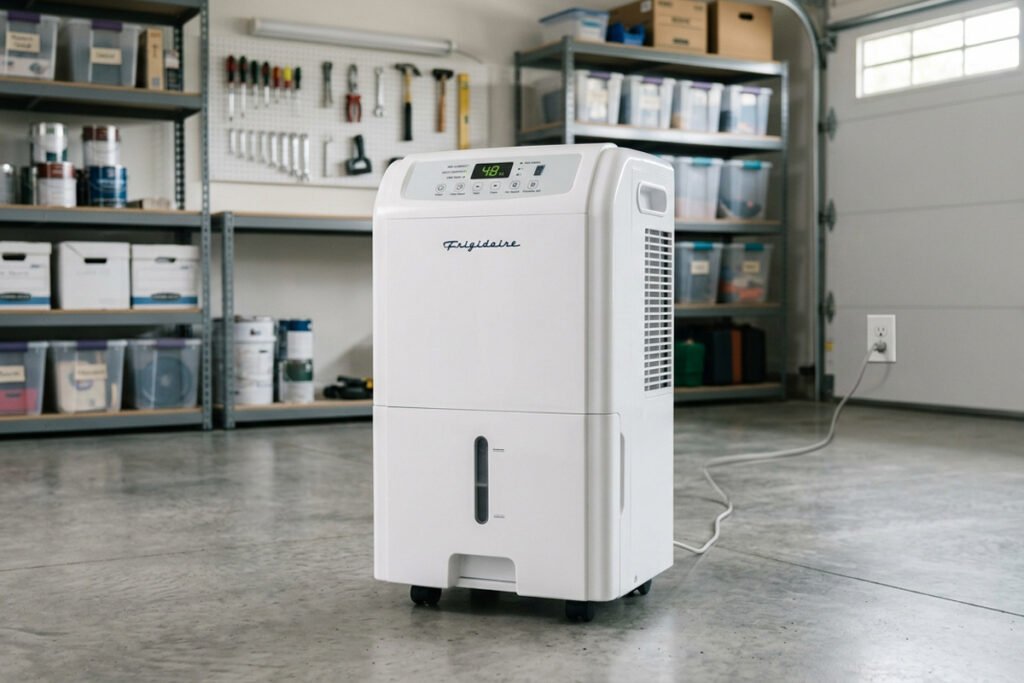
| Frigidaire 50-Pint Energy Star | Best Trusted/Reliable Brand | 50 pt, Energy Star certified | ~$200–$240 |
Note: prices and pint ratings are approximate and based on typical current listings — confirm exact specs, coverage, and minimum operating temperature before you buy.
1. hOmeLabs 50-Pint Dehumidifier — Best Overall
⭐ Best Overall
50 pints/day (real-world tested) | Coverage up to 4,500 sq ft | Operating range 41°F–95°F | Gravity drain, no pump | ~$180–$220
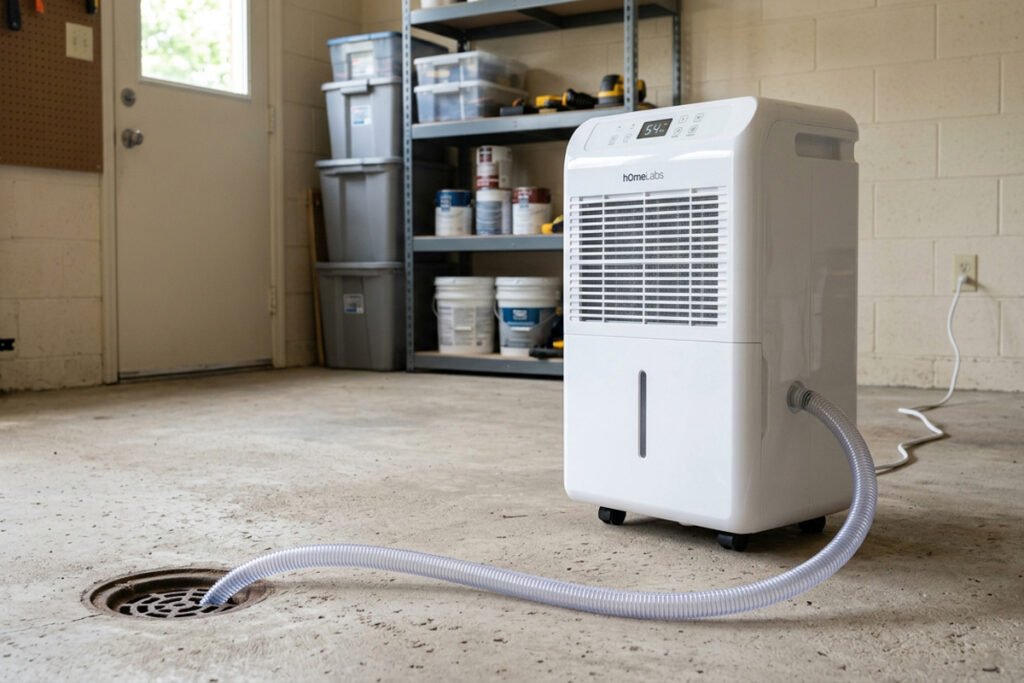
This is the pick reviewers consistently point to because it actually delivers close to its rated capacity in real-world testing, which is more than can be said for a lot of competitors that look identical on a spec sheet. Independent HVAC-professional testing has shown it performing near its rated output rather than falling well short like many budget alternatives. The gravity drain option means continuous drainage is possible without a pump, provided your drain point sits at or below the tank level.
Why buy it
- Delivers real-world performance close to its rated 50-pint capacity, unlike many competitors that undershoot their spec sheet
- Large 1.8-gallon tank means fewer manual empties if you’re not using the drain hose
- Simple humidistat control makes it easy to set and forget
Worth knowing
- No built-in pump — continuous drainage requires a gravity-fed setup with the drain point below the tank
- Like most residential units, effectiveness drops as temperatures fall toward the low end of its rated range
Verdict: the strongest all-around pick for most single or two-car garages, especially if you have a floor drain or low exit point for gravity drainage.
2. Waykar 80-Pint Energy Star Dehumidifier — Best for Large/Two-Car Garages
🏠 Best for Large Garages
80 pints/day rated | Energy Star certified | Large tank capacity | ~$220–$280
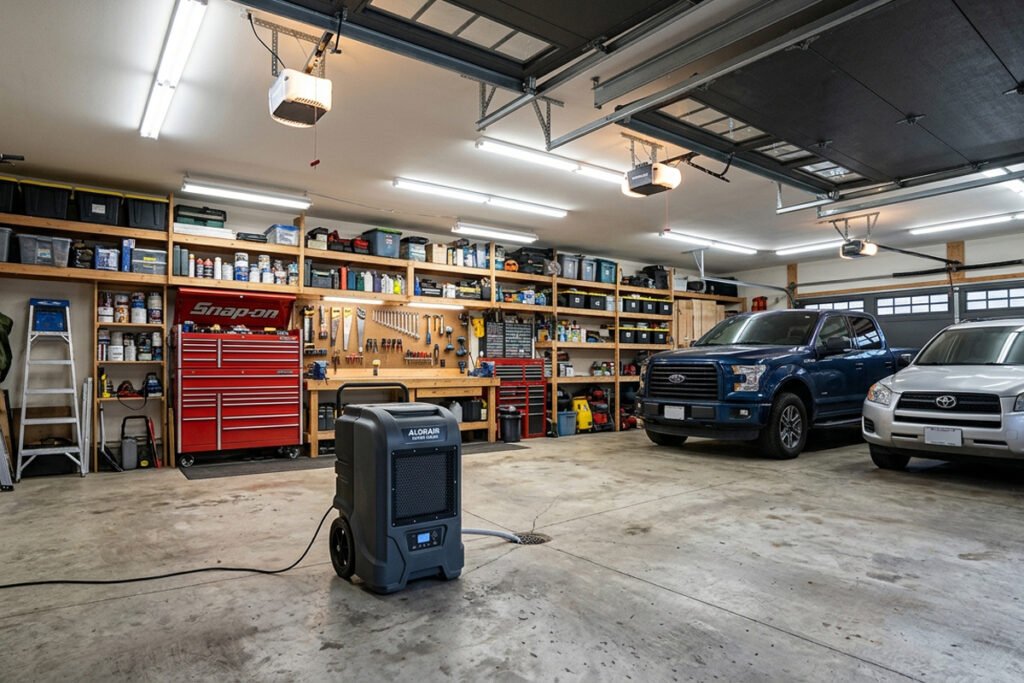
Stepping up to 80 pints of rated capacity gives real headroom for a larger two-car garage or a garage that runs consistently damp, which matters given how much real-world performance can lag behind the rated number in cooler spaces. The Energy Star certification keeps running costs reasonable despite the higher capacity, and the larger footprint is a fair trade for genuinely covering a bigger or more humid space without constantly running at full tilt.
Why buy it
- Higher rated capacity gives meaningful headroom for larger or consistently damp garages
- Energy Star certification keeps electricity costs reasonable relative to the capacity
- Larger tank means fewer manual empties between drains if not using a hose
Worth knowing
- Larger physical footprint than a 50-pint unit — factor in where it will actually sit
- Overkill for a small single-car garage without a chronic moisture problem
Verdict: the right step up if a 50-pint unit isn’t keeping pace with your garage’s actual humidity, especially in a two-car space or a consistently damp climate.
3. ALORAIR 120-Pint Commercial Dehumidifier — Best for Chronic Moisture & Workshop Use
🏭 Best Commercial-Grade
120 pints/day | All-metal casing | Built-in pump, 19.6-ft lift | Designed for professional/heavy use | ~$500–$650
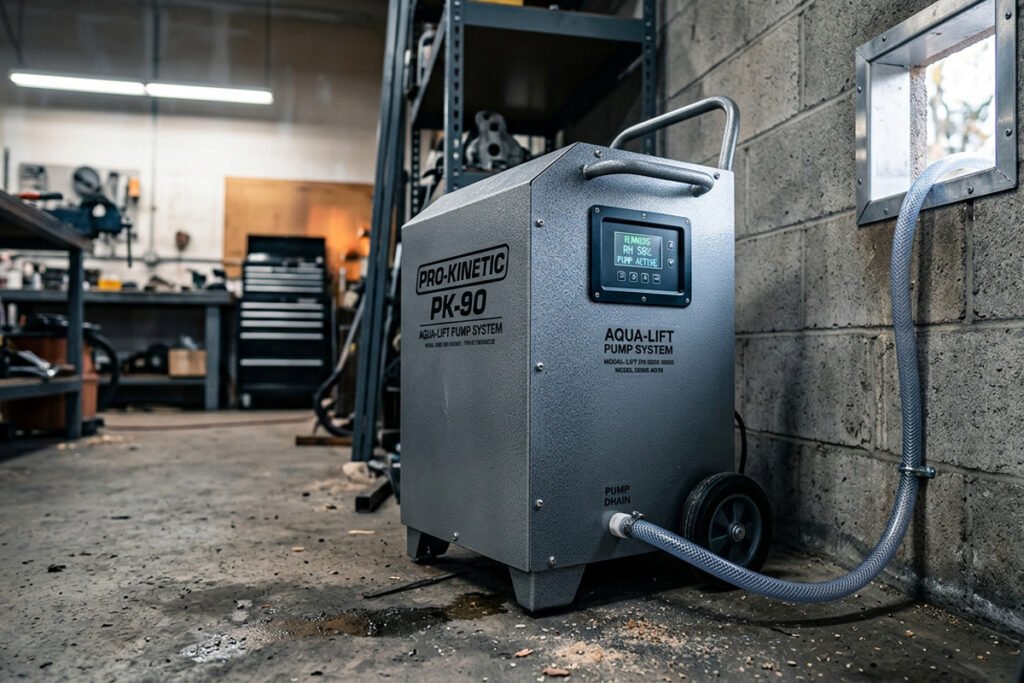
This is a genuinely different category of machine — built for chronic, serious moisture problems rather than routine garage dampness. The all-metal casing resists the impacts, UV exposure, and chemical fumes that crack plastic-bodied residential units over time, and the built-in pump with a 19.6-foot lift means you can drain up and out through a wall or window rather than being limited to gravity flow. If your garage doubles as a genuine workshop with ongoing moisture issues, this is built for that use case specifically.
Why buy it
- All-metal construction holds up to impacts, UV, and chemical exposure far better than plastic residential units
- Built-in pump with a genuinely long lift distance opens up drainage options gravity-only units don’t have
- Rated capacity and build quality genuinely suited to chronic, serious moisture problems, not just routine dampness
Worth knowing
- Meaningfully more expensive than residential units, and sized well beyond what most garages actually need
- Higher power draw than smaller units — factor the running cost into the decision if it will run constantly
Verdict: reserve this for a genuinely serious, ongoing moisture problem or heavy workshop use — it’s overkill for routine garage humidity control.
4. GE 25-Pint Portable Dehumidifier — Best Budget/Small Garage
💰 Best Budget
25 pints/day rated | Compact footprint | Basic humidistat control | ~$130–$160
A straightforward, no-frills option sized right for a smaller single-car garage or mild, seasonal humidity rather than a chronic problem. It won’t keep pace with a large or consistently damp space, but for the price and footprint, it’s a reasonable first step for anyone testing whether dehumidification actually solves their garage’s moisture issue before investing in a larger unit.
Why buy it
- Lowest price and smallest footprint on this list, easy to tuck into a corner
- Reasonable entry point to test whether dehumidification solves your specific moisture problem
- Simple controls with no unnecessary smart features to configure
Worth knowing
- 25-pint rating is genuinely modest — won’t keep up with a large garage or serious dampness
- Smaller tank means more frequent manual empties without a drain hose setup
Verdict: the right call for a small garage with mild, seasonal humidity — size up if you’re dealing with a genuinely damp space.
5. Frigidaire 50-Pint Energy Star Dehumidifier — Best Trusted/Reliable Brand
🛡️ Best Reliable Brand
50 pints/day rated | Energy Star certified | Established brand with long track record | ~$200–$240
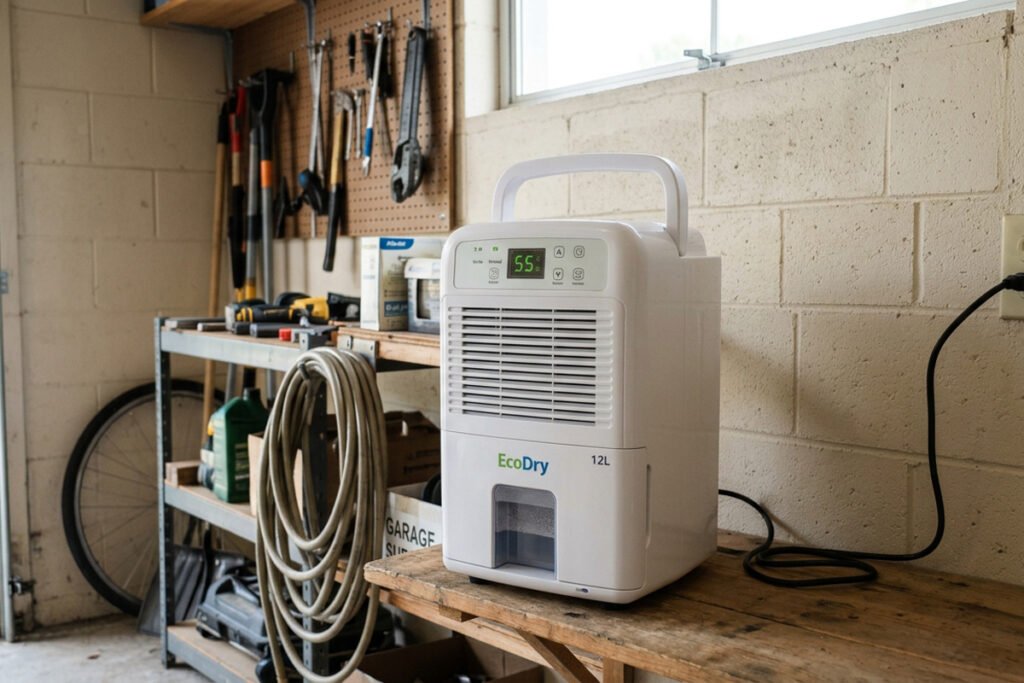
For buyers who’d rather stick with a long-established appliance brand than a newer direct-to-consumer name, this covers the same 50-pint capacity range as the hOmeLabs pick with the track record and widespread parts/service availability that comes with a major, decades-old manufacturer. It won’t outperform the hOmeLabs unit on real-world testing data, but the brand history and broad retail availability count for something if that matters to your buying decision.
Why buy it
- Long-established brand with a broad service and parts network
- Energy Star certification keeps running costs predictable
- Widely available at major retailers, making warranty support and replacement parts easier to find
Worth knowing
- Similar capacity and price to the hOmeLabs pick without a clear performance edge over it
- Choose this primarily for brand trust and availability rather than a meaningful spec advantage
Verdict: a solid alternative to the hOmeLabs pick if brand reputation and easy service access matter more to you than squeezing out the last bit of real-world performance.
Which Dehumidifier Fits Your Garage?
- Standard single or two-car garage, moderate humidity: the hOmeLabs 50-Pint is the strongest all-around pick.
- Large two-car garage or a space that runs consistently damp: step up to the Waykar 80-Pint for real headroom.
- Chronic moisture problem, workshop use, or post-leak drying: the ALORAIR commercial unit is genuinely built for that load.
- Small single-car garage with mild, seasonal dampness: the GE 25-Pint is a reasonable, affordable starting point.
- You’d rather buy from an established appliance brand: the Frigidaire 50-Pint matches the hOmeLabs capacity with a longer brand track record.
Common Mistakes When Buying a Garage Dehumidifier
Buying based on pint rating alone
As covered above, the pint number is measured in warm, humid lab conditions that don’t reflect a cooler garage. Oversize by at least 50% above what square footage alone suggests, and check independent real-world testing where available rather than trusting the box number.
Ignoring the minimum operating temperature
Most residential compressor-based units lose effectiveness below 65°F and can shut off entirely below 41°F. If your garage regularly runs cold in winter, this single spec matters more than pint capacity.
Skipping the drainage plan
A dehumidifier with no drain plan means manually emptying a tank every day or two in a genuinely humid garage, which gets old fast. Check whether gravity drainage is possible before assuming you’ll need a pump-equipped unit.
Running it in an unsealed, unventilated garage without addressing the source
A dehumidifier fights symptoms; it works far better paired with actually reducing moisture sources — sealing obvious gaps, improving ventilation, and addressing any standing water or leaks first.
Fast Buying Guide
Sizing for your garage
As a starting point, a single-car garage under 400 sq ft typically needs a 30–50 pint unit; a two-car garage or workshop over that size often needs 50–80 pints or more. Remember to oversize by roughly 50% above the square-footage guideline to account for real-world performance loss in a cooler space.
Gravity drain vs. pump
Gravity drain is simpler and cheaper but requires the drain point to sit at or below the unit’s tank level — workable if you have a floor drain or can run a hose out a low door gap. A built-in pump removes that restriction and lets you drain up and out through a wall or window, which matters more in a finished garage without a convenient low exit point.
Energy Star and running cost
Dehumidifiers that run for extended periods add up on the electric bill — Energy Star certification typically means meaningfully lower power draw for a comparable capacity, worth prioritizing if the unit will run for more than a few hours a day.
Where to place it
Central placement with clear airflow on all sides works best — avoid tucking it into a corner behind storage bins or shelving where airflow is restricted. If you’ve recently insulated the garage, that also helps keep temperatures in the range where the dehumidifier actually stays effective through more of the year.
Frequently Asked Questions
Will a dehumidifier work in an unheated garage during winter?
It depends on the unit’s minimum operating temperature. Most residential compressor-based dehumidifiers lose effectiveness below 65°F and can shut off entirely below 41°F, which many unheated garages fall below in winter. Check this spec specifically before buying if your garage gets genuinely cold.
What size dehumidifier do I need for a two-car garage?
Start with 50–80 pints of rated capacity for a typical two-car garage, then oversize by roughly 50% above what square footage alone suggests, since real-world performance in a cooler garage typically falls short of the lab-tested rating on the box.
Do I need a dehumidifier with a built-in pump?
Only if gravity drainage isn’t practical — meaning you don’t have a floor drain or low exit point at or below the unit’s tank level. If you do, a simpler gravity-drain unit is cheaper and has one less mechanical part to maintain.
How much does it cost to run a garage dehumidifier?
This varies by capacity, local electricity rates, and how many hours a day it runs, but Energy Star certified units are meaningfully more efficient than non-certified equivalents at a comparable pint rating — worth prioritizing for any unit that will run for extended periods.
Can a dehumidifier alone fix a musty garage smell or mold problem?
It helps significantly by removing the moisture mold and mildew need to grow, but it won’t remove existing mold or fix an active leak. Address the moisture source and any existing mold directly, then use the dehumidifier to prevent recurrence.
Should I run my garage dehumidifier all year or just seasonally?
It depends on your climate and how the garage is used. In humid regions or garages with chronic moisture issues, running it continuously with a humidistat set to maintain 45–55% relative humidity is common. In drier climates or milder seasons, running it only when humidity spikes — after rain, in spring/summer — is often sufficient and saves on electricity.
The Bottom Line
If you buy just one thing from this list, make it a 50-pint unit like the hOmeLabs pick — it covers most single and two-car garages with real-world tested performance rather than just an optimistic number on the box. Step up to the Waykar or ALORAIR if you’re dealing with a larger space or a genuinely chronic moisture problem, and check the minimum operating temperature carefully if your garage runs cold in winter — that spec matters more than pint rating for a lot of real garages.
Last Updated: July 2026


1 thought on “Best Garage Dehumidifiers: Top 5 Picks & Buying Guide”
Pingback: Best Rust Remover for Tools: Proven Top Picks | GarageDaily.com – Master Your Garage with Expert Tips