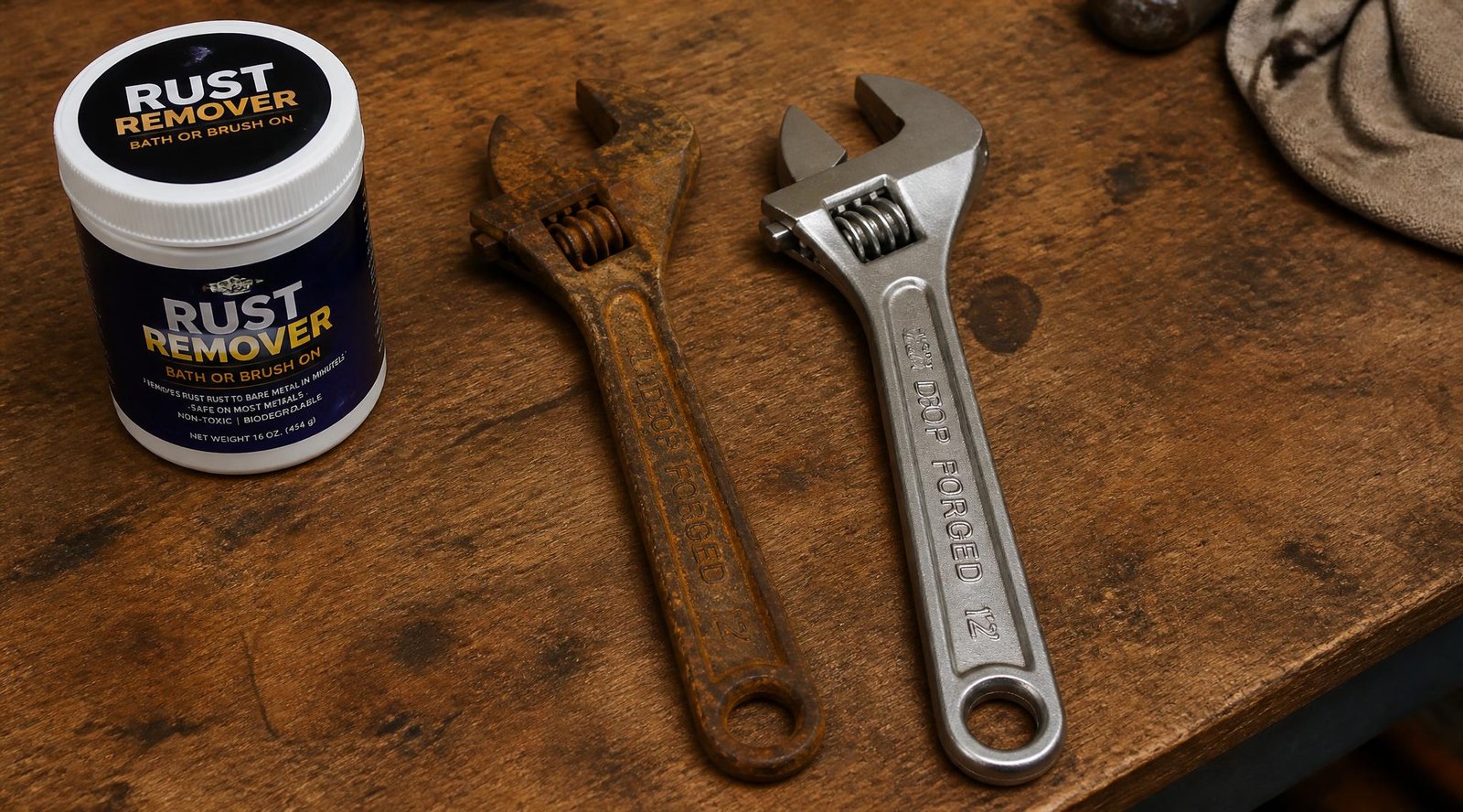
You reach for a favorite wrench and find the jaws dusted in orange. The socket set you stored last spring now has a crust on every drive end, and the hand saw you inherited has freckles all down the blade. Rust in a garage is rarely a one-time event. It creeps in quietly wherever humidity, temperature swings and bare steel meet.
Most people make the same two mistakes. They scrub aggressively with whatever is nearby, which scratches the metal and never reaches rust inside pits. Or they grab the wrong type of product, such as a paint-on converter for a tool that needs bare metal. Picking the best rust remover for the job avoids both problems.
This guide compares five proven options, explains when each one makes sense, and walks through a safe step-by-step process. If rust keeps coming back, the root cause is usually moisture, so it also helps to read our guide to the best garage dehumidifiers and our garage ventilation guide.
Quick Answer
The best rust remover depends on what you are restoring. Hand tools and small parts that fit in a container are best handled with a soak-style remover such as Evapo-Rust, which works without harsh acids or scrubbing. Heavily corroded, all-metal pieces can need a stronger soak or a jelly. Large surfaces you plan to paint, like a workbench frame or a gate, suit a rust converter instead of a remover. Whichever you choose, degrease first and protect the bare metal afterward, or the rust returns.
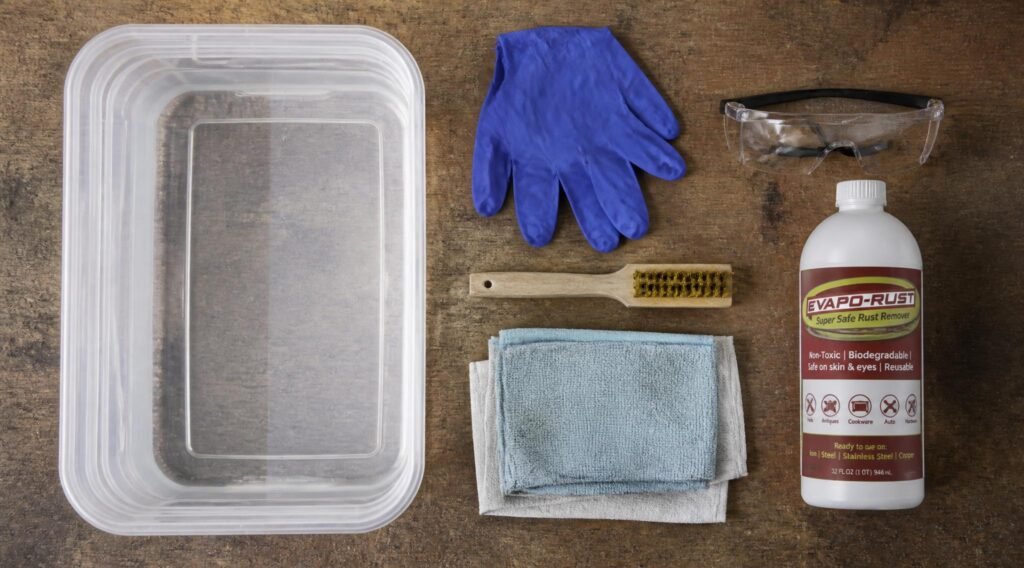
Table of Contents
- What Is Rust and How Do Rust Removers Work?
- How to Choose the Best Rust Remover
- The Best Rust Remover Picks: Top 5
- Comparison Table
- Best Rust Remover for Different Uses
- How to Remove Rust Step by Step
- Common Mistakes
- Expert Tips
- Final Verdict
- Frequently Asked Questions
What Is Rust and How Do Rust Removers Work?
Rust is iron oxide. It forms when iron or steel reacts with oxygen and water, and the process speeds up in humid air, salty air and wherever moisture gets trapped. Once it starts, rust is porous and holds more moisture against the metal, so it keeps spreading unless you stop it.
A rust remover takes the oxide off and leaves bare metal behind. There are three broad families, and understanding them makes choosing the best rust remover much easier:
- Chelating soaks bind to the iron oxide and lift it off the surface. Evapo-Rust is the best-known example, and it is water-based and non-toxic.
- Acid-based removers and jellies dissolve rust chemically. They can be faster on heavy rust, but they demand gloves, eye protection, ventilation and careful rinsing.
- Abrasives and erasers remove rust mechanically with a fine grit. They suit small spots and blades but not deep pitting.
A fourth category is often confused with removers: rust converters and reformers. These do not take rust off. They chemically change it into a stable surface that you then paint over. That distinction matters, and we cover it below.
In a garage, rust usually starts where air is damp: toolboxes against exterior walls, cardboard boxes on the floor, and tools left out after a wet job. Fixing the environment is half the battle. Our guides to garage mold removal and garage odor removal cover the same dampness problem from another angle.
How to Choose the Best Rust Remover
Ask yourself three questions before you buy.
1. Can the item be submerged? If a tool or part fits in a bucket or tub, a soak remover is gentle, thorough and reaches rust inside crevices. If it is bolted down or too large, you need a gel, a spray or a converter.
2. How much rust, and how precious is the piece? Light surface rust on a socket set is a different job than deep pitting on a vintage hand plane. For delicate or antique tools, a gentle chelating soak is the safer choice because it attacks rust rather than the metal beneath.
3. Will you paint it afterward? If you plan to repaint, a converter or primer can make sense. If you want bare, working metal such as a wrench jaw or a blade, you want a true remover.
Safety also belongs in your decision. Acid-based products require chemical-resistant gloves and eye protection. The U.S. Occupational Safety and Health Administration explains how to match personal protective equipment to the hazard, and it is worth a read before you open anything stronger than a water-based soak.
The Best Rust Remover Picks: Top 5
1. Evapo-Rust — Best Overall for Hand Tools
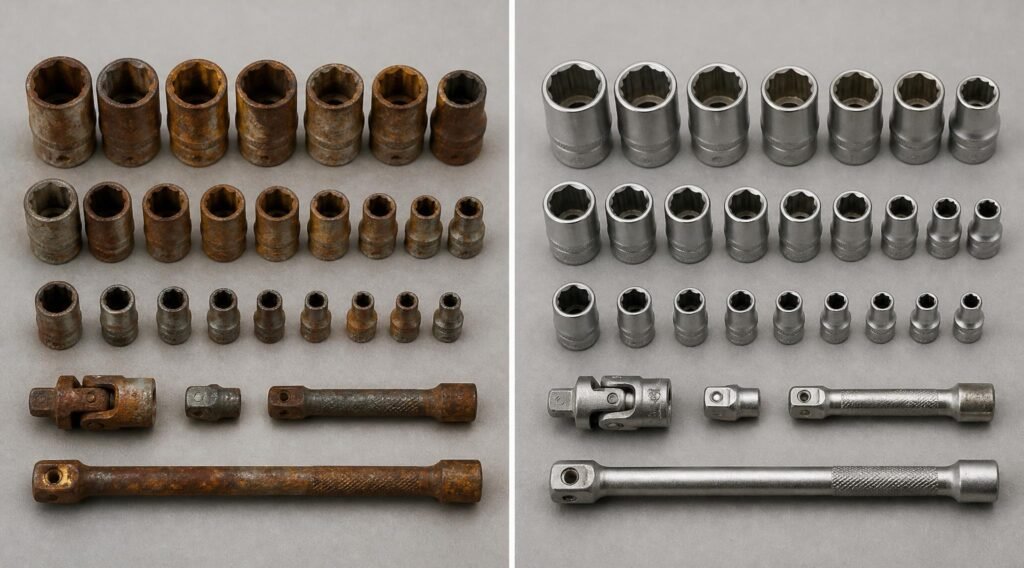
Overview: Evapo-Rust is the product most woodworkers and mechanics name first, and for good reason. It is a water-based, non-toxic soak that removes rust through chelation rather than strong acid. You submerge the tool, wait, rinse and dry. It does not need scrubbing, and the liquid can be reused until it stops working. Because it leaves the underlying metal alone, it is a popular choice for restoring wrenches, chisels, pliers and vintage tools.
Key Features:
- Water-based, non-toxic, biodegradable formula
- Reusable until it loses effectiveness
- Works on items that can be fully submerged
- Available in sizes from small containers to multi-gallon jugs
Best For: Hand tools, hardware, small parts and anything you want to restore without damaging the metal.
Pros: ✅ Gentle on the base metal ✅ No harsh fumes or acids ✅ Reusable
Cons: ❌ Only works on parts you can fully submerge ❌ Slower than acid on heavy rust
Our Verdict: If you own more than a handful of rusty tools, start here. Pair it with a good degreaser first, and store the finished tools in a dry cabinet like those in our best garage tool chests and storage cabinets guide.
2. Metal Rescue — Best Budget Soak
Overview: Metal Rescue is an acid-free immersion remover aimed at people who want soak-style results at a lower cost. It works the same way as other chelating soaks. Submerge the part, give it time, rinse and dry. It is a strong fit for small batches and single parts like carburetor components, hinges and fasteners.
Key Features:
- Acid-free, biodegradable soak
- Handles small tools, fasteners and parts
- Typically sold in gallon sizes
Best For: DIYers on a budget and anyone restoring a few small parts at a time.
Pros: ✅ Budget-friendly ✅ Acid-free ✅ Good for small parts
Cons: ❌ A one-gallon container limits the size of tools you can soak ❌ Needs a rinse and a protective coat afterward
Our Verdict: A smart second-tier choice when Evapo-Rust feels like too much for a small job. Keep your soaked parts organized in garage storage bins so they stay dry afterward.
3. WD-40 Specialist Rust Remover Soak — Best for Heavy Rust
Overview: When rust is thick and layered, a stronger soak can save hours. WD-40’s Specialist Rust Remover Soak is built for heavily corroded metal and is a good fit for all-metal items like old monkey wrenches, cast-iron parts and seized pliers. It is better suited to items where preserving an original finish is not the priority. Wear gloves and follow the label.
Key Features:
- Soak formula designed for heavy corrosion
- Suited to all-metal tools and parts
- Widely available at hardware stores
Best For: Neglected, heavily rusted all-metal tools and parts.
Pros: ✅ Strong on layered rust ✅ Easy to find
Cons: ❌ Gloves and care required ❌ Not ideal for delicate or antique finishes
Our Verdict: Reach for it when gentler soaks stall. Keep the work area clear and well ventilated, as covered in our garage safety guide.
4. Rust-Oleum Rust Reformer — Best Converter for Painted Surfaces
Overview: This one is a converter, not a remover, and that difference is the whole point. Rust Reformer is sprayed over sound, rusted metal and chemically converts the rust into a stable, paintable surface, leaving a protective base coat. It is ideal for metal you plan to paint, such as shelving frames, a metal workbench or outdoor gear. It is not the right choice for the working face of a wrench or chisel.
Key Features:
- Aerosol application for quick coverage
- Converts rust into a paintable surface
- Fast drying
Best For: Larger metal items you will repaint, like racks, frames and gates.
Pros: ✅ Quick coverage ✅ Seals against new rust
Cons: ❌ Leaves a coating, so it is not for bare working surfaces ❌ Needs a paint topcoat for lasting results
Our Verdict: Excellent for structural metal in the garage. For rust on the door itself, our guide on how to remove rust from the garage door covers that job directly.
5. CorrosionX — Best for Preventing Rust Afterward
Overview: CorrosionX is not a remover. It is a corrosion inhibitor that helps stop rust from returning. It is the finishing step many restorers use after a soak, because freshly stripped steel is bare and rusts quickly. A light protective coat on tools, hinges and exposed hardware keeps moisture off the metal.
Key Features:
- Inhibitor designed to protect metal after cleaning
- Useful on tools, hardware and stored equipment
- Works as a follow-up to any soak remover
Best For: Protecting restored tools and anything stored in a damp garage.
Pros: ✅ Extends the life of restored metal ✅ Great as a second step
Cons: ❌ Does not remove existing rust ❌ An extra product to buy
Our Verdict: Treat it as the partner to your remover, not a replacement. Combine it with a dry storage plan and you will rarely need to repeat the cleanup.
Comparison Table
| Product | Type | Best For | Submersion Needed | Painted Finish Afterward |
|---|---|---|---|---|
| Evapo-Rust | Chelating soak | Hand tools, antiques | Yes | No, bare metal |
| Metal Rescue | Acid-free soak | Small parts, budget | Yes | No, bare metal |
| WD-40 Specialist Rust Remover Soak | Soak | Heavy rust, all-metal tools | Yes | No, bare metal |
| Rust-Oleum Rust Reformer | Converter (spray) | Frames, shelving, gates | No | Yes, paint over it |
| CorrosionX | Inhibitor | Protection after cleaning | No | Not applicable |
Confirm current sizes, labels and availability on the manufacturer’s site before buying.
Best Rust Remover for Different Uses
Hand Tools and Antique Tools
Wrenches, planes, chisels and saws are best restored with a gentle soak. A chelating remover leaves the surrounding metal and fine details intact, which matters for vintage pieces. Degrease first with a product from our best garage floor degreaser guide or a household degreaser, then soak. Keep the finished tools safe in the cabinets described in our garage cabinet cleaning guide and the best garage tool chests.
Garage Doors, Shelving and Metal Frames
Large fixed items cannot be soaked. For light rust, wire brushing plus a gel or spray remover works. For heavier rust you intend to repaint, a converter is the practical route. Clean the surface first using the methods in our garage wall cleaning guide, and keep an eye on garage storage shelving that sits against damp walls.
Car Ramps, Jack Stands and Safety Gear
Be careful here. Heavy structural rust on a jack stand or ramp is a safety concern, not a cosmetic one. Light surface rust can be cleaned, but if a weight-bearing part is pitted, cracked or weakened, replace it. Review our best car ramps and jack stands before you decide.
How to Remove Rust Step by Step
The process below suits soak-style removers. Always follow your specific product’s label.
Step 1: Prepare
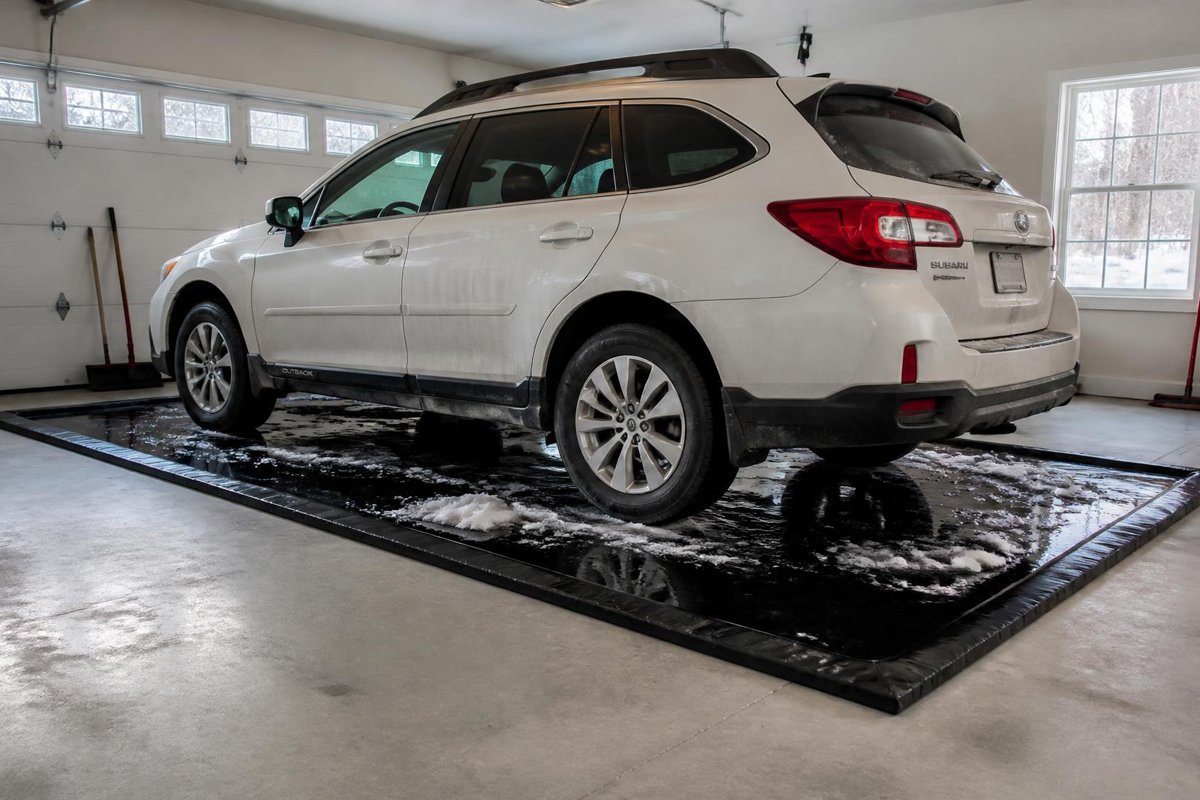
Put on gloves and eye protection, and work in a ventilated space such as an open garage door. Lay down a mat so spills do not stain the floor. A containment mat is ideal.
Step 2: Degrease
Remove oil and dirt first. Remover cannot reach rust under grease. Scrub with a brush and degreaser, then rinse and dry. Our garage cleaning tools guide lists good brushes and supplies.
Step 3: Soak or Apply
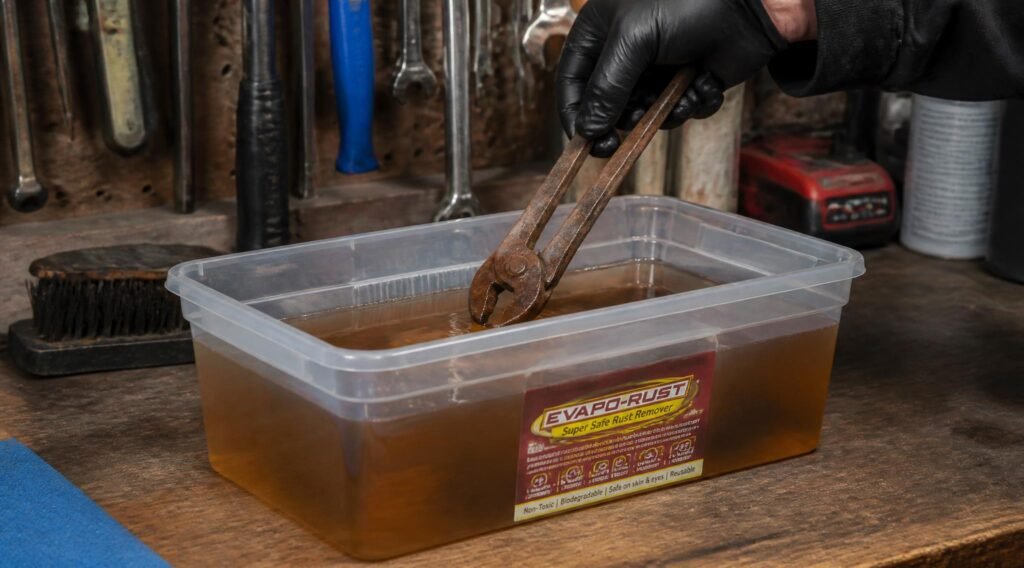
Submerge the tool fully in the remover, or apply gel or spray as directed. For soaks, a plastic tub with a lid works well. Do not use a container you also use for food.
Step 4: Wait
Light rust may release within hours, while heavy rust can take overnight or longer, depending on the product. Check the label for timing and do not leave a tool soaking for days unless the instructions allow it.
Step 5: Rinse, Dry and Protect
Rinse with clean water, dry immediately with a rag or compressed air, and coat the metal with a protectant such as paste wax, oil or a corrosion inhibitor. Bare steel can flash-rust within hours if left damp. Wipe up any splashes with a shop vacuum if you are working on a larger project.
Common Mistakes
Skipping the degreasing step. Oil and grime block the remover, so results look weak even with the best rust remover. If your floor is oily too, see our garage floor cleaning guide.
Using a converter where you need bare metal. A converter leaves a coating. On a wrench jaw, plane sole or blade, that ruins the working surface. Use a true remover instead.
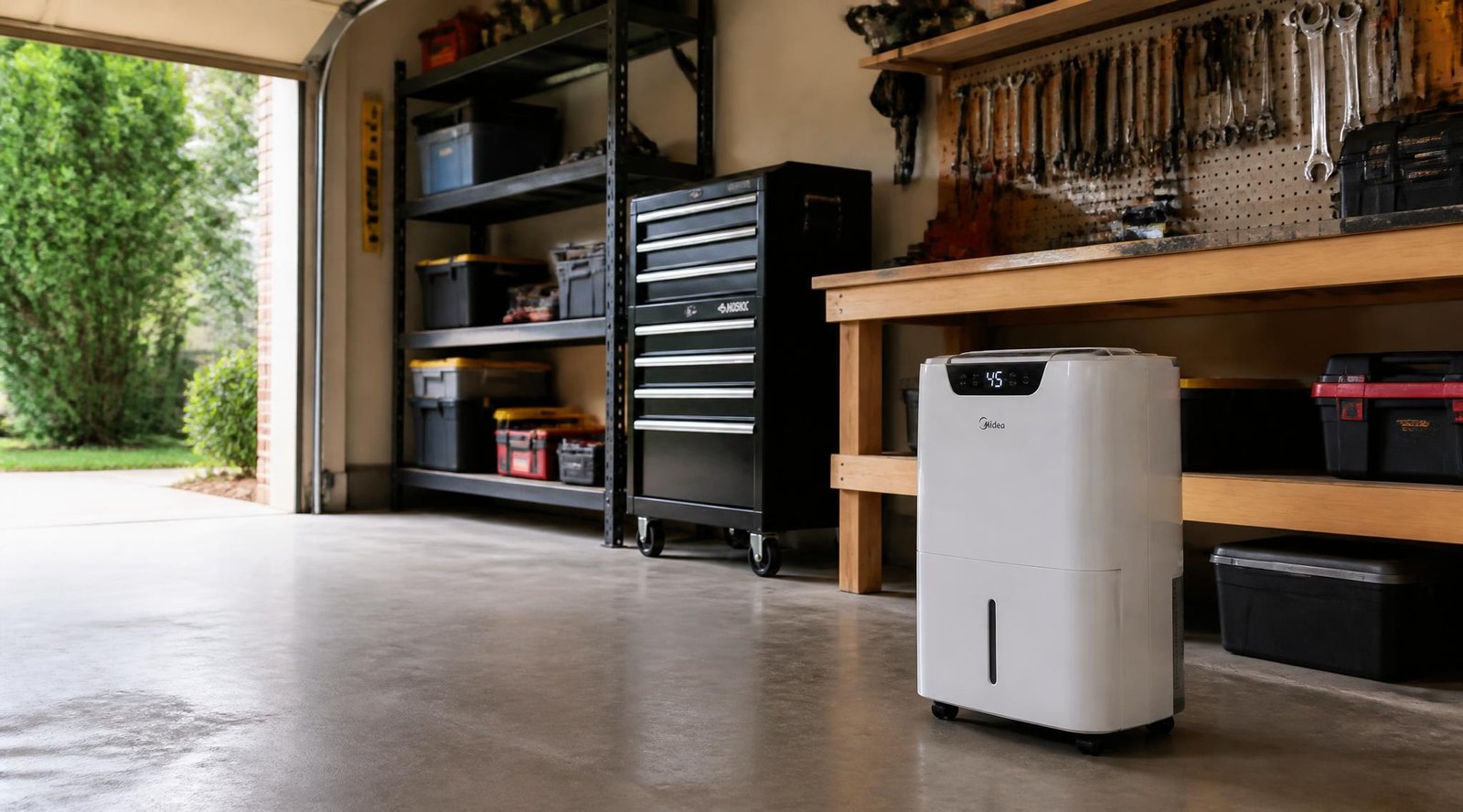
Forgetting to protect the metal afterward. Freshly cleaned steel has no defense. Without wax, oil or an inhibitor, rust returns fast, especially in a damp space. If dampness is the culprit, our dehumidifier guide is the next read.
Expert Tips
Match the soak to the container. A shallow plastic tub with a lid keeps vapors down and lets you submerge long tools at an angle. Use separate tubs so you never mix products.
Add a gentle brush at the end. After a soak, a brass or nylon brush clears any loose residue without scratching. Save steel brushes for heavy, non-precious metal.
Fix the cause, not just the symptom. Rust is a moisture problem. Raise tools off the floor, keep cabinets closed, store paint and solvents properly in a flammable storage cabinet, and improve airflow so the room can dry out. An air purifier will not remove humidity, but a dehumidifier will.
Final Verdict: Choosing the Best Rust Remover
- Best overall: Evapo-Rust, for gentle, reusable, tool-friendly rust removal
- Best budget: Metal Rescue, for small parts and light jobs
- Best for heavy rust: WD-40 Specialist Rust Remover Soak, for tough all-metal pieces
- Best for painted surfaces: Rust-Oleum Rust Reformer, as a converter and base coat
- Best for prevention: CorrosionX, as the finishing step after cleaning
For most home garages, the winning combination is a soak remover plus a protectant. Then deal with humidity so you do not repeat the job. While you are at it, give your bike storage and gear a quick rust check, and keep a first aid kit nearby for scrapes during workshop jobs.
Frequently Asked Questions
Do I need to degrease before using a rust remover? Yes. Oil and grime form a barrier, so the remover cannot contact the rust. A quick scrub with degreaser and a rinse makes soaks work faster and more evenly.
How long does a rust remover take to work? It depends on the product and the rust. Light rust can clear in a few hours, while heavy, layered rust may take overnight or longer. Always follow the label’s timing instead of guessing.
What is the difference between a rust remover and a rust converter? A remover takes rust off to reveal bare metal. A converter chemically changes rust into a stable surface you then paint. Use a remover for working tool surfaces and a converter for painted structural metal.
Is a chelating soak better than an acid-based remover? Soaks are gentler and safer to handle, and they preserve the underlying metal. Acid-based products can be faster on heavy rust but need more protection and care. For most DIY tool restoration, a soak is the safer starting point.
Can I reuse the rust remover solution? Many soak-style removers can be reused until they stop working, which saves money. Strain out debris and store the liquid in a sealed container as the label directs. Do not pour leftover liquid back into the original bottle.
Will rust remover damage the metal? Gentle chelating soaks are designed to leave the base metal alone, though prolonged soaking is not recommended. Stronger acid products can etch metal or dull finishes if left too long, so time them carefully.
How do I stop tools from rusting again? Dry tools completely, apply wax, oil or a corrosion inhibitor, and store them in a closed cabinet. Controlling humidity with a dehumidifier does the most to prevent rust over the long term.
Can I remove rust from jack stands or ramps? You can clean light surface rust, but do not rely on a weight-bearing part with deep pitting or cracks. Replace any damaged support, since the failure risk outweighs the cost of new gear.
How should I dispose of used rust remover? Check the product label and your local waste rules. Some water-based removers are biodegradable, but used liquid may contain dissolved metals, so local disposal guidance matters.
Is it safe to use rust remover in a closed garage? Open the door and keep air moving. Even low-odor products are best used with ventilation, and acid-based products need gloves and eye protection. See our garage ventilation guide for airflow tips.
Author: Danial Marquez
Last Updated: October 2026