
Most garages don’t get dirty overnight — they get dirty one skipped weekend at a time. Oil drips harden into stains, dust settles into cabinet corners, and a musty smell creeps in before anyone notices. The usual reaction is to grab whatever’s under the kitchen sink and hope for the best, which is exactly why so many garage cleanups stall halfway through.
The real fix isn’t more effort — it’s the right tools for a space that’s nothing like the rest of the house. Concrete floors, oil and grease, dust, cobwebs, and poor ventilation all call for gear that a typical household cleaning kit was never built for.
This guide breaks down the garage cleaning tools and supplies actually worth buying, organized by task, so you can build a kit once and reuse it for years. If you’re tackling specific problem areas, see our guides on garage mold removal and garage odor removal for deeper dives into those issues.
Quick Answer
The best garage cleaning tools depend on what you’re fighting. For everyday dust and debris, a wet/dry shop vacuum and a stiff push broom cover most of the work. For oil and grease stains on concrete, a dedicated degreaser and a stiff-bristle scrub brush (or pressure washer) do the heavy lifting. For cabinets, shelving, and workbenches, an all-purpose cleaner and microfiber cloths are enough. If you only buy one thing first, make it a wet/dry shop vac — it handles more garage messes than any other single tool.
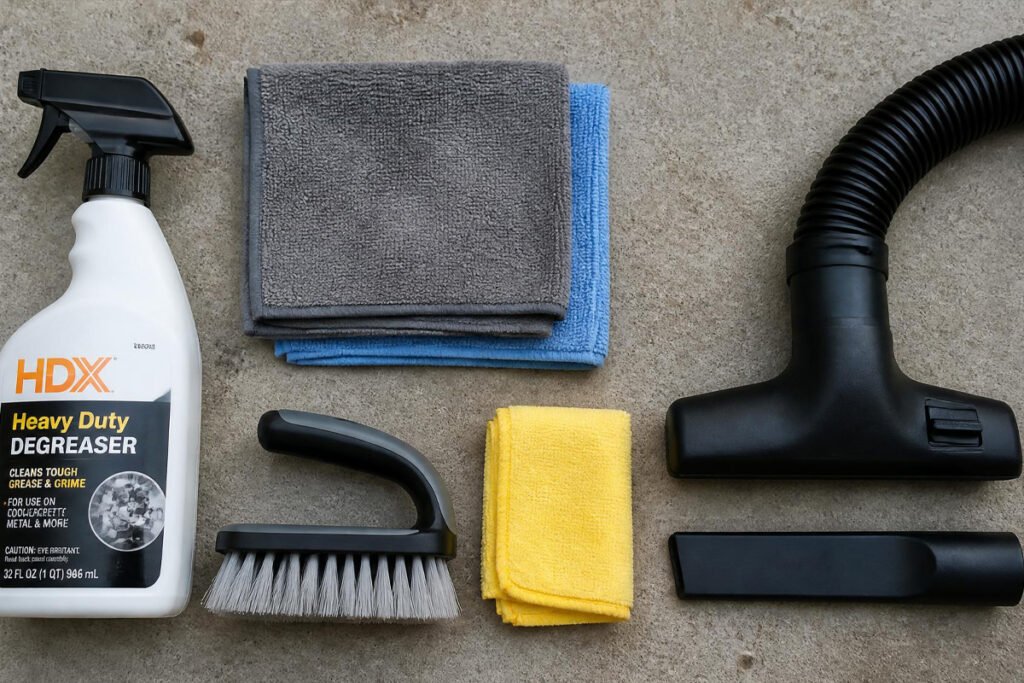
Table of Contents
- What Garage Cleaning Tools Do You Actually Need?
- How to Choose the Right Garage Cleaning Tools
- Best Garage Cleaning Tools & Supplies Available
- Comparison Table
- Best Cleaning Tools for Different Garage Areas
- How to Clean a Garage Correctly, Step by Step
- Common Mistakes
- Expert Tips
- Final Thoughts
- FAQ
What Garage Cleaning Tools Do You Actually Need? {#what-you-need}
A garage combines the dirt of an outdoor space with the storage habits of an indoor one — dust, dead leaves, tracked-in gravel, oil drips, cobwebs, and stored cardboard all pile up in the same 400 square feet. That’s why generic household cleaning supplies fall short: a kitchen sponge won’t touch a hardened oil stain, and a regular broom just pushes garage grit around instead of lifting it.
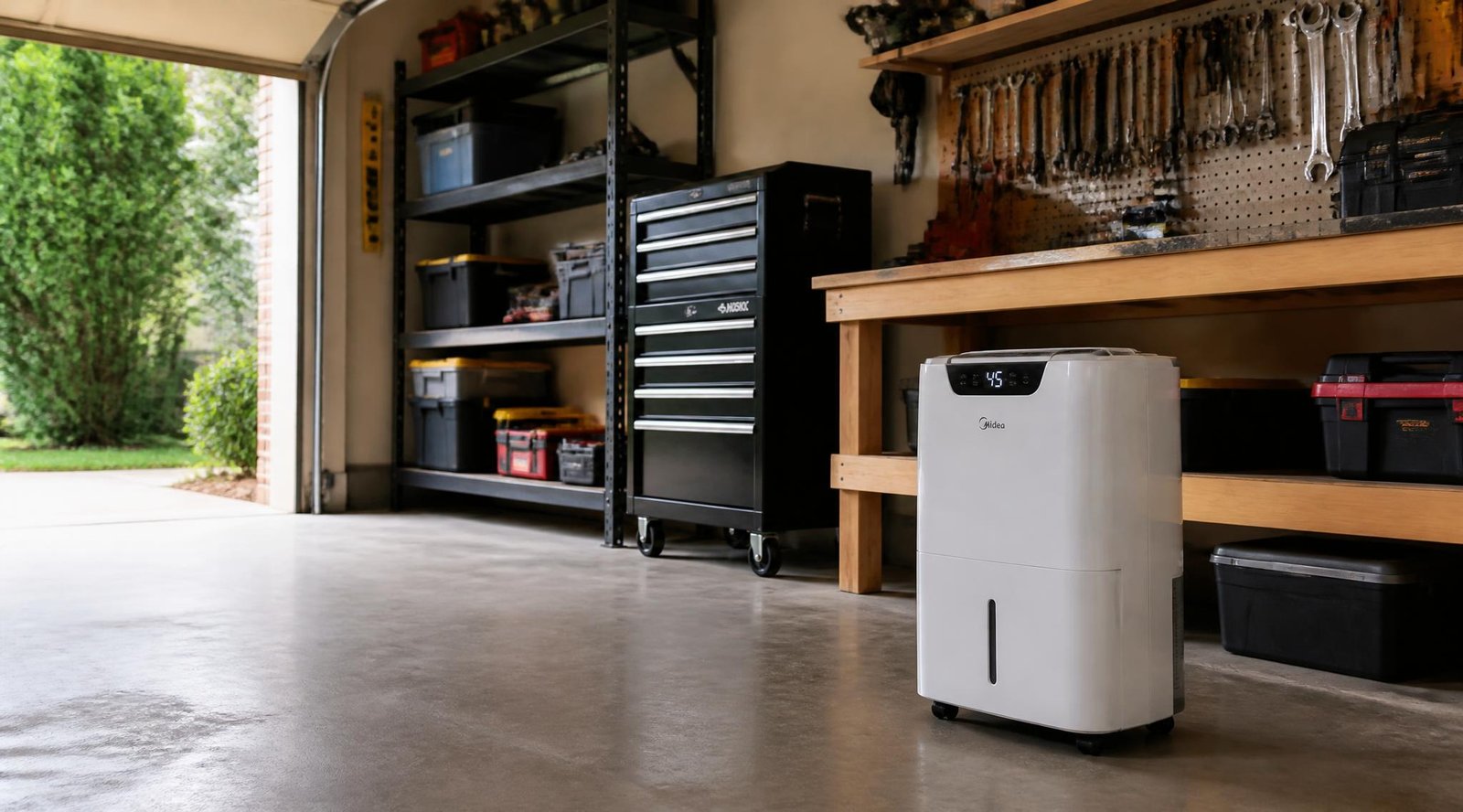
The right garage cleaning tools fall into four categories: debris removal (vacuums, brooms, dustpans), stain and grease treatment (degreasers, scrub brushes, pressure washers), surface wiping (microfiber cloths, all-purpose cleaners), and odor and air control (fans, dehumidifiers, odor absorbers). Most garages don’t need every category at once — but building toward a full kit means fewer trips to the store every time a new mess shows up. For floor-specific buildup, our guide on the best garage floor degreaser goes deeper into stain treatment specifically.
How to Choose the Right Garage Cleaning Tools {#how-to-choose}
Before buying anything, ask three questions:
- What’s my garage floor made of? Bare concrete, epoxy-coated, or polyaspartic surfaces each tolerate different chemicals and scrubbing methods — check our guide on cleaning a polyaspartic garage floor if that applies to you.
- Is my mess mostly dry debris or wet/oily buildup? Dry debris calls for vacuums and brooms; oil and grease need degreasers and scrub tools.
- How much storage space do I have for cleaning gear? A wall-mounted tool rack or a single storage tote keeps your cleaning kit from becoming its own clutter problem.
For a general safety reference on ventilation while using cleaning chemicals indoors, the U.S. EPA’s guidance on indoor air quality is a solid, non-commercial resource worth bookmarking.
Best Garage Cleaning Tools & Supplies Available {#best-tools}
1. Wet/Dry Shop Vacuum (e.g., Shop-Vac 5-Gallon or similar)
Overview: A wet/dry shop vacuum is the single most versatile tool for garage cleaning. Unlike a household vacuum, it’s built to handle sawdust, gravel, standing water, and even small amounts of liquid spills without clogging or overheating. Most models come with a blower function too, useful for clearing leaves out of corners.
Key Features:
- 5–8 gallon tank capacity for fewer empties
- Wet and dry pickup in one unit
- Interchangeable nozzle and brush attachments
- Blower mode for debris and leaves
- Washable, reusable filter
Best For: General debris, sawdust from workbench projects, minor spills, seasonal deep cleans
Pros: ✅ Handles wet and dry messes in one pass ✅ Powerful suction lifts embedded grit ✅ Long-lasting, low-maintenance motor Cons: ❌ Bulky to store if space is tight ❌ Can be loud during extended use
Our Verdict: If you only buy one item from this list, make it a shop vac. It replaces the broom for most jobs and pulls double duty during workshop projects — pair it with the tips in our garage workshop setup guide for dust management while you work.
2. Heavy-Duty Push Broom with Stiff Bristles
Overview: A quality push broom with polypropylene or wire-reinforced bristles clears out gravel, leaves, and coarse dirt faster than a vacuum for large open floor areas. Look for an 18–24 inch head and an angled bristle design that reaches into corners.
Key Features:
- Wide head for fast coverage
- Stiff, non-absorbent synthetic bristles
- Angled design for wall and corner edges
- Threaded handle compatible with standard poles
Best For: First-pass debris clearing before mopping or vacuuming, seasonal cleanups
Pros: ✅ Fast for large floor areas ✅ No power source or battery needed ✅ Inexpensive and long-lasting Cons: ❌ Doesn’t lift fine dust as well as a vacuum ❌ Not effective on oily residue
Our Verdict: A good push broom earns its spot as the “first pass” tool before any wet cleaning. Use it ahead of a full floor clean — see our complete walkthrough in how to clean a garage floor.
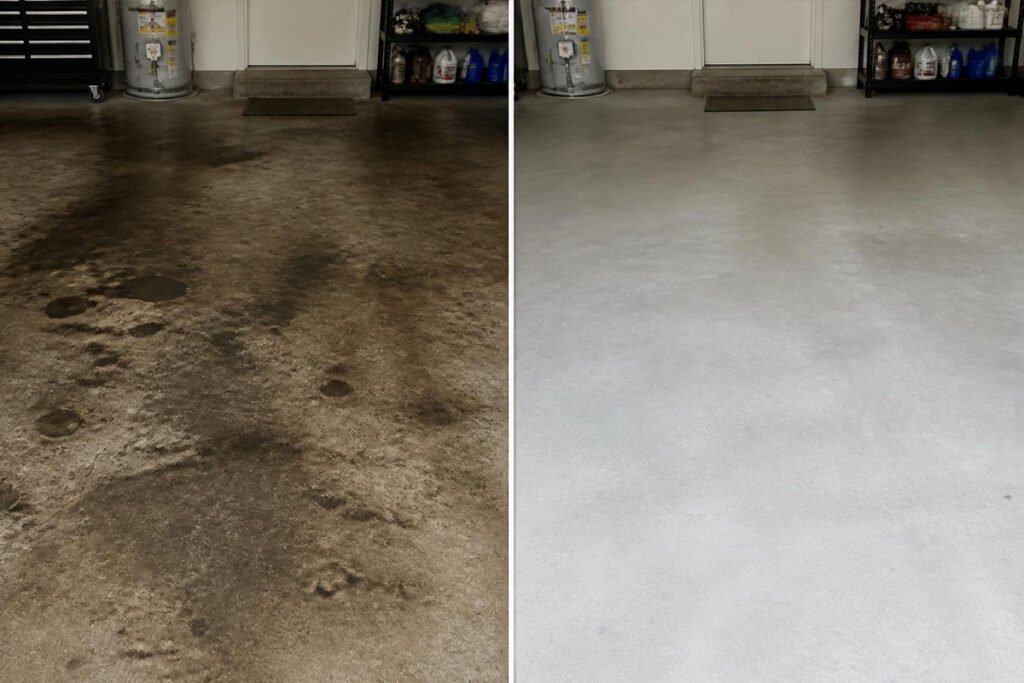
3. Concentrated Garage Floor Degreaser
Overview: Oil and grease stains bond to concrete pores over time, and plain soap and water won’t break that bond. A concentrated degreaser, applied and allowed to dwell before scrubbing or rinsing, is purpose-built to lift automotive fluids without damaging the slab.
Key Features:
- Concentrated formula, diluted per job
- Safe on bare concrete, sealed, and epoxy floors (check label)
- Biodegradable options available
- Works with a scrub brush, pressure washer, or both
Best For: Oil stains, grease spots, tire marks
Pros: ✅ Purpose-built for automotive stains ✅ Concentrated formula lasts many applications ✅ Pairs well with a pressure washer Cons: ❌ Needs dwell time, not an instant fix ❌ Some formulas require good ventilation while working
Our Verdict: This is the product most garage owners are missing. For a full breakdown of formulas and application technique, our dedicated guide on the best garage floor degreaser covers this in depth.
4. Stiff-Bristle Scrub Brush with Long Handle
Overview: A long-handled deck or scrub brush with stiff synthetic bristles lets you apply real pressure to stained concrete without kneeling. It’s the manual complement to a degreaser — chemicals loosen the stain, the brush finishes the job.
Key Features:
- Long handle to avoid kneeling
- Stiff bristles rated for concrete and masonry
- Wide head for faster coverage
- Rust-resistant hardware
Best For: Working degreaser into stains, general floor scrubbing
Pros: ✅ Reaches stubborn, dried-in stains ✅ No electricity or water pressure required ✅ Cheap and durable Cons: ❌ More physical effort than a pressure washer ❌ Bristles wear down with heavy use
Our Verdict: Keep one of these next to your degreaser at all times — it’s the tool that turns “applied chemical” into “actually clean floor.”
5. Electric Pressure Washer (1,800–2,000 PSI)
Overview: For garages with heavy, years-old staining or large surface areas, a pressure washer cuts cleaning time dramatically. Electric models in the 1,800–2,000 PSI range are strong enough for concrete without being so aggressive that they etch or pit the surface.
Key Features:
- 1,800–2,000 PSI output (ideal range for concrete)
- Multiple nozzle tips for adjustable spray pattern
- Detergent tank for combining with degreaser
- Corded electric for consistent power indoors/near an outlet
Best For: Whole-floor deep cleans, large stained areas, pre-epoxy surface prep
Pros: ✅ Dramatically cuts scrubbing time ✅ Reaches into porous concrete texture ✅ Doubles for driveway and siding cleaning Cons: ❌ Requires water drainage plan for indoor garages ❌ Too aggressive at close range on sealed or epoxy floors if misused
Our Verdict: Worth the investment if you’re doing a full floor reset, especially before a coating project — pair it with our guide on epoxy coating a garage floor since a clean, degreased slab is the single biggest factor in coating adhesion.
Comparison Table {#comparison-table}
| Tool | Best For | Power Source | Approx. Price Range | Storage Footprint |
|---|---|---|---|---|
| Wet/Dry Shop Vacuum | General debris, spills | Electric | $60–$150 | Medium |
| Heavy-Duty Push Broom | First-pass debris clearing | Manual | $20–$40 | Low (wall hook) |
| Concentrated Floor Degreaser | Oil and grease stains | N/A (chemical) | $15–$30 | Low |
| Long-Handle Scrub Brush | Manual stain scrubbing | Manual | $10–$20 | Low |
| Electric Pressure Washer | Deep floor cleaning | Electric | $120–$300 | Medium–Large |
Best Cleaning Tools for Different Garage Areas {#different-areas}
Concrete and Epoxy Floors
Floors need the heaviest-duty combination: degreaser, scrub brush, and either a pressure washer or a stiff mop for rinsing. If your floor is already epoxy-coated, stick to pH-neutral cleaners to avoid dulling the finish — see how to clean an epoxy garage floor and cleaning a garage floor without a pressure washer for lower-impact methods.
Cabinets, Shelving, and Storage Bins
Dust and grease film build up on cabinet surfaces even without direct spills. A microfiber cloth and an all-purpose degreasing spray handle this quickly — our full walkthrough is in how to clean garage cabinets. For anything stored inside, check our guides on storing totes and storing tarps so cleaning doesn’t undo itself the next time you reload shelves.
Garage Doors (Interior and Exterior Panels)
Garage doors collect road grime, pollen, and hard water spots that a floor-cleaning routine won’t touch. A soft-bristle brush, mild soap, and a hose (not a pressure washer at close range) are the safest combination — full method in how to clean a garage door. Rust spots need a different approach entirely; see how to remove rust from a garage door.
How to Clean a Garage Correctly, Step by Step {#how-to-clean}
For general ventilation safety while using cleaning chemicals in an enclosed garage, OSHA’s guidelines on workplace ventilation are a useful reference even for home use.
Step 1: Clear and Sort
Remove everything from the floor and shelving that isn’t fixed in place. Sort into keep, donate, and discard piles before any cleaning tool touches the space.
Step 2: Dry Debris First
Run the push broom or shop vac across the entire floor before introducing any liquid. Wetting down loose dirt first only turns it into mud.
Step 3: Apply Degreaser to Stains
Spray or pour concentrated degreaser directly onto oil and grease spots and let it dwell per the label’s instructions — usually 5–15 minutes.
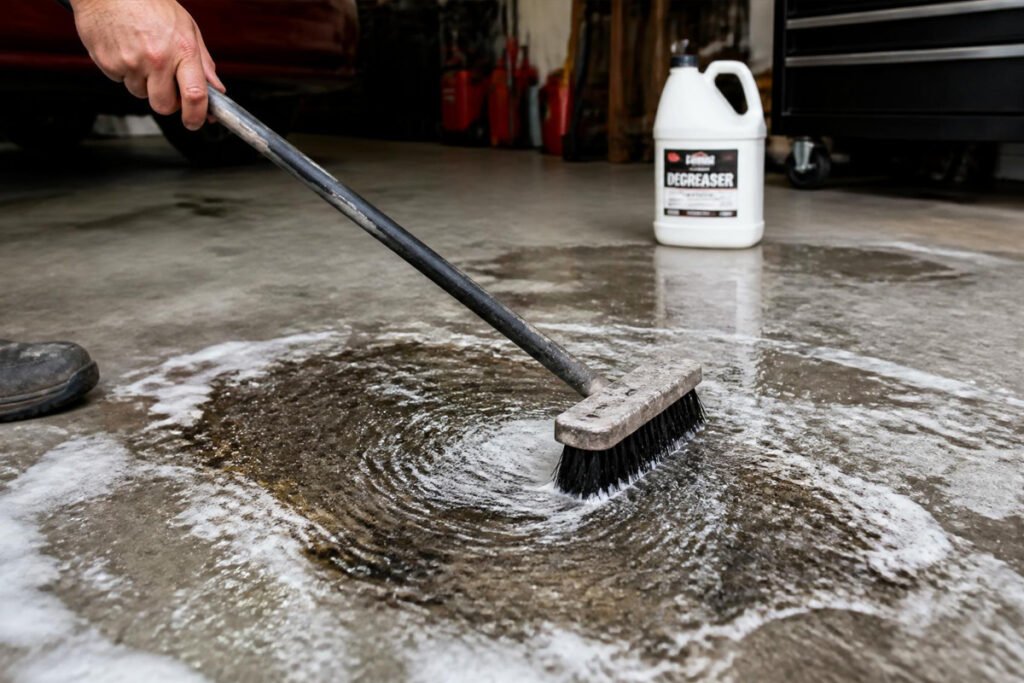
Step 4: Scrub and Rinse
Work the degreaser into the concrete with a stiff brush, then rinse with a hose or pressure washer, working toward a floor drain or the garage entrance.
Step 5: Wipe Down and Dry
Finish cabinets, shelving, and workbenches with a microfiber cloth and all-purpose cleaner, then run a fan or open the door to fully dry the floor and prevent garage odor from taking hold again.
Common Mistakes {#common-mistakes}
Using household cleaners on concrete. Kitchen and bathroom cleaners aren’t formulated for oil and grease — they’ll smear stains around rather than lift them. Stick to a purpose-built degreaser instead.
Skipping ventilation while degreasing. Enclosed garages trap fumes fast, especially with the door closed. If your setup lacks airflow, review our garage ventilation guide before starting a deep clean.
Pressure-washing too close to epoxy or sealed floors. High-pressure spray at close range can chip or peel a coating. Keep the nozzle at a safe distance or switch to hand-scrubbing on coated surfaces.
Expert Tips {#expert-tips}
Dilute degreaser stronger for old stains, not longer dwell time. A more concentrated mix works faster and more thoroughly than simply letting a weak mix sit longer — check the product’s max-strength ratio on the label.
Store your cleaning kit together in one bin. A dedicated tote near the door means the next cleanup starts in seconds instead of turning into a scavenger hunt through the garage itself.
Clean before you organize, not after. Cleaning shelving and floors while they’re empty is dramatically faster than working around stored items — tackle organization projects like a garage storage loft only after the space is already clean.
Final Thoughts {#final-thoughts}
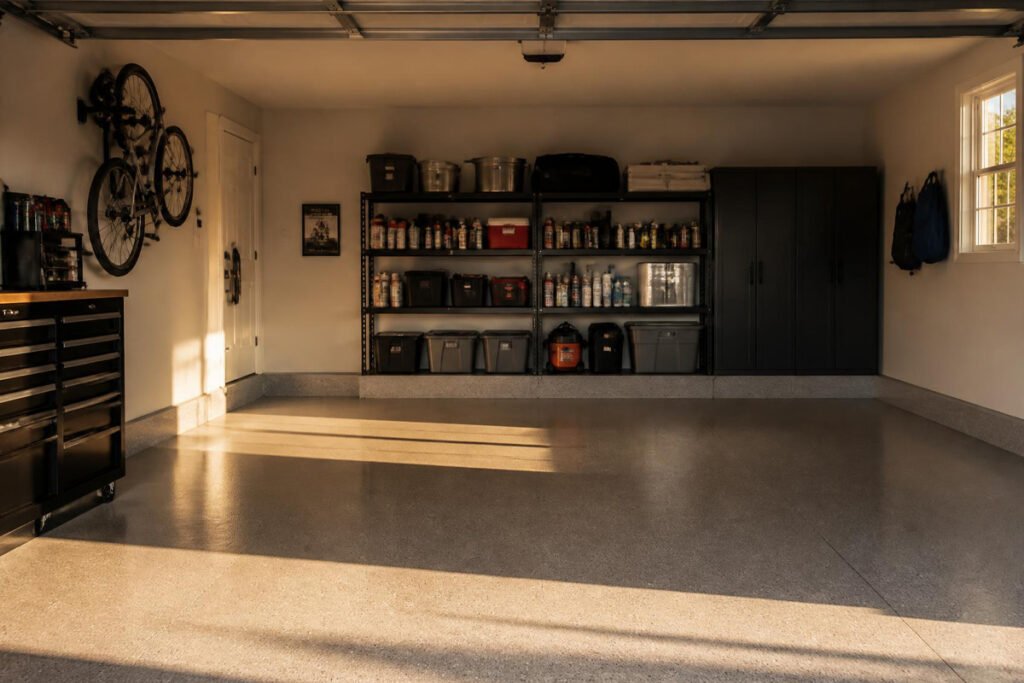
Best Overall: The wet/dry shop vacuum and concentrated degreaser combo covers 90% of what a garage throws at you. Best Budget: A push broom and a bottle of degreaser will get real results for under $50. Best for a Full Reset: Add the pressure washer if you’re clearing years of buildup or prepping a floor for epoxy coating.
Whatever combination you land on, the goal is the same: build a kit once, store it in one place, and reuse it — for related upkeep, see our garage maintenance checklist and garage safety guide to keep the whole space in shape year-round.
Frequently Asked Questions {#faq}
Do I need a pressure washer to clean a garage floor? No. A stiff brush, degreaser, and a garden hose can clean most garage floors effectively — a pressure washer just speeds up the process on large or heavily stained areas. See our guide on cleaning without a pressure washer for the manual method.
How often should I deep clean my garage? Most homeowners get good results with a full deep clean twice a year — spring and fall — with quick sweeps or vacuum passes monthly in between.
Regular degreaser vs. dish soap — what’s the real difference? Dish soap cuts light grease on dishes but isn’t concentrated or formulated to penetrate porous concrete. A dedicated degreaser breaks down bonded automotive oils far more effectively and won’t leave a soapy residue behind.
Will a pressure washer damage my epoxy garage floor? Used carelessly at close range, yes — it can chip the coating. Keep the nozzle at least 12–18 inches away and use a wide fan tip, or stick to hand-scrubbing on coated floors.
What’s the best way to get rid of garage odor after cleaning? Good airflow is the real fix — run a fan, crack the door, or address the ventilation setup itself. Our garage odor removal guide covers odor-specific solutions beyond basic cleaning.
Can I use a shop vac to pick up spilled oil? Only if it’s rated for wet pickup, and even then, absorb larger spills with cat litter or an absorbent pad first — a vacuum should handle residue, not standing liquid fuel or oil.
Do I need different tools for a bare concrete floor vs. a sealed one? Mostly the same tools work, but sealed or epoxy floors are more sensitive to harsh chemicals and abrasive scrubbing — always check that your degreaser is labeled safe for coated surfaces.
What should I do about mold I find while cleaning? Stop and address it separately — mold needs a different treatment approach than dirt or grease. See our full garage mold removal guide before continuing your regular cleaning routine.
Is a broom or a vacuum better for garage floors? Use both in sequence: a broom for the first pass on loose debris, then a shop vac for fine dust and corners a broom can’t fully reach.
How do I keep my garage floor clean between deep cleans? A weekly quick sweep and prompt cleanup of any fresh spills prevents stains from setting in, which cuts down significantly on how often a full degreasing session is needed.
Author: Danial Marquez Last Updated: July 2026



1 thought on “Best Garage Cleaning Tools & Supplies: Top Picks & Buying Guide”
Pingback: Best Rust Remover for Tools: Proven Top Picks | GarageDaily.com – Master Your Garage with Expert Tips