Every garage eventually hits the same wall: a project stalls because the one wrench you need isn’t in the drawer, or it’s there but it’s the wrong size, rusted shut, or borrowed and never returned. A good set of garage hand tools is the difference between fixing something in ten minutes and making three trips to the hardware store.
The problem isn’t a lack of tools — most garages have plenty. It’s that they accumulated randomly over the years: a few sockets here, a cheap screwdriver set there, nothing organized and nothing complete. If you’re setting up a workshop from scratch, our guide on how to set up a garage workshop covers the bigger picture, but this article focuses specifically on the hand tools themselves — what to buy, what to skip, and which sets are actually worth the money.
Quick Answer
The best garage hand tools depend on how you’ll use them. A weekend DIYer who tackles the occasional shelf or leaky faucet needs a compact, general-purpose set. A homeowner who also handles car maintenance needs a set with a full metric and SAE socket range. Someone furnishing a dedicated workshop should invest in a larger mechanic’s set with organized case storage. In every case, prioritize chrome vanadium steel construction and a lifetime warranty over sheer piece count — a 120-piece set of soft steel is worth less than a well-made 40-piece set.
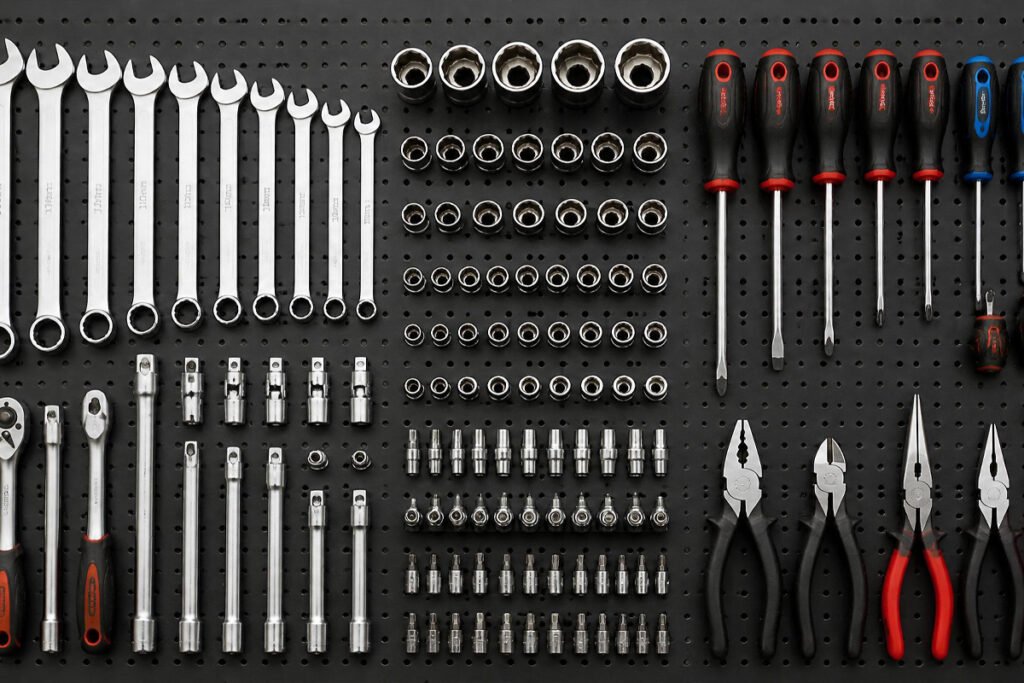
Table of Contents
- What Are Garage Hand Tools and Why They Matter
- How to Choose the Right Hand Tool Set
- Best Garage Hand Tool Sets Available
- Comparison Table
- Best Hand Tools for Different Garage Uses
- How to Set Up and Organize Your Hand Tools
- Common Mistakes
- Expert Tips
- Final Thoughts
- Frequently Asked Questions
What Are Garage Hand Tools and Why They Matter
Hand tools are the manually operated equipment that doesn’t plug in or run on a battery — wrenches, sockets, screwdrivers, pliers, hammers, and hex keys. They form the foundation of any garage, workshop, or home maintenance setup, and unlike power tools, they rarely become obsolete or run out of charge mid-job.
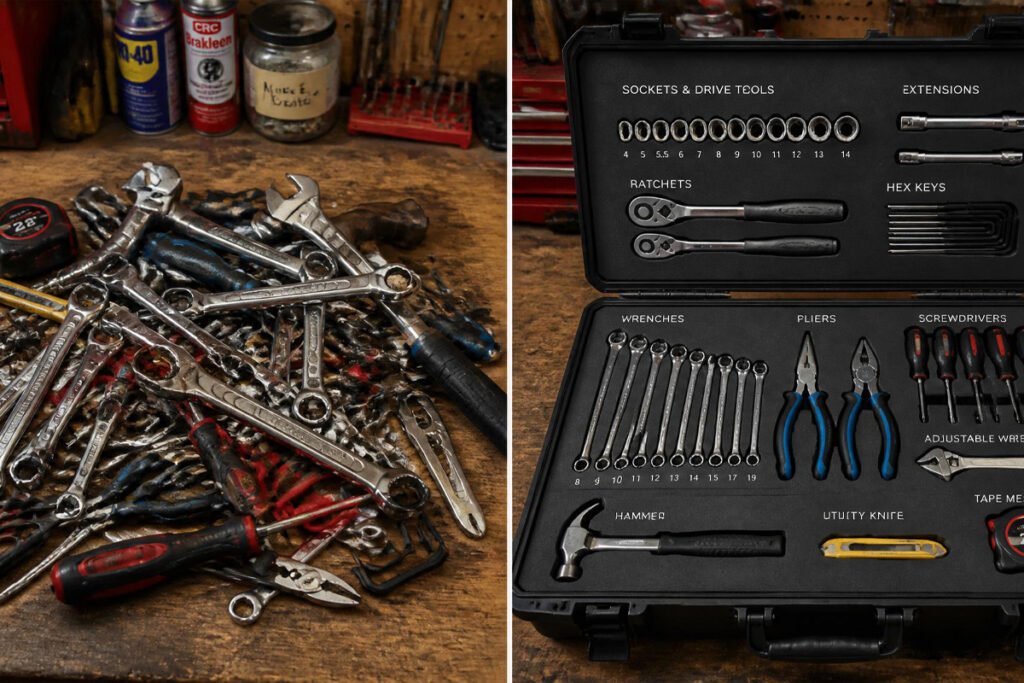
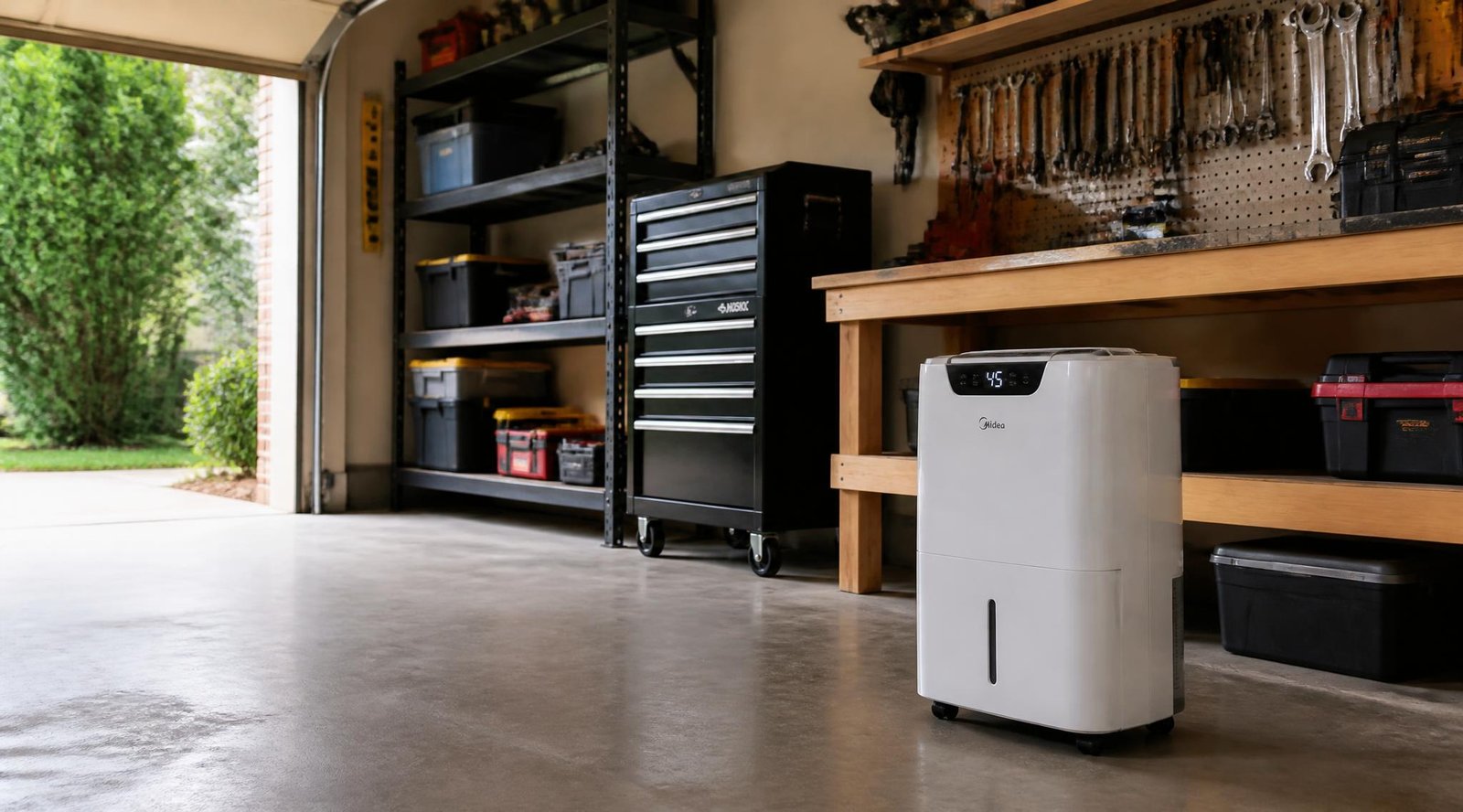
The best garage hand tools share three qualities: durable construction (usually chrome vanadium steel), correctly labeled sizing in both metric and SAE units, and a storage case that keeps everything findable. A disorganized pile of loose tools is nearly as frustrating as not owning the tools at all, which is why many of the sets below emphasize the case and layout as much as the tools inside it. If your garage also lacks basic organization, our guide to garage shelving units pairs well with any new tool set.
How to Choose the Right Hand Tool Set
Before buying, ask yourself:
1. What will I actually be fixing? Car maintenance calls for a deep socket range and metric sizes; furniture assembly and household repairs lean more on screwdrivers and hex keys.
2. How much storage space do I have? A large 200+ piece mechanic’s set needs a dedicated cabinet or workbench drawer, while a compact set fits in a closet or car trunk.
3. Will more than one person use these tools? If kids, roommates, or family members will also grab tools, a labeled case with foam inlays makes it obvious when something is missing — and less likely to go missing permanently.
According to the U.S. Consumer Product Safety Commission, choosing correctly sized, well-maintained hand tools is also one of the simplest ways to reduce the risk of slipped-wrench and hand injuries in a home workshop.
Best Garage Hand Tool Sets Available
1. Craftsman 230-Piece Mechanics Tool Set
Overview: A long-standing favorite for homeowners who want one case that covers nearly every common repair. It includes a full range of SAE and metric sockets, ratchets, combination wrenches, and drive extensions, all held in a blow-molded case with a tray layout that shows at a glance if something’s missing.
Key Features:
- Full 1/4″, 3/8″, and 1/2″ drive sockets
- SAE and metric combination wrenches
- Quick-release ratchets
- Blow-molded storage case with tray inserts
- Lifetime warranty on hand tools
Best For: Homeowners who want one comprehensive set instead of buying tools piecemeal.
Pros: ✅ Extremely versatile for both car and household repairs ✅ Case keeps everything organized ✅ Backed by a well-known warranty
Cons: ❌ Bulky for smaller garages ❌ Some specialty sizes still need to be bought separately
Our Verdict: If you only buy one tool set for your garage this year, this is the safest all-around choice, and it pairs naturally with a dedicated pegboard or garage shelving unit for storage.
2. DEWALT Mechanics Tool Set (200-Piece)
Overview: DEWALT’s set leans toward durability, with black chrome finishes designed to resist the grease and grime typical of a working garage. It’s a strong match for anyone who also owns DEWALT power tools and wants a matching case system.
Key Features:
- Black chrome corrosion-resistant finish
- Full metric and SAE range
- Compact stackable case
- Quick-release ratcheting mechanisms
Best For: Garages that double as an auto repair space.
Pros: ✅ Excellent corrosion resistance ✅ Compact case footprint ✅ Stacks well with other DEWALT storage
Cons: ❌ Slightly pricier than comparable sets ❌ Case latches can loosen with heavy daily use
Our Verdict: A great pick if durability under grease and moisture is your top priority, especially if you already deal with rust issues — our guide on removing rust from a garage door covers similar corrosion problems that also affect tools left in a damp garage.
3. TEKTON Combination Wrench Set
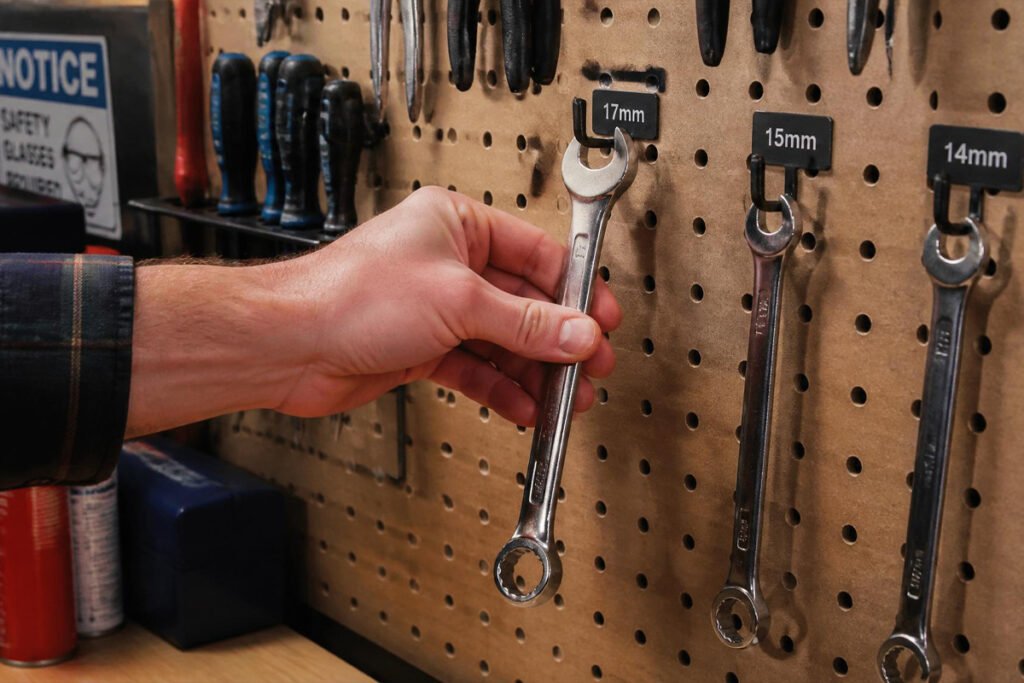
Overview: For garages that mainly need wrenches rather than a full mechanic’s case, TEKTON’s combination set focuses on one job and does it well — clearly stamped sizes, a comfortable box-end angle, and a straightforward rack for wall mounting.
Key Features:
- 12-point box end, 15-degree offset open end
- Raised, easy-to-read size markings
- Wall-mountable storage rack included
- Available in both SAE and metric sets
Best For: Anyone who wants a focused wrench upgrade without buying a full mechanic’s kit.
Pros: ✅ Very readable size stamps ✅ Wall rack keeps them visible and off the bench ✅ Good value for the piece count
Cons: ❌ No sockets or ratchets included ❌ Doesn’t come in a hard case
Our Verdict: A smart, budget-friendly add-on set rather than a standalone solution — best combined with a socket set from another brand on this list.
4. Husky Homeowner’s Tool Set (150-Piece)
Overview: Designed less for auto repair and more for general household use — picture frames, furniture assembly, light electrical work. It includes a claw hammer, a full screwdriver bit set, pliers, a tape measure, and a basic socket set in one all-purpose case.
Key Features:
- Claw hammer and utility knife included
- Screwdriver bit set with ratcheting driver
- Basic socket and wrench assortment
- Single-latch carrying case
Best For: First-time homeowners building a garage tool collection from zero.
Pros: ✅ Covers the basics for nearly any household repair ✅ Affordable entry point ✅ Single case is easy to grab and carry
Cons: ❌ Sockets aren’t deep enough for serious car work ❌ Wrench range is limited compared to dedicated mechanic sets
Our Verdict: The right starting point if you’re furnishing a garage workshop for the first time — see our full garage workshop setup guide for what to add next.
5. Stanley 99-Piece Mixed Tool Set
Overview: A compact, budget-conscious set aimed at apartment dwellers and small garages where storage space is limited. It trades piece count for a smaller footprint, fitting easily in a single toolbox rather than a stacked case system.
Key Features:
- Combination pliers and adjustable wrench
- Compact socket set with ratchet
- Precision screwdriver bits
- Single-tier fitted toolbox
Best For: Small garages, apartments, or as a secondary “grab and go” set.
Pros: ✅ Small footprint ✅ Budget-friendly ✅ Good for basic repairs and furniture assembly
Cons: ❌ Not built for heavy or frequent mechanical work ❌ Some pieces feel light-duty under regular use
Our Verdict: Best treated as a backup or travel set rather than your garage’s primary tool collection.
Comparison Table
| Product | Best For | Piece Count | Case Included | Warranty |
|---|---|---|---|---|
| Craftsman 230-Piece Set | All-around garage use | 230 | Yes, blow-molded | Lifetime |
| DEWALT 200-Piece Set | Auto repair / damp garages | 200 | Yes, stackable | Limited lifetime |
| TEKTON Wrench Set | Wrench-only upgrade | Varies (8–20) | Wall rack | Limited lifetime |
| Husky Homeowner Set | First-time garage tool kit | 150 | Yes, single case | Limited |
| Stanley 99-Piece Set | Small garages / backup set | 99 | Yes, fitted box | Limited |
Best Hand Tools for Different Garage Uses
Car Maintenance and Repair
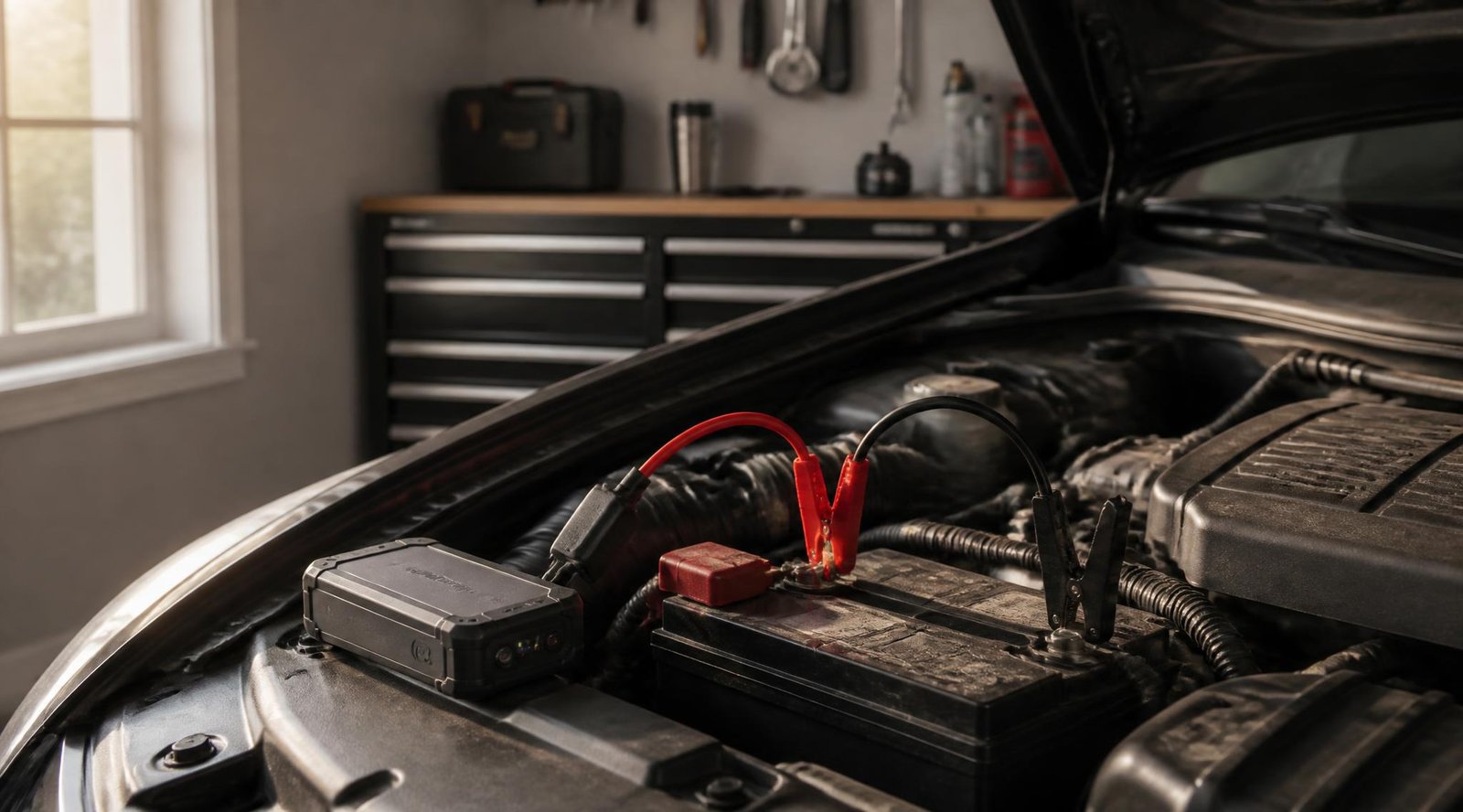
If your garage doubles as a home mechanic bay, prioritize deep sockets, a torque wrench, and a full metric range, since most modern vehicles use metric fasteners almost exclusively. Pair your tool set with proper lighting — our LED garage lights guide makes a real difference when you’re working under a raised hood or vehicle. A reliable battery charger or jump starter also belongs in this setup for dead-battery mornings.
General Household Repairs
For furniture assembly, hanging shelves, or fixing squeaky hinges, a homeowner-style set with a good screwdriver bit range and claw hammer covers 90% of jobs. Combine it with a solid garage shelving unit so tools stay put between projects instead of migrating to random drawers around the house.
Dedicated Workshop Projects
Woodworking, small engine repair, or serious DIY builds call for the largest and most complete sets, ideally organized on a pegboard or in a rolling cabinet. If you’re building this kind of space from the ground up, revisit our how to set up a garage workshop guide, and consider ventilation and insulation too — see our garage insulation guide and garage ventilation guide if you’ll be spending long hours in there.

How to Set Up and Organize Your Hand Tools
Step 1: Sort by Category
Group everything into wrenches, sockets, screwdrivers, pliers, and miscellaneous before deciding on storage. This alone reveals duplicate purchases and real gaps in your collection.
Step 2: Choose Your Storage System
Pegboards work well for frequently used items you want visible at a glance, while drawer cabinets suit sets that come in factory foam trays. If you’re short on wall space, a rolling cart adds storage without a permanent footprint — the same principle used in our storage loft guide for overhead space.
Step 3: Label Everything
Painter’s tape and a marker are enough to label drawers, hooks, or foam cutouts. It sounds basic, but labeling is the single biggest factor in whether tools actually get put back.
Step 4: Do a Monthly Check
Once a month, do a quick scan of your pegboard or case outline to spot anything missing before it becomes a permanent loss.
Step 5: Maintain and Clean
Wipe down metal tools periodically to prevent surface rust, especially in humid climates or unheated garages — a problem closely related to the corrosion issues covered in our garage rust removal guide.
Common Mistakes
Buying piece count over quality. A 300-piece set stuffed with thin sheet-metal wrenches is worse than a 50-piece set made of forged steel. Check material specs, not just the number printed on the box.
Storing tools loose in a drawer. Without a case, tray, or pegboard outline, tools scatter and go missing fast. If storage is the real bottleneck, our garage shelving units guide solves this directly.
Ignoring garage humidity and rust risk. Tools left in a damp, unventilated garage corrode quickly. Pairing tool storage with proper airflow — see our garage ventilation guide — extends the life of every tool you own.
Expert Tips
Buy wrenches and sockets in sets, not individually. Matched sets guarantee consistent quality and sizing accuracy across the whole range, which loose individual purchases from different brands often don’t.
Keep a small “go bag” separate from your main set. A compact secondary kit like the Stanley 99-piece set above is worth keeping in a car trunk or travel bag so your main garage set never has to leave home.
Add safety gear alongside your tools. Basic hand tool work still carries injury risk — a small first-aid kit and a properly rated fire extinguisher belong in any workshop, and our garage safety guide covers the full checklist.
Final Thoughts
Best Overall: The Craftsman 230-Piece Mechanics Set for its balance of range, quality, and case organization. Best for Auto Repair: The DEWALT 200-Piece Set, thanks to its corrosion-resistant finish. Best Budget Option: The Stanley 99-Piece Set for small garages or as a backup kit. Best for Beginners: The Husky Homeowner’s Set, which covers the essentials without overwhelming a first-time buyer.
Whichever set you choose, pair it with proper storage — whether that’s a garage shelving unit, a pegboard system, or overhead space from our storage loft guide — so the tools stay organized long after the initial purchase.
Frequently Asked Questions
Do I really need a full mechanic’s set if I don’t work on cars? Not necessarily. If your repairs are mostly household — furniture, shelving, minor fixes — a homeowner-style set like the Husky 150-piece kit covers your needs without unused specialty sockets.
How much should I expect to spend on a good garage hand tool set? Quality mechanic’s sets typically range from budget-friendly options under $100 to premium 200+ piece kits well above that, depending on brand, material, and included storage case.
Chrome vanadium vs. chrome molybdenum — does it matter? Both are durable options used in quality tools; chrome vanadium is more common in general-purpose sets, while chrome molybdenum often appears in higher-torque applications like impact sockets.
How long do hand tools typically last? With proper storage and occasional cleaning to prevent rust, forged steel hand tools can last decades — far longer than most power tools, which rely on batteries or motors that wear out.
Should I buy metric, SAE, or both? Buy both if your garage includes any vehicle work, since modern cars are metric while some older American vehicles and general hardware use SAE sizing.
What’s the difference between a mechanic’s set and a homeowner’s set? Mechanic’s sets emphasize deep sockets, torque accessories, and a full metric/SAE range for automotive work, while homeowner’s sets add general-purpose items like hammers and screwdriver bits for household repairs.
My sockets keep going missing — what’s the fix? Switch to a foam-inlay case or pegboard with tool outlines. A visible gap makes it immediately obvious when something hasn’t been returned.
Can I store hand tools in an unheated garage? Yes, but humidity and temperature swings increase rust risk over time. Wiping tools down periodically and improving airflow, as covered in our garage ventilation guide, helps prevent corrosion.
Are cheaper off-brand tool sets worth buying? For occasional, light use, budget sets can be fine. For frequent use or torque-heavy jobs like automotive work, established brands with forged steel construction and real warranties tend to hold up better long-term.
Do I need a torque wrench as part of my basic set? Not for general household repairs, but yes if you do any car maintenance — many fasteners have specific torque requirements, and over-tightening can damage parts.
Author: Danial Marquez Last Updated: July 2026



![A standard smoke detector is the wrong tool for a garage — dust, vehicle exhaust, and temperature swings trigger enough false alarms that most people eventually just disable the unit, which defeats the purpose entirely. A heat detector solves that by responding to actual temperature change instead of airborne particles. For related garage fire and safety context, see our carbon monoxide and garage safety guide. This roundup focuses specifically on which heat detector to buy. Quick answer: for most attached garages, a hardwired, interconnectable unit like the First Alert HD6135FB is the most reliable choice, since it ties into your home's existing smoke/CO alarm system rather than operating as an isolated device. If wiring isn't an option or you want app alerts when you're not home, a smart or wireless model further down this list covers that instead. We compared products on detection method (fixed temperature vs. rate-of-rise), operating temperature range, interconnection capability, installation type, and price — specifically for garage use, where dust, exhaust, and wide temperature swings rule out options that work fine in a bedroom or hallway. [IMAGE 1 — THUMBNAIL: heat detector mounted on garage ceiling with LED indicator visible — full professional photo brief in SEO package] Quick Comparison Product Best For Detection Type Approx. Price First Alert HD6135FB Best Overall 135°F fixed + rate-of-rise ~$25–$35 Kidde HD135F Best for Whole-Home Interconnection 135°F fixed only ~$25–$35 X-Sense XH02-M Best Smart/App-Connected Heat + app alerts (needs base station) ~$30–$40 + base station RiSol Commercial Heat Detector Best for Large or Extreme-Range Garages Dual fixed + rate-of-rise, –4°F to 135°F ~$50–$80 Honeywell 5809SS Best Wireless (No Hardwiring) Fixed + rate-of-rise, 345MHz wireless ~$40–$55 Note: prices are approximate and based on typical current listings — confirm exact specs and compatibility before you buy. 1. First Alert HD6135FB — Best Overall ⭐ Best Overall 135°F fixed temperature + rate-of-rise (15°F/min) | Hardwired 120VAC with 9V battery backup | 85dB horn | UL539 compliant | ~$25–$35 [IMAGE 2 — First Alert HD6135FB mounted on garage ceiling, white housing visible — full professional photo brief in SEO package] This is the most widely stocked and referenced heat detector for exactly this use case, and the dual-sensing approach is the reason why: it triggers either when the temperature hits a fixed 135°F or when it rises more than 15°F in a single minute, whichever comes first. That rate-of-rise sensing catches a fast-developing fire earlier than a fixed-temperature-only unit would, without the false-alarm sensitivity of a smoke detector. Why buy it • Dual detection (fixed + rate-of-rise) catches fast-developing fires earlier than fixed-only units • Microprocessor control specifically reduces nuisance alarms from dust and temperature swings • Interconnects with other First Alert/BRK hardwired alarms so a garage fire triggers alarms throughout the house Worth knowing • Requires hardwiring into a 120V circuit — not a simple battery-only install • Not rated for extreme cold below –20°F or heat above 115°F, which covers the vast majority of garages but is worth checking for extreme climates Verdict: the safest default pick if your garage is already wired or you're comfortable having an electrician add the circuit — the interconnection with the rest of your home's alarm system is the real value here. 2. Kidde HD135F — Best for Whole-Home Interconnection 🔗 Best for Interconnection 135°F fixed temperature only | Hardwired with 9V battery backup | Interconnects up to 24 Kidde devices | 2 status LEDs | ~$25–$35 [IMAGE 3 — Kidde HD135F heat detector on ceiling with visible LED status lights — full professional photo brief in SEO package] If your home already runs on Kidde smoke and CO alarms, this is the natural fit — it interconnects with up to 24 other Kidde AC-interconnect devices, meaning a garage fire trips every alarm in the house, not just the one nearest the fire. The trade-off against the First Alert pick above is that this unit is fixed-temperature only, without rate-of-rise sensing, which means it won't catch a fast-developing fire quite as early. Pair it with our carbon monoxide safety guide if you're building out a full Kidde-based alarm ecosystem across the house. Why buy it • Seamless interconnection if the rest of your home already runs Kidde alarms • Two LED indicators make status checking simple at a glance • UL 539 certified with a straightforward, well-documented hardwired install Worth knowing • Fixed temperature only — no rate-of-rise detection, so it triggers slightly later on a fast-developing fire • Only interconnects with other Kidde AC-interconnect devices, not mixed brands Verdict: the right choice specifically if you're standardizing on Kidde across the house — otherwise the First Alert's rate-of-rise sensing is the stronger technical pick. 3. X-Sense XH02-M — Best Smart/App-Connected 📱 Best Smart Option Heat sensing + WiFi app alerts | Requires SBS50 base station (sold separately) | Push notifications, battery status alerts | ~$30–$40 + base station [IMAGE 4 — X-Sense XH02-M heat detector with smartphone showing app alert notification — full professional photo brief in SEO package] This is the pick if you want to know about a problem while you're at work or on vacation, not just when you're standing in the garage. It connects to X-Sense's SBS50 base station over 2.4GHz WiFi and pushes alerts, battery status, and incident updates straight to your phone through the X-Sense Home Security app — genuinely useful for anyone who travels or has a detached garage/workshop they don't check daily. Why buy it • Remote push notifications mean you find out about a problem even when you're away from home • Battery status alerts prevent the detector from silently going dead without your knowledge • Straightforward app setup compared to a full hardwired interconnect system Worth knowing • Requires the separate SBS50 base station to function — factor that cost into the total price • Depends on home WiFi and the manufacturer's app/cloud service staying online to deliver remote alerts Verdict: worth the added cost and setup if remote monitoring genuinely matters to your situation — skip it if you're rarely away from the property for long stretches. 4. RiSol Commercial-Grade Heat Detector — Best for Large or Extreme-Range Garages 🌡️ Best for Extreme Ranges Dual fixed + rate-of-rise thermistor sensing | Operating range –4°F to 135°F | Covers up to 900 sq ft | 85dB alarm | ~$50–$80 [IMAGE 5 — RiSol commercial heat detector mounted in a large workshop-style garage — full professional photo brief in SEO package] Built with commercial and industrial spaces in mind, this steps up both the coverage area and the operating temperature range compared to standard residential units — rated down to –4°F, which matters for an uninsulated garage in a genuinely cold climate. The wider 900 sq ft coverage also means a large two-car garage or combined garage/workshop can often get by with fewer total units than standard residential detectors would require. Why buy it • Wide operating range handles genuinely extreme cold better than standard residential units • Larger 900 sq ft coverage area reduces the total number of units needed for a big space • Dual-sensor design matches the fixed + rate-of-rise approach of the best residential picks Worth knowing • Costs more than standard residential heat detectors, reflecting the commercial-grade build • Overkill for a small single-car garage — sized for larger spaces specifically Verdict: the right pick for a large garage, detached workshop, or genuinely harsh climate where standard residential units are pushed past their comfortable operating range. 5. Honeywell 5809SS — Best Wireless (No Hardwiring) 📡 Best Wireless Fixed + rate-of-rise detection | 345MHz wireless | Requires a compatible security panel/receiver | ~$40–$55 [IMAGE 6 — Honeywell 5809SS wireless heat detector mounted with no visible wiring — full professional photo brief in SEO package] For a garage that isn't wired and where running new electrical isn't practical, this is a genuine wireless alternative — it communicates over 345MHz radio to a compatible security system receiver rather than needing a hardwired connection. The catch is real and worth stating plainly: this only works if you already have, or are willing to add, a compatible security panel. It's not a fully standalone battery unit that works on its own out of the box. Why buy it • No electrical work required — genuinely useful for an unwired detached garage or workshop • Same fixed + rate-of-rise dual detection as the best hardwired picks on this list • Integrates with an existing home security system if you already have compatible Honeywell/Resideo equipment Worth knowing • Requires a compatible 345MHz security panel or receiver — it will not function as a true standalone device • Adds an ongoing dependency on your security system staying powered and functional Verdict: the right pick only if you already have, or plan to add, a compatible security system — otherwise the hardwiring cost for a First Alert or Kidde unit is usually simpler. Which Heat Detector Fits Your Garage? • Standard attached garage, already wired: the First Alert HD6135FB is the safest, most tested default. • Home already runs Kidde smoke/CO alarms: the Kidde HD135F keeps the whole system on one interconnected brand. • You travel often or have a detached workshop you don't check daily: the X-Sense XH02-M's app alerts are worth the extra setup. • Large two-car garage, workshop, or genuinely cold climate: the RiSol commercial unit's wider range and coverage area earn the higher price. • Garage isn't wired and running new electrical isn't practical: the Honeywell 5809SS is the realistic wireless option, provided you have or plan to add a compatible security panel. If you're installing a detector alongside other garage upgrades — an EV charger, new overhead storage, or a full workshop build-out — it's worth planning detector placement at the same time rather than as an afterthought once everything else is installed. A Quick Reality Check on “Battery-Only” Heat Detectors If you've searched for a simple, standalone battery-powered heat detector with no wiring and no base station required, you've likely noticed there aren't many well-established options from major brands — that's not an oversight on this list, it reflects the actual market. Most “battery operated” heat detectors marketed online are either wireless units requiring a compatible security panel (like the Honeywell above) or generic, unbranded products without established testing history. If a fully standalone, no-ecosystem battery unit is a hard requirement, expect to do extra due diligence on UL listing and brand reputation before buying, since this is a thinner and less-regulated part of the market than hardwired or panel-based options. Common Mistakes When Buying a Garage Heat Detector Installing a smoke detector instead This is the single most common mistake, and the reason this guide exists — a standard smoke detector in a garage will false-alarm from dust and exhaust often enough that most people eventually disconnect it, leaving the garage with no working fire detection at all. Assuming any heat detector interconnects with any brand Interconnection is almost always brand-specific — a Kidde heat detector won't trip a First Alert smoke alarm elsewhere in the house, and vice versa. If whole-home interconnection matters to you, match the brand to what's already installed. Skipping the operating temperature range Standard residential units are typically rated for roughly –20°F to 115°F. An uninsulated garage in a genuinely extreme climate can exceed that range, which is exactly the gap a wider-range commercial unit like the RiSol pick is built to cover. Forgetting it's not a substitute for a CO detector A heat detector responds to fire risk, not carbon monoxide. Both belong in or near a garage, but they're solving different problems — see our carbon monoxide safety guide for the CO side of garage safety. Fast Buying Guide Fixed temperature vs. rate-of-rise Fixed-temperature detectors trigger at a set threshold, typically 135°F. Rate-of-rise detectors trigger when temperature climbs quickly, regardless of the absolute number, which catches a fast-developing fire earlier. Dual-sensor units combine both and are the stronger choice whenever the price difference is small. Where to mount it Ceiling-mounted, centered in the garage or near the highest-risk area (workbench, electrical panel), away from HVAC vents and garage door tracks that could cause airflow interference. If your garage doubles as a workshop, position it to cover the hot-work or highest-risk station specifically rather than just the geometric center of the room. Interconnected vs. standalone An interconnected unit (hardwired or app-based) alerts the rest of the house when the garage detector trips, buying more time to react. A standalone unit only sounds locally in the garage, which is a real limitation if no one is nearby to hear it. Interconnection is worth the small added cost or setup effort for most attached garages. How many detectors does a garage need A single-car garage under about 500 sq ft typically needs just one unit, centered on the ceiling. A two-car garage or workshop over that size may need two, especially if there's a distinct high-risk zone like a hot-work station on one side of the room. Frequently Asked Questions Why not just use a smoke detector in the garage? Dust, vehicle exhaust, and temperature swings cause frequent false alarms in a standard smoke detector, which tends to end with the unit being disabled entirely — the opposite of what you want. A heat detector responds to actual temperature change instead, avoiding that false-alarm problem. Do I need a hardwired or battery-powered heat detector? Hardwired units are generally more reliable for a garage that already has wiring nearby, and interconnect with the rest of the home's alarm system. If wiring isn't practical, a wireless option paired with a compatible security panel is the realistic alternative — true standalone battery-only heat detectors from major brands are uncommon. What temperature should a garage heat detector trigger at? 135°F is the standard fixed-temperature threshold used by most residential heat detectors, paired with rate-of-rise sensing (commonly 15°F per minute) on better units to catch fast-developing fires earlier. Can a heat detector replace a smoke detector everywhere in my house? No — heat detectors are specifically recommended for spaces where smoke detectors perform poorly, like garages, attics, and crawl spaces. Living areas and bedrooms should still use smoke detectors, which respond faster to smoldering fires that a heat detector wouldn't catch until much later. How often should I test or replace a garage heat detector? Test monthly using the built-in test button, and replace the unit every 10 years regardless of apparent condition, consistent with standard smoke/heat alarm replacement guidance — sensors degrade with age even when a unit still appears to power on correctly. The Bottom Line If you buy just one thing from this list, make it a hardwired dual-sensor unit like the First Alert HD6135FB — it solves the actual problem (a garage with no reliable fire detection) for most households without complicated setup. Go wireless only if hardwiring genuinely isn't an option, and step up to a commercial-grade unit only if your garage is unusually large or exposed to genuinely extreme temperatures. Last Updated: July 2026](https://garagedaily.com/wp-content/uploads/2026/08/Best-Heat-Detectors-for-the-Garage-Top-5-Picks-Buying-Guide-1.jpg)