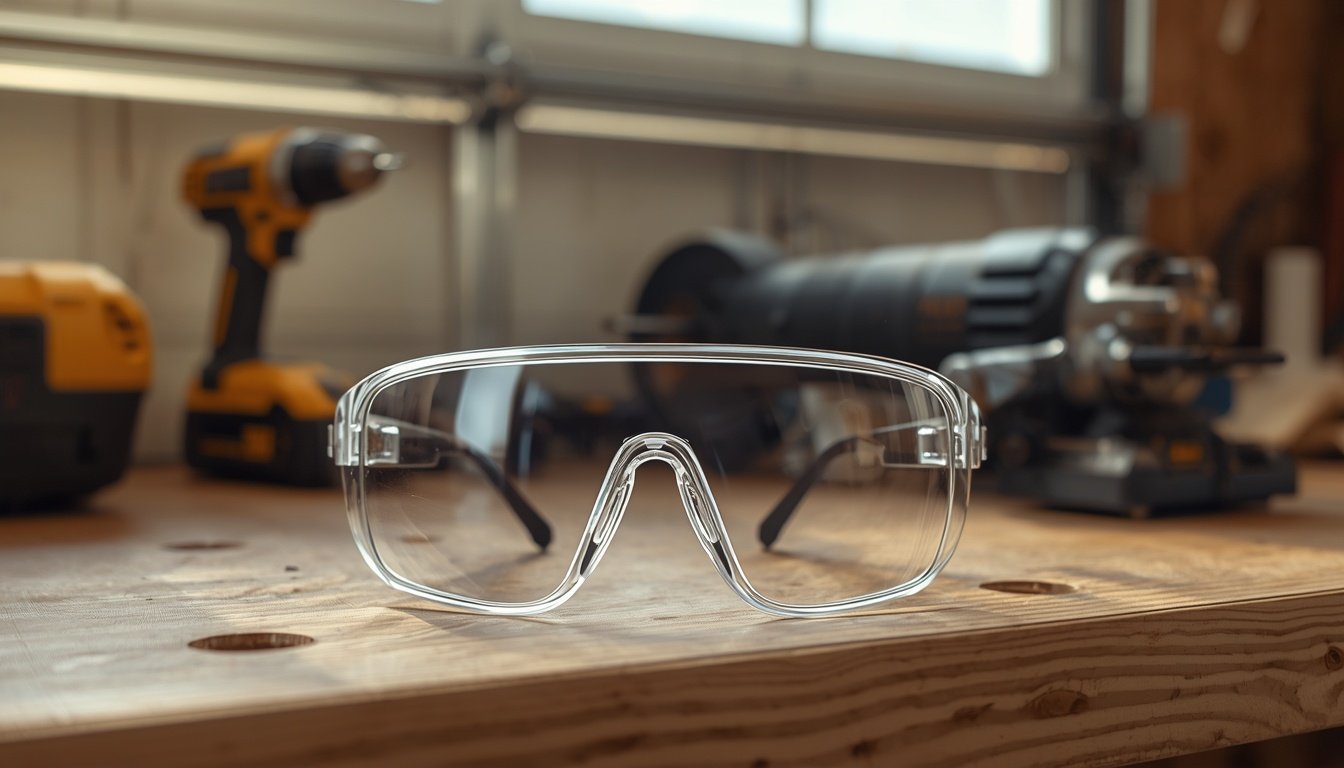
Most garage eye injuries do not come from dramatic accidents. They come from a quick cut with the grinder, a spray of brake cleaner or a chip flying off a wire wheel, all in the three seconds when you decided you did not need glasses. Your eyes are the one tool you cannot replace, which is why picking the best safety glasses for garage use is worth ten minutes of your time.
The problem is that most pairs sold as “safety glasses” are bought for price, then left in a drawer because they fog, pinch or scratch. This guide helps you find a pair you will actually wear. If you are building out your whole safety setup, start with our garage safety guide.
Below you will find five proven options, what the ratings mean, and how to fit and care for your pair. Keep a well-stocked garage first aid kit nearby as a backup, because the goal is to never need it.
Quick Answer
The best safety glasses for garage work are impact-rated, marked ANSI Z87.1, and comfortable enough that you forget you are wearing them. For general tool use, a wraparound pair with anti-fog and scratch-resistant lenses is the best fit. For dust, sanding or chemical splash, upgrade to sealed goggles. If you wear prescription glasses, choose an over-the-glasses style. The best pair is the one you will put on every single time.
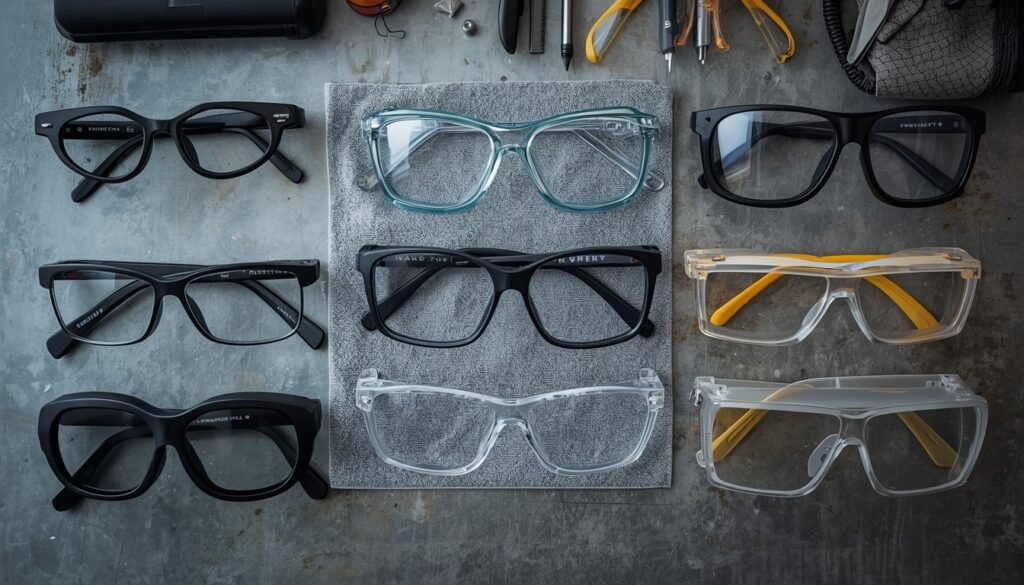
Table of Contents
- Why Garage Eye Protection Matters
- What to Look For in Safety Glasses
- How to Choose the Right Pair
- The 5 Best Safety Glasses for Garage Work
- Comparison Table
- Best Eye Protection for Different Garage Jobs
- How to Fit and Care for Safety Glasses
- Common Mistakes
- Expert Tips
- Final Verdict
- Frequently Asked Questions
Why Garage Eye Protection Matters
A garage is a high-risk space for eyes. Grinders throw sparks and metal fragments. Sanders and saws fill the air with fine dust. Cleaners, solvents and battery acid can splash. Even a stiff wire brush or a bungee cord can snap back with real force.
The damage can be permanent, and it is usually preventable. Workplace safety rules treat eye protection as basic equipment for exactly these hazards. The U.S. Occupational Safety and Health Administration explains when protection is required and how to choose it on its eye and face protection page.
Home garages often skip those rules, yet the same hazards show up. If you work with solvents or paint, also read our flammable and paint storage cabinets guide, because splashes and fumes often travel together. Good eye protection works best alongside proper fire extinguishers for the garage and clean airflow.
What to Look For in Safety Glasses
Five features separate good safety glasses from a pair that just looks the part.
ANSI Z87.1 marking. This is the U.S. standard for eye and face protection. Look for “Z87” printed on the frame or lens. A “Z87+” mark means the lens passed a high-impact test, which is what you want for grinding or hammering.
Lens material. Polycarbonate is the standard because it is light and impact resistant. It also blocks most UV light.
Anti-fog and scratch-resistant coatings. Fogging is the number one reason people take glasses off mid-job. A good coating keeps lenses clear, and scratch resistance extends their life.
Side protection. Wraparound frames or side shields stop debris from coming in at an angle. Flat lenses with no side coverage leave a gap exactly where fragments sneak in.
Fit and comfort. Soft nose pads, flexible temples and light weight matter more than they seem. A pair that slides or pinches gets pushed up on your forehead and stops protecting you.
How to Choose the Right Pair
Ask yourself three short questions before you buy.
1. What are you doing most often? For general tool use, sanding and car work, safety glasses are fine. For heavy grinding, chemical splashes or fine dust, move up to goggles. Our shop vacuums for the garage guide pairs well if dust is your main issue.
2. Do you wear prescription glasses? If so, over-the-glasses safety glasses fit on top of yours, or you can buy prescription safety eyewear. Regular safety glasses worn over your glasses often sit badly.
3. How long do you wear them? Long sessions in the garage call for a lightweight, well-cushioned pair with a good anti-fog coating.
Lighting also plays a role. If you struggle to see clearly through tinted or scratched lenses, the real fix may be better light, which we cover in our upcoming garage lighting guide.
The 5 Best Safety Glasses for Garage Work
These picks come from product lines that are widely recommended for workshop use. Specs, coatings and prices change, so confirm the current details, including the Z87.1 marking, on the product page before you order.
1. 3M SecureFit 400 Series: Best Overall
Overview: The 3M SecureFit 400 Series is a popular all-rounder for garages. It has a lightweight wraparound frame with soft, adjustable temples and a comfortable nose bridge. It is designed for all-day wear, which is the key feature if you want to keep them on.
Key Features:
- Wraparound polycarbonate lens with scratch-resistant coating
- Anti-fog lens options available in the line
- Pressure-diffusion temples for comfort
- Impact-rated to ANSI Z87.1
- Several lens tints for indoor and outdoor work
Best For: All-around garage use, long sessions and anyone who hates uncomfortable glasses.
Pros:
- ✅ Very comfortable for long wear
- ✅ Good coverage and lens clarity
- ✅ Widely available
Cons:
- ❌ Costs more than bargain pairs
- ❌ Not sealed, so not for fine dust or splash
Our Verdict: If you want one pair for most jobs, this is the safest bet. Keep it in a labeled spot on your garage tool chest or storage cabinet so you grab it every time.
2. DEWALT DPG82 Concealer: Best Budget Pick
Overview: The DEWALT DPG82 is a well-known, inexpensive pair that many DIYers keep by the door. It has a wraparound design, soft nose bridge and a slim profile. It is a solid way to start building the habit without spending much.
Key Features:
- Wraparound polycarbonate lens
- Anti-fog and scratch-resistant options depending on version
- Soft nose bridge and flexible temples
- Marked to ANSI Z87.1
- Low price, often sold in multi-packs
Best For: Budget buyers, spare pairs for guests and anyone replacing scratched lenses often.
Pros:
- ✅ Very affordable
- ✅ Light and easy to wear
- ✅ Easy to keep spares around
Cons:
- ❌ Coatings wear faster than premium pairs
- ❌ Fit is less adjustable
Our Verdict: A smart, low-cost choice that beats going without. Buy two or three pairs and store them near your garage storage bins and shelving.
3. Uvex Stealth: Best Anti-Fog Performance
Overview: Uvex is known for lens coatings, and the Stealth is often picked by people who fight fog in cold or humid garages. It has a full-coverage wraparound lens and a comfortable fit, and it is built for heavy, repeated use.
Key Features:
- Wraparound lens with strong anti-fog coating
- Scratch-resistant treatment
- Soft, grippy nose bridge and temples
- Impact-rated to ANSI Z87.1
- Built for repeated cleaning
Best For: Cold garages, humid climates and anyone who sweats while working.
Pros:
- ✅ Excellent fog resistance
- ✅ Durable lens coating
- ✅ Comfortable fit
Cons:
- ❌ Priced above entry-level pairs
- ❌ Fewer style options
Our Verdict: If fogging has ever made you rip glasses off mid-job, this is the pair to try. In a damp garage, see our dehumidifier guide to cut moisture at the source.
4. 3M GoggleGear 500 Series: Best Goggles for Dust and Splash
Overview: When glasses are not enough, goggles are. The 3M GoggleGear 500 Series offers a sealed fit that keeps dust, mist and splashes out. It is a good match for sanding, cleaning with chemicals or working under a vehicle.
Key Features:
- Sealed goggle design with indirect venting
- Anti-fog lens options
- Adjustable strap that fits over most heads
- Impact-rated to ANSI Z87.1
- Works over many prescription glasses
Best For: Sanding, chemical splash, dusty jobs and working under cars.
Pros:
- ✅ Seals out dust and liquid
- ✅ Often fits over regular glasses
- ✅ Strong coverage
Cons:
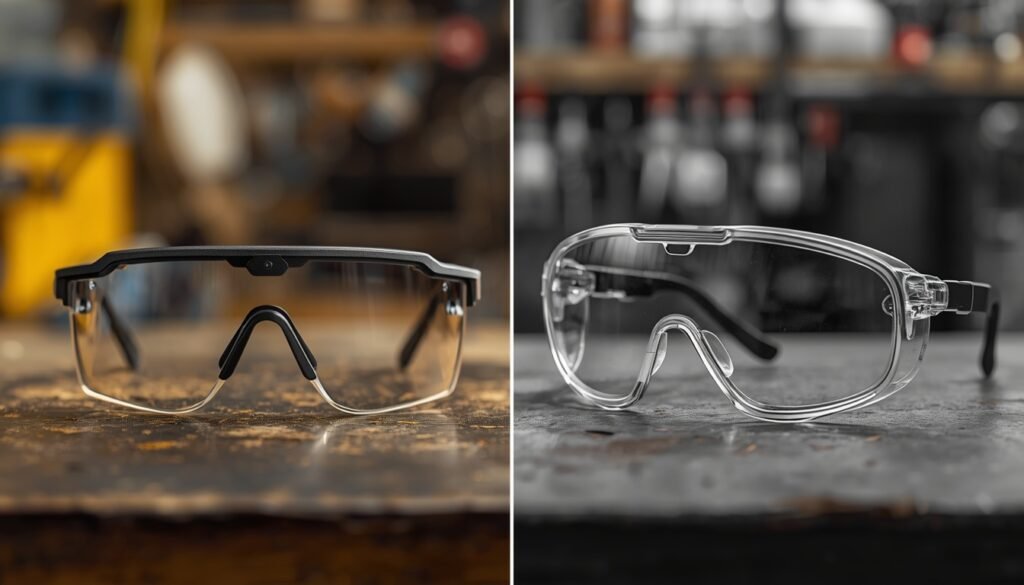
- ❌ Warmer and bulkier than glasses
- ❌ Overkill for light tasks
Our Verdict: Keep a pair for messy or hazardous jobs. When working under a car, read our car ramps and jack stands guide first, since falling debris and drips are the exact risk goggles solve.
5. NoCry Over-Glasses Safety Glasses: Best for Prescription Wearers
Overview: If you wear regular glasses, safety glasses worn over them are the simplest solution. NoCry makes a well-known over-the-glasses style with a roomy frame that fits over most prescription lenses. It adds protection without a prescription safety purchase.
Key Features:
- Roomy wraparound design that fits over glasses
- Scratch-resistant polycarbonate lens
- Side protection for angled debris
- Marked to ANSI Z87.1 on most versions
- Adjustable temples
Best For: Anyone who wears prescription glasses and does tool work.
Pros:
- ✅ Fits over most prescription frames
- ✅ Low cost compared with prescription safety glasses
- ✅ Good side coverage
Cons:
- ❌ Bulkier than standard safety glasses
- ❌ Can fog when layered over lenses
Our Verdict: A practical fix for glasses wearers. Check that the frame sits comfortably over yours, and keep the lens clean with the tips in our garage cleaning tools guide.
Comparison Table
| Product | Best For | Style | Anti-Fog | Fits Over Glasses |
|---|---|---|---|---|
| 3M SecureFit 400 | Best overall | Safety glasses | Options available | No |
| DEWALT DPG82 | Budget | Safety glasses | Depends on version | No |
| Uvex Stealth | Fog resistance | Safety glasses | Strong coating | No |
| 3M GoggleGear 500 | Dust and splash | Sealed goggles | Options available | Often yes |
| NoCry Over-Glasses | Prescription wearers | Over-glasses | Varies | Yes |
Always verify the current Z87.1 marking, coatings and price on the listing before buying.
Best Eye Protection for Different Garage Jobs
Grinding, Cutting and Metalwork
Sparks and metal fragments move fast and hit hard. Choose a Z87+ impact-rated pair, and use goggles or a face shield for heavy grinding. Keep a fire extinguisher close and clear flammables from the area, as described in our garage fire safety guide. Never grind near open solvent containers.
Sanding, Woodworking and Painting
Fine dust slips around open glasses, so sealed goggles do better here. Pair them with a respirator and good airflow. Our garage ventilation guide explains how to move dust out, and an air purifier for the garage can help catch what is left behind.
Cleaning, Chemicals and Car Care
Brake cleaner, degreasers and battery work call for splash protection. Goggles are the safe choice. If you are tackling stains or the floor, wear them while following our guide to cleaning a garage floor, and keep the area ventilated. For walls and ceilings, falling grime is a real risk, so use eye protection with our garage wall cleaning guide.
How to Fit and Care for Safety Glasses
Good glasses only protect you if they fit and stay in good shape. This takes two minutes.
Step 1: Check the Marking
Look for “Z87” or “Z87+” on the frame or lens. If there is no marking, do not use the pair for tool work.
Step 2: Adjust the Fit
Put them on and look in a mirror. They should sit close to your face with no gaps at the sides, and rest on your nose without slipping. Adjust temples or the strap until they feel secure but not tight.
Step 3: Test the Field of View
Turn your head and look up and down. The frame should not block your sight, and you should not feel pressure behind your ears after a few minutes.
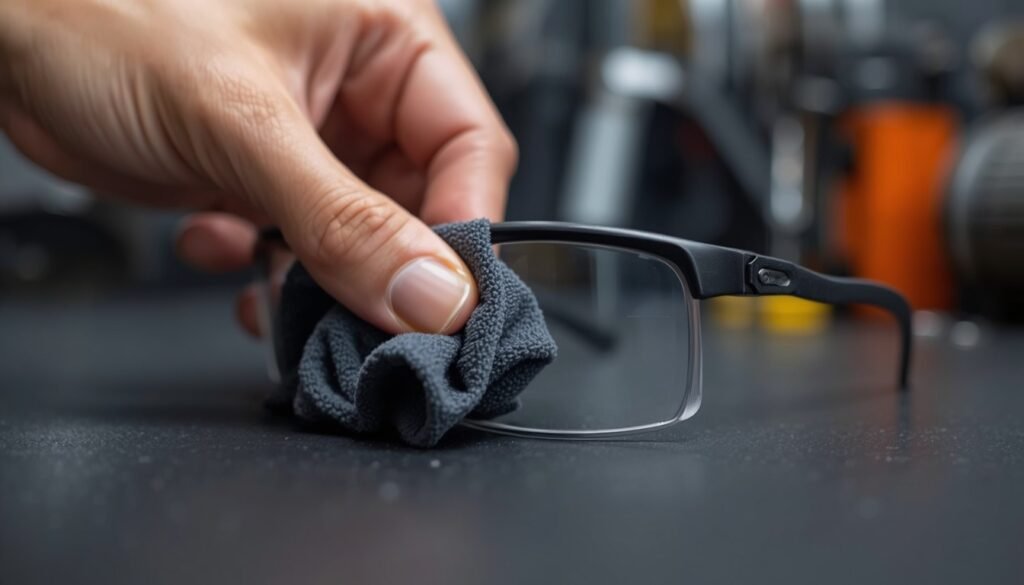
Step 4: Clean Properly
Rinse off grit first, then wipe with a soft microfiber cloth and mild soapy water. Never dry-wipe a dusty lens, because that scratches it.
Step 5: Store and Replace
Keep them in a pouch or on a hook, lens up, away from tools. Replace them when the lens is deeply scratched, cracked or hazy, since damage weakens protection and blocks vision.
Common Mistakes
Wearing regular glasses or sunglasses instead. Everyday glasses and sunglasses are not impact rated and can shatter into your eye. Always use a Z87.1-marked pair. For sprays and fumes, add ventilation from our garage carbon monoxide safety guide if engines run in the space.
Skipping them for quick jobs. Most injuries happen on the “just one second” task. Hang a pair by the door and another at the bench so there is no excuse. A visible, convenient spot beats a perfect pair in a drawer.
Using scratched or fogged lenses. Hazy lenses push people to take them off. Replace them when they get scratched, and choose an anti-fog model if your garage is cold or damp. If power tools run off a generator, keep the setup safe with our portable generators guide.
Expert Tips
Buy several pairs. Keep one at the bench, one by the door and one in the car. If a pair is within arm’s reach, you will wear it.
Match the tint to the room. Clear lenses are best for a dim garage. Save tinted lenses for bright outdoor work, since a dark lens in a dim space makes you squint and push it up.
Add hearing protection. Grinders and compressors damage hearing too. Pairing glasses with earmuffs or plugs covers two of the most common garage injuries at once. Keep the combo near your door so both go on together.

Final Verdict
For most people the best safety glasses for garage use are a comfortable, anti-fog, Z87.1-rated wraparound pair that they will wear every time.
- Best Overall: 3M SecureFit 400 Series
- Best Budget: DEWALT DPG82 Concealer
- Best Anti-Fog: Uvex Stealth
- Best for Dust and Splash: 3M GoggleGear 500 Series
- Best for Prescription Wearers: NoCry Over-Glasses Safety Glasses
Once your eyes are covered, lock down the rest of the space with our garage door security guide, test your carbon monoxide detectors and finish with the garage deep cleaning checklist.
Frequently Asked Questions
What does ANSI Z87.1 mean on safety glasses?
It is the U.S. standard for eye and face protection. A “Z87” mark means the lens meets basic impact standards, and “Z87+” means it passed a higher-impact test. Look for the mark on the frame or lens before you buy.
Do I need safety glasses for light garage work?
Yes. Even small tasks like drilling, hammering or using a wire brush can send debris flying. A comfortable pair takes seconds to put on and protects against injuries that are hard to undo.
What is the difference between safety glasses and goggles?
Safety glasses protect from front and side impacts. Goggles seal around the eyes and block dust, mist and splashes. Use glasses for general work and goggles for sanding, chemicals or heavy debris.
Can I wear safety glasses over my prescription glasses?
Yes, with over-the-glasses styles or goggles designed for that purpose. Check that the frames sit comfortably together and do not press on your nose. Prescription safety glasses are another option if you work often.
How do I stop safety glasses from fogging?
Choose a pair with a good anti-fog coating, keep lenses clean and make sure air can move around your face. Cold garages and sweat both increase fogging. Avoid wiping with dry cloths, which strips coatings.
How often should I replace safety glasses?
Replace them when the lens is cracked, deeply scratched or cloudy, or after a hard impact. A damaged lens weakens protection and hurts visibility. Cheap pairs are easy to swap in multi-packs.
Are cheap safety glasses okay?
Yes, as long as they carry the Z87.1 mark and fit well. A budget pair you wear every time is safer than a premium pair you skip. Just expect cheaper coatings to wear sooner.
Are tinted safety glasses good for the garage?
Clear lenses are best for most garages because the space is often dim. Use tinted or sun lenses only for bright outdoor jobs like pressure washing the driveway or yard work.
Do I need a face shield too?
For heavy grinding, wire wheeling or chopping metal, a face shield over safety glasses gives extra protection. For routine tasks, quality glasses or goggles are enough.
Author: Danial Marquez
Last Updated: November 2026