The power goes out and suddenly the freezer, the sump pump, and every device in the house that actually matters are all competing for the same dead outlet. A portable generator solves that problem, but only if you bought the right one — undersized units bog down the moment two appliances start at once, and oversized units mean paying for capacity you’ll rarely use.
This guide breaks down the best portable generators for home backup power, how to size one correctly, and — just as important — how to run one safely near or in a garage. Generators are one of the leading causes of accidental carbon monoxide poisoning in homes, so before anything else, make sure you’ve read our carbon monoxide safety guide and have a working CO detector installed before your first outage.
Quick Answer
The best portable generator for most households is a mid-size dual-fuel unit in the 5,000–9,000 watt range, since it covers essential circuits — refrigerator, sump pump, some lighting, and a few outlets — without the cost or bulk of a whole-home-capable unit. For sensitive electronics like laptops or medical equipment, an inverter generator produces cleaner power than a standard conventional model. For light, occasional use or workshop tool power rather than full home backup, a battery-powered portable power station avoids fuel storage and combustion risk entirely.
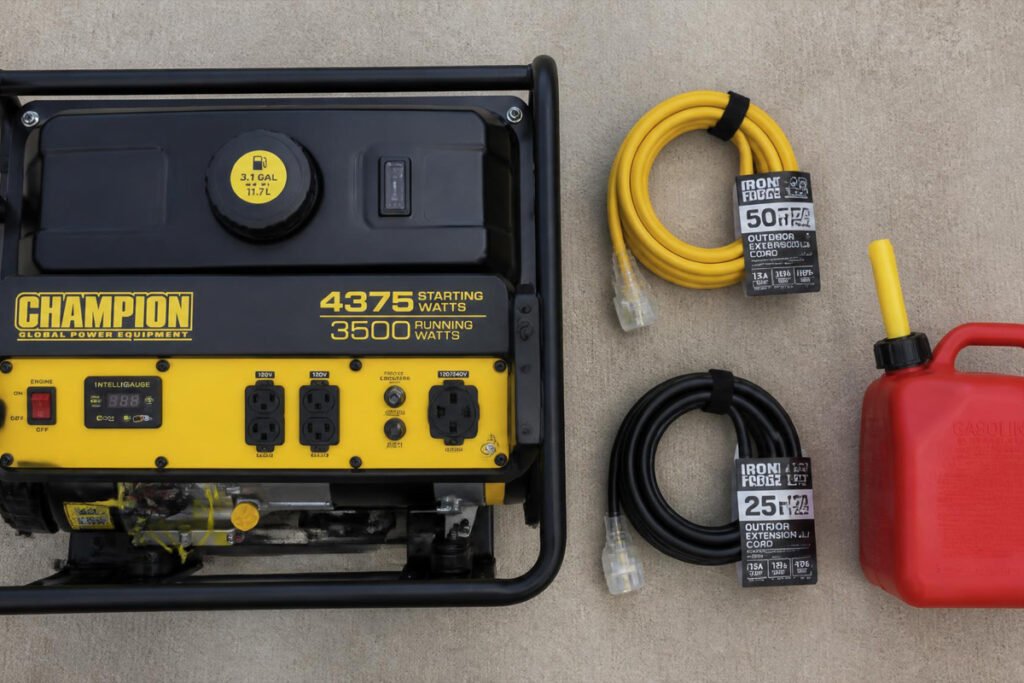
Table of Contents
- Portable Generator Types: What Actually Matters
- How to Size the Right Generator for Your Home
- Best Portable Generators Available
- Comparison Table
- Best Generators for Different Situations
- How to Run a Generator Safely
- Common Mistakes
- Expert Tips
- Final Thoughts
- Frequently Asked Questions
Portable Generator Types: What Actually Matters {#what-you-need}
Conventional generators run at a constant engine speed and deliver high wattage at the lowest cost per watt, but they’re louder and produce a rougher electrical signal that can be hard on sensitive electronics. Inverter generators vary engine speed based on load, producing quieter operation and a cleaner sine wave safe for laptops, phones, and medical devices, typically at a higher price for the same wattage. Dual-fuel and tri-fuel generators run on gasoline plus propane (and sometimes natural gas), giving you flexibility if one fuel type becomes hard to find during an extended outage — a real consideration during major storms.
Whichever type you choose, fuel-burning generators must never run inside an enclosed garage, even with the door open — see our garage ventilation guide for why airflow alone isn’t sufficient protection here.
How to Size the Right Generator for Your Home {#how-to-choose}
Before buying, work through three questions:
- What do I actually need to power during an outage? List your essential appliances and add up both running watts and the higher starting watts required when a motor first kicks on — a refrigerator or sump pump draws meaningfully more power at startup than while running.
- How long might an outage realistically last in my area? Longer expected outages favor dual-fuel flexibility and larger fuel tank capacity over a smaller, single-fuel unit.
- Do I need whole-circuit backup or just critical devices? A transfer switch setup for specific circuits is far more affordable and manageable than trying to power an entire home’s panel with a portable unit.
For authoritative safety guidance on generator use, the U.S. Consumer Product Safety Commission’s generator safety resources are essential reading before your first use — carbon monoxide poisoning from generators is a real and serious risk covered directly by their guidance.
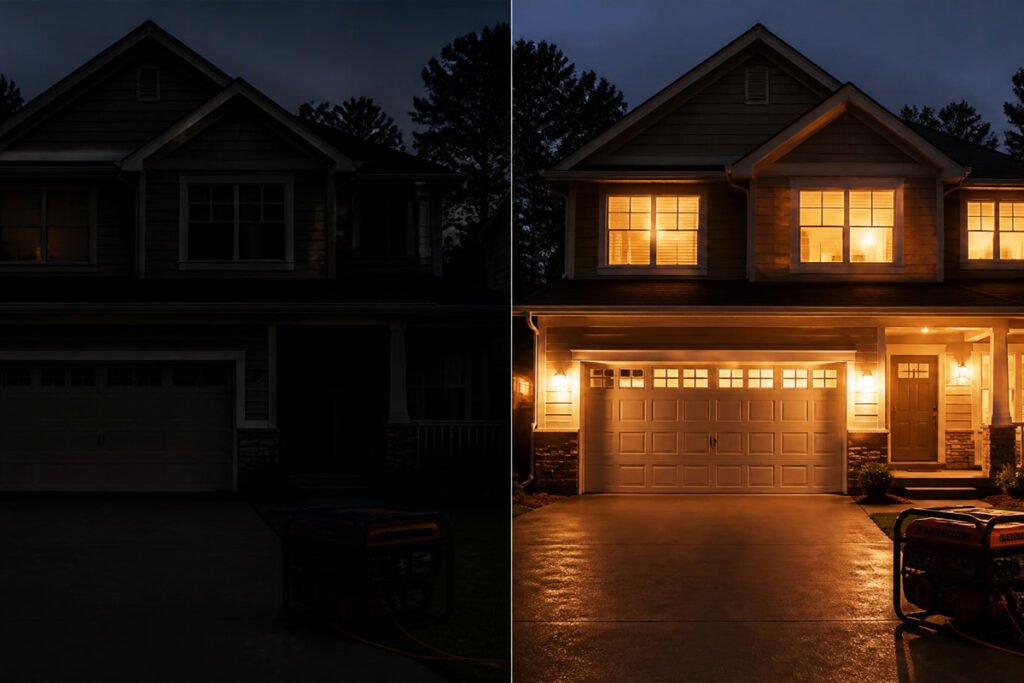
Best Portable Generators Available {#best-tools}
1. Mid-Size Dual-Fuel Conventional Generator (5,000–9,000W)
Overview: This is the sweet spot for most households — enough wattage to cover a refrigerator, sump pump, some lighting, and a handful of outlets, with the flexibility to run on gasoline or propane depending on what’s available during an extended outage.
Key Features:
- 5,000–9,000 watt running capacity
- Dual-fuel flexibility (gasoline and propane)
- Electric start common at this size tier
- Wheel kit standard for portability
Best For: Most households wanting reliable essential-circuit backup power
Pros: ✅ Covers the essentials most households actually need ✅ Fuel flexibility matters during extended outages ✅ Best overall value per watt in this category Cons: ❌ Louder than an inverter generator of similar output ❌ Rougher power output, less ideal for very sensitive electronics
Our Verdict: The right starting point for most homeowners — pair it with a working CO detector and a clear understanding of safe placement before your first real outage.
2. Inverter Generator (2,000–3,500W)
Overview: Inverter generators trade raw wattage for cleaner, quieter power, making them the better choice for households prioritizing sensitive electronics, or for anyone who wants to run a generator without disturbing the entire neighborhood.
Key Features:
- Variable engine speed for quieter, more fuel-efficient operation
- Clean sine wave output safe for laptops and sensitive electronics
- Compact and lightweight compared to conventional generators of similar output
- Often parallel-capable, letting you connect two units for more power
Best For: Sensitive electronics, noise-conscious neighborhoods, camping and portable use alongside home backup
Pros: ✅ Significantly quieter operation ✅ Clean power safe for laptops, phones, and medical equipment ✅ More fuel-efficient than conventional generators Cons: ❌ Lower maximum wattage than conventional models at a similar price ❌ Higher cost per watt of capacity
Our Verdict: Worth the premium if you’re regularly running electronics or work from home during outages — two smaller parallel-capable units can also flex your capacity up when you genuinely need it.
3. High-Output Tri-Fuel Generator (10,000W+)
Overview: For homes wanting to cover most of their electrical panel rather than just essential circuits, a high-output tri-fuel generator (gasoline, propane, and natural gas) delivers serious capacity with maximum fuel flexibility.
Key Features:
- 10,000+ watt running capacity
- Tri-fuel compatibility including natural gas if your home has a line
- Often includes multiple outlet types, including 240V for larger appliances
- Electric start and larger fuel tanks standard at this tier
Best For: Homes wanting near-whole-house backup without a permanent standby generator
Pros: ✅ Covers significantly more of a home’s electrical needs ✅ Maximum fuel flexibility, including natural gas if available ✅ 240V output supports larger appliances Cons: ❌ Significant size and weight, less truly “portable” in practice ❌ Highest price point among portable options
Our Verdict: A strong alternative to a permanent standby generator if you want flexibility without the installation cost — professional installation of a transfer switch is still strongly recommended at this output level.
4. Battery-Powered Portable Power Station
Overview: For households wanting to avoid fuel storage, combustion fumes, and engine noise entirely, a battery-powered power station delivers backup power silently, often rechargeable via a wall outlet, car, or an optional solar panel.
Key Features:
- No fuel, no combustion, no exhaust fumes
- Silent operation
- Rechargeable via wall outlet, vehicle, or solar panel
- Multiple USB, AC, and DC outlet options
Best For: Light backup needs, sensitive electronics, indoor use, solar-paired households
Pros: ✅ No combustion or carbon monoxide risk at all ✅ Completely silent operation ✅ Safe for indoor and garage use without ventilation concerns Cons: ❌ Significantly lower capacity than fuel-powered generators ❌ Recharge time is much longer than refueling a gas generator
Our Verdict: Not a full replacement for a fuel-powered generator during an extended outage, but an excellent, genuinely safe option for essential electronics and shorter outages — see our guide on EV chargers if you’re already building out a broader home electrical resilience plan.
5. Budget Portable Generator (2,000–3,000W, Single Fuel)
Overview: For homeowners on a tighter budget or with more modest backup needs, a smaller single-fuel gasoline generator still covers the true essentials — a refrigerator and some lighting — at a fraction of the cost of larger units.
Key Features:
- 2,000–3,000 watt running capacity
- Single-fuel (typically gasoline) simplicity
- Lightweight and easy to store and transport
- Lower price point than dual-fuel or inverter models
Best For: Budget-conscious buyers, apartments with limited storage, minimal backup needs
Pros: ✅ Most affordable entry point into generator ownership ✅ Compact and easy to store ✅ Simple, few-frills operation Cons: ❌ Limited capacity, won’t cover much beyond one or two essential appliances ❌ Less fuel flexibility than dual-fuel options during extended outages
Our Verdict: A reasonable choice if your backup needs are genuinely modest — just be realistic about what 2,000–3,000 watts can actually cover before relying on it during a real emergency.
Comparison Table {#comparison-table}
| Generator Type | Best For | Noise Level | Approx. Price Range | Fuel Source |
|---|---|---|---|---|
| Mid-Size Dual-Fuel (5,000–9,000W) | Most households, essential circuits | Moderate–High | $500–$1,000 | Gasoline/propane |
| Inverter (2,000–3,500W) | Sensitive electronics, quiet operation | Low | $400–$900 | Gasoline |
| High-Output Tri-Fuel (10,000W+) | Near-whole-house backup | High | $1,200–$2,500+ | Gasoline/propane/natural gas |
| Battery-Powered Power Station | Light needs, indoor/garage-safe use | None | $300–$1,500+ | Electric (rechargeable) |
| Budget Single-Fuel (2,000–3,000W) | Minimal backup needs, tight budgets | Moderate | $200–$450 | Gasoline |
Best Generators for Different Situations {#different-setups}
Frequent Storm or Extended Outage Regions
A dual-fuel or tri-fuel unit offers real resilience here, since fuel availability can become genuinely unpredictable during a major regional event.
Noise-Conscious Neighborhoods or Close Quarters
An inverter generator’s significantly quieter operation matters more here than raw output — check local noise ordinances too, since some areas restrict generator use during certain hours.
Homes Prioritizing Safety Above All Else
A battery-powered power station eliminates the carbon monoxide and fire risks of a fuel-burning generator entirely, making it the safest option for anyone uncomfortable managing fuel storage and combustion safety.
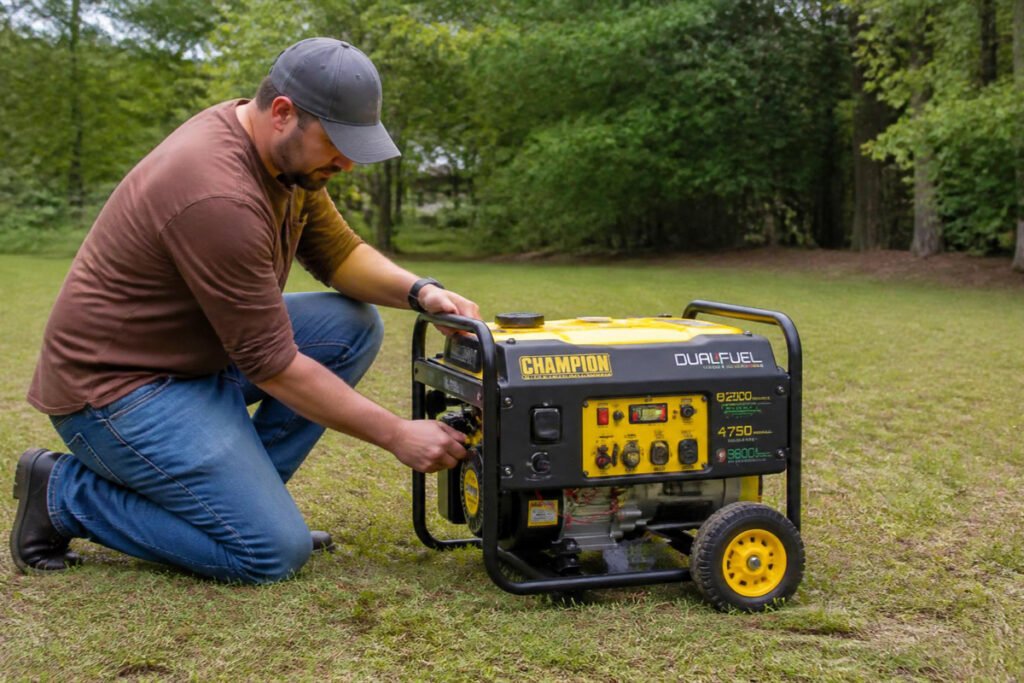
How to Run a Generator Safely {#how-to-use}
Step 1: Never Run It in an Enclosed or Partially Enclosed Space
This includes garages with the door open — carbon monoxide can still accumulate dangerously. Run fuel-powered generators only fully outdoors, well away from windows, doors, and vents.
Step 2: Install and Test a Carbon Monoxide Detector First
Before your first real use, confirm you have a working CO detector installed in your home, not just near the generator itself.
Step 3: Keep the Generator at Least 20 Feet From Your Home
Distance matters even outdoors — exhaust can still drift toward windows and doors at closer range.
Step 4: Use Properly Rated Outdoor Extension Cords
Never overload a cord’s rated capacity, and keep connections dry and off the ground where possible.
Step 5: Never Backfeed Power Through a Wall Outlet
This is extremely dangerous to utility workers and your own electrical system — use a properly installed transfer switch instead if you want to power your home’s circuits directly.
Common Mistakes {#common-mistakes}
Running a generator inside a garage, even with the door open. This is one of the most common causes of accidental carbon monoxide poisoning — a generator must run fully outdoors, regardless of ventilation efforts inside the garage.
Underestimating starting watts, not just running watts. A refrigerator or sump pump can draw two to three times its running wattage for a brief moment at startup — undersizing a generator based on running watts alone leads to overload trips.
Backfeeding power through a household outlet. This bypasses your home’s safety systems and can seriously injure utility workers — always use a properly installed transfer switch instead.
Expert Tips {#expert-tips}
Test your generator before you actually need it. Running it briefly every few months, per the manufacturer’s maintenance schedule, catches problems before an actual emergency.
Store fuel safely and rotate it periodically. Gasoline degrades over time — stored fuel older than a few months (without stabilizer) may not run reliably when you need it most.
Plan your generator’s location before an outage happens, not during one. Deciding on a safe, sufficiently distant outdoor spot ahead of time avoids rushed, unsafe placement decisions in the middle of a storm.
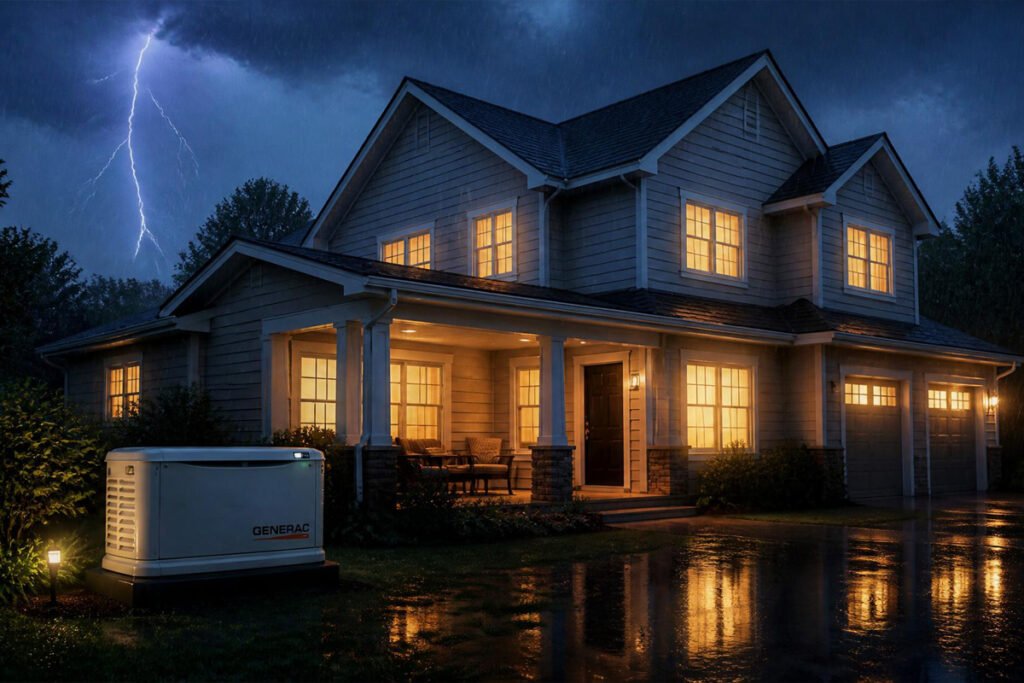
Final Thoughts {#final-thoughts}
Best Overall: A mid-size dual-fuel generator in the 5,000–9,000 watt range for most households’ essential backup needs. Best for Sensitive Electronics: An inverter generator, for cleaner power and significantly quieter operation. Safest Option: A battery-powered portable power station, eliminating combustion and carbon monoxide risk entirely, though with lower overall capacity.
Whatever generator you choose, safety comes before convenience every time — review our carbon monoxide safety guide and CO detector buying guide before your first outage, not during one.
Frequently Asked Questions {#faq}
Can I run a portable generator in my garage with the door open? No. Even with the door fully open, carbon monoxide can accumulate to dangerous levels in and near a garage. Generators must run fully outdoors, well away from windows, doors, and vents.
How many watts do I actually need for home backup power? Add up the running watts of your essential appliances, plus the higher starting watts required when motors first kick on — a rough starting point for many households is 5,000–7,500 watts to cover a refrigerator, sump pump, and basic lighting.
Inverter vs. conventional generator — which should I choose? Inverter generators offer quieter, cleaner power ideal for electronics, while conventional generators typically deliver more wattage per dollar. Many households prioritize conventional or dual-fuel units for raw backup capacity and add a small inverter unit for sensitive devices if needed.
Is it safe to backfeed power into my house through an outlet? No, this is extremely dangerous both to you and to utility workers who may be working on lines they believe are de-energized. Always use a properly installed transfer switch instead.
How far from my house should a generator be placed while running? At least 20 feet is a common safety guideline, positioned away from windows, doors, and vents so exhaust can’t drift back into your home.
Do I need a transfer switch, or can I just run extension cords? For a few essential devices, properly rated outdoor extension cords work fine. For powering specific circuits throughout your home, a professionally installed transfer switch is the safe, code-compliant approach.
How long can a portable generator run continuously? This varies by tank size and load, typically 8–12 hours on a full tank at moderate load — dual-fuel and tri-fuel units can extend this significantly by switching fuel sources.
Do battery-powered power stations really work for home backup? For essential electronics, medical devices, and shorter outages, yes. For extended outages needing appliance-level power, their capacity is generally more limited than a fuel-powered generator.
How often should I test or maintain my generator? Run it briefly every 1–3 months per the manufacturer’s schedule, and change the oil and check spark plugs on the recommended interval — a generator that hasn’t run in over a year may not start reliably when you actually need it.
Author: Danial Marquez Last Updated: August 2026