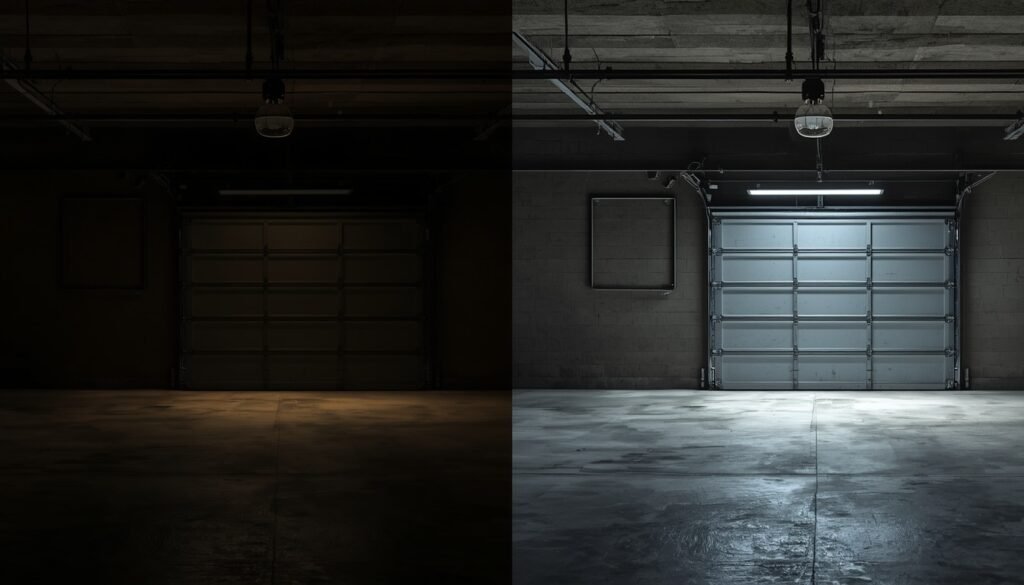
A single bare bulb over the door is how most garages get lit, and it is a quiet safety problem. Shadows hide the extension cord on the floor, the oil spot under the car and the edge of the workbench. Colors look wrong, small parts vanish and eyes tire quickly. Choosing the best garage lighting fixes all of that, and it is one of the cheapest upgrades you can make.
The trouble is that shopping for the best garage lighting is confusing. Lumens, kelvin, linkable fixtures, high bays and motion sensors all sound important, and the wrong choice leaves you with glare, dark corners or fixtures that need an electrician. This guide cuts through that. If you are also working through a bigger safety checklist, start with our garage safety guide and come back here for the lighting piece.
Below you will find five proven LED options, a simple way to size your setup, and a step-by-step install. Good light also makes the rest of your garage easier to organize, so keep our garage tool chests and storage cabinets guide handy.
Quick Answer
The best garage lighting depends on your ceiling height and how you use the space. A typical two-car garage with an 8 to 10 foot ceiling does best with several linkable 4 foot LED shop lights at about 5000K. Garages with ceilings above 12 feet, or workshops with large open floors, do better with LED high bay fixtures. If you only need hands-free light for quick trips and storage areas, a motion sensor ceiling light is the simplest fix. In every case, aim for roughly 50 or more lumens per square foot for general use, and more over the workbench.
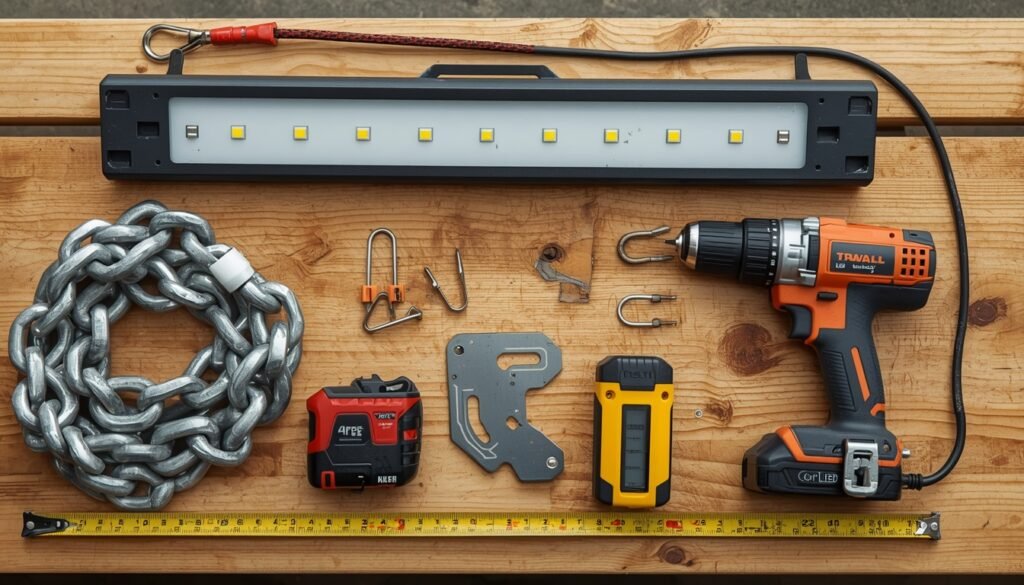
Table of Contents
- What Makes the Best Garage Lighting?
- How to Choose the Right Garage Lights
- The 5 Best Garage Lighting Options
- Comparison Table
- Best Garage Lighting for Different Garages
- How to Install Garage Lighting Correctly
- Common Mistakes
- Expert Tips
- Final Verdict
- Frequently Asked Questions
What Makes the Best Garage Lighting?
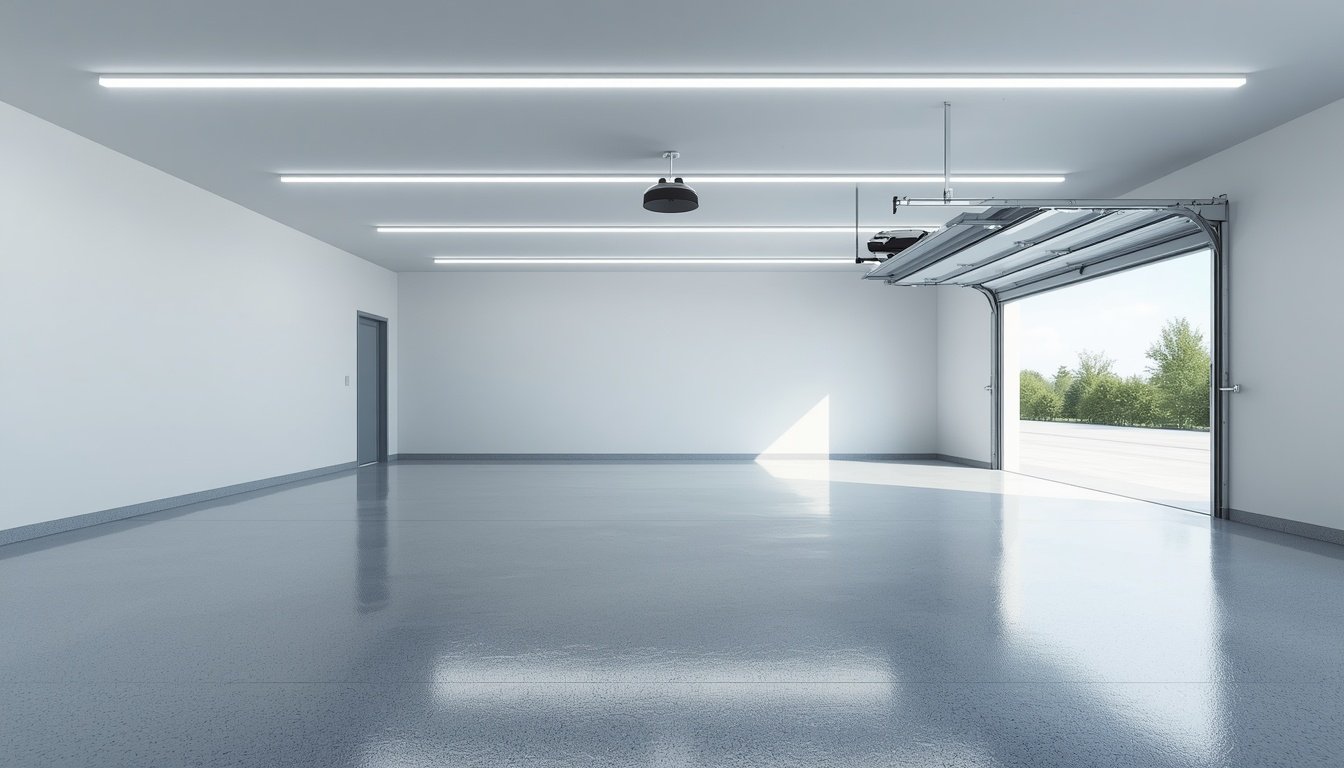
Garage lighting has a harder job than living room lighting. Bare concrete soaks up light, walls are often dark, and the space serves three or four roles at once: parking, storage, a workshop and sometimes a gym. The best garage lighting is bright, evenly spread and the right color, so that nothing important hides in shadow.
Three specs do most of the work. Lumens measure total light output, and more lumens means a brighter space. Color temperature, measured in kelvin, sets how the light feels. For garages, 5000K daylight white is the common sweet spot because it makes colors and fine details easy to see. Color rendering (CRI) tells you how true colors look, which matters if you do any painting or detail work.
The fixture type matters too. LED shop lights are slim, bright and often linkable. High bays throw a lot of light downward from high ceilings. Motion sensor lights turn on when you walk in. Fluorescent tubes still work, but LEDs use less power and last far longer. The U.S. Department of Energy explains the efficiency and lifespan benefits in its LED lighting overview.
Lighting also supports the rest of your safety setup. You cannot see a leak, a frayed cord or a rusty hinge in bad light. Pair good lighting with working fire extinguishers for the garage and you have covered two of the biggest day-to-day risks.
How to Choose the Right Garage Lights
Ask yourself three short questions before you buy.
1. How big is the space and how tall is the ceiling? Multiply length by width to get square feet. A two-car garage is usually 400 to 600 square feet. With ceilings of 8 to 10 feet, shop lights work well. Above 12 feet, high bays throw light where it is needed.
2. What do you actually do out there? If the garage is just for parking and boxes, about 30 to 50 lumens per square foot is plenty. If you wrench on cars, build furniture or paint, plan for 70 to 100 lumens per square foot over the work area. Our car ramps and jack stands guide covers the kind of under-vehicle work where strong light really pays off.
3. Can you hardwire, or do you need plug-and-play? Plug-in linkable fixtures need only an outlet. Hardwired and high bay units are cleaner, but they need basic electrical work or an electrician. Check your local code before touching wiring.
A quick rule: multiply your square footage by your lumens target, then divide by the lumens listed on each fixture. That gives you the number of fixtures you need.
The 5 Best Garage Lighting Options
These picks come from lighting types and products that reviewers and buyers consistently recommend for garages. Specs and prices change often, so confirm the current details on the product page before you order.
1. Hykolity Linkable 4ft LED Shop Light: Best Overall
Overview: The Hykolity 4 foot LED shop light is a go-to for a reason. It is a slim, bright, plug-in fixture that links to others in a chain, so you can light a whole garage from one outlet. It uses a 5000K daylight tone that suits workbenches and car work alike, and it hangs from chains or mounts flush to the ceiling.
Key Features:
- 4 foot linkable LED fixture, usually sold in multi-packs
- 5000K daylight color
- Plug-in with a pull-chain or power switch on most versions
- Chain or flush mounting hardware included
- Long rated lifespan, commonly 50,000 hours or more
Best For: One and two-car garages with standard ceilings, and anyone who wants an easy DIY upgrade.
Pros:
- ✅ Easy to install with no wiring
- ✅ Linkable, so one outlet powers several lights
- ✅ Good brightness for the price
Cons:
- ❌ Visible cords unless you route them neatly
- ❌ Link limits mean very large garages need extra circuits
Our Verdict: If you want the best garage lighting for the least hassle, start here. It lights a garage evenly, costs little and pairs well with a freshly cleaned floor. See our guide to cleaning a garage floor before you install, because light shows every stain.
2. Sunco Industrial LED Shop Light: Best Value Multi-Pack
Overview: Sunco sells its industrial-style LED shop lights in multi-packs, which makes outfitting a full garage affordable. The fixtures are rugged, bright and designed for garages, basements and workshops. Reviewers often rank this style highly for value.
Key Features:
- 4 foot industrial LED fixtures in multi-packs
- Daylight-range color options
- Linkable design on many versions
- Sturdy housing built for workshop use
- Chain or surface mounting
Best For: Budget buyers who need to light a larger garage or add a second row of lights.
Pros:
- ✅ Strong price per fixture in multi-packs
- ✅ Durable build for dusty, cold spaces
- ✅ Simple mounting
Cons:
- ❌ Color and lumen options vary by listing, so read carefully
- ❌ Light quality is solid, not premium
Our Verdict: A smart choice when you need many fixtures on a budget. Combine it with smart storage from our garage storage bins and shelving guide and you will actually find things in the new light.
3. Barrina T8 Integrated LED Tube Light: Best for Replacing Old Fluorescents
Overview: If your garage already has fluorescent strip fixtures, the Barrina T8 integrated LED tube is a simple upgrade. These are designed for easy installation and give you modern LED efficiency without a full rebuild. Many versions link end to end for continuous coverage.
Key Features:
- 4 foot T8-style integrated LED tubes
- Bright, even light with high lumen output per tube
- Linkable for continuous runs
- Multiple color temperatures available
- Low heat and low power draw
Best For: Garages with existing fluorescent fixtures and anyone who wants the cleanest lines.
Pros:
- ✅ Lower energy use than older fluorescents
- ✅ Neat, continuous-strip look
- ✅ Often quick to install
Cons:
- ❌ Some setups need the old ballast bypassed, which can require an electrician
- ❌ Not ideal for very high ceilings
Our Verdict: A tidy, efficient upgrade for garages that already have the fixtures. Check wiring needs first, then enjoy the savings. More garage upgrade ideas live in our garage cleaning tools guide.
4. HYPERLITE LED High Bay Light: Best for High Ceilings
Overview: High bay fixtures are designed for ceilings above 12 feet, workshops and large open floors. The HYPERLITE high bay line is regularly recommended for exactly this use. It throws a lot of light straight down, so a single fixture covers a wide area.
Key Features:
- High-output LED designed for tall ceilings
- Wide beam coverage from a single fixture
- Rugged, heat-dissipating housing
- Hardwired or plug-in versions depending on the model
- Commercial-grade feel for workshops
Best For: Tall ceilings, big workshops, detached garages and shop-style spaces.
Pros:
- ✅ Excellent coverage from fewer fixtures
- ✅ Handles tall ceilings that shop lights cannot
- ✅ Built to last
Cons:
- ❌ Overkill for an 8 foot ceiling
- ❌ Can cause glare if mounted too low
Our Verdict: The right tool for tall or large spaces and the wrong one for a standard garage. If your ceiling is high and you also fight winter chill, read our garage heater guide too.
5. Tanbaby Motion Sensor Garage Light: Best for Hands-Free Convenience
Overview: A motion sensor ceiling light screws into a standard socket and turns on when you walk in. Tanbaby makes a popular deformable, multi-panel version that is marketed at very high brightness for a single socket. It is not a replacement for a full lighting plan, but it is a terrific add-on.
Key Features:
- Screws into a standard bulb socket
- Built-in motion sensor for automatic on and off
- Adjustable panels to aim light
- Very high lumen output for a single fixture
- No wiring changes needed
Best For: Renters, quick-trip areas, entry doors and dark storage corners.
Pros:
- ✅ Lights up the moment you enter with your arms full
- ✅ Zero wiring and quick to set up
- ✅ Great for dark corners
Cons:
- ❌ Not a substitute for proper workbench lighting
- ❌ Sensor can time out while you work quietly
Our Verdict: Use it as a supplement. It pairs well with a strong shop light layout and with a garage security camera, since lit entry points also deter break-ins.
Comparison Table
| Product | Best For | Type | Install Difficulty | Typical Mounting |
|---|---|---|---|---|
| Hykolity 4ft Linkable | Best overall | LED shop light | Easy (plug-in) | Chain or flush |
| Sunco Industrial | Budget multi-pack | LED shop light | Easy | Chain or surface |
| Barrina T8 Integrated | Replacing fluorescents | LED tube | Moderate | Existing fixture |
| HYPERLITE High Bay | Tall ceilings | LED high bay | Moderate to advanced | Hanging or hardwired |
| Tanbaby Motion Sensor | Quick, hands-free light | Screw-in motion light | Very easy | Standard socket |
Always verify current lumens, wattage and price on the listing before buying.
Best Garage Lighting for Different Garages
Standard Attached Garage
Most attached garages have 8 to 9 foot ceilings and one or two overhead fixtures. Plug-in linkable 4 foot shop lights are the best match. Run two rows parallel to the car bays so you do not cast your own shadow over the work area. A two-car garage usually wants four to six fixtures for general light.
If you are also tackling the floor, our epoxy garage floor coating kits guide shows why bright light and a clean coating look so good together. A glossy floor reflects light and can raise the whole room’s brightness.
Workshop or Detached Garage
Shops need brighter, more directed light. Combine overhead high bays or dense shop light rows with task lights over the bench. If you cut, sand or paint, store flammables correctly and read our flammable and paint storage cabinets guide. Dust also coats fixtures, so keep an eye on air quality with our garage air purifier roundup.
Garage Gym or Multi-Use Space
If the space doubles as a gym or hobby room, aim for even, glare-free light and avoid placing bright fixtures right where you look up. A mix of shop lights and a motion sensor fixture works nicely. Keep walls clean so they bounce light, using our garage wall cleaning guide. For bikes, wall racks keep floor space clear and well lit, as shown in our garage bike storage racks article.
How to Install Garage Lighting Correctly
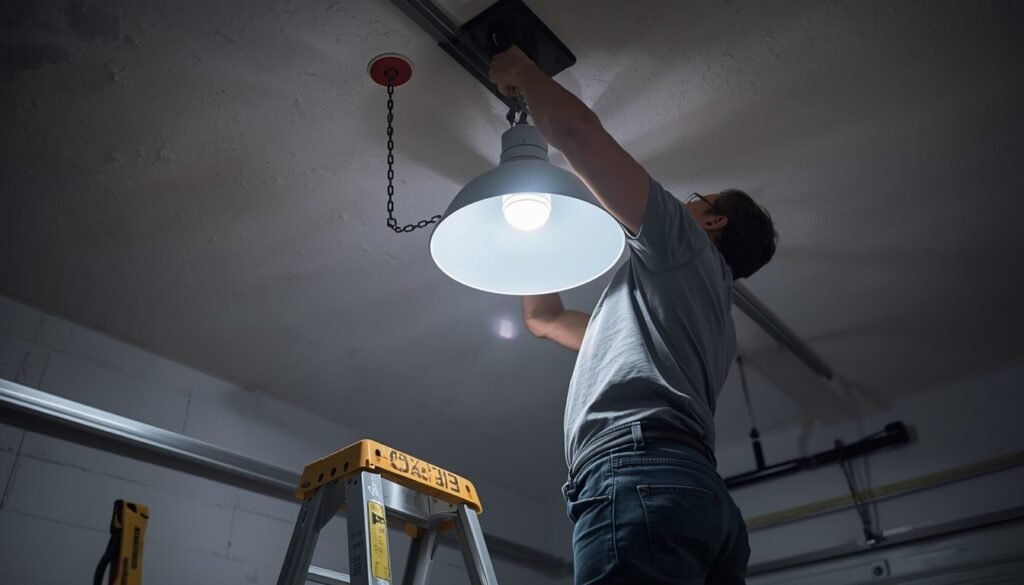
For plug-in fixtures this is a simple weekend job. Anything involving hardwiring should be done by a licensed electrician, and you should always follow local electrical codes. The National Electrical Code and your local authority set the rules for garage wiring, so check them before you start.
Step 1: Plan
Measure the garage and mark where you want each fixture. Aim for even spacing and keep rows parallel to the work areas. Calculate your fixture count using the lumens formula above.
Step 2: Prepare
Clear the ceiling area and move the car out. Make sure the circuit can handle the total wattage. LEDs draw little power, but check the manufacturer’s link limits so you do not overload a chain.
Step 3: Mount
Install the chains or mounting clips into ceiling joists with proper anchors. Hang or fix each fixture, and keep cords tidy with clips. Never run cords across walkways.
Step 4: Connect and Test
Link the fixtures, plug in and flip the switch. Check for flicker, dark spots and glare. Adjust height or angle if needed. Turn the power off at the breaker before any wiring work.
Step 5: Finish
Add a motion sensor light at the entry door, and consider a smart plug or wall switch for easy control. Clean the fixture covers a few times a year so dust does not dim the output.
Common Mistakes
Buying too few lumens. The most common error is trusting a single bulb or one fixture to light a whole garage. Size the setup by square footage, not by guesswork. If your garage also gets damp, see our garage dehumidifier guide, since moisture can shorten fixture life.
Ignoring ventilation and heat. Fixtures in a closed, stuffy garage run hotter and age faster. Good airflow protects both your lights and your lungs. Our garage ventilation guide explains how.
Skipping task lighting. Even a bright garage can leave the workbench shadowed. Add a dedicated bench light, and keep a well-stocked first aid kit nearby for the day a shadowed blade slips.
Expert Tips
Light the walls, not just the floor. Pale walls and a light-colored floor bounce light back into the room and can make a garage feel noticeably brighter without adding fixtures.
Layer your light. Use general overhead light, task light over the bench and motion light at the doors. A layered setup beats one large fixture every time.
Put lights on separate switches. Control the workshop side and the parking side independently, so you only light what you use. It saves energy and keeps the car side from glaring when you are working.
Final Verdict
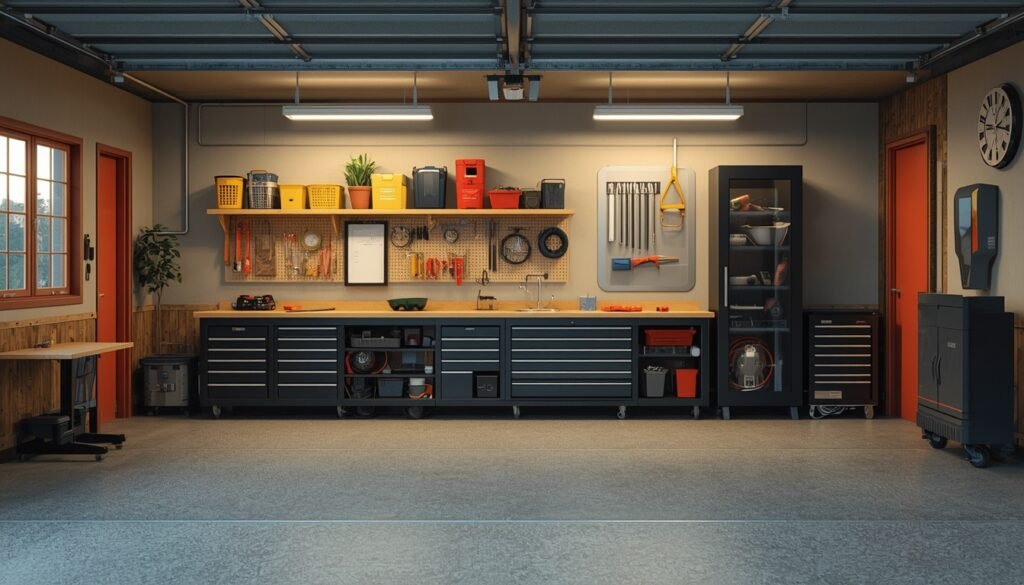
For most homeowners the best garage lighting is a set of linkable 4 foot LED shop lights at 5000K. They are bright, cheap and easy to install.
- Best Overall: Hykolity Linkable 4ft LED Shop Light
- Best Budget Multi-Pack: Sunco Industrial LED Shop Light
- Best for Replacing Fluorescents: Barrina T8 Integrated LED Tube
- Best for High Ceilings: HYPERLITE LED High Bay
- Best for Convenience: Tanbaby Motion Sensor Light
Once the lights are up, take the next step and run through our garage deep cleaning checklist, harden the space with our garage door security guide, and review your garage fire safety plan.
Frequently Asked Questions
How many lumens do I need for a garage?
For general parking and storage, about 30 to 50 lumens per square foot is enough. For a workshop or car work, aim for 70 to 100 lumens per square foot. A 400 square foot garage used for projects needs roughly 28,000 to 40,000 lumens in total.
What color temperature is best for garage lights?
5000K daylight white is the most popular choice because it shows details and colors clearly. Some people prefer 4000K for a slightly warmer, less harsh feel. Avoid very warm 2700K bulbs in work areas, since they make fine detail harder to see.
How many LED shop lights does a two-car garage need?
Most two-car garages do well with four to six 4 foot fixtures for general light, depending on lumens per fixture. Add one or two over the workbench. Use the formula of square feet times lumens target divided by lumens per light.
Are LED shop lights better than fluorescent?
Yes, for most garages. LEDs use less energy, turn on instantly in the cold and last much longer. Fluorescents can flicker or struggle in freezing temperatures, which is a real issue in unheated garages.
Do LED lights work in a cold garage?
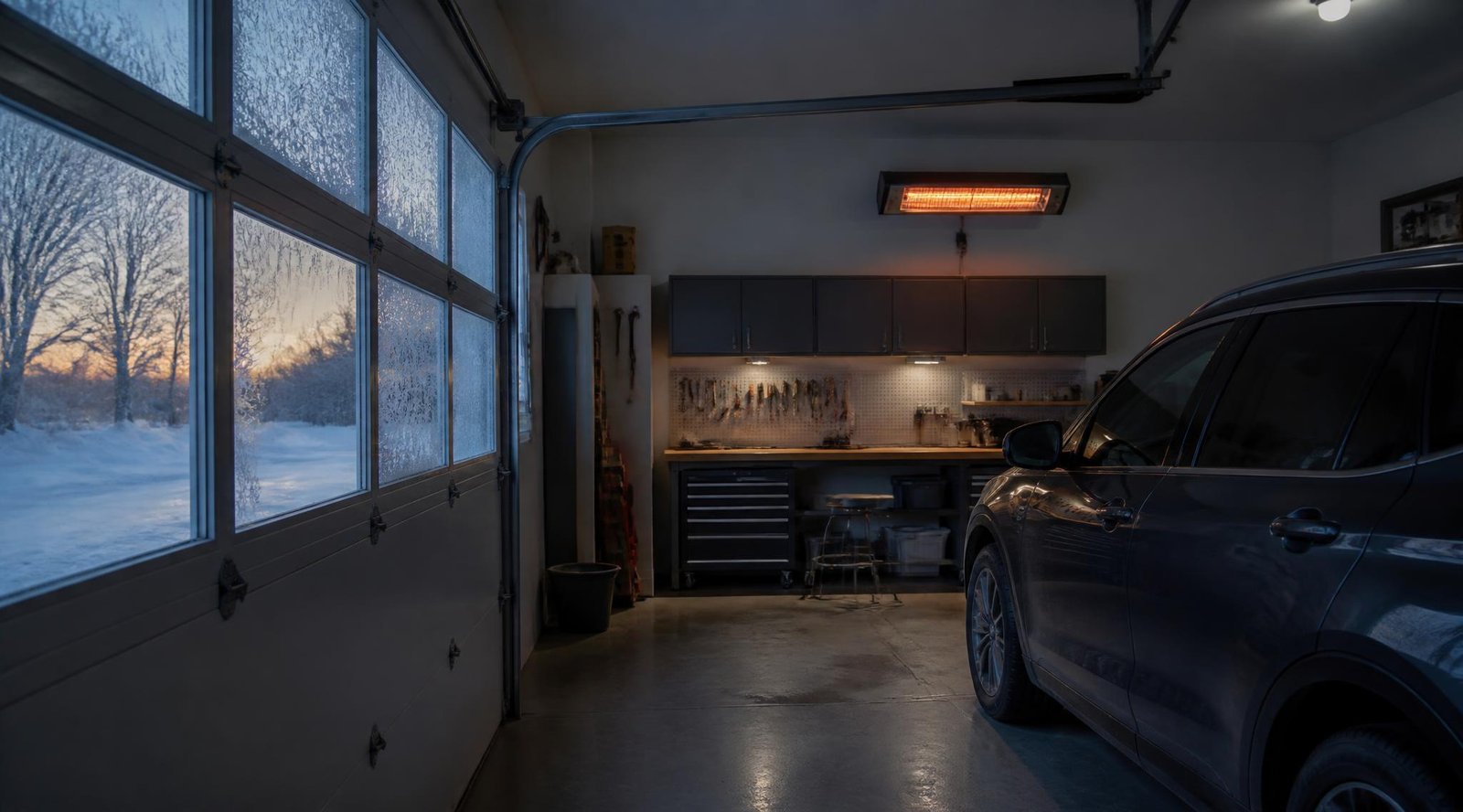
Most LEDs work well in cold weather and often perform better than fluorescents. Check the fixture’s rated operating temperature range for extreme climates. If your garage gets very cold, see our garage heater guide for ideas.
What is the difference between a shop light and a high bay?
Shop lights are long, slim fixtures suited to normal ceilings. High bays are compact, high-output fixtures designed for ceilings above about 12 feet. Using a high bay on a low ceiling can cause glare and hot spots.
Can I install garage lights myself?
Plug-in linkable fixtures and screw-in lights are DIY-friendly. Hardwiring or changing circuits should be handled by a licensed electrician and must follow local code. When in doubt, hire a pro.
Should garage lights be on motion sensors?
Motion sensors are great at entry doors and storage corners, where you walk in with full hands. For the main work area, use a normal switch so the lights do not shut off while you are standing still working.
How long do garage LED lights last?
Quality LED fixtures are commonly rated for 50,000 hours or more. At a few hours of use per day, that can mean a decade or longer. Keep fixtures clean and dry to get the full life.
Author: Danial Marquez
Last Updated: November 2026