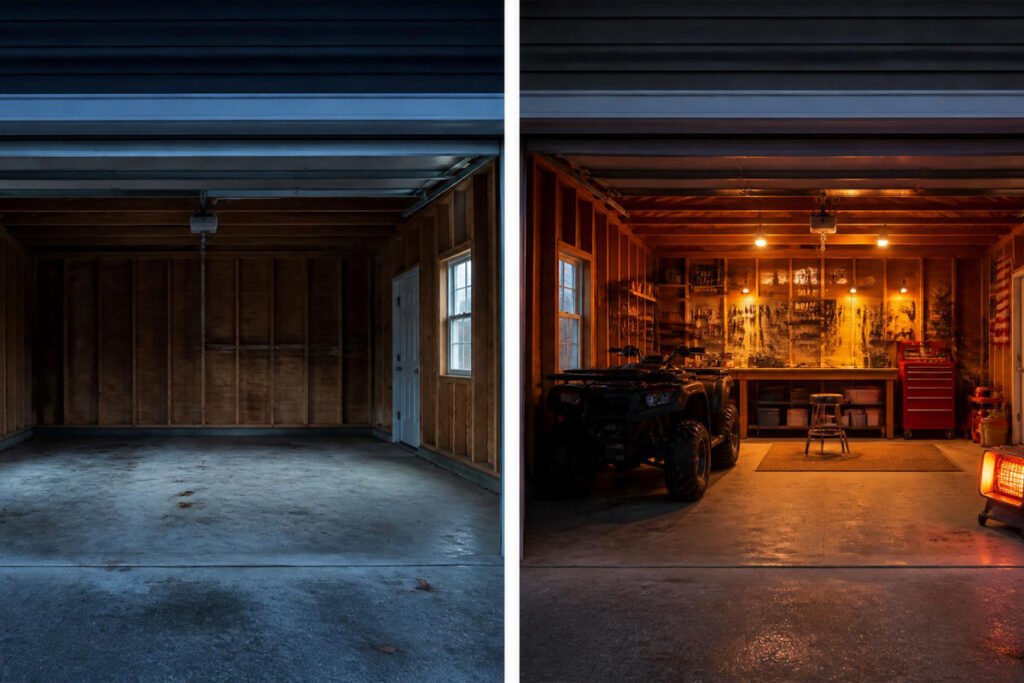
A garage in winter has a way of turning even simple tasks into an endurance test — fingers going numb during an oil change, paint that won’t cure properly, tools too cold to comfortably hold. Most homeowners just wait it out until spring, when a properly sized heater could have made the space usable all winter long.
The challenge is that garage heaters aren’t one-size-fits-all the way a living room space heater might be. Fuel type, BTU output, and mounting style all need to match your garage’s size, insulation level, and how you actually plan to use the space. This guide breaks down the best garage heaters available right now and how to size one correctly. If your garage is losing heat as fast as you can produce it, our guide on insulating a garage is worth addressing before or alongside a heater purchase.
Quick Answer
The best garage heater depends on your garage size, insulation, and fuel access. For most single-car garages with reasonable insulation, a 1,500–5,000 watt electric heater is sufficient and simplest to install. For larger, less insulated garages or workshop spaces, a hardwired 240V electric or natural gas unit heater delivers far more consistent output. For garages without easy electrical access, a propane forced-air heater offers strong portable heat, though it requires careful ventilation. Whatever you choose, never use a fuel-burning heater in an enclosed garage without a working carbon monoxide detector.
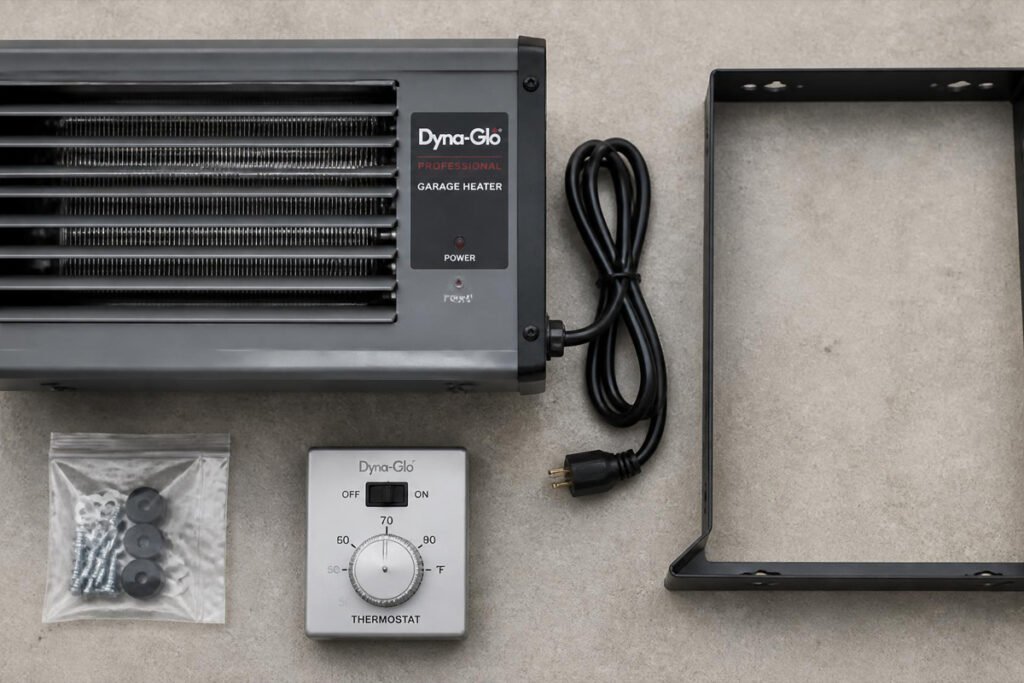
Table of Contents
- Electric vs. Gas vs. Propane: What Actually Matters
- How to Size and Choose the Right Heater
- Best Garage Heaters Available
- Comparison Table
- Best Heaters for Different Garage Setups
- How to Install and Use a Garage Heater Safely
- Common Mistakes
- Expert Tips
- Final Thoughts
- Frequently Asked Questions
Electric vs. Gas vs. Propane: What Actually Matters {#what-you-need}
Electric heaters are the simplest to install and safest to run in an enclosed space, since they produce no combustion byproducts, but they cost more per unit of heat over time and often require a dedicated 240V circuit for higher-output models. Natural gas heaters are efficient and inexpensive to run long-term but require professional venting and a gas line connection. Propane heaters offer strong, portable heat without needing a gas line, but produce combustion byproducts that demand serious ventilation and monitoring in an enclosed garage.
Whichever fuel type you choose, if your garage doubles as an active workshop, good airflow matters just as much for heater safety as it does for dust and fumes — see our garage ventilation guide for the airflow side of this equation.
How to Size and Choose the Right Heater {#how-to-choose}
Before buying, ask three questions:
- How well insulated is my garage? A well-insulated garage needs meaningfully less heating capacity than an uninsulated one of the same size — check our garage insulation guide if you haven’t already addressed this.
- How large is the space I need to heat? A rough rule of thumb is 10 watts per square foot for electric heaters, or roughly 40 BTU per square foot for gas heaters, adjusted upward for poor insulation or high ceilings.
- Do I need whole-garage heat or just spot heating? A small portable unit near a workbench solves a very different problem than heating an entire two-car garage evenly.
For general information on safe heater use and fire prevention, the National Fire Protection Association’s space heater safety guidance is a solid, non-commercial reference worth reviewing before buying or installing any heater.
Best Garage Heaters Available {#best-tools}
1. Portable Electric Space Heater (1,500W)
Overview: The simplest and most affordable option, a standard 1,500-watt portable electric heater plugs into a regular outlet and delivers focused heat for a small area or workbench, without any installation required.
Key Features:
- Plugs into a standard 120V outlet
- 1,500-watt output, suitable for small or spot heating
- Portable, no permanent installation
- Common safety features include tip-over and overheat shutoff
Best For: Small garages, spot heating near a workbench, occasional use
Pros: ✅ No installation or electrical work required ✅ Fully portable, easy to move or store ✅ Lowest upfront cost on this list Cons: ❌ Limited output for larger or uninsulated garages ❌ Not efficient for heating an entire two-car space
Our Verdict: A practical starting point for occasional use or a small dedicated workspace — pair it with strong ventilation habits from our garage ventilation guide if you’re also running any fuel-burning equipment nearby.
2. Hardwired 240V Electric Garage Heater (3,000–5,000W)
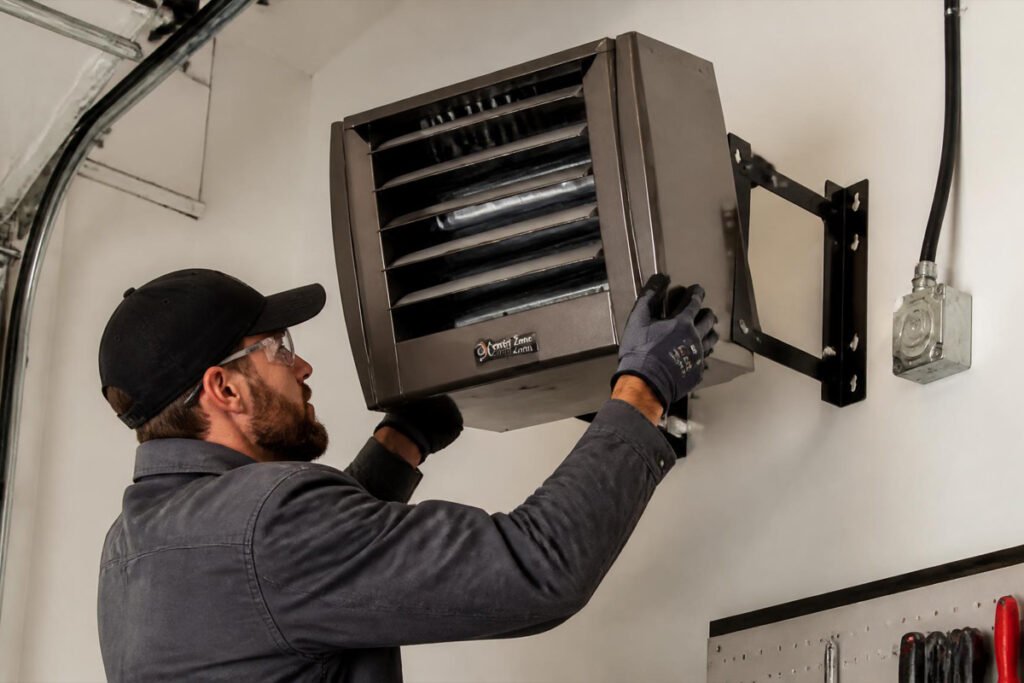
Overview: For meaningfully heating a full single or double garage, a hardwired 240V unit delivers far more consistent output than a plug-in space heater, typically mounted to the wall or ceiling to stay out of the way.
Key Features:
- 3,000–5,000 watt output range
- Requires a dedicated 240V circuit, professionally installed
- Ceiling or wall-mount options to preserve floor space
- Adjustable thermostat and multiple heat settings on most models
Best For: Single or double garages needing consistent, whole-space heat
Pros: ✅ Consistent output for a full garage, not just spot heating ✅ Ceiling mounting keeps it out of the way entirely ✅ No combustion byproducts to manage Cons: ❌ Requires professional electrical installation ❌ Higher electricity cost than gas for the same heat output
Our Verdict: The best overall choice for most homeowners wanting genuine whole-garage heat without dealing with fuel storage or venting — check your panel’s spare capacity using our EV charger installation guide as a reference, since both draw significant dedicated circuit capacity.
3. Propane Forced-Air Heater
Overview: Propane heaters deliver strong, fast heat without needing a gas line or dedicated electrical circuit, running instead on a standard propane tank. They’re popular for garages without easy access to a 240V circuit.
Key Features:
- Runs on standard propane tanks, no gas line required
- High BTU output relative to size and cost
- Portable, no permanent installation needed
- Some models include low-oxygen shutoff sensors
Best For: Garages without 240V access, temporary or occasional heating needs
Pros: ✅ No electrical or gas line installation required ✅ High heat output relative to unit cost ✅ Fully portable between spaces Cons: ❌ Produces combustion byproducts requiring real ventilation ❌ Never safe to use in a fully closed, unventilated garage
Our Verdict: Only use this type with a working carbon monoxide detector and active ventilation — see our best CO detectors guide and carbon monoxide safety guide before running any propane heater indoors.
4. Infrared Radiant Heater
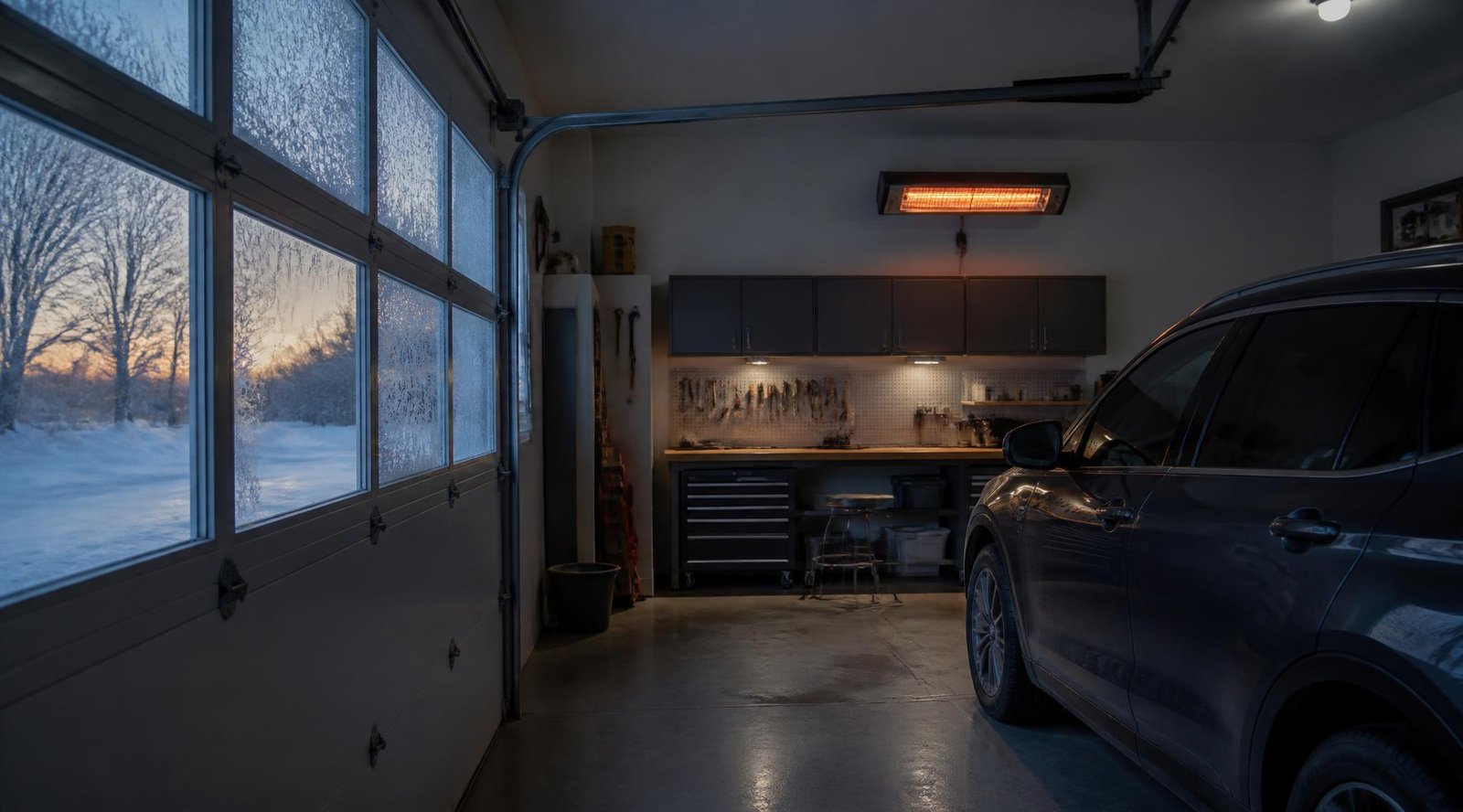
Overview: Unlike heaters that warm the air, infrared radiant heaters warm objects and people directly, making them especially effective in drafty garages where heated air escapes quickly through gaps and an open door.
Key Features:
- Heats objects and people directly rather than air
- Effective even in drafty or poorly sealed spaces
- Available in both electric and propane fuel types
- Near-instant warmth compared to air-based heating
Best For: Drafty garages, workbench spot heating, garages with frequent door opening
Pros: ✅ Effective even with imperfect insulation or sealing ✅ Near-instant heat compared to air-based systems ✅ Available in multiple fuel and mounting options Cons: ❌ Heats objects in its direct path rather than the whole room evenly ❌ Less effective for whole-garage ambient warmth
Our Verdict: A smart pick if you’ve noticed drafts from an aging garage door seal — see our guide on garage door weather seals to address the root cause alongside a radiant heater’s targeted warmth.
5. Natural Gas Unit Heater (Hardwired, Vented)
Overview: For larger workshop garages or those used heavily year-round, a natural gas unit heater offers the lowest long-term operating cost of any option here, though it requires a gas line connection and professional venting during installation.
Key Features:
- Runs on a connected natural gas line, no tank refills
- Ceiling-mounted, out of the way of floor and wall space
- Lowest per-BTU operating cost of the options covered here
- Requires professional venting and gas line installation
Best For: Large or heavily used workshop garages, long-term whole-space heating
Pros: ✅ Lowest long-term operating cost ✅ No fuel storage or tank refills needed ✅ Strong, consistent output for large spaces Cons: ❌ Highest upfront installation cost, requiring both gas and venting work ❌ Not a realistic option without an existing gas line nearby
Our Verdict: Worth the investment for a genuinely year-round workshop garage — pair the installation with a proper CO detector setup regardless of how well the unit is vented.
Comparison Table {#comparison-table}
| Heater Type | Best For | Installation | Approx. Price Range | Ventilation Needed |
|---|---|---|---|---|
| Portable Electric (1,500W) | Spot heating, small garages | None | $30–$80 | No |
| Hardwired 240V Electric (3,000–5,000W) | Whole single/double garage | Professional electrical | $150–$400 | No |
| Propane Forced-Air | No 240V access, temporary use | None | $80–$200 | Yes, essential |
| Infrared Radiant | Drafty garages, spot warmth | Varies by model | $60–$250 | Depends on fuel type |
| Natural Gas Unit Heater | Large, year-round workshops | Professional gas + venting | $400–$900+ | Yes, professionally vented |
Best Heaters for Different Garage Setups {#different-setups}
Small or Occasionally Used Garages
A portable electric space heater covers most needs here without any installation cost or complexity.
Full Single or Double Garages Used Regularly
A hardwired 240V electric heater delivers the most consistent, whole-space heat without fuel storage or venting concerns.
Uninsulated or Drafty Garages
Infrared radiant heating performs better here than air-based heaters, since it warms people and objects directly rather than air that quickly escapes — though addressing the draft itself with proper weather seals and insulation still delivers the best long-term result.
How to Install and Use a Garage Heater Safely {#how-to-install}
Step 1: Confirm Your Fuel and Electrical Access
Check whether your garage has spare 240V circuit capacity, a natural gas line, or neither, before choosing a heater type.
Step 2: Choose a Safe, Unobstructed Mounting Location
Keep the heater well clear of flammable materials, stored chemicals, and high-traffic areas.
Step 3: Install a Carbon Monoxide Detector First
If you’re using any fuel-burning heater, install and test a CO detector before the heater’s first use, not after.
Step 4: Have Electrical or Gas Work Done Professionally
Hardwired electric and gas unit heaters both require licensed installation — this isn’t a step to shortcut for safety and code reasons.
Step 5: Test and Set the Thermostat
Run the heater through a full cycle and set the thermostat to a level that avoids constant cycling, which shortens the unit’s lifespan.
Common Mistakes {#common-mistakes}
Using an unvented propane or kerosene heater with the garage door fully closed. This is one of the most serious safety mistakes possible in a garage — always ensure real airflow and a working CO detector with any fuel-burning heater.
Undersizing the heater for the space. An underpowered heater runs constantly without ever reaching a comfortable temperature, wasting energy and wearing out faster — size up rather than guessing low.
Skipping insulation and weatherstripping before buying a bigger heater. A drafty, uninsulated garage will outpace almost any heater’s output — see our insulation guide and weather seal guide before assuming you need more heating power.
Expert Tips {#expert-tips}
Address insulation and sealing before upgrading heater size. A well-sealed garage often needs a smaller, cheaper heater than an uninsulated one twice the price would require in a leaky space.
Keep flammable items well clear of any heater, electric or fuel-burning. Stored paint, solvents, and paper products should stay several feet away from any heat source at minimum.
Pair any fuel-burning heater with active ventilation, not passive hope. A cracked window or door isn’t a substitute for verified airflow — see our ventilation guide for what actually qualifies as adequate.
Final Thoughts {#final-thoughts}
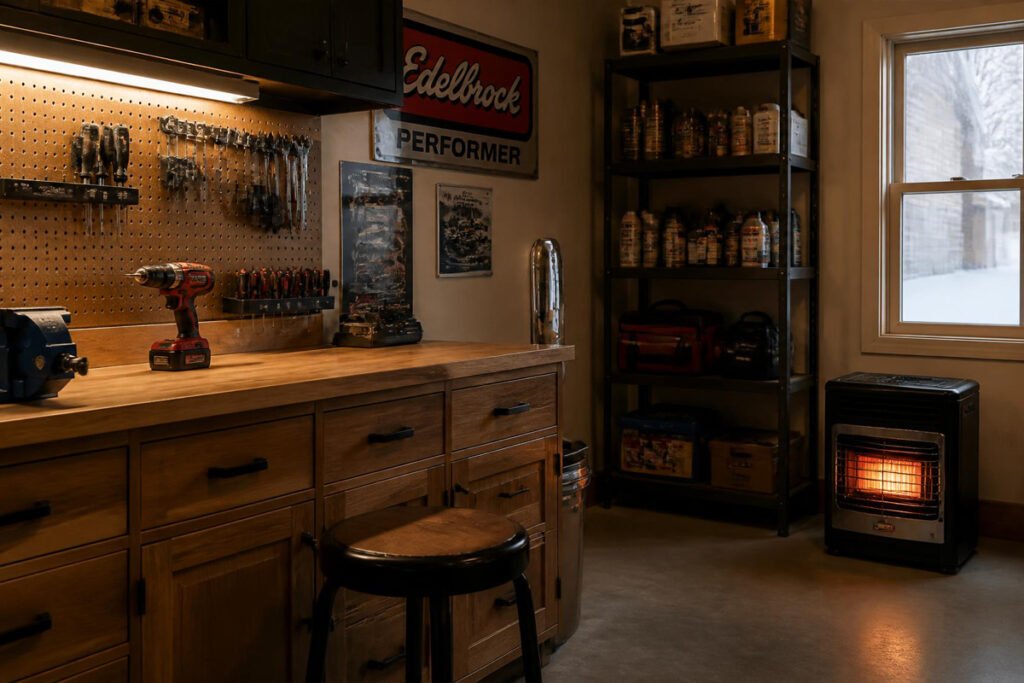
Best Overall: A hardwired 240V electric heater for most single or double garages needing consistent, whole-space warmth. Best Budget: A portable 1,500W electric heater for small garages or spot heating. Best for Large Workshops: A natural gas unit heater, for the lowest long-term operating cost in a heavily used space.
Whichever heater you choose, safety comes first — pair it with our CO detector buying guide and garage safety guide before your first cold-weather use.
Frequently Asked Questions {#faq}
What size heater do I need for my garage? A rough starting point is 10 watts per square foot for electric heaters or 40 BTU per square foot for gas heaters, adjusted upward for poor insulation, high ceilings, or extreme cold climates.
Is it safe to use a propane heater in my garage? Only with genuine ventilation and a working carbon monoxide detector — never run a propane or other fuel-burning heater in a fully sealed, closed garage.
Electric vs. gas heaters — which is cheaper to run? Natural gas typically costs less per unit of heat over time, but electric heaters have a lower upfront and installation cost, so the cheaper overall option depends on how much you’ll actually use it.
Do I need a dedicated circuit for a garage heater? Higher-output hardwired heaters (3,000W and above) typically need a dedicated 240V circuit, while smaller portable units can run on a standard household outlet.
Can I heat my garage well enough to work comfortably in winter? Yes, with a properly sized heater matched to your garage’s insulation level — an uninsulated garage will need meaningfully more heating capacity than a sealed, insulated one of the same size.
How close can I place flammable items to a garage heater? Manufacturer guidance varies, but a minimum of 3 feet of clearance from any heater is a reasonable general rule, more for higher-output units.
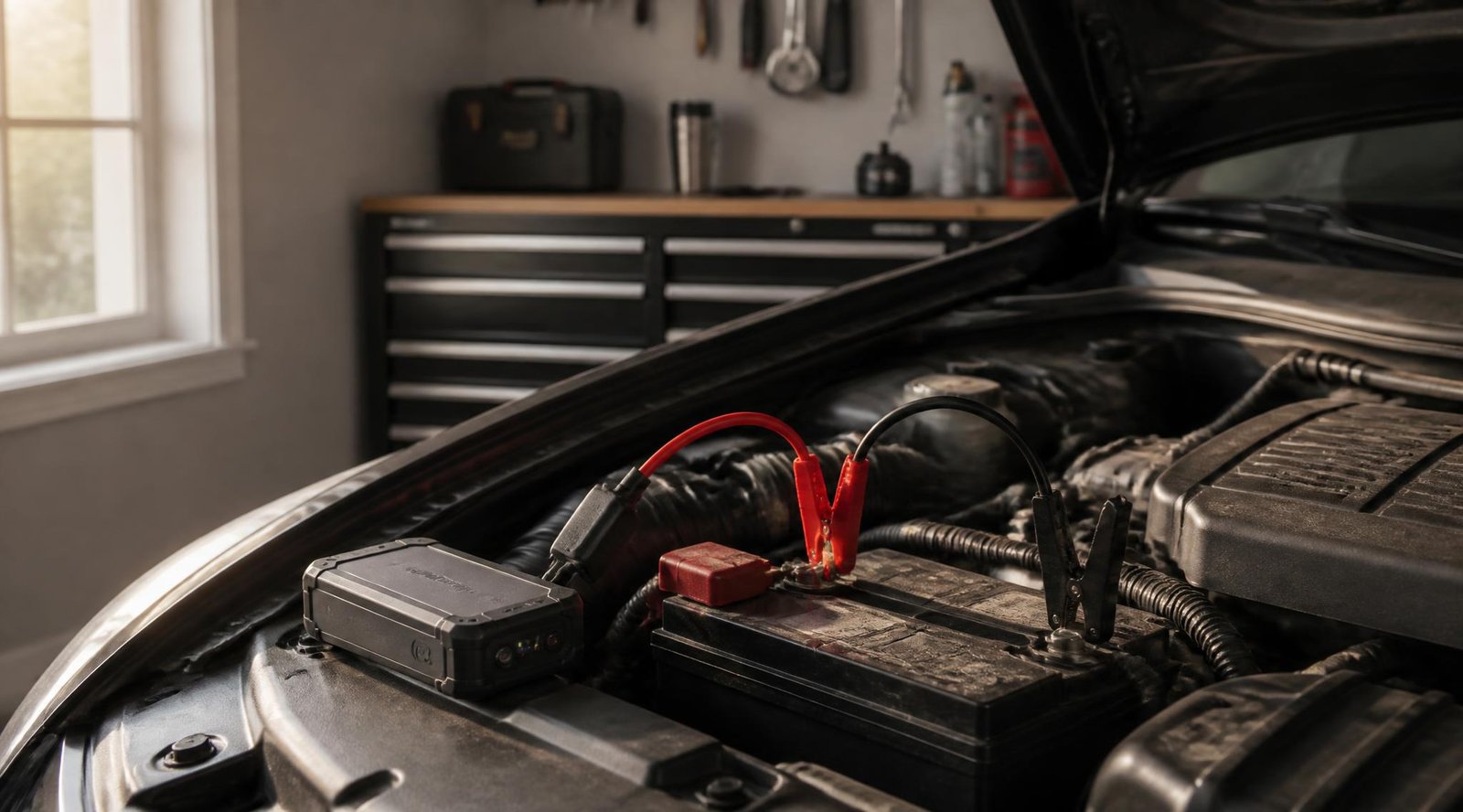
Will a garage heater help protect my car’s battery or fluids in winter? A consistently heated garage does help slow cold-weather battery drain and fluid thickening, though it’s a secondary benefit rather than the primary reason most people install one.
Do infrared heaters actually work well in a garage? Yes, especially in drafty or poorly insulated garages, since they warm objects and people directly rather than relying on air temperature that escapes quickly through gaps.
Should I insulate my garage before buying a heater? If your garage is currently uninsulated, addressing that first often reduces the heater size and running cost you’ll actually need — see our insulation guide before making a heater purchase.
Author: Danial Marquez Last Updated: August 2026