
An uninsulated garage is one of the most overlooked energy drains in any home. In summer, it becomes an oven that radiates heat into your living space. In winter, it acts as a cold box that makes your heating system work overtime. Whether you use your garage for parking, working, storage, or any combination of the three, proper insulation transforms it from a liability into a genuinely comfortable and efficient space.
This complete guide on how to insulate a garage covers everything you need: the best insulation types for every part of the garage, step-by-step installation instructions, cost estimates, and the mistakes that most homeowners make the first time around.
💡 A properly insulated garage can reduce your home’s overall energy costs by 10–20%, depending on your climate and existing insulation levels.
Table of Contents
- Why Insulating Your Garage Matters
- Understanding R-Values: What You Need to Know
- Types of Garage Insulation — Compared
- How to Insulate Garage Walls (Step-by-Step)
- How to Insulate a Garage Ceiling
- How to Insulate a Garage Door
- How to Insulate a Garage Floor
- Garage Insulation Cost Breakdown
- Common Garage Insulation Mistakes to Avoid
- Frequently Asked Questions
1. Why Insulating Your Garage Matters
Most homeowners insulate their walls, attics, and crawlspaces but completely ignore the garage — even when it shares walls with the main living space. This is a significant oversight. An attached garage without insulation acts as a thermal bridge, allowing cold or hot air to pass directly into your home through shared walls.
Key Benefits of a Well-Insulated Garage:
- Lower energy bills — reduces heat loss in winter and heat gain in summer
- More comfortable working or storage environment year-round
- Protection for stored items — tools, vehicles, and equipment last longer in stable temperatures
- Reduced noise transmission from inside and outside the garage
- Higher home resale value — buyers notice functional, finished garage spaces
- Prevents pipes from freezing in cold climates
🔗 Related: How to Epoxy Coat Your Garage Floor: Complete DIY Guide (2026)
🔗 Related: Smart Garage Technology in 2026: The Complete Guide
2. Understanding R-Values: What You Need to Know
Before choosing any insulation product, you need to understand R-values. The R-value is the measure of thermal resistance — how well a material resists the flow of heat. The higher the R-value, the better the insulation performance.
R-value is cumulative: Layers of insulation add their R-values together. Two R-13 layers give you R-26.
Recommended R-Values by Climate and Garage Area:
- Mild climates (southern states): Garage walls R-11 to R-15, ceiling R-19 to R-30
- Moderate climates (midwest, mid-atlantic): Walls R-13 to R-21, ceiling R-30 to R-38
- Cold climates (northern states, Canada): Walls R-19 to R-21, ceiling R-38 to R-60
- Garage doors: R-8 to R-18 for most climates
💡 Check the U.S. Department of Energy’s climate zone map to find the recommended R-value for your specific area before purchasing insulation.
3. Types of Garage Insulation — Full Comparison
| Type | R-Value | Best For | Cost (per sq ft) | DIY Friendly? |
| Fiberglass Batts | R-11 to R-38 | Walls & ceiling | $0.30–$1.00 | ✅ Yes |
| Rigid Foam Board | R-3.8 to R-6.5 | Garage door & walls | $0.25–$1.00 | ✅ Yes |
| Spray Foam | R-3.7 to R-6.5 | Air sealing & gaps | $1.00–$3.00 | ⚠️ Partial |
| Blown-In | R-2.2 to R-4.0 | Attic/ceiling | $0.50–$2.00 | ⚠️ Partial |
| Reflective/Radiant | R-3 to R-17 | Hot climates | $0.10–$0.25 | ✅ Yes |
| Mineral Wool | R-3 to R-3.3 | Fire-resistant areas | $0.50–$1.50 | ✅ Yes |
Which Type Should You Choose?
For most DIY homeowners: Fiberglass batts for walls and ceiling, rigid foam board for the garage door and any concrete walls. This combination gives you the best balance of performance, cost, and ease of installation.
For maximum performance: Closed-cell spray foam delivers the highest R-value per inch and doubles as an air and moisture barrier, but costs significantly more.
For hot climates: Add a radiant barrier under the roof deck or behind the garage door to reflect radiant heat before it enters the space.
🔗 Related: The Complete Garage Door Weatherproofing Guide (2026)
4. How to Insulate Garage Walls — Step-by-Step
Garage walls are typically the most straightforward area to insulate, especially if the wall studs are exposed. This is a realistic weekend DIY project for most homeowners.
Tools and Materials You’ll Need:
- Fiberglass batt insulation (R-13 or R-15 for 2×4 studs; R-19 or R-21 for 2×6 studs)
- Utility knife and straightedge for cutting batts
- Staple gun and staples (if using faced insulation)
- Safety gear: N95 respirator, safety glasses, long sleeves, gloves
- Vapor barrier (plastic sheeting) — required in cold climates
- Tape measure and pencil
Step-by-Step Installation:
- Clear the wall area of any stored items and clean away dust, cobwebs, and debris
- Measure each stud bay (the space between studs) — they are typically 14.5 or 22.5 inches wide for 16 or 24-inch on-center framing
- Cut insulation batts to length using a utility knife and straightedge — compress the batt slightly and cut through it for a clean edge
- Fit the batt snugly into each stud bay — it should fit without gaps at the sides or ends. Gaps dramatically reduce effectiveness
- For faced insulation (paper or foil backing): staple the facing flanges to the face of the studs every 8–12 inches. The facing acts as a vapor retarder
- For unfaced insulation: install a separate vapor barrier (6-mil polyethylene sheeting) over the batts before adding drywall
- Cut around electrical outlets and boxes carefully — do not compress insulation behind boxes; cut to fit around them
- Once all bays are filled, cover with drywall or your preferred wall finish
⚠️ Never compress fiberglass batts to fit a thinner cavity — compression dramatically reduces R-value. If your studs are 2×4, use R-13 batts, not R-19 compressed batts.
🔗 Related: How to Clean Garage Walls Before Painting
5. How to Insulate a Garage Ceiling
The ceiling is the most critical area to insulate in a garage, especially if there is a living space or conditioned room above. Heat rises, and an uninsulated garage ceiling allows enormous amounts of energy to escape upward.
Option A: Insulating Between Ceiling Joists (Most Common)
- Access the ceiling joists from above (attic space) if possible, or work from below
- Measure joist spacing — typically 16 or 24 inches on center
- Cut fiberglass batts or rigid foam to fit between joists
- For below-joist installation: use wire supports or netting to hold batts in place before adding drywall
- For above-joist installation (attic access): lay batts perpendicular to joists for a second layer to eliminate thermal bridging through the wood
Option B: Rigid Foam Board on Exposed Ceiling
If your garage has no attic above and you want to insulate without adding drywall, rigid foam board can be glued directly to the ceiling between and over the joists using construction adhesive, then covered with a fire-rated material (foam is flammable and must be covered).
💡 For detached garages, ceiling insulation delivers the single biggest energy improvement. An uninsulated ceiling can be responsible for 50–60% of total heat loss.
🔗 Related: How to Set Up a Garage Workshop: The Complete Organization Guide (2026)
6. How to Insulate a Garage Door
The garage door is often the largest single opening in your home and one of the biggest sources of thermal loss. Even insulated garage doors benefit from additional insulation, and uninsulated steel doors are one of the easiest upgrades you can make.
Option A: Garage Door Insulation Kit (Easiest)
Garage door insulation kits are available at any home improvement store for $50–$150. They include pre-cut foam board or fiberglass panels that fit into the door panels.
- Measure the width and height of each door panel
- Cut the insulation panels to fit — most kits come with plastic retaining clips
- Snap clips into the door panel, then press the insulation panel onto the clips
- Repeat for all panels
Option B: Rigid Foam Board (Higher Performance)
- Cut rigid foam board to fit each door panel precisely
- Apply construction adhesive to the back of the foam
- Press firmly into each panel and hold until adhesive sets
- Trim any excess foam with a utility knife
⚠️ Adding heavy insulation to a garage door increases its weight. If your door starts moving unevenly or the opener struggles, the spring tension may need adjustment — contact a professional.
🔗 Related: Garage Door Safety: The Complete Homeowner’s Guide
🔗 Related: How To Replace Garage Door Bottom Seal
7. How to Insulate a Garage Floor
Garage floor insulation is often overlooked but makes a significant difference in comfort, especially in cold climates or if you plan to use the space as a workshop or gym. Cold concrete floors pull heat directly from your feet and any equipment resting on the surface.
Option A: Rigid Foam Board + Subfloor
- Clean the concrete floor thoroughly and let it dry completely
- Apply a vapor barrier (6-mil polyethylene) over the concrete
- Lay 1–2 inch rigid foam insulation panels over the vapor barrier
- Install plywood subfloor panels (3/4 inch) over the foam, securing with concrete screws
- Finish with your preferred flooring — epoxy coating, rubber mats, or interlocking tiles
Option B: Interlocking Foam Floor Tiles (Simplest)
For workshops and gyms, interlocking foam tiles provide both insulation and cushioning. They require no subfloor and can be installed in under an hour.
💡 Even a 1/2 inch foam mat under rubber flooring raises the perceived floor temperature significantly and reduces fatigue from standing.
🔗 Related: How to Convert Your Garage Into a Home Gym: Complete Step-by-Step Guide (2026)
🔗 Related: How to Pressure Wash Your Garage Floor and Driveway: Complete Guide (2026)
8. Garage Insulation Cost Breakdown
| Area | DIY Cost | Professional Cost | Time Required |
| Garage Door | $50–$200 | $200–$600 | 2–4 hours |
| Walls (unfinished) | $200–$800 | $800–$2,500 | 1–2 days |
| Ceiling | $150–$600 | $600–$2,000 | 4–8 hours |
| Floor | $100–$500 | $300–$1,200 | 4–8 hours |
| Full Garage (all) | $500–$1,500 | $2,000–$6,000 | 2–4 days |
How to Save Money on Garage Insulation:
- Do the labor yourself — DIY typically saves 50–70% compared to professional installation
- Buy insulation in bulk at warehouse stores or during sales
- Focus on the highest-impact areas first: ceiling, then walls, then door
- Check for utility company rebates — many offer cash back for insulation upgrades
- Use leftover rigid foam from other projects to insulate smaller areas like the garage door
9. Common Garage Insulation Mistakes to Avoid
Mistake 1: Leaving Air Gaps
Insulation that doesn’t make full contact with the framing cavity loses a significant portion of its rated R-value. Every gap is a thermal bridge. Fill all gaps with spray foam or cut insulation to fit precisely.
Mistake 2: Skipping the Vapor Barrier in Cold Climates
In cold climates, warm interior air carries moisture that condenses inside the wall cavity when it hits cold surfaces. Without a vapor barrier on the warm side, this causes mold and structural damage over time.
Mistake 3: Insulating Without Air Sealing First
Insulation slows heat transfer; it does not stop air movement. Before adding insulation, seal all cracks, penetrations, and gaps with caulk or spray foam. Air sealing and insulation work together — one without the other is significantly less effective.
Mistake 4: Covering Foam Without Fire Protection
Rigid foam and spray foam insulation are combustible. Building codes require that foam insulation be covered with a fire-rated material (typically 1/2-inch drywall) when installed in living or attached spaces. Skipping this is both a safety hazard and a code violation.
Mistake 5: Using the Wrong R-Value for Your Climate
Under-insulating because you used the R-value recommendation for a warmer climate than yours. Always check your specific climate zone requirements from the Department of Energy.
⚠️ Always check your local building codes before starting. Some jurisdictions require permits for garage insulation projects, especially if you are adding drywall.
10. Frequently Asked Questions (FAQ)
Is it worth insulating a garage?
Yes — for most homeowners, garage insulation provides an excellent return on investment. It reduces energy costs, protects stored items, and increases usable living space. In cold or hot climates, the payback period for DIY insulation can be as short as 1–3 years.
What is the best insulation for a garage?
For most DIY projects, fiberglass batt insulation offers the best combination of cost, availability, and performance. For the garage door specifically, rigid foam board is the easiest to work with. For maximum air sealing and performance, closed-cell spray foam is the top performer but costs significantly more.
Can I insulate my garage myself?
Yes. Fiberglass batts and rigid foam board are both straightforward DIY materials that require no special equipment beyond basic hand tools. Spray foam (especially closed-cell) is better left to professionals due to the precision required for correct mixing and application.
How long does garage insulation take?
A typical single-car garage with exposed walls and ceiling can be insulated over a weekend (8–16 hours total). A two-car garage with all areas — walls, ceiling, door, and floor — typically takes 2–4 days for a single DIY installer.
Do I need a vapor barrier in my garage?
In cold climates (where outdoor temperatures regularly drop below freezing), a vapor barrier on the warm side of the insulation is strongly recommended. In hot, humid climates, the vapor barrier should go on the exterior side. In mild climates, it may not be strictly necessary. Check your local building code.
Will insulating my garage keep it warm?
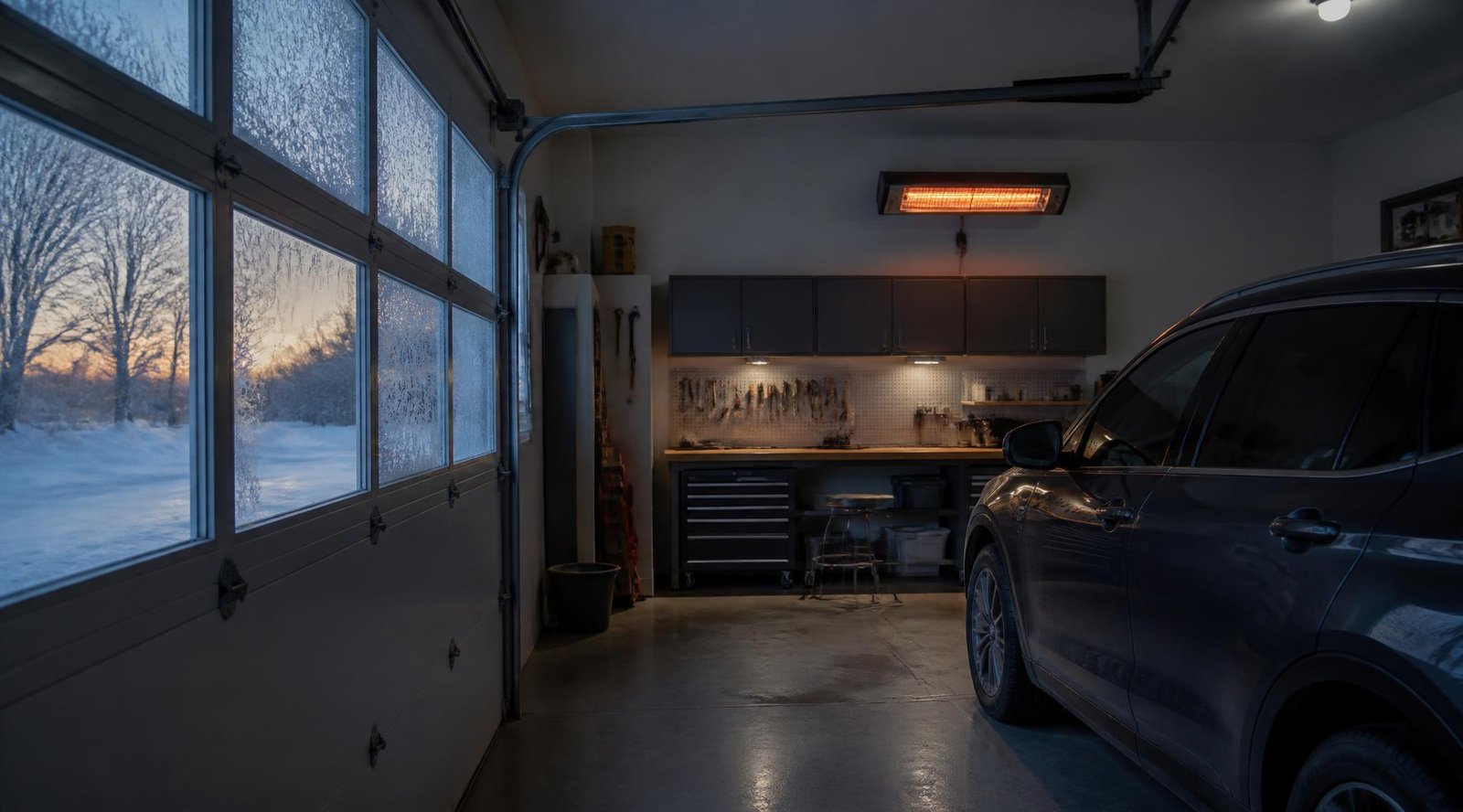
Insulation alone slows heat loss but does not generate heat. A well-insulated garage stays warmer than an uninsulated one in winter, but you will still need a heat source (electric, propane, or NG heater) to maintain comfortable working temperatures in very cold climates.
Final Thoughts
Learning how to insulate a garage is one of the most impactful DIY home improvement projects you can complete in a single weekend. The combination of lower energy bills, improved comfort, and better protection for your garage contents makes it one of the best returns on investment in home improvement.
Start with the area that will make the biggest difference for your specific situation — usually the ceiling or the garage door — and work from there. Even a partial insulation job delivers noticeable results.
More Garage Improvement Guides:
- Ultimate Garage Organization Guide: Step-by-Step 2026 → https://garagedaily.com/ultimate-garage-organization-guide-step-by-step/
- 12 Creative Garage Storage Solutions for Small Spaces → https://garagedaily.com/12-creative-garage-storage-solutions-for-small-spaces/
- Car Maintenance Checklist Every Driver Should Follow in 2026 → https://garagedaily.com/car-maintenance-checklist-2026-guide/
- How to Build Storage Shelves In Garage → https://garagedaily.com/how-to-build-storage-shelves-in-garage/
- Automatic Garage Door Maintenance Tips → https://garagedaily.com/automatic-garage-door-maintenance-tips/
Written by Danial Marquez | GarageDaily | garagedaily.com




1 thought on “How to Insulate a Garage: The Complete Step-by-Step Guide (2026)”
Pingback: Best Garage Heaters in 2026: Top 5 Picks for Every Garage Size | GarageDaily.com – Master Your Garage with Expert Tips