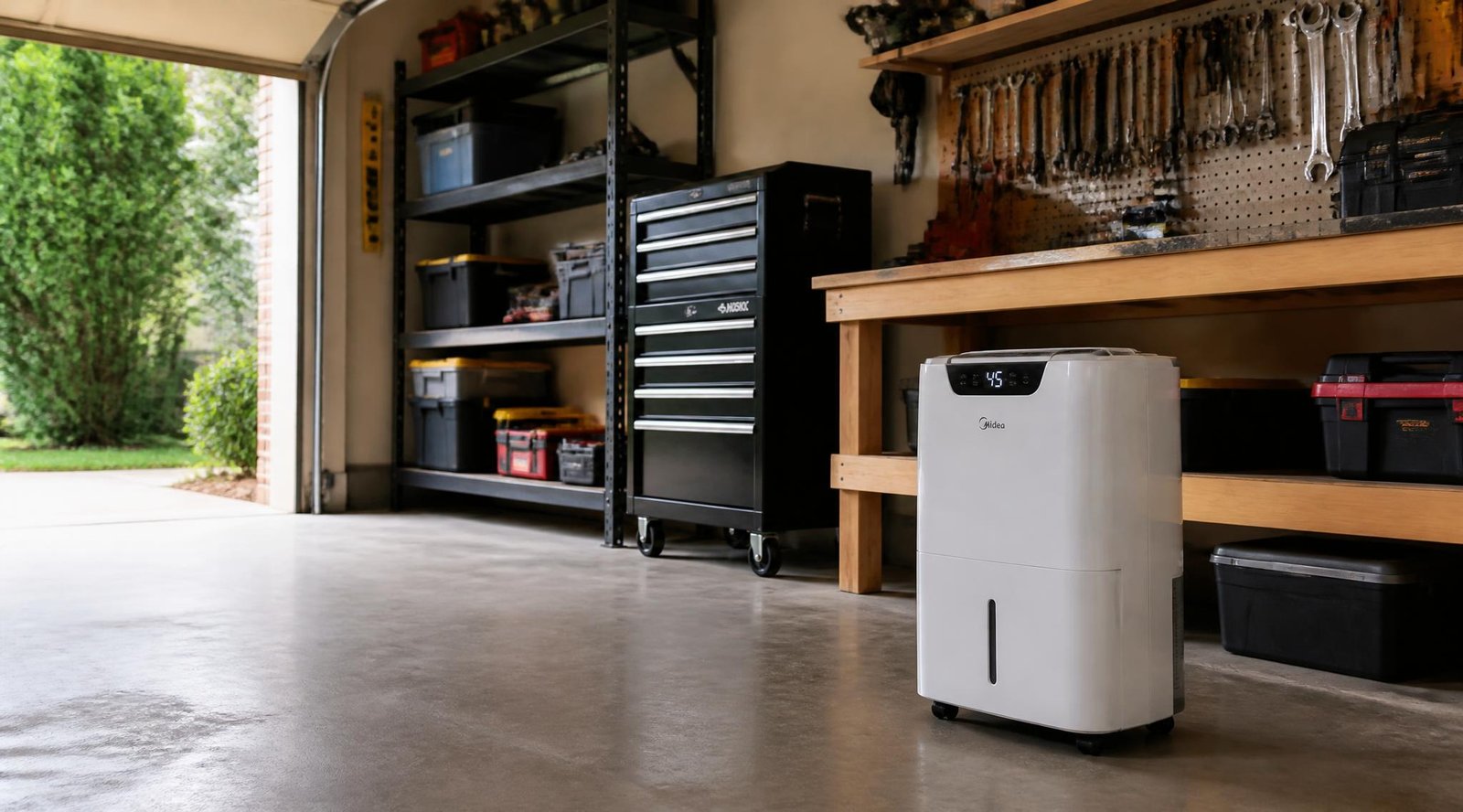
Every garage reaches the same tipping point eventually: the floor disappears under holiday decorations, camping gear, and boxes nobody’s opened since the move, and parking the car becomes an afterthought. The instinct is to buy “some shelves,” but generic shelving from a big-box store often ends up sagging under real garage weight or rusting within a season.
The fix isn’t more storage — it’s the right storage, matched to what you’re actually keeping and how often you need to reach it. This guide breaks down the best garage storage bins and shelving systems available right now, organized by what job each one solves, so you build a setup that actually holds up. For a broader organization strategy before you buy anything, our guide on 50+ garage organization ideas is worth a look first.
Quick Answer
The best garage storage system depends on what you’re storing and how heavy it gets. For bulky, occasional-use items like holiday decor, heavy-duty wire shelving or an overhead ceiling rack works best. For small parts, tools, and anything you want protected from dust and moisture, stackable plastic bins with locking lids are the safer bet. For frequently used tools, a wall-mounted pegboard or slatwall system keeps everything visible and within reach. Most well-organized garages end up using a combination of all three rather than relying on just one.
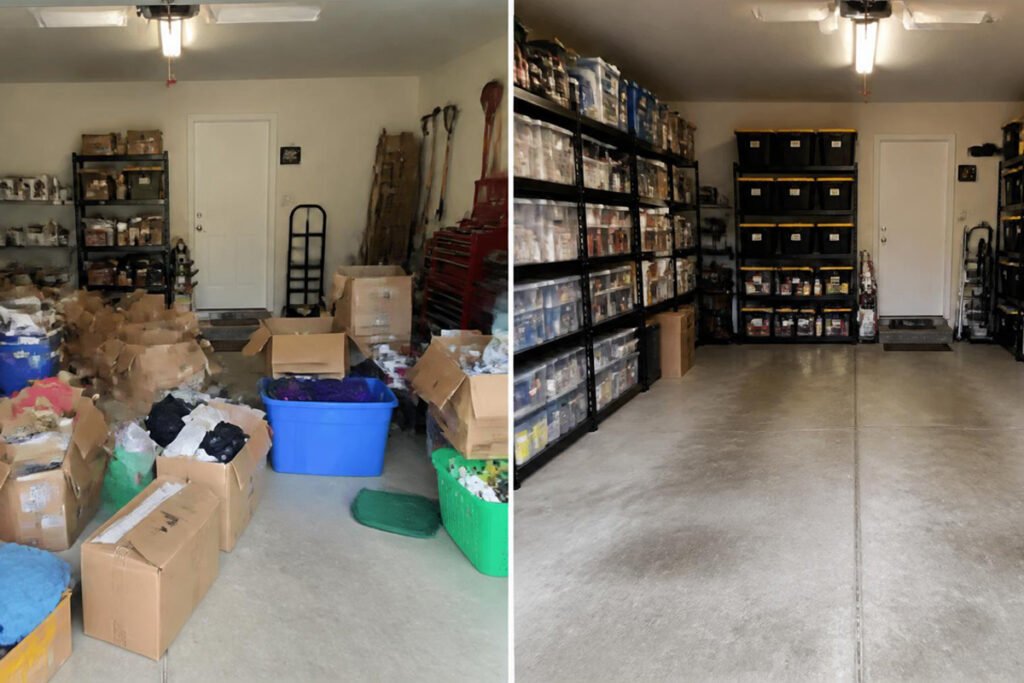
Table of Contents
- What Makes Garage Storage Different From Household Storage?
- How to Choose the Right Storage System
- Best Garage Storage Bins & Shelving Available
- Comparison Table
- Best Storage for Different Garage Zones
- How to Set Up a Garage Storage System, Step by Step
- Common Mistakes
- Expert Tips
- Final Thoughts
- FAQ
What Makes Garage Storage Different From Household Storage? {#what-you-need}
Garages swing through temperature and humidity extremes that a hall closet never sees — freezing in winter, sweltering in summer, and often damp year-round. Cardboard boxes wick moisture and fall apart, and cheap plastic totes turn brittle and crack in cold weather. That’s why dedicated garage storage bins and shelving systems matter: they’re built from materials rated for those swings, with load capacities that match what actually lives in a garage — power tools, paint cans, car parts, and full bins of seasonal decorations.
The right setup usually combines three categories: shelving (wire or steel units for bulk storage), bins and totes (stackable, often weatherproof, for anything you want protected), and wall or overhead systems (pegboard, slatwall, or ceiling racks for reclaiming floor space entirely). If floor space is your biggest constraint, our guide on building a storage loft in the garage is a natural next step once shelving alone isn’t enough.
How to Choose the Right Storage System {#how-to-choose}
Before buying anything, ask three questions:
- How much weight am I actually storing? A shelf rated for 200 lbs per level will sag or fail under a stack of paint cans and power tools — check the per-shelf rating, not just the unit total.
- How often do I need to access this item? Daily-use tools belong on open shelving or pegboard at eye level; seasonal items belong up high or in an overhead rack.
- Does my garage have humidity or pest issues? If so, sealed plastic bins beat cardboard or open shelving every time — pair your storage plan with our guide on garage mold removal if moisture has already been a problem.
For general guidance on safe storage weight limits and shelving stability, the Occupational Safety and Health Administration’s material storage guidelines are a solid, non-commercial reference, even for home garages.
[IMAGE 3 — Before/After | Alt text: “cluttered garage floor before and organized shelving system after”]
Best Garage Storage Bins & Shelving Available {#best-tools}
1. Heavy-Duty Steel Wire Shelving Unit
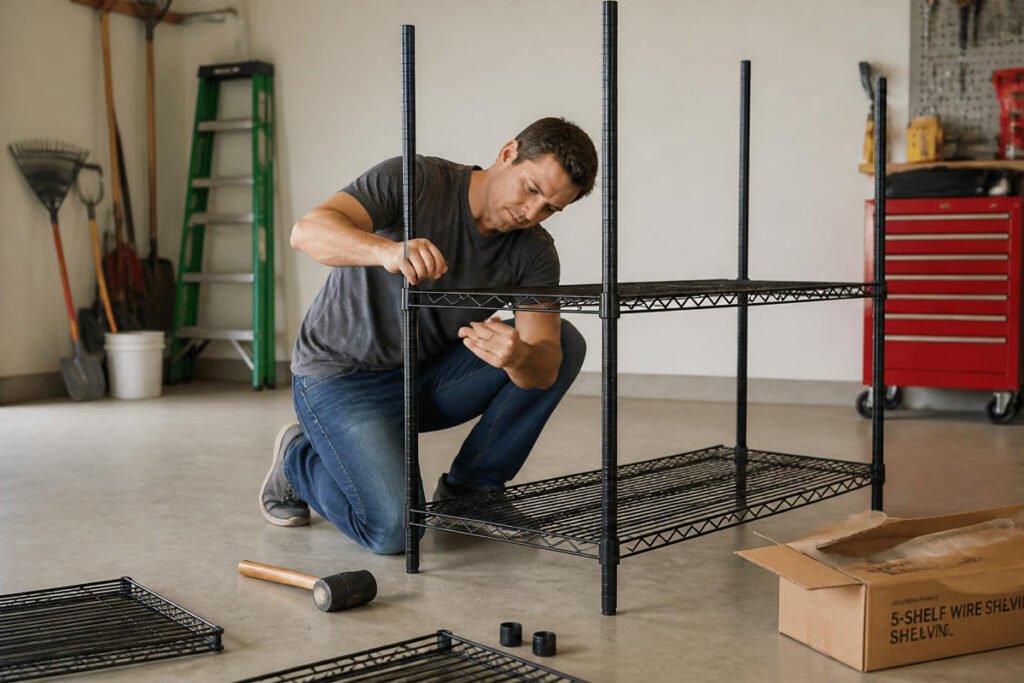
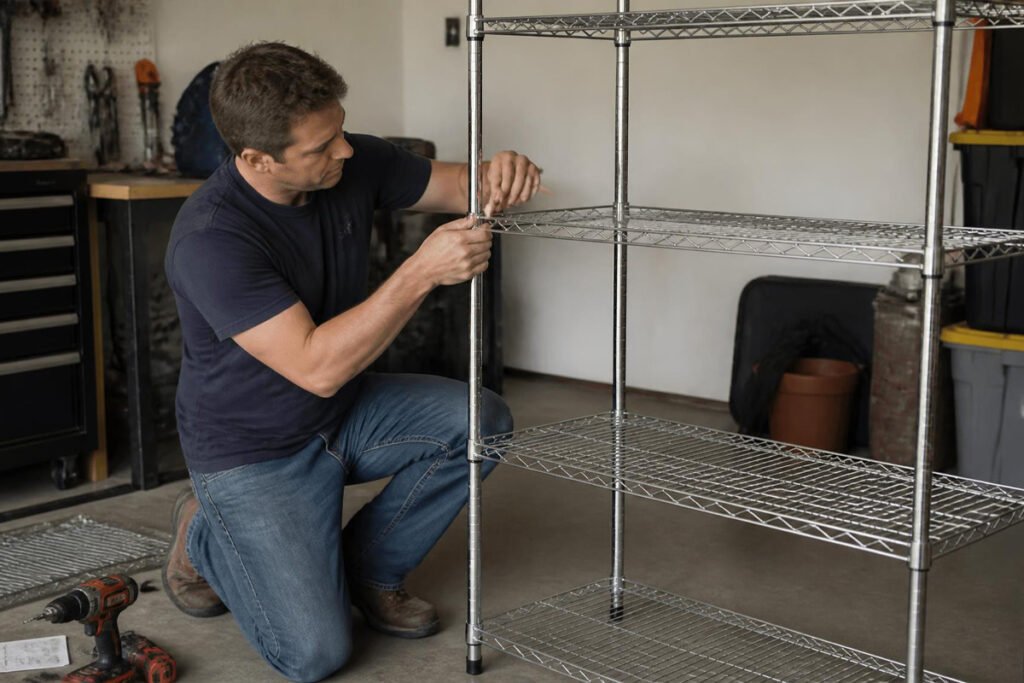
Overview: A 4-to-6-tier steel wire shelving unit is the backbone of most garage storage systems. Wire construction resists the dust buildup that solid shelving traps, and adjustable shelf heights let you customize the unit around oddly-shaped items like coolers or tool cases.
Key Features:
- 4–6 adjustable shelf levels
- 200–800 lbs capacity per shelf depending on model
- Open wire design resists dust and moisture buildup
- Often includes optional caster wheels for mobility
Best For: Bulk storage of bins, tools, paint cans, and seasonal items
Pros: ✅ Extremely high weight capacity for the price ✅ Easy to assemble without special tools ✅ Adjustable shelves adapt as storage needs change Cons: ❌ Takes up a fixed footprint of floor space ❌ Uncoated steel models can rust in humid garages
Our Verdict: This is the single highest-value item on this list — almost every organized garage starts here. Pair it with the storage tips in our garage totes storage guide to plan what goes where before you buy.
2. Stackable Weatherproof Storage Bins
Overview: Unlike household plastic totes, garage-rated storage bins use thicker, UV- and cold-resistant plastic with locking or snap-lid closures that keep out dust, moisture, and pests. Stackable, uniform sizing is what actually makes shelving efficient — mismatched box shapes waste space fast.
Key Features:
- Reinforced, cold-resistant plastic construction
- Locking or snap-fit lids
- Stackable, uniform footprint
- Often available with clear sides for quick identification
Best For: Holiday decorations, out-of-season gear, anything sensitive to moisture or pests
Pros: ✅ Protects contents from moisture and pests ✅ Stackable design maximizes shelf space ✅ Far more durable than cardboard long-term Cons: ❌ More expensive than cardboard boxes upfront ❌ Opaque bins need labeling to stay organized
Our Verdict: Swap out any remaining cardboard boxes for these first — they’re the fastest upgrade for protecting what you’re storing, especially alongside guidance in our tarp storage guide for oddly-shaped soft goods that don’t fit a bin.
3. Overhead Ceiling Storage Rack
Overview: For garages where floor space is the real constraint, a ceiling-mounted storage rack reclaims space that’s otherwise completely unused. These are ideal for items accessed only a few times a year — holiday decor, camping gear, or seasonal sports equipment.
Key Features:
- Mounts directly to ceiling joists
- Typically rated for 250–600 lbs total
- Adjustable height clearance
- Keeps floor and wall space completely clear
Best For: Seasonal, infrequently-accessed bulky items
Pros: ✅ Uses otherwise wasted overhead space ✅ Keeps the floor completely clear for parking ✅ One-time installation, no ongoing footprint Cons: ❌ Requires secure joist mounting, not just drywall ❌ Not practical for frequently-accessed items
Our Verdict: If you’re converting part of your garage into a workshop or living space, this is the tool that makes it possible — see our guides on setting up a garage workshop and converting a garage into living space for how overhead storage fits into a bigger layout change.
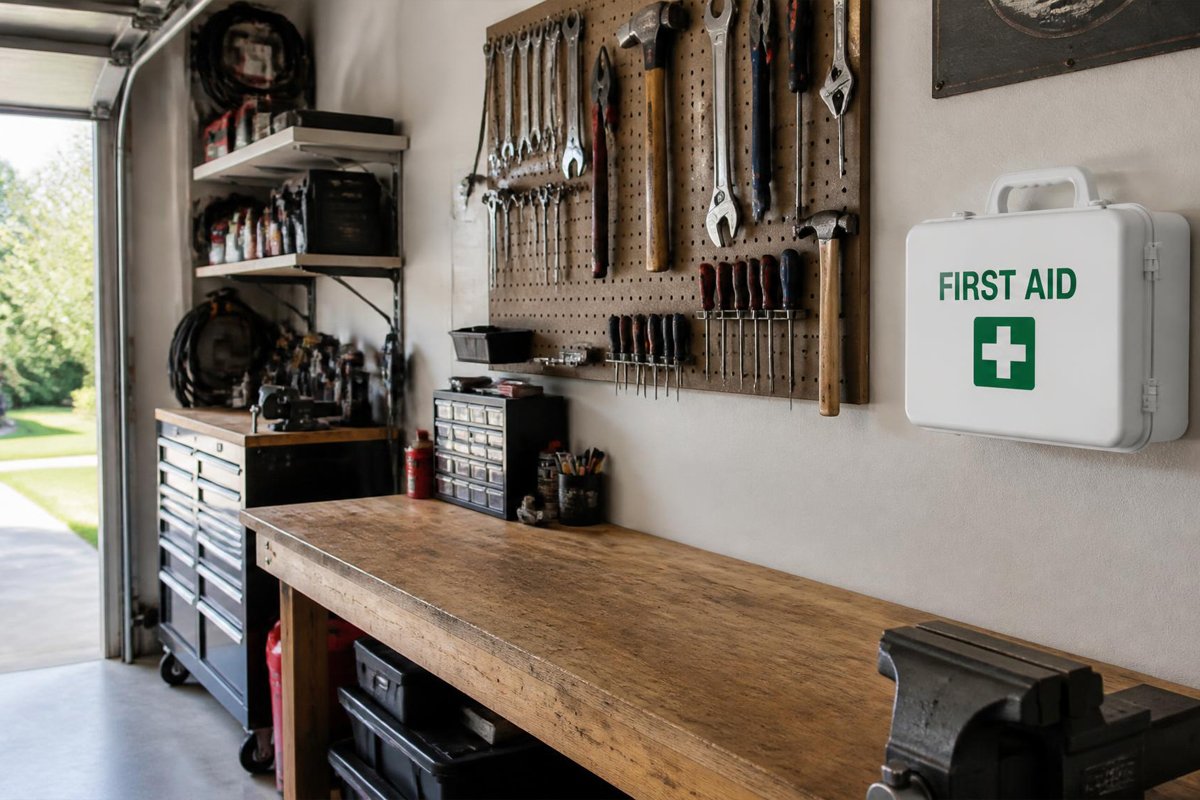
4. Wall-Mounted Pegboard or Slatwall System
Overview: For tools you reach for constantly, a pegboard or slatwall system beats any bin or shelf — everything stays visible, labeled, and within arm’s reach, and rearranging your layout takes minutes instead of a full reorganization.
Key Features:
- Modular hooks, bins, and brackets
- Slatwall panels handle heavier loads than traditional pegboard
- Keeps frequently-used tools visible and accessible
- Scales easily as your tool collection grows
Best For: Hand tools, power tool accessories, frequently-used gear
Pros: ✅ Keeps tools visible instead of buried in bins ✅ Highly customizable layout ✅ Frees up shelf and drawer space for other items Cons: ❌ Takes upfront time to plan hook placement ❌ Not suited for bulky or irregularly shaped items
Our Verdict: Pair this with a solid hand tool set — see our best garage hand tool sets guide — and you’ve got a workstation where nothing is ever buried at the bottom of a drawer.
5. Modular Garage Cabinet System
Overview: For a garage that doubles as a workshop, lockable modular cabinets combine the weather resistance of bins with the accessibility of shelving, while keeping sharp tools, chemicals, and valuables out of reach of kids or pets.
Key Features:
- Lockable doors and drawers
- Modular units that connect and expand over time
- Often paired with a butcher-block or steel worktop
- Steel or heavy-duty polymer construction
Best For: Power tools, chemicals, valuables, workshop supplies
Pros: ✅ Lockable security for hazardous or valuable items ✅ Clean, finished look compared to open shelving ✅ Doubles as a work surface in many models Cons: ❌ Highest price point on this list ❌ Heavier and harder to reconfigure once installed
Our Verdict: Worth the investment if your garage functions as a real workshop — especially alongside good lighting from our best LED garage lights guide, since cabinet contents are easy to lose track of in a dim garage.
Comparison Table {#comparison-table}
| System | Best For | Floor Footprint | Approx. Price Range | Weatherproof |
|---|---|---|---|---|
| Steel Wire Shelving | Bulk storage | Medium–Large | $60–$180 | Partial (open air) |
| Stackable Weatherproof Bins | Moisture-sensitive items | None (stacks on shelving) | $8–$25 per bin | Yes |
| Overhead Ceiling Rack | Seasonal bulky items | None | $80–$200 | Partial |
| Pegboard / Slatwall System | Frequently-used tools | Wall-mounted, no floor use | $40–$150 | No |
| Modular Cabinet System | Workshop, valuables, chemicals | Large | $200–$600+ | Yes |
Best Storage for Different Garage Zones {#different-zones}
Overhead and Ceiling Space
The single most underused area in most garages. Reserve it for genuinely infrequent items — holiday decorations, camping gear used once a year — and keep anything you need weekly off the ceiling rack entirely.
Wall Space Near the Workbench
This is prime real estate for a pegboard or slatwall setup. Keep it limited to tools you reach for during active projects; see our garage workshop setup guide for a full workbench-zone layout.
Floor-Level Shelving Along the Perimeter
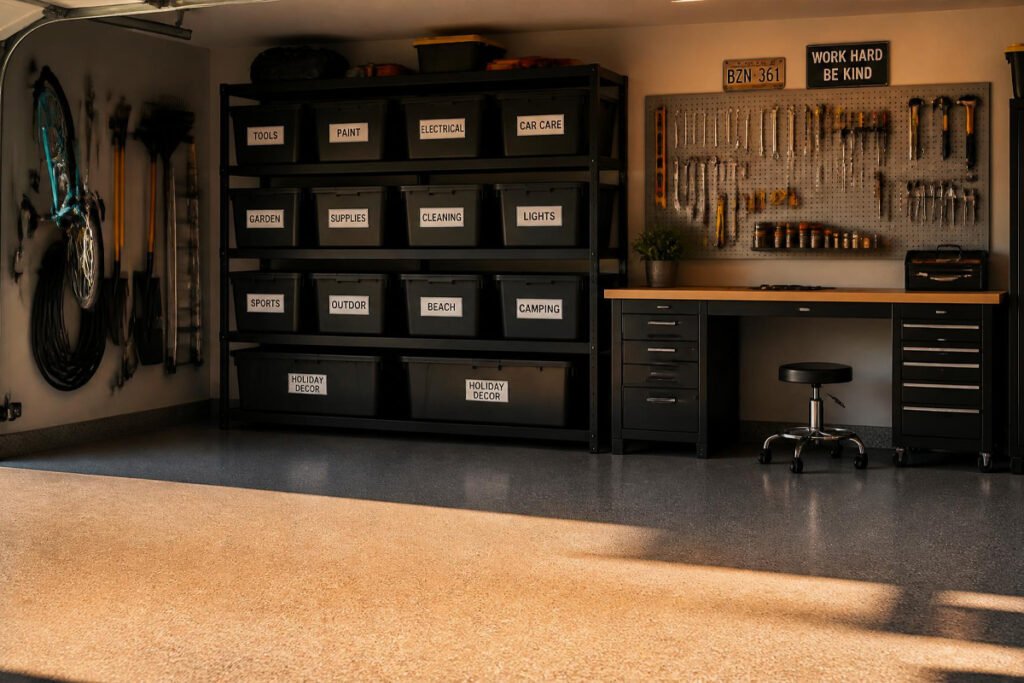
Wire shelving along a side wall keeps bins accessible without blocking the car. Group bins by category — automotive, seasonal, sports gear — and label every bin, since cabinet clutter creeps back fast without a consistent system.
How to Set Up a Garage Storage System, Step by Step {#how-to-set-up}
Step 1: Clear and Sort Everything
Pull everything off the floor and out of existing storage. Sort into keep, donate, and discard piles before buying a single new bin.
Step 2: Measure Your Space
Note ceiling height, wall length, and any obstructions like garage door tracks before ordering shelving or a ceiling rack.
Step 3: Install Shelving and Overhead Racks First
These form the structural backbone of your system — get them mounted and leveled before anything goes on them.
Step 4: Sort Into Bins by Category
Group items logically (seasonal, automotive, tools, sports) and choose bin sizes that stack evenly on your shelving.
Step 5: Set Up Wall Storage for Daily-Use Items
Finish with pegboard or slatwall near your most-used zone, like the workbench, so frequently grabbed tools never end up buried in a bin.
Common Mistakes {#common-mistakes}
Buying shelving without checking the per-shelf weight rating. A unit’s total capacity looks impressive, but it’s the per-shelf number that determines whether your top shelf sags under a stack of paint cans.
Storing everything in identical unlabeled bins. Uniform bins look clean but waste time if you can’t tell what’s inside — label every bin on at least two sides.
Skipping pest-proofing on stored items. Cardboard and open bins invite pests looking for shelter — see our guide on keeping spiders out of the garage if this has already been an issue.
Expert Tips {#expert-tips}
Store heaviest items on the lowest and middle shelves. Keeping weight low improves shelving stability and makes heavy bins easier and safer to lift.
Leave one empty shelf level for “in transition” items. A dedicated spot for things you’re still deciding whether to keep prevents clutter from spreading back across the floor.
Reassess your storage system once a year. What you’re storing changes — a seasonal review, ideally alongside a garage floor cleaning session, keeps the whole system from drifting back into chaos.
Final Thoughts {#final-thoughts}
Best Overall: Steel wire shelving paired with stackable weatherproof bins covers the majority of garage storage needs. Best for Tight Floor Space: An overhead ceiling rack, since it uses space nobody else is fighting you for. Best for a Workshop Garage: A modular cabinet system combined with a pegboard wall, for security and daily accessibility together.
Whichever combination you choose, the real win is consistency — for related upkeep once your system is in place, see our garage maintenance checklist and garage safety guide to keep the whole space running smoothly year-round.
Frequently Asked Questions {#faq}
How much weight can garage wire shelving actually hold? It varies widely by model, typically 200–800 lbs per shelf. Always check the per-shelf rating rather than assuming the total unit capacity applies evenly to every level.
Are plastic bins better than cardboard boxes for garage storage? Yes, in almost every case. Garage-rated plastic bins resist moisture, pests, and temperature swings that cause cardboard to weaken and fail over time.
Wire shelving vs. solid shelving — what’s the real difference? Wire shelving resists dust buildup and allows better airflow, which matters in a garage prone to humidity. Solid shelving offers a cleaner look but traps more dust and moisture underneath.
Can I mount an overhead storage rack myself? Many kits are DIY-friendly, but the rack must be anchored to ceiling joists, not just drywall — if you’re unsure about your ceiling structure, it’s worth having it checked before loading it up.
What’s the best way to organize small parts like screws and hardware? Small, divided storage bins or a labeled parts cabinet mounted near your workbench keeps hardware sorted and prevents the classic “mystery jar of loose screws” problem.
Do I need a pegboard if I already have shelving? They solve different problems. Shelving handles bulk and bins; pegboard keeps your most frequently used tools visible and instantly accessible, so most well-organized garages use both.
How do I keep stored items safe from pests? Sealed, locking bins are the biggest defense, combined with keeping stored items off the floor. See our garage odor removal guide if a pest issue has already created a lingering smell.
Is it worth buying a modular cabinet system instead of open shelving? If you’re storing chemicals, valuables, or want a locked space around kids or pets, yes — the security and finished look justify the higher price for many workshop garages.
How often should I reorganize my garage storage system? Once a year is enough for most households, ideally timed with a seasonal deep clean so you’re sorting through everything anyway.
Author: Danial Marquez Last Updated: August 2026