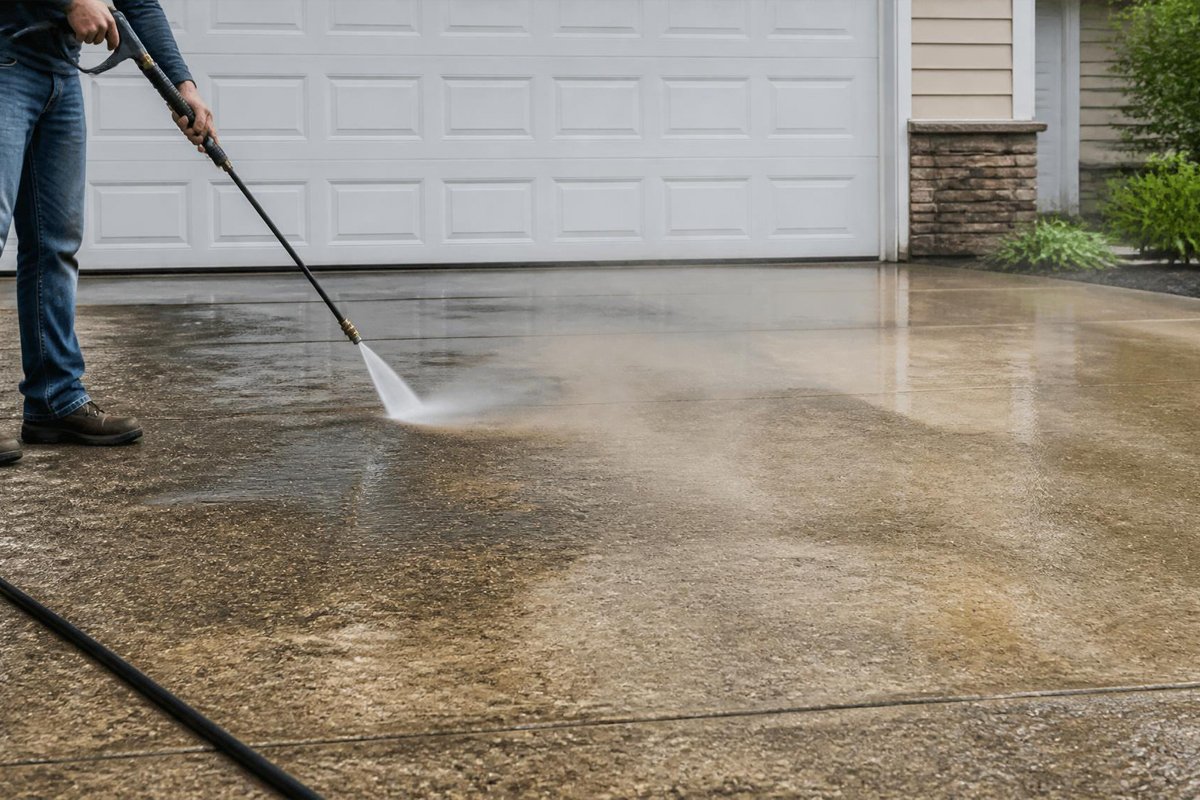
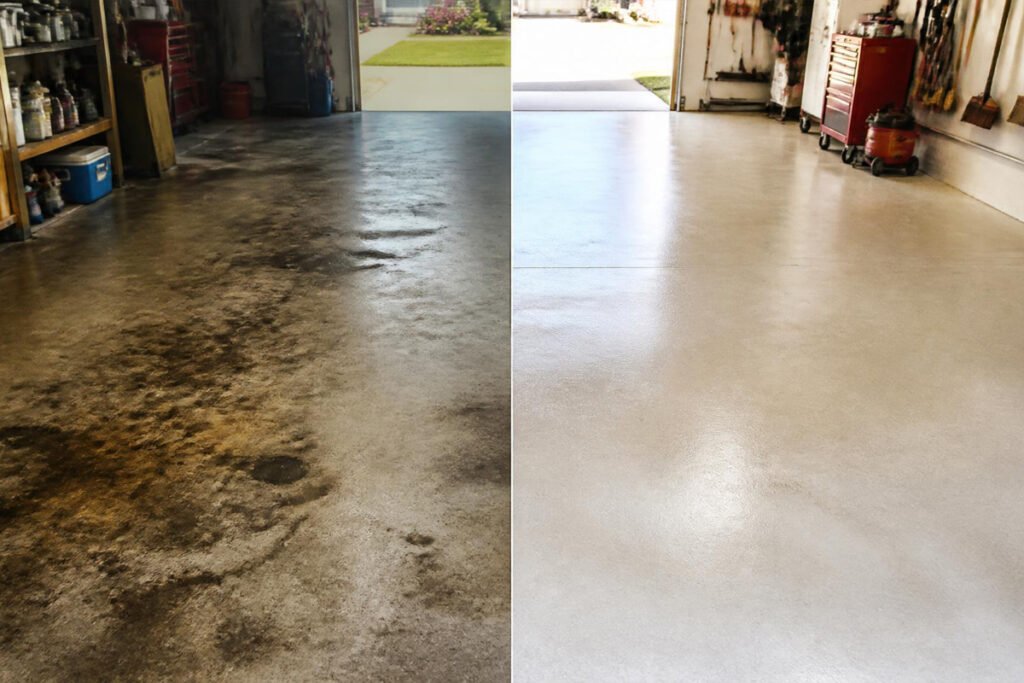
Oil stains, years of tire grime, chalky efflorescence on the concrete, salt residue tracked in every winter — a garden hose and a stiff broom only get a garage floor partway clean. A pressure washer is the tool that actually strips that buildup down to bare concrete, and it does the same job on the driveway, the garage door, and the siding around it in a fraction of the time.
The tricky part is that “pressure washer” covers everything from a $90 light-duty electric unit to a $600 gas machine that can genuinely damage wood or peel paint if it’s pointed wrong. Before buying, it’s worth reviewing this alongside your broader garage cleaning tools and supplies so the pressure washer fits into a cleaning routine you’ll actually keep up with.
This guide compares five pressure washers that hold up to real garage and driveway conditions — oil stains, concrete grime, and seasonal buildup — and breaks down which one fits which situation.
Quick Answer
The best pressure washer for a garage depends on the surface and how often you’ll use it. For most homeowners tackling a garage floor, driveway, and the occasional car wash, the Sun Joe SPX3000 remains the benchmark electric pick — strong cleaning power, dual detergent tanks, and a price most people are comfortable with. If raw power for stubborn concrete stains matters more than price, the Greenworks GPW2700 delivers gas-comparable output without the maintenance of an engine. Anyone who wants professional-grade reliability and doesn’t mind paying for it should look at the Kärcher K4 Power Control, widely regarded as the most refined electric unit on the market. A gas-powered option like the Simpson Cleaning MSH3125 is worth it for heavy-duty concrete and driveway work electric units struggle with. And for light, occasional use — cars, patio furniture, small areas — a compact budget pick like the AR Blue Clean AR383 gets the job done without overspending.
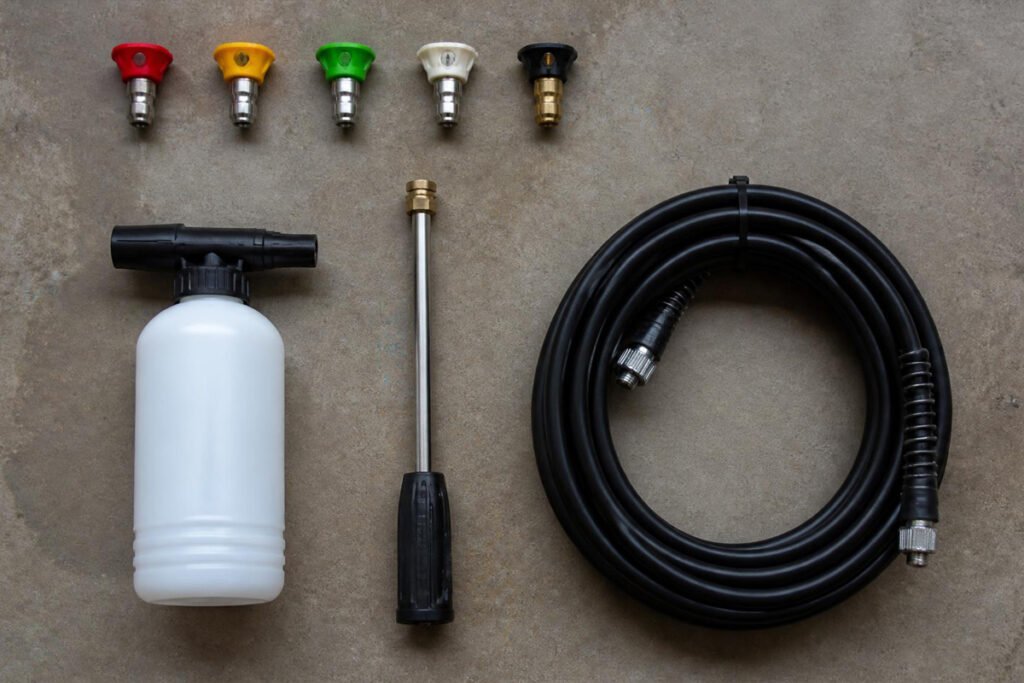
Table of Contents
- How Pressure Washers Work
- How to Choose the Right Pressure Washer
- Best Pressure Washers Available
- Comparison Table
- Best Pressure Washers for Different Garage Setups
- How to Pressure Wash a Garage Floor Correctly
- Common Mistakes
- Expert Tips
- Final Thoughts
- Frequently Asked Questions
How Pressure Washers Work
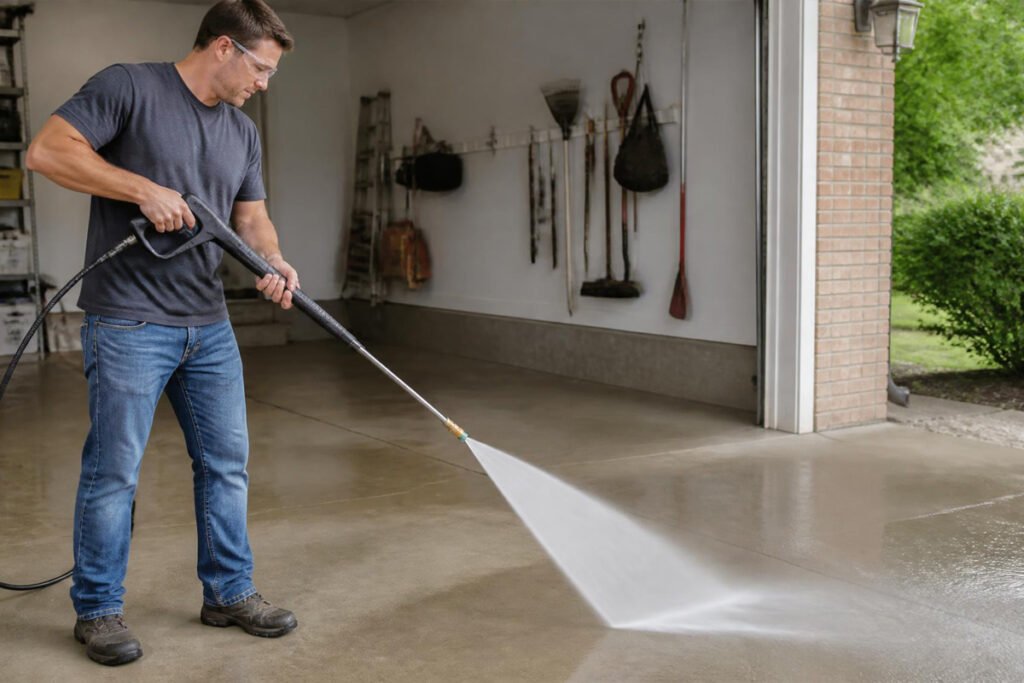
A pressure washer uses an electric motor or gas engine to drive a pump that forces water through a narrow nozzle at high pressure, dramatically increasing its cleaning force compared to a garden hose. Two numbers determine how well a given machine actually cleans: PSI (pounds per square inch), which measures pressure, and GPM (gallons per minute), which measures flow. Multiplying the two gives “cleaning units” — a rough measure of overall cleaning power that matters more than PSI alone, since a high-PSI, low-GPM machine can actually clean slower than a more balanced one.
Interchangeable nozzle tips control the spray pattern, typically ranging from a narrow, aggressive 0-degree jet to a wide 40-degree fan for general rinsing, plus a dedicated soap nozzle for applying detergent at low pressure. Getting the nozzle wrong for the surface is the single most common cause of pressure-washing damage — a narrow tip that’s fine on concrete can gouge wood siding or strip paint in seconds.
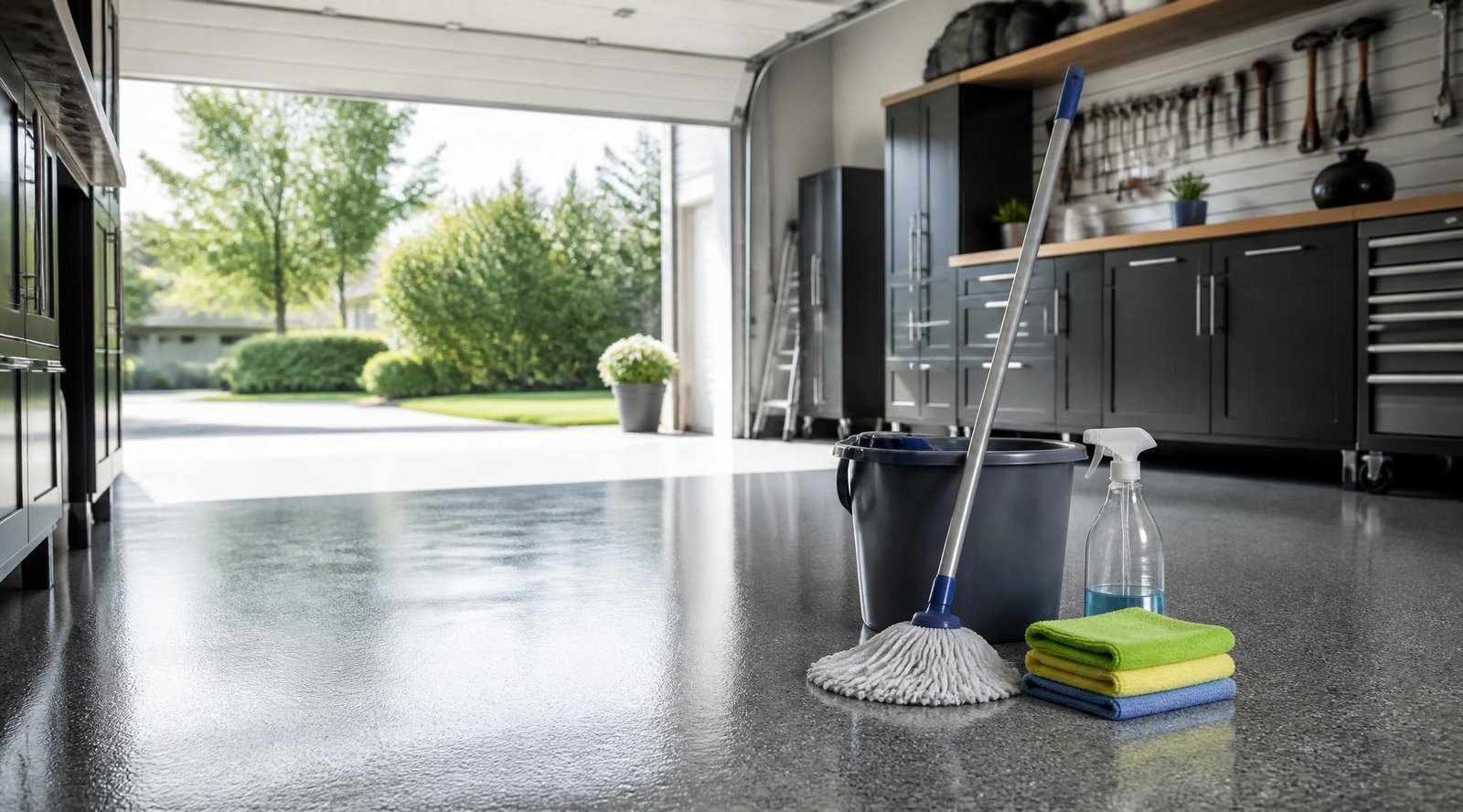
If part of your garage routine also includes the floor itself, it’s worth reviewing pressure washing alongside your epoxy floor coating plans, since a properly coated floor handles pressure washing very differently than bare, porous concrete.
How to Choose the Right Pressure Washer
Before comparing specific models, work through three questions:
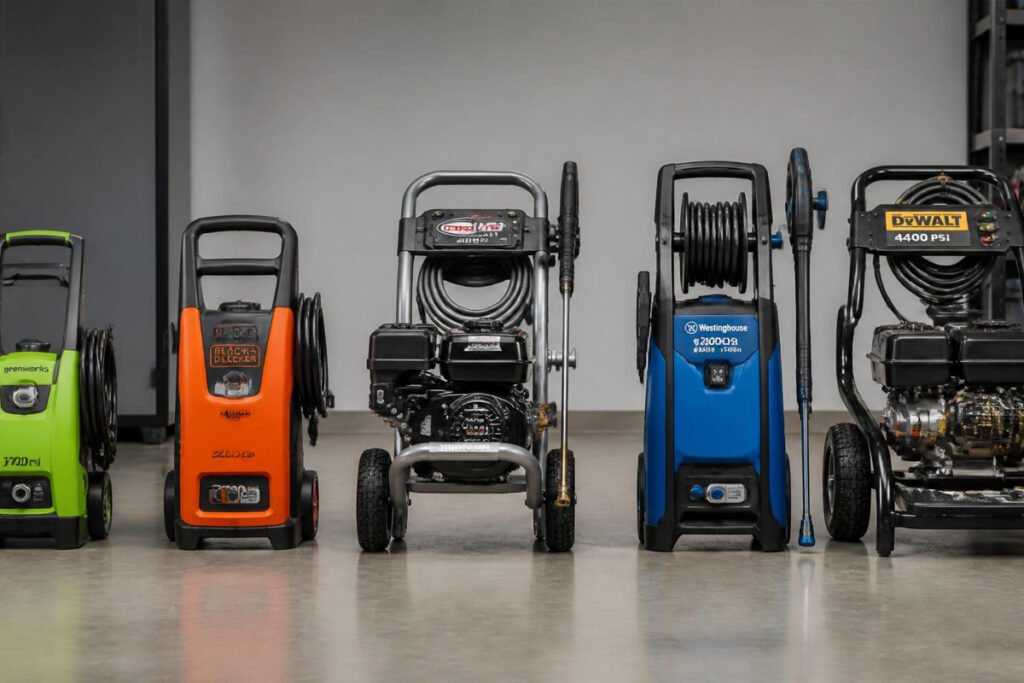
Electric or gas? Electric models are quieter, need less maintenance, and are plenty powerful for most residential cleaning — cars, garage floors, driveways, siding. Gas models deliver meaningfully more power for large driveways, heavy concrete staining, or frequent heavy-duty use, at the cost of more maintenance and noise.
How often will you actually use it? A machine that sits unused for months, especially a gas model, needs more upkeep (fuel stabilizer, occasional starts) than one used regularly. If use will be occasional, an electric model avoids most of that maintenance burden entirely.
What surfaces will it touch most? Bare concrete tolerates higher pressure than painted surfaces, wood, or vinyl siding. If your garage door or siding will regularly be in the mix, prioritize a model with a full nozzle set and a genuine low-pressure soap setting, not just raw PSI.
For general safety guidance on this kind of equipment, the Consumer Product Safety Commission’s guidance on pressure washer safety is a useful, non-commercial reference — the water stream from a pressure washer can break skin at close range, and it’s worth understanding that risk before using one for the first time.
Best Pressure Washers Available
1. Sun Joe SPX3000 — Best Overall
Overview: The Sun Joe SPX3000 has been one of the best-selling electric pressure washers in the U.S. for years, and it earns that position with a genuinely balanced spec sheet — 2,030 PSI and 1.76 GPM, producing enough cleaning power for cars, patios, decks, fencing, and light driveway work without becoming unwieldy. Its induction motor runs quieter and more durably than the cheaper universal motors found in many budget competitors.
Key Features:
- 2,030 PSI / 1.76 GPM (roughly 3,570 cleaning units)
- Dual onboard detergent tanks with adjustable output
- Five quick-connect nozzle tips (0°, 15°, 25°, 40°, soap)
- Quieter, more durable induction motor
Best For: General garage, driveway, and car-washing use for most homeowners.
Pros: ✅ Strong, well-rounded cleaning power for the price ✅ Easy nozzle swaps and dual detergent tanks ✅ Quieter and more durable motor than budget competitors
Cons: ❌ Hose management and garden-hose hookup are a known weak point ❌ Not powerful enough for heavy, years-old concrete staining
Our Verdict: For most garages and driveways, this is the safe default — it balances price, power, and reliability better than almost anything else in its class.
2. Greenworks GPW2700 — Best for Maximum Electric Power
Overview: The Greenworks GPW2700 pushes electric pressure washing closer to gas-machine territory, rated around 6,200 cleaning units — meaningfully more than the Sun Joe — while staying corded and low-maintenance. It’s the pick for anyone who wants gas-level cleaning power without dealing with an engine.
Key Features:
- 2,700 PSI with strong GPM for high overall cleaning units
- Corded electric — no gas, oil, or engine maintenance
- Multiple nozzle tips included
- Onboard detergent tank
Best For: Larger driveways or genuinely dirty concrete that a standard electric unit struggles to fully clean.
Pros: ✅ Cleaning power that rivals many gas machines ✅ No engine maintenance, oil changes, or fuel stabilizer needed ✅ Still relatively quiet compared to gas alternatives
Cons: ❌ Heavier and bulkier than lighter electric models ❌ Higher price than standard electric pressure washers
Our Verdict: If a standard electric pressure washer has ever left you wishing for more power, this closes that gap without the trade-offs of switching to gas.
3. Kärcher K4 Power Control — Best Premium Pick
Overview: Kärcher effectively invented the modern consumer pressure washer, and the K4 Power Control reflects that experience — independent testers have repeatedly rated it among the most powerful and user-friendly electric pressure washers available, capable of stripping paint from a sign or cleaning grime off brick with ease. Its Power Control dial lets you adjust pressure directly from the spray wand without swapping nozzles.
Key Features:
- Adjustable pressure via a dial on the spray wand, no nozzle swapping needed
- Strong, versatile cleaning across a wide range of surfaces
- Refined build quality and ease of use
- Vario Power spray wand covers multiple pressure settings in one tool
Best For: Homeowners who want the most refined, easiest-to-use electric pressure washer regardless of price, or anyone doing frequent varied cleaning tasks.
Pros: ✅ Genuinely versatile — handles delicate and heavy-duty surfaces well ✅ Adjustable pressure dial removes the need to swap nozzles constantly ✅ Well-regarded build quality and reliability
Cons: ❌ Priced meaningfully higher than the Sun Joe or similar competitors ❌ Some accessories and upgrades are sold separately
Our Verdict: For anyone who values ease of use and versatility over squeezing out the lowest possible price, this is the electric pressure washer to beat.
4. Simpson Cleaning MSH3125 — Best Gas-Powered
Overview: When electric power genuinely isn’t enough, the Simpson MSH3125 steps into gas territory with far higher sustained pressure and flow, suited to heavy-duty concrete cleaning, large driveways, or serious commercial-adjacent use. It trades the convenience of electric for raw output.
Key Features:
- Gas engine delivering significantly higher PSI/GPM than electric units
- Suited to heavy concrete, large surface areas, and stubborn stains
- No cord — full mobility around a large property
- Commercial-grade components in a homeowner-accessible package
Best For: Large driveways, heavy-duty concrete cleaning, or anyone who pressure washes often enough to justify a gas machine’s extra maintenance.
Pros: ✅ Substantially more cleaning power than any electric option ✅ No cord — fully mobile across a large property ✅ Built for sustained, heavy-duty use
Cons: ❌ Requires ongoing engine maintenance — oil changes, fuel stabilizer, winterizing ❌ Louder and heavier than electric alternatives
Our Verdict: This is overkill for occasional garage floor cleaning, but for a large driveway or genuinely stubborn, years-old staining, the extra power is the difference between a finished job and a frustrating one.
5. AR Blue Clean AR383 — Best Budget Pick
Overview: At under $120, the AR383 delivers 1,900 PSI in a compact, lightweight package — the lightest unit in most comparisons — aimed at cars, outdoor furniture, and light patio or garage cleaning rather than heavy concrete work. It’s a sensible entry point for anyone unsure how much they’ll actually use a pressure washer.
Key Features:
- 1,900 PSI, compact and lightweight design
- Simple, straightforward controls
- Included nozzle set for basic cleaning tasks
- Low price point for genuine name-brand reliability
Best For: Light, occasional use — cars, patio furniture, small cleaning jobs — or as a low-risk first pressure washer.
Pros: ✅ Very affordable while still being a reliable, name-brand unit ✅ Lightweight and easy to store or move ✅ Simple enough for a first-time user
Cons: ❌ Not powerful enough for heavy concrete staining or large driveways ❌ Smaller detergent capacity than higher-end models
Our Verdict: If you’re not sure how much a pressure washer will actually get used, this is a low-risk way to find out without overspending on power you may never need.
Comparison Table
| Product | Best For | PSI / GPM | Power Source | Approx. Price |
|---|---|---|---|---|
| Sun Joe SPX3000 | Best Overall | 2,030 PSI / 1.76 GPM | Electric | $150–$220 |
| Greenworks GPW2700 | Best Max Electric Power | 2,700 PSI, high GPM | Electric | $250–$320 |
| Kärcher K4 Power Control | Best Premium Pick | Adjustable, high-end range | Electric | $300–$350 |
| Simpson Cleaning MSH3125 | Best Gas-Powered | Significantly higher than electric | Gas | $400–$500 |
| AR Blue Clean AR383 | Best Budget Pick | 1,900 PSI | Electric | $100–$130 |
Prices are approximate and vary by retailer and included accessories.
Best Pressure Washers for Different Garage Setups
Standard One- or Two-Car Garage Floor and Driveway
The Sun Joe SPX3000 covers this use case well for most homeowners — enough power for real cleaning without the bulk or maintenance of a gas machine. Pair it with your broader garage cleaning tools setup for a complete routine.
Large or Heavily Stained Driveway
For a longer driveway or stubborn, years-old concrete staining, step up to the Greenworks GPW2700 or the gas-powered Simpson MSH3125, depending on how much extra maintenance you’re willing to take on for the power.
Garage Door, Siding, and Delicate Surfaces
If painted surfaces or siding are part of the regular cleaning routine alongside the floor, the Kärcher K4’s adjustable pressure dial makes it easier to avoid damage — a real advantage over swapping nozzles by hand. This pairs naturally with a broader look at how to clean a garage door without damaging the finish.
How to Pressure Wash a Garage Floor Correctly
Step 1: Clear and Sweep the Floor First
Remove loose debris and give the floor a quick sweep — pressure washing over loose gravel or debris just relocates the mess and can pit softer surfaces.
Step 2: Choose the Right Nozzle
Start with a wider-angle nozzle (25° or 40°) on bare concrete before considering a narrower tip, and always test an inconspicuous spot first on anything coated or painted.
Step 3: Apply Detergent at Low Pressure
Use the soap nozzle or low-pressure setting to apply cleaner, and let it sit for the manufacturer’s recommended dwell time — typically 5–10 minutes — before rinsing.
Step 4: Rinse in Overlapping Passes
Work in consistent, overlapping passes rather than random spraying, keeping the nozzle a consistent distance from the surface to avoid uneven cleaning or streaking.
Step 5: Let the Floor Dry Before Reopening the Garage
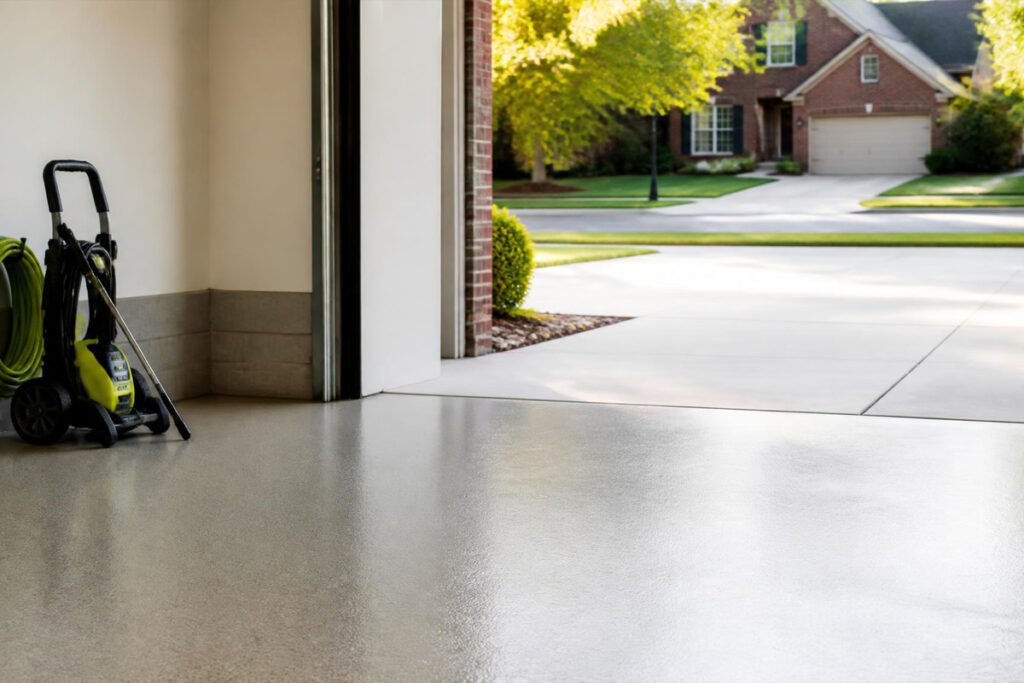
Standing water on a freshly washed floor is a slip hazard — let it dry, or squeegee it toward a drain, before parking a car back over it.
Common Mistakes
Using too narrow a nozzle on the wrong surface. A 0-degree tip can gouge wood, strip paint, or damage soft coatings almost instantly. Default to a wider spray angle and narrow it only if genuinely needed.
Holding the nozzle too close to the surface. Distance matters as much as pressure setting — holding the wand too close concentrates force enough to damage concrete, wood, or vehicle paint that would otherwise be perfectly safe to clean.
Skipping engine maintenance on a gas model. A gas pressure washer left unused for months without fuel stabilizer or proper storage is a common source of hard starts and pump damage — treat it like any other small engine and maintain it as part of your regular garage maintenance routine.
Expert Tips
Match cleaning units, not just PSI, to the job. A machine with lower PSI but higher GPM can outclean a higher-PSI, low-GPM unit. Multiply PSI by GPM to compare cleaning power across models more accurately than either spec alone.
Pre-treat oil stains before pressure washing. A degreaser applied and allowed to dwell before rinsing lifts oil stains far better than water pressure alone — pressure washing without pre-treatment often just spreads the stain rather than removing it.
Store hoses and detergent tanks empty and dry. Leftover detergent or standing water in the tank between uses is a common source of clogs and mildew smell — empty and rinse both after each use, especially before longer-term storage.
Final Thoughts
Best Overall: The Sun Joe SPX3000 remains the benchmark for a reason — it balances power, price, and reliability better than almost anything else for general garage and driveway use.
Best for Serious Power: The Greenworks GPW2700 closes the gap to gas-level cleaning without the maintenance burden of an engine.
Best Budget: The AR Blue Clean AR383 proves a capable pressure washer doesn’t have to be expensive if your needs are genuinely light.
Whichever model you choose, pair it with the right nozzle habits and pre-treatment for stubborn stains, and it’ll handle most of what a garage floor and driveway throw at it. For the rest of your cleaning setup, see our guide to garage cleaning tools and supplies.
Frequently Asked Questions
What PSI do I need to clean a garage floor? Most garage floors clean well with 1,900–2,300 PSI on bare concrete, which covers the majority of electric pressure washers on this list. Higher PSI matters more for heavily stained or larger surfaces than for routine cleaning.
Is a pressure washer safe to use on a coated or epoxy garage floor? Yes, generally, but use a wider nozzle angle and moderate pressure rather than a narrow, aggressive tip, which can wear down a coating’s finish over repeated use. Check your specific coating manufacturer’s guidance if unsure.
Electric vs. gas pressure washer — which is better for a garage? Electric models are quieter, need less maintenance, and are powerful enough for most residential garage and driveway cleaning. Gas models deliver meaningfully more power, which matters for large driveways or heavy, stubborn concrete staining, at the cost of ongoing engine maintenance.
Can a pressure washer remove oil stains from a garage floor? Pressure washing alone often just spreads an oil stain rather than removing it. Pre-treating with a dedicated degreaser, letting it dwell, and then rinsing gets meaningfully better results than water pressure by itself.
How much does a good pressure washer cost? Budget electric models start around $100–$130, mid-range electric options with stronger performance run $150–$300, and gas-powered machines for heavy-duty use typically start around $400 and go up from there.
What nozzle should I use for a driveway? A 15- or 25-degree nozzle generally balances cleaning power and safety well for bare concrete driveways. Start wider and narrow the angle only if the wider setting isn’t cutting through the buildup.
How often should I pressure wash my garage floor? Once or twice a year is typical for most garages, more often if you deal with heavy seasonal salt, mud, or oil buildup. Regular light cleaning also reduces how aggressive a pressure wash needs to be each time.
Can I use a pressure washer to clean my car? Yes, with the right nozzle and distance — many pressure washers, including several on this list, include specific settings or lower-pressure nozzles suited to vehicle paint. Avoid narrow, high-pressure tips directly on paint or trim.
Do I need a gas pressure washer, or is electric enough? For most homeowners cleaning a standard garage, driveway, and car, electric is genuinely enough. Gas becomes worth the extra maintenance mainly for large surface areas or heavy-duty, frequent commercial-adjacent use.
Is it dangerous to use a pressure washer? The water stream from a pressure washer can break skin at close range and can also damage surfaces if misused, so it’s worth taking basic precautions — keep the nozzle at a safe distance, never point it at yourself or others, and start with a wider spray angle until you understand how the machine behaves.
Author: Danial Marquez Last Updated: September 2026