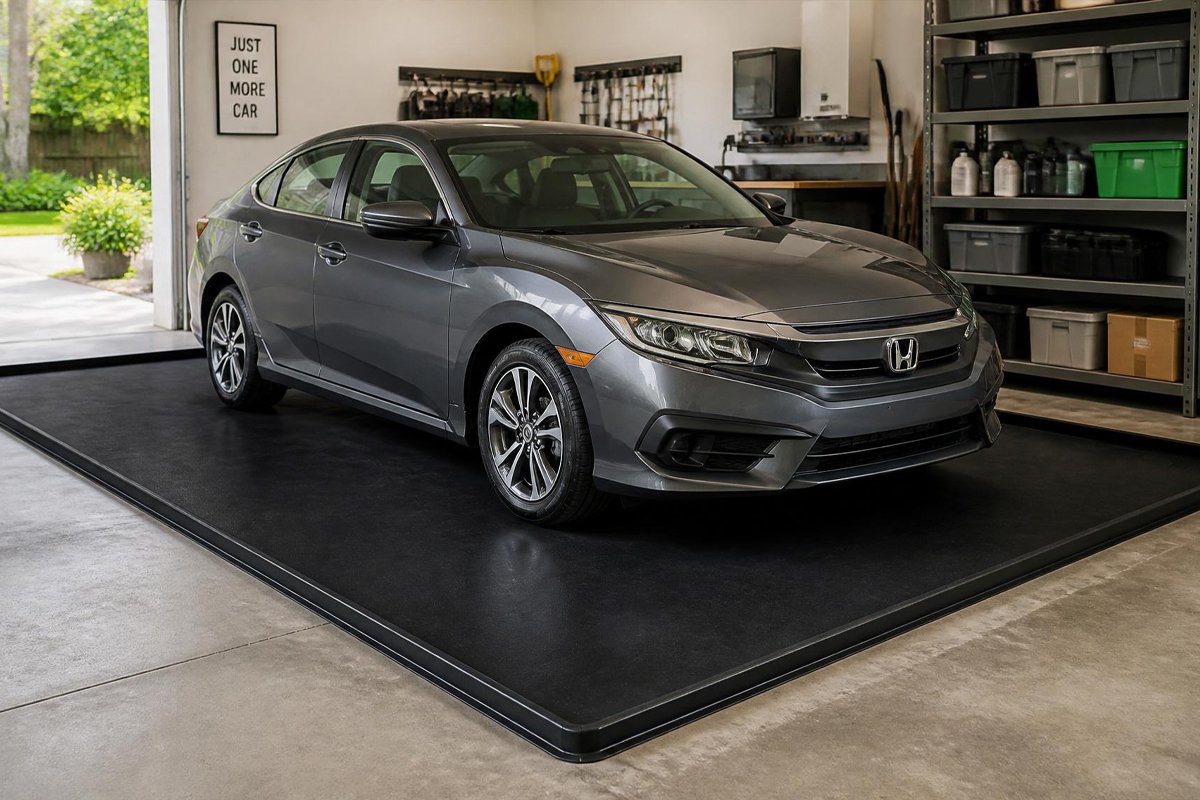
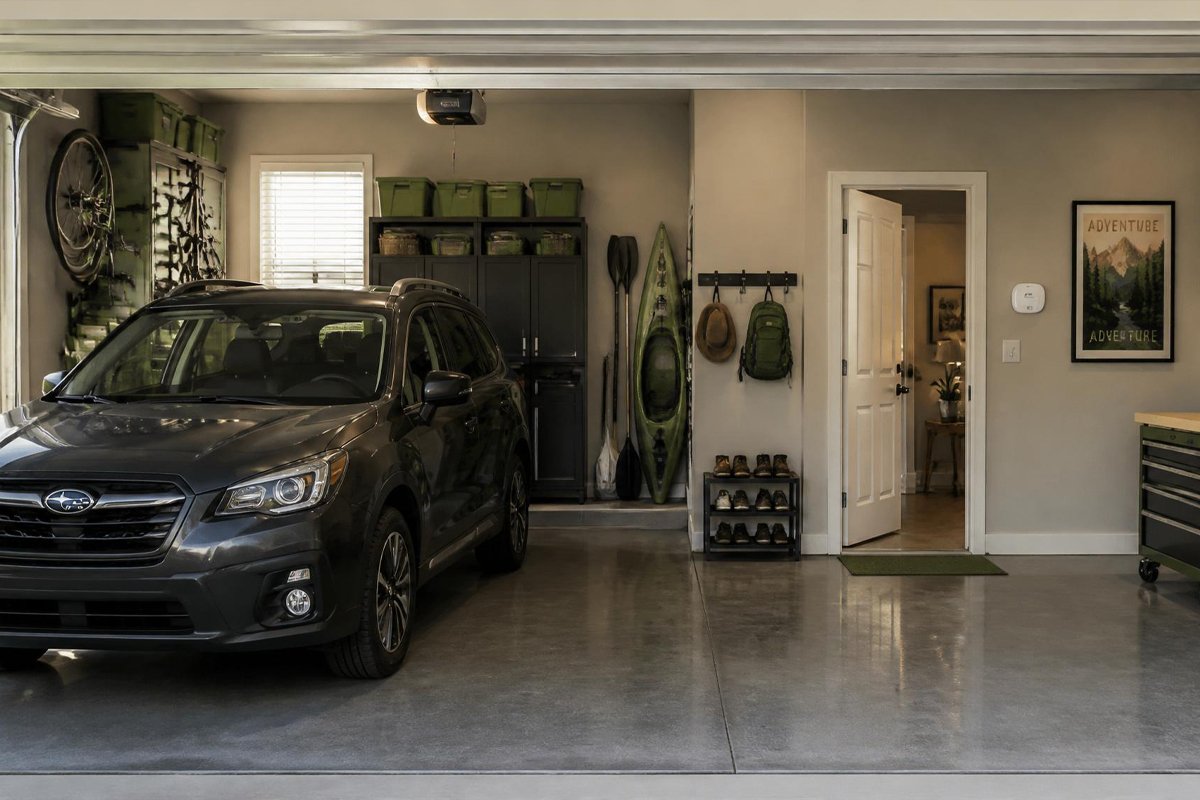
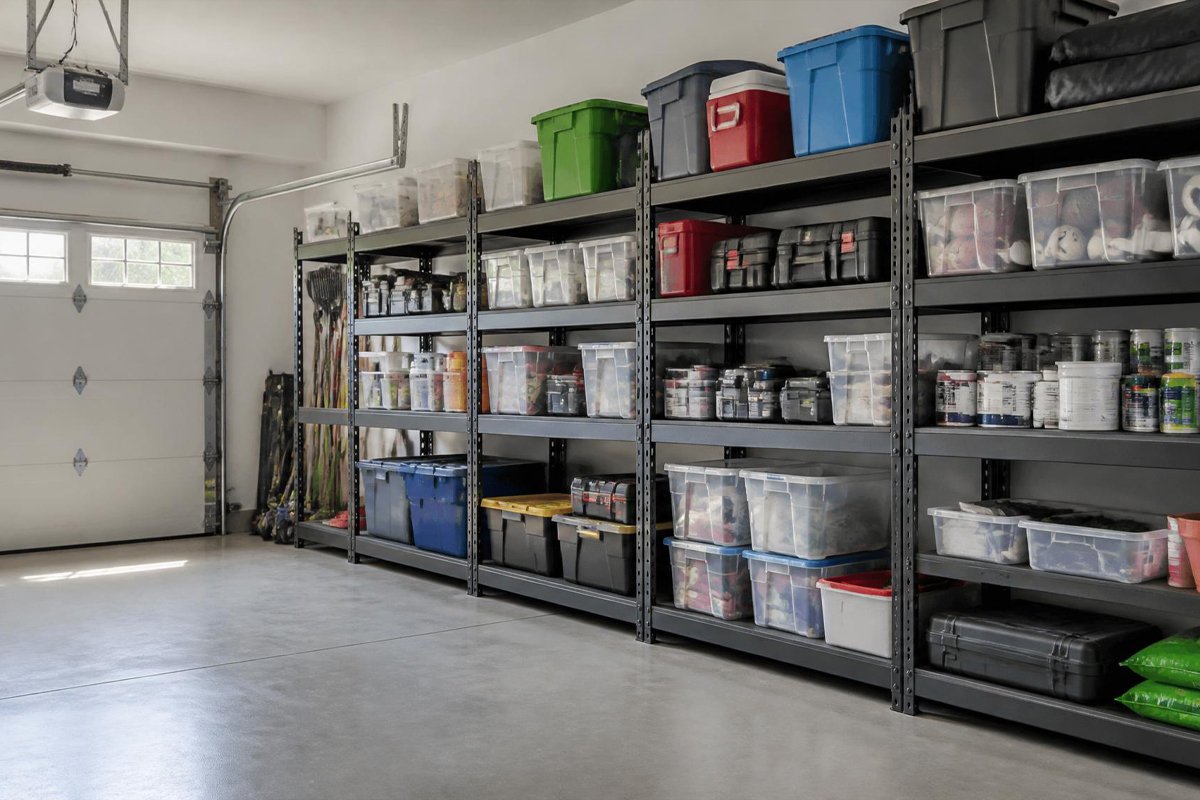
Bare concrete takes a beating in a garage — oil drips, road salt, snowmelt, and tire marks all leave permanent stains if there’s nothing between your car and the floor. A good garage floor mat solves that without the cost or commitment of epoxy coating, and it rolls up and moves with you if you ever leave.
Quick answer: for most garages, a heavy-duty containment mat with raised edges is the best all-around pick, since it handles winter mess and everyday drips in one product. If you’ve already epoxy coated your floor, a softer mat under just the parking zone protects that investment without covering the whole floor. Full picks and a buying guide follow below.
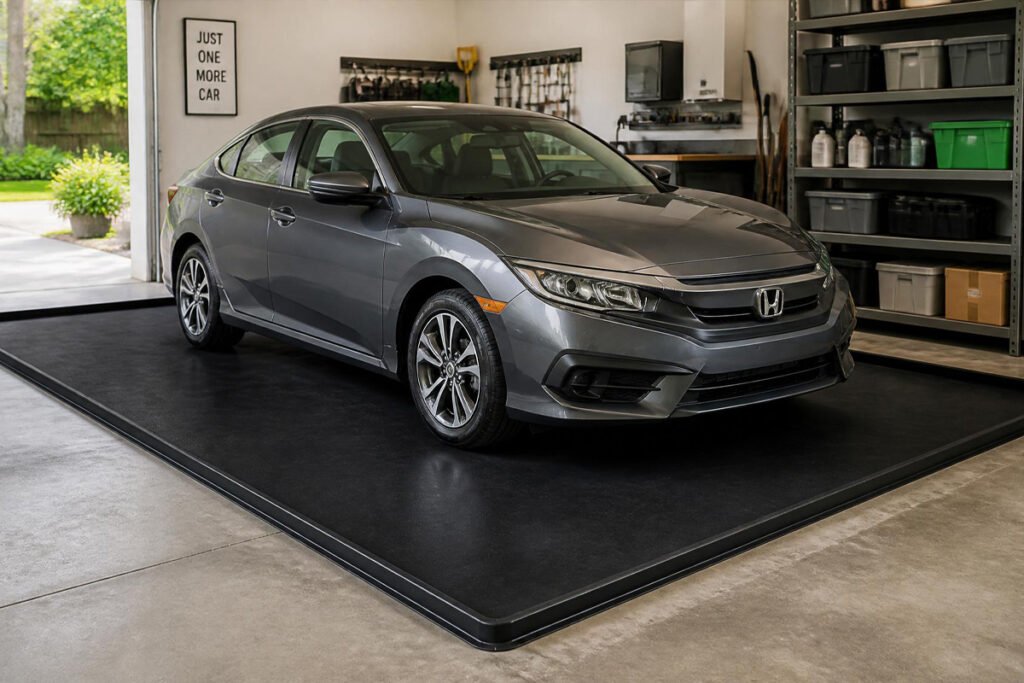
Garage floor mats fall into a few genuinely different categories that solve different problems, which is worth understanding before you buy: containment mats with raised edges are built to hold liquid within the mat itself, absorbent mats soak drips directly into the material, and rubber or interlocking tile flooring prioritizes a tough, non-slip work surface over liquid containment. We compared products on material durability, containment capacity, ease of cleaning, and price-per-square-foot value specifically for garage use.
Quick Comparison
| Product | Best For | Material | Approx. Price |
| AutoFloorGuard Containment Mat | Best Overall / Winter Climates | PVC-coated polyester, raised edge | ~$130–$180 |
| Drymate Garage Floor Mat | Best Absorbent Everyday Mat | Recycled fiber, waterproof backing | ~$80–$120 |
| RaceDeck Free-Flow Tiles | Best Premium / Drainage System | Interlocking polypropylene tiles | ~$4–$6 per sq ft |
| Rubber-Cal Diamond Plate Roll | Best Durable Rubber Roll-Out | SBR rubber, fire retardant | ~$3–$4 per sq ft |
| NarwooAuto PVC Roll Mat | Best Budget Pick | 2.8mm thickened PVC | ~$60–$90 |
Note: prices vary by size and are approximate based on typical current listings — confirm exact dimensions and pricing before you buy.
1. AutoFloorGuard Heavy-Duty Containment Mat — Best Overall
⭐ Best Overall
PVC-coated polyester with 1-inch raised edge | Holds up to 64 gallons | Stay-Put corners | ~$130–$180
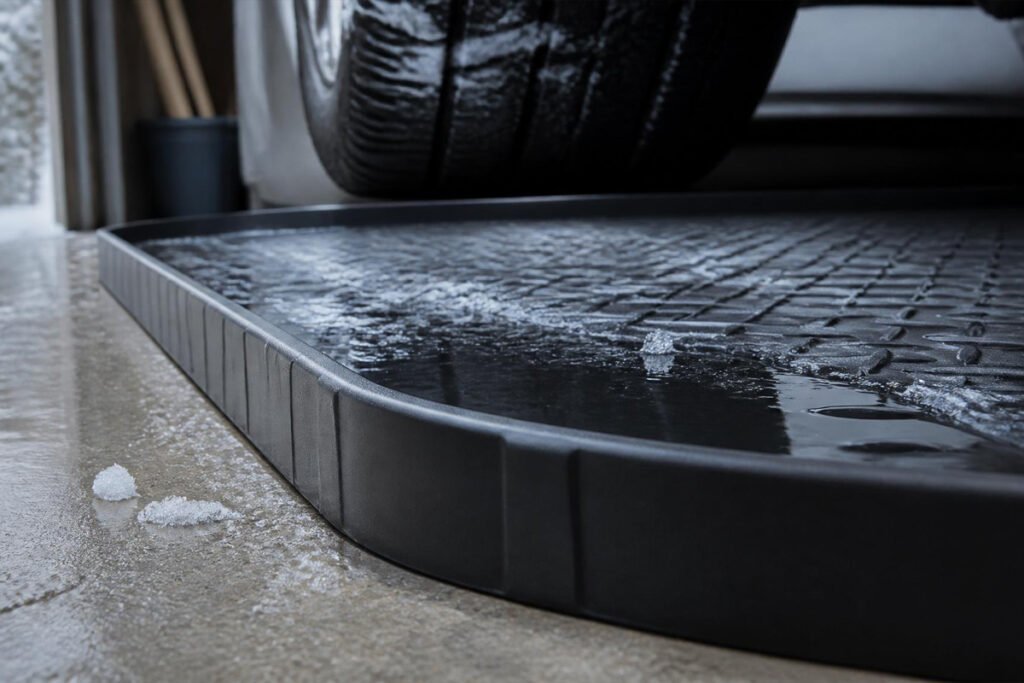
This is the mat most reviewers point to for genuinely messy climates — the raised containment edge actually holds a meaningful volume of snowmelt and road salt runoff instead of just slowing it down, and the heat-sealed watertight seams mean it stays that way for years rather than failing at the corners after one hard winter. A built-in squeegee and drainage approach makes cleanup a matter of pushing water out the door rather than mopping the whole garage.
Why buy it
- Raised edge genuinely contains large volumes of snowmelt, road salt, and mud rather than just slowing it down
- Heat-sealed seams hold up to years of daily vehicle use without failing at the corners
- No assembly — unroll and it’s ready, with corner anchors to reduce shifting
Worth knowing
- Corner anchors work better on sealed floors than bare concrete — may need extra tape on unsealed surfaces
- Requires periodic cleaning to avoid dirt and grime building up inside the containment edge
Verdict: the strongest all-around pick, especially for anyone dealing with real winter weather or wanting maximum containment rather than light protection.
2. Drymate Garage Floor Mat — Best Absorbent Everyday Mat
💧 Best Absorbent Mat
Over 50% recycled fiber surface | Waterproof polyester backing | No raised edge | ~$80–$120
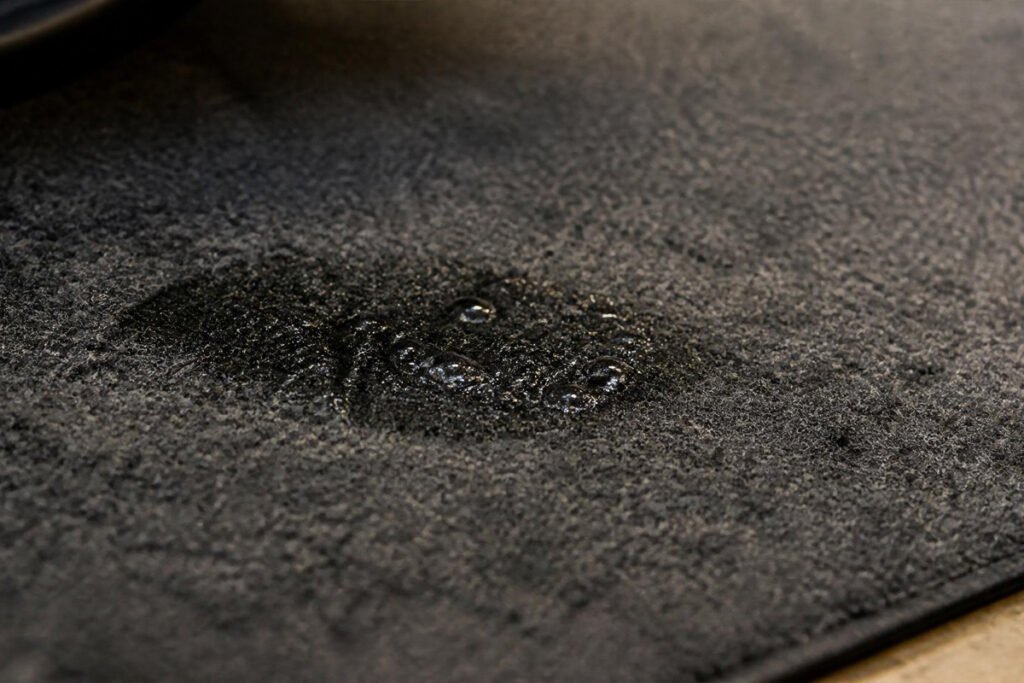
Instead of containing liquid within a raised edge, this mat absorbs it directly into a felt-like recycled fiber surface, backed by a waterproof layer that stops anything from reaching the concrete underneath. That makes it a genuinely good everyday mat for routine oil drips and minor leaks, and the fabric surface feels less industrial underfoot than a hard PVC or rubber mat, though it takes more effort to clean than a wipe-down surface.
Why buy it
- Genuinely absorbs drips and minor leaks rather than just letting them sit on the surface
- Waterproof backing protects concrete even as the top layer absorbs liquid
- Softer, less industrial feel underfoot than rubber or PVC alternatives
Worth knowing
- No raised edge, so it’s not built to contain large volumes like heavy snowmelt
- Fabric surface needs more effort to clean thoroughly than a smooth PVC or rubber mat
Verdict: the better choice for routine oil drips and everyday protection rather than heavy winter containment — pick this over the AutoFloorGuard if you’re in a milder climate.
3. RaceDeck Free-Flow Interlocking Tiles — Best Premium / Drainage System
🏆 Best Premium
Interlocking polypropylene tiles | Open-grid drainage design | Supports 80,000 lb rolling loads | ~$4–$6 per sq ft

This is a genuinely different category from the roll-out mats above it — a modular tile system that clicks together into a permanent-feeling floor rather than a mat you roll out and put away. The open-grid design lets liquid drain through to the concrete below instead of pooling on the surface, and the tiles support genuinely heavy rolling loads, which matters if you’re parking anything larger than a standard car or rolling heavy equipment across it.
Why buy it
- Open-grid drainage keeps the surface dry underfoot even with liquid passing through
- Interlocking tiles create a permanent, finished look rather than a rollable mat
- Rated for genuinely heavy rolling loads — well beyond what a standard car requires
Worth knowing
- Meaningfully more expensive than roll-out mats, especially for a full two-car garage
- Installation takes longer, since you’re laying and clicking together individual tiles rather than unrolling one mat
Verdict: worth the premium if you want a finished, showroom-quality floor rather than a temporary mat — skip it if you just need basic protection.
4. Rubber-Cal Diamond Plate Rubber Flooring Roll — Best Durable Rubber Roll-Out
🛡️ Best Durable Roll-Out
Styrene-butadiene rubber (SBR) | Fire retardant | Diamond or coin-grip surface | ~$3–$4 per sq ft
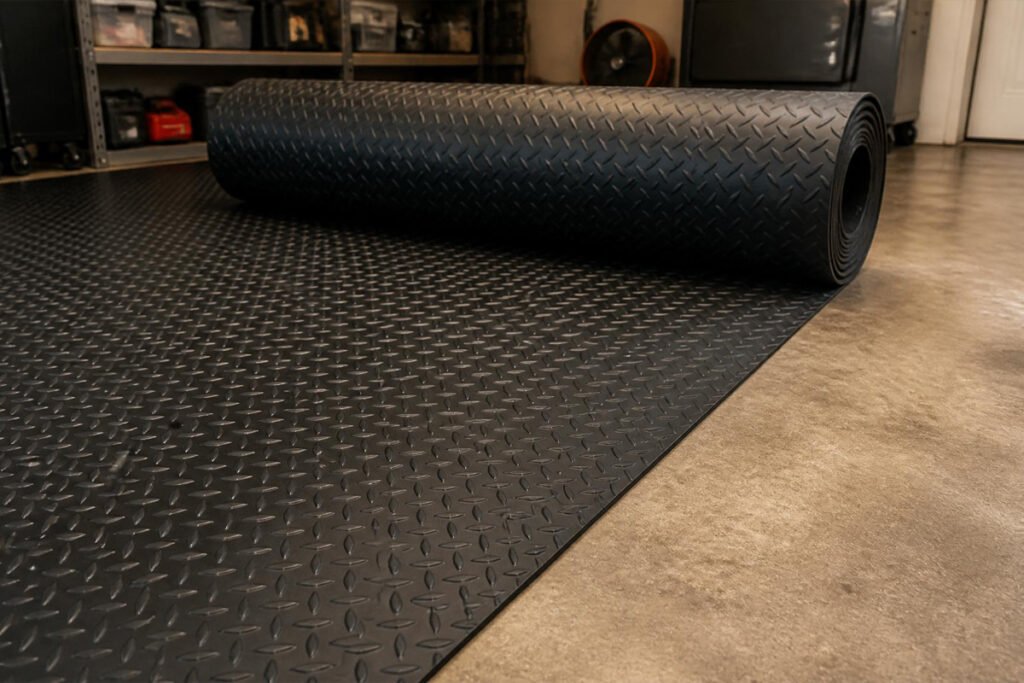
Rubber flooring rolls solve a different problem than containment mats — they’re less about catching snowmelt and more about giving you a genuinely tough, non-slip surface that holds up under dropped tools, rolling jacks, and years of foot traffic. The diamond or coin-grip texture provides real traction, and unlike PVC mats, it’s rated fire retardant, which matters if the garage doubles as a workshop with any hot-work activity.
Why buy it
- Genuinely tough surface that holds up to dropped tools and heavy equipment better than PVC mats
- Fire-retardant rating is a meaningful safety plus for a garage used as a workshop
- Textured surface provides real slip resistance underfoot, though it can get slick when wet
Worth knowing
- Not designed as a containment system — it’s a durable surface, not a liquid barrier
- Heavier and more physically demanding to install than a lightweight PVC roll
Verdict: the right pick if durability and a genuine work surface matter more to you than liquid containment — pair it with a smaller containment mat under the parking zone specifically if you need both.
5. NarwooAuto PVC Roll Mat — Best Budget Pick
💰 Best Budget
2.8mm thickened PVC | Diamond plate pattern | Includes mounting tape | ~$60–$90
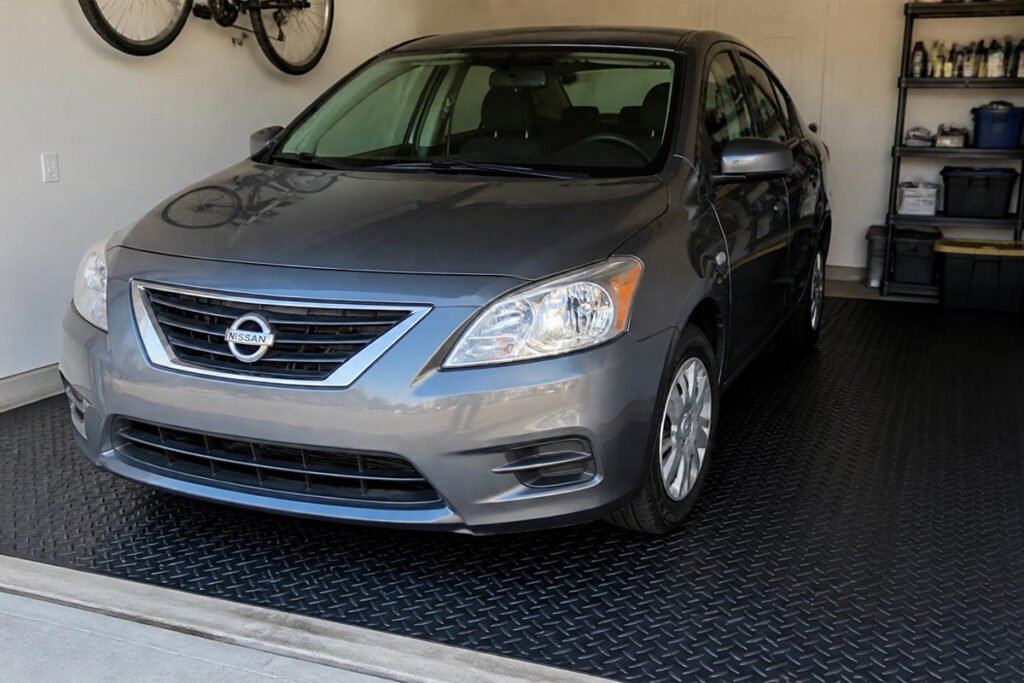
A straightforward PVC roll that covers the basics — a diamond plate pattern for grip, enough thickness to resist punctures from normal use, and a price that makes it an easy first upgrade from bare concrete. It won’t match the containment volume of the AutoFloorGuard or the durability of a rubber roll, but for the cost, it’s a clear step up from doing nothing.
Why buy it
- Lowest price on this list while still meaningfully protecting the floor underneath
- Included mounting tape helps keep it in place without a separate purchase
- Good option for a single parking spot rather than a whole-garage overhaul
Worth knowing
- Thinner material than the premium options, so it’s more prone to wear over time
- No raised containment edge — liquid can still run off the sides onto the surrounding floor
Verdict: the right call if budget is the primary constraint and you just need basic, affordable protection for one parking spot.
Which Mat Fits Your Garage?
- Snowy or salt-heavy climate: the AutoFloorGuard containment mat handles winter runoff better than anything else on this list.
- Mild climate, mostly worried about oil drips: the Drymate absorbent mat is a better everyday fit than a full containment system you don’t need.
- Workshop with tools, jacks, and heavy equipment: the Rubber-Cal rubber roll prioritizes durability and fire resistance over containment.
- Renovating for a permanent, showroom-style finish: RaceDeck interlocking tiles are worth the premium for the finished look and drainage.
- Tight budget, single parking spot: the NarwooAuto PVC roll covers the basics without a big investment.
Common Mistakes When Buying a Garage Floor Mat
Choosing based on price alone
A cheap thin mat that shifts, curls at the edges, or tears within a season often ends up costing more in replacements than a single quality mat would have upfront. Match the mat to your actual climate and use case rather than defaulting to the lowest price.
Ignoring your climate
A basic absorbent mat is a poor fit for a genuinely snowy climate, and a heavy containment mat is overkill if you never see snow or ice. Match the mat type to what your garage floor actually deals with most of the year.
Measuring the space incorrectly
Garage mats are sold in specific lengths and widths, and getting the size wrong either leaves gaps at the edges or requires cutting a mat that wasn’t designed to be trimmed. Measure the actual parking footprint, not just the garage’s overall dimensions, before ordering.
Forgetting about existing floor treatments
If you’ve already epoxy coated your garage floor, check whether a given mat’s backing can discolor or interact with the coating over time — some rubber-backed mats can leave marks on certain epoxy finishes if left in place for extended periods without occasional airing out.
Fast Buying Guide
Containment mat vs. absorbent mat vs. rubber flooring
Containment mats use a raised edge to hold liquid within the mat itself — the right choice for winter climates and heavy runoff. Absorbent mats soak liquid into the surface material — better for routine drips than large volumes. Rubber or interlocking tile flooring prioritizes a durable, non-slip work surface over liquid containment specifically. Pick based on what your garage actually deals with most: winter mess, everyday drips, or heavy equipment and foot traffic.
Sizing your mat
Measure the actual footprint you want covered — typically the length and width of your parking spot, with a few extra inches of margin on each side. Most containment and absorbent mats come in standard sizes like 7–8 feet by 16–20 feet for a single vehicle; interlocking tiles are sold by the square foot and can be sized to fit any layout.
Installation and maintenance
Roll-out mats need no real installation beyond unrolling and, ideally, taping the corners on bare concrete. Interlocking tiles take longer to lay but create a more permanent finish. For upkeep, a squeegee and occasional hose-down handles most containment and rubber mats; absorbent mats may need a stronger cleaner for stubborn stains. If you’re setting up the rest of the garage at the same time, our workshop setup guide and overhead storage guide cover the other half of building a genuinely functional space.
A note on ventilation and moisture
A containment mat catches liquid, but trapped moisture underneath any mat can still contribute to mold or mildew if the garage doesn’t get enough airflow. Pulling mats up occasionally to air out the floor underneath, and keeping the space generally well ventilated, prevents the mat itself from becoming a moisture trap rather than a solution.
Frequently Asked Questions
What’s the best garage floor mat for snowy climates?
A heavy-duty containment mat with a raised edge, like the AutoFloorGuard, is the strongest choice for snow and road salt — it actually holds meltwater rather than just slowing it down, which matters far more than material choice in genuinely snowy regions.
Do garage floor mats damage epoxy coating underneath?
Generally no, but some rubber-backed mats left in place for extended periods without airing out can leave discoloration on certain epoxy finishes. Check the mat manufacturer’s guidance on epoxy compatibility, and consider occasionally lifting the mat to let the floor breathe.
How do I clean a garage floor containment mat?
Most containment and rubber mats can be pulled outside, hosed down, and squeegeed dry. Absorbent fabric mats may need a stronger cleaner or a wet/dry vac for stubborn stains, since the liquid soaks into the fibers rather than sitting on the surface.
Are interlocking garage tiles worth the extra cost over a roll-out mat?
If you want a permanent, finished look and genuinely heavy load capacity, yes. If you mainly need basic protection and want the option to roll it up and take it with you if you move, a standard mat is the more practical and affordable choice.
What size garage floor mat do I need?
Measure your actual parking footprint with a few inches of margin on each side. Most single-vehicle mats run roughly 7–8 feet wide by 16–20 feet long; measure your specific space rather than assuming a standard size will fit.
Can I use a garage floor mat over a cracked or damaged concrete floor?
Yes — a mat can hide minor cracks and imperfections and adds a protective layer on top, though it won’t fix underlying structural issues. For significant cracking or settling, address the concrete itself before relying on a mat as a long-term cosmetic fix.
The Bottom Line
If you buy just one thing from this list, make it a heavy-duty containment mat like the AutoFloorGuard — it handles the widest range of real-world garage mess, from winter runoff to everyday drips. Step up to RaceDeck tiles if you want a permanent, showroom-quality finish, or down to the NarwooAuto roll if budget is the main constraint. Whichever you choose, it’s one of the easiest upgrades available for protecting a garage floor without the cost or commitment of a full epoxy job.
Last Updated: July 2026