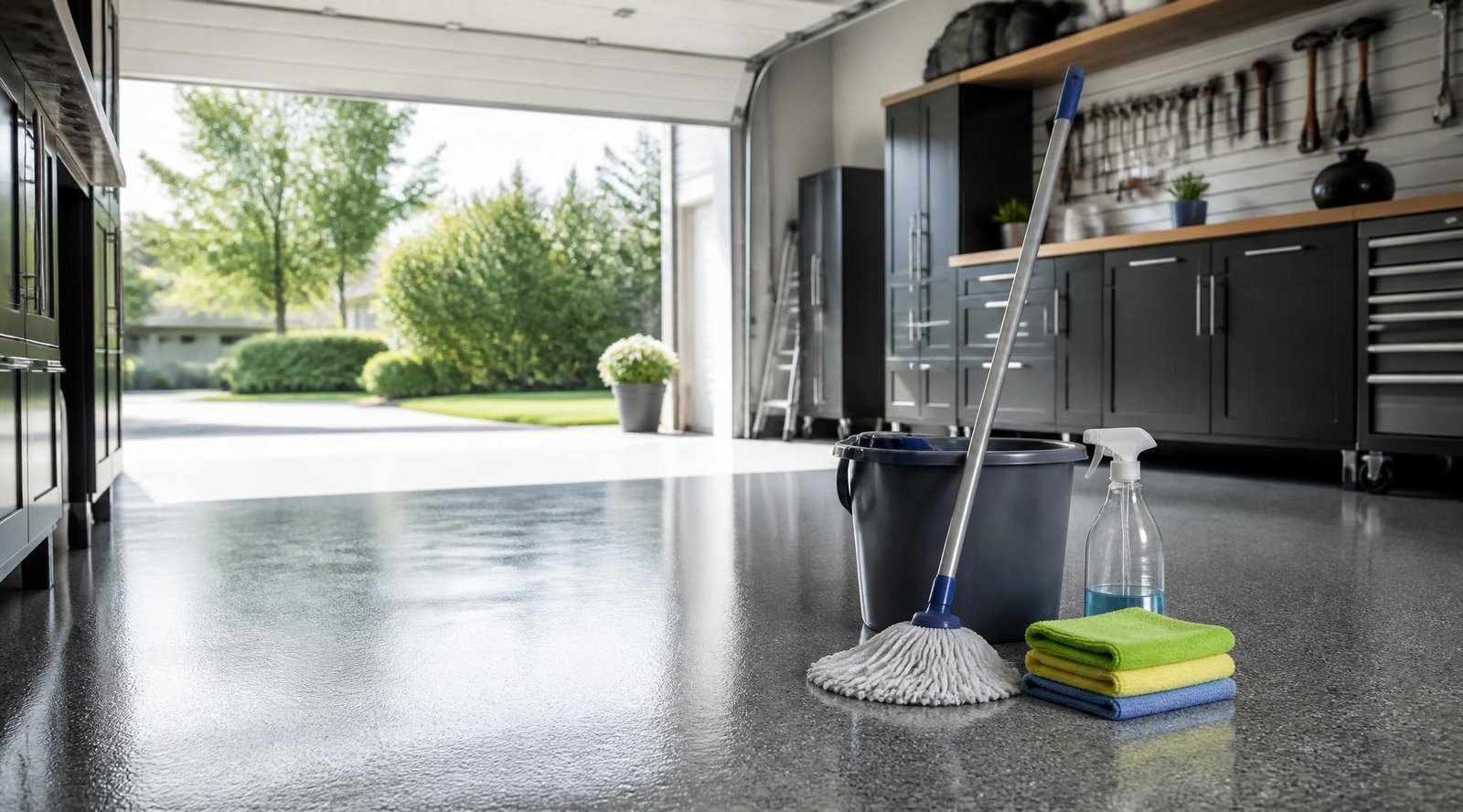
Your garage floor takes more abuse than almost any other surface in your home. Every day it bears the weight of your vehicles, absorbs oil drips, collects dirt and dust tracked in from outside, and endures harsh chemical spills. Over time, that neglect builds up into a floor that looks terrible, smells bad, and can even become a safety hazard.
The good news? Cleaning a garage floor is absolutely a DIY project — and when done right, the results are dramatic. A clean garage floor instantly makes the entire space feel more functional, organized, and professional.
In this complete guide, you’ll learn exactly how to clean a garage floor from start to finish — whether you’re dealing with everyday dust, stubborn oil stains, or years of built-up grime. We’ll cover the tools you need, the best cleaning methods for different floor types, and how to keep your floor clean long-term.
Why Cleaning Your Garage Floor Matters More Than You Think
Most homeowners think of garage floor cleaning as optional. It’s not. Here’s why regular cleaning is essential:
Safety First: Oil, grease, and wet debris turn your concrete floor into a slip-and-fall hazard. One unexpected slip can cause a serious injury.
Protects the Concrete: Dirt, salt, and chemicals gradually degrade concrete over time. Regular cleaning prevents surface damage, cracks, and spalling.
Extends Floor Coatings: If you have an epoxy or painted floor, regular cleaning dramatically extends its lifespan. Grit left on the surface acts like sandpaper under your tires. If you haven’t coated your floor yet, check out our guide on how to epoxy coat your garage floor for a durable, easy-to-clean finish.
Improves Air Quality: Concrete dust, mold spores, and chemical residue on your floor can migrate into your living space. Keeping the floor clean directly improves the air your family breathes.
Boosts Your Garage’s Usability: Whether you’re setting up a garage workshop or converting the space into a home gym, a clean floor is always the starting point.
What You’ll Need: Tools and Supplies Checklist
Before you start, gather everything you need. Having the right tools makes the job much faster and more effective.
Cleaning Tools:
- Stiff-bristle push broom or floor brush
- Wide dust mop or broom
- Mop and bucket
- Stiff deck brush (for scrubbing)
- Wet/dry shop vacuum
- Garden hose or pressure washer (optional but highly effective)
Cleaning Products:
- Dish soap or all-purpose cleaner (for general cleaning)
- Concrete degreaser (for oil and grease stains)
- TSP (Trisodium Phosphate) cleaner (for heavy-duty deep cleaning)
- White vinegar (for mild cleaning and odor control)
- Baking soda (for absorbing fresh oil)
- Kitty litter or sawdust (for soaking up fresh spills)
Safety Equipment:
- Rubber gloves
- Safety goggles
- Non-slip rubber boots
- Old clothes or an apron
Optional but Helpful:
- Pressure washer (1,500–2,000 PSI is ideal for residential garages)
- Concrete sealer (to protect after cleaning)
- Floor fan or blower (to speed up drying)
Step 1: Clear the Garage Floor Completely
The single biggest mistake people make when cleaning their garage floor is trying to work around everything. Don’t do it.
Move every vehicle, bike, tool chest, and storage item out of the garage or to one side. The more floor you can access, the better job you’ll do.
If your garage is heavily cluttered, this is also a great opportunity to declutter. Our ultimate garage organization guide walks you through the full process of sorting and storing everything properly — which makes future cleaning ten times easier.
Once the floor is clear:
- Check for any items you’ve been meaning to throw away
- Move trash, recyclables, and donation items to the appropriate areas
- Put small tools and loose items into bins or on shelves
Step 2: Dry Sweep and Vacuum the Floor
Before introducing any water or liquid cleaner, always do a thorough dry clean first. Wet cleaning over dry debris just turns dirt into mud and makes the job harder.
How to do it:
- Use a wide push broom to sweep the entire floor, working from the back corners toward the garage door.
- Pay special attention to the edges and corners where debris accumulates.
- Follow up with a shop vacuum to pick up fine dust, pet hair, and anything the broom missed.
- If you have wall-mounted storage, sweep down any dust that’s fallen from shelves — this prevents it from resettling on your clean floor.
Pro Tip: Wear a dust mask during this step, especially if the garage hasn’t been cleaned in a while. Concrete dust can contain silica particles that are harmful when inhaled.
Step 3: Identify and Pre-Treat Stains
Before general cleaning, identify the specific stains on your floor. Different stains need different treatments.
Oil and Grease Stains
Oil stains are the most common and the most stubborn. The key is to use a degreaser, not regular soap.
For fresh oil spills (less than 24 hours old):
- Immediately cover the spill with kitty litter, baking soda, or sawdust.
- Let it sit for at least 30 minutes to absorb the oil.
- Sweep up the absorbent material and discard.
- Apply a small amount of dish soap directly to the remaining stain, scrub with a stiff brush, then rinse.
For old or set-in oil stains:
- Apply a dedicated concrete degreaser (available at any hardware store) directly to the stain.
- Let it dwell for 10–15 minutes.
- Scrub vigorously with a stiff deck brush.
- Rinse thoroughly with water.
- Repeat if necessary for very old stains.
Pro Tip: Commercial degreasers like Purple Power, Zep Heavy-Duty Degreaser, or Oil Eater work exceptionally well on concrete. Always follow the product’s safety instructions.
Rust Stains
Rust stains are common near metal shelving, tools, or vehicles with rusty undercarriages.
Treatment:
- Apply white vinegar directly to the rust stain.
- Let it sit for 10–15 minutes.
- Scrub with a stiff brush.
- For stubborn rust, use a commercial rust remover or oxalic acid-based cleaner.
- Rinse completely — leftover acid can continue etching the concrete.
Tire Marks
Black tire marks on light concrete are mostly surface deposits of rubber and petroleum.
Treatment:
- Apply a degreaser to the marks.
- Let it soak for 5 minutes.
- Scrub with a deck brush.
- In most cases, a pressure washer will remove tire marks entirely with the right degreaser pre-treatment.
Paint Stains
For fresh paint: Wipe up immediately with a rag and clean with warm soapy water.
For dried paint: Use a paint stripper safe for concrete, apply, let dwell, then scrub and rinse. A pressure washer can also be very effective at removing flaking paint.
Mold and Mildew
Dark stains in corners or near walls may be mold. This is a safety issue.
Treatment:
- Mix 1 cup bleach with 1 gallon of water.
- Apply to the affected area.
- Let sit for 10 minutes.
- Scrub with a stiff brush.
- Rinse thoroughly.
- Improve ventilation to prevent recurrence.
Step 4: Deep Clean the Entire Floor
Once stains are pre-treated, it’s time for the full floor wash.
Method 1: Bucket and Mop (Basic Cleaning)
Best for: Lightly soiled floors, painted or epoxy-coated floors, or after light use.
Instructions:
- Fill a mop bucket with warm water and a floor cleaning solution (dish soap, TSP, or a dedicated concrete cleaner).
- Start at the back of the garage and work your way toward the door.
- Mop in wide overlapping strokes.
- Wring the mop frequently and change the water when it becomes visibly dirty.
- Follow with a clean water rinse — dirty mop water left on the floor will dry as a film.
- Use a floor squeegee to push excess water out the garage door.
Method 2: Hose and Scrub Brush (Heavy Cleaning)
Best for: Bare concrete floors with moderate to heavy soiling.
Instructions:
- Mix your cleaning solution in a bucket (1 cup TSP or degreaser per gallon of warm water).
- Wet the entire floor lightly with the hose first.
- Apply the cleaning solution evenly across the floor.
- Let it dwell for 5–10 minutes so the cleaner can break down dirt and grease.
- Scrub the entire floor using a long-handled deck brush, working in small sections.
- Rinse thoroughly from back to front, pushing dirty water out the door.
- Check for missed spots and repeat if necessary.
Method 3: Pressure Washer (Best Results)
Best for: Stubborn grime, old oil stains, large garages, and floors that haven’t been cleaned in years.
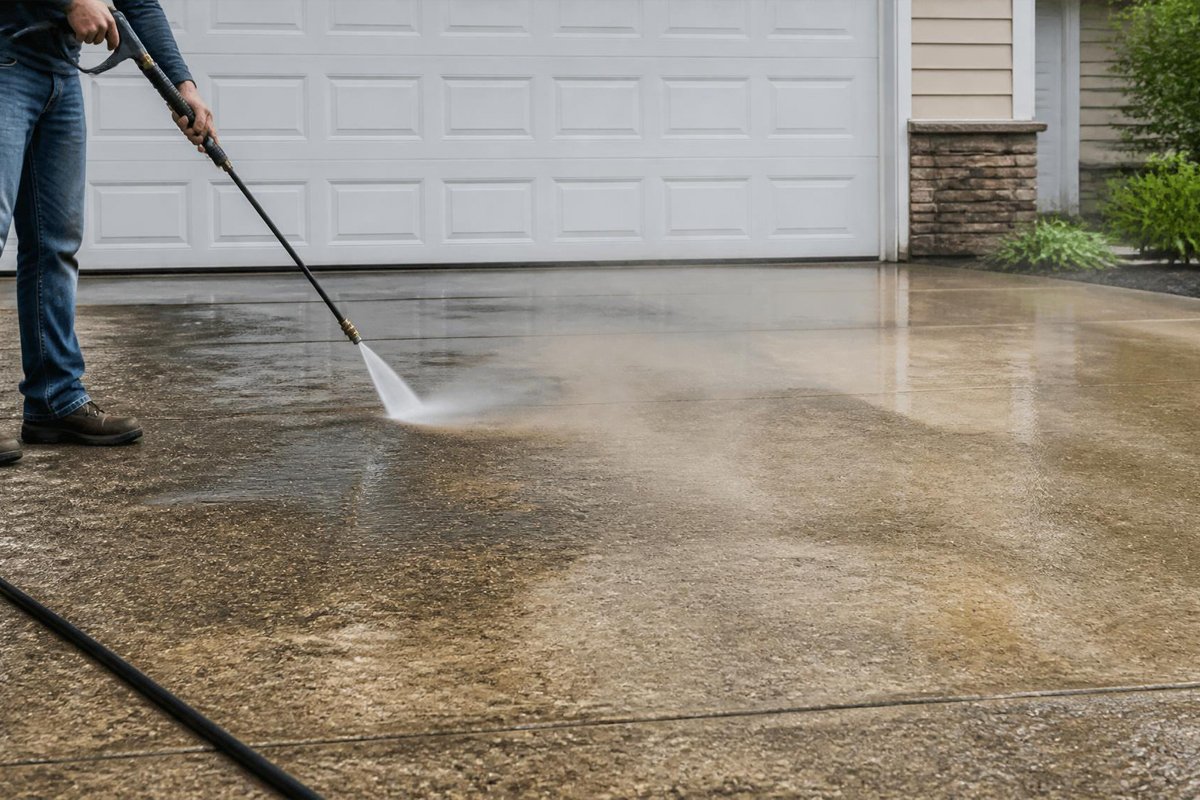
A pressure washer is the single most effective tool for deep-cleaning a concrete garage floor. If you already own one or can rent one, this method will produce the cleanest results by far. Our detailed guide on how to pressure wash your garage floor and driveway covers the full process step by step.
Quick overview:
- Apply degreaser and let it dwell.
- Use a 25-degree (green) tip at 1,500–2,000 PSI.
- Work in overlapping strokes from back to front.
- Keep the nozzle 6–12 inches from the surface.
- Make a final pass to push all water and loose debris out the door.
Important: Do NOT pressure wash painted or epoxy-coated floors — the high pressure can damage the coating. Use the mop method for coated floors instead.
Step 5: Rinse Completely
This step is often rushed, but it’s critical. Any cleaning solution left on the floor will dry into a sticky residue that actually attracts more dirt.
How to rinse properly:
- Use clean, fresh water — not the water from your cleaning bucket.
- Work from the back of the garage toward the door.
- If using a hose, keep it running and sweep the water with a floor squeegee as you go.
- Do at least two full passes with clean water.
- For large garages, this step alone can take 10–15 minutes. Don’t rush it.
Step 6: Dry the Floor Completely
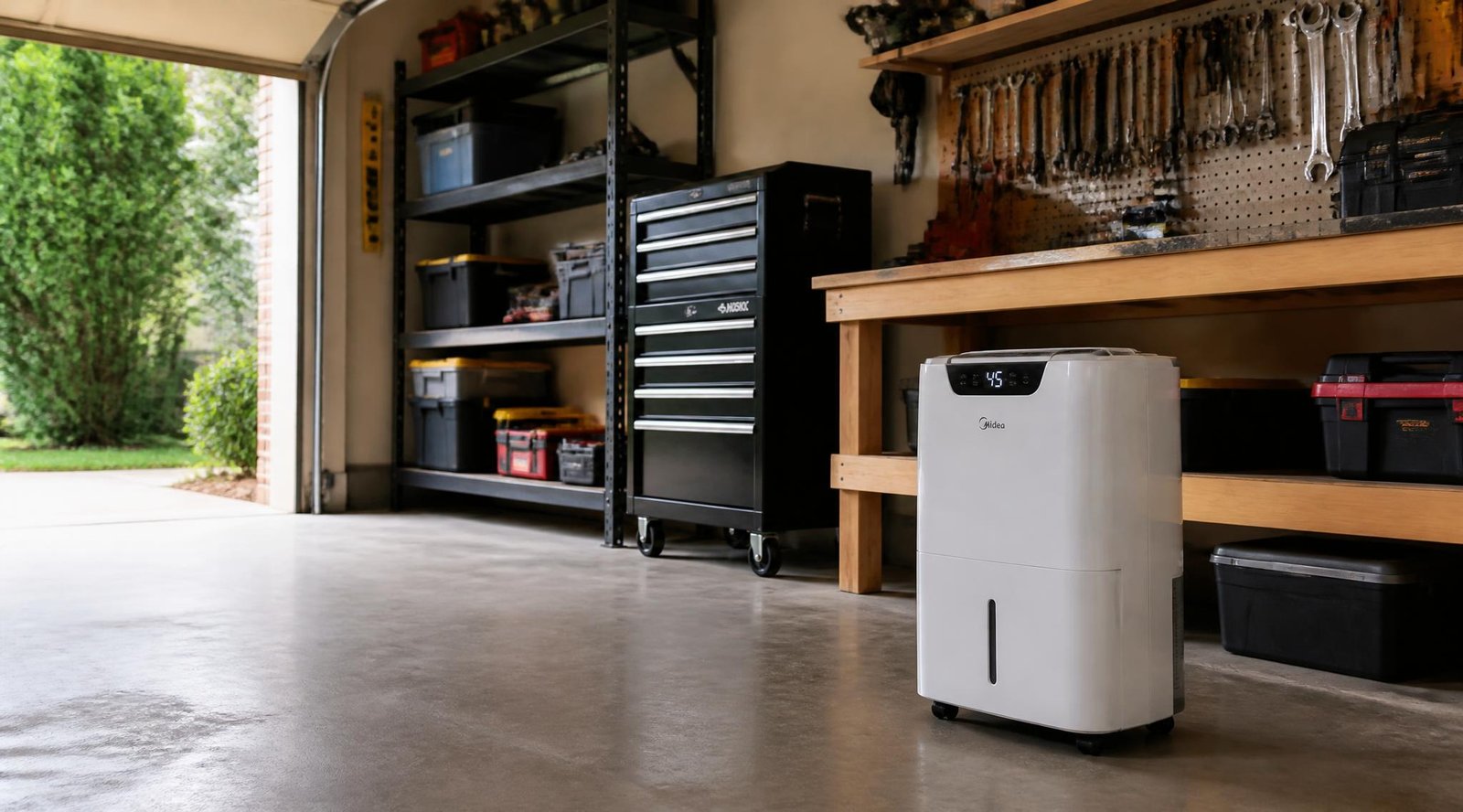
Never skip drying. A wet concrete floor is a slip hazard, and moisture sitting on concrete can also encourage mold growth, especially in poorly ventilated garages.
How to speed up drying:
- Open the garage door completely.
- Set up floor fans to push air across the wet surface.
- If you have a garage ventilation system, turn it on.
- Use a wet/dry vacuum to pull water out of low spots.
- On warm days, the floor can air-dry in 30–60 minutes. On cool or humid days, give it 2–3 hours.
Pro Tip: After the floor is dry, walk across the entire surface barefoot. You’ll immediately feel any areas that are still tacky or dirty — these are spots to re-clean.
Step 7 (Optional): Apply a Concrete Sealer
Once your floor is completely clean and dry, applying a concrete sealer is the best investment you can make for long-term maintenance.
Why seal?
- Creates a barrier that prevents oil and chemicals from penetrating the concrete.
- Makes future cleaning dramatically easier — spills wipe up instead of soaking in.
- Reduces dusting from the concrete surface.
- Gives the floor a cleaner, finished appearance.
Types of sealer:
- Penetrating sealers — Soak into the concrete and protect from within. Invisible finish, best for bare concrete.
- Acrylic sealers — Create a surface coating with a light sheen. More visible but easier to apply.
- Epoxy coatings — The gold standard for garage floor protection. For the full process, see our guide on how to epoxy coat your garage floor.
Application:
- Make sure the floor is 100% dry (wait 24 hours after cleaning).
- Apply sealer with a paint roller or sprayer.
- Work in sections from back to front.
- Let dry per product instructions (usually 4–24 hours) before walking on it.
- Apply a second coat for maximum protection.
How Often Should You Clean Your Garage Floor?
Here’s a simple maintenance schedule to keep your floor in great shape year-round:
Weekly:
- Quick sweep or vacuum to remove dust, leaves, and loose debris.
Monthly:
- Mop with warm soapy water or a diluted all-purpose cleaner.
- Spot-treat any new stains immediately.
Every 3–6 Months:
- Full deep clean with degreaser.
- Inspect for cracks, spalling, or damage.
Annually:
- Pressure wash the floor.
- Inspect and potentially re-apply sealer or touch up epoxy coating.
Cleaning Different Types of Garage Floors
Not all garage floors are the same. Here’s how to adjust your approach based on your floor type.
Bare Concrete
The most common type. Concrete is porous and will absorb stains quickly, but it’s also the most forgiving when it comes to heavy scrubbing and pressure washing.
- Use TSP or a dedicated concrete degreaser for deep cleaning.
- Pressure washing is safe and highly effective.
- Apply a sealer after cleaning for easier future maintenance.
Painted Concrete
Painted floors require a gentler approach.
- Use a mild cleaner — avoid TSP, acids, and strong degreasers that can strip paint.
- Mop rather than pressure wash.
- Check for peeling or chipping paint and repaint as needed.
Epoxy-Coated Floors
Epoxy floors are the easiest to clean because they’re non-porous.
- Use a pH-neutral cleaner — avoid harsh acids or strong solvents.
- Mop or hose down with gentle pressure.
- Don’t use steel wool or abrasive scrubbers that can scratch the coating.
- Dry thoroughly to prevent water spots.
Garage Tiles (Interlocking)
Interlocking rubber or plastic tiles have gaps that can trap debris.
- Sweep and vacuum gaps regularly.
- Mop across the tiles with a mild cleaner.
- For deep cleaning, remove sections of tile, clean underneath, then replace.
Common Garage Floor Cleaning Mistakes to Avoid
Using too little water when rinsing: Soap residue left on the floor is a slip hazard and will actually attract more dirt. Always rinse thoroughly.
Cleaning without pre-treating stains: Mopping over oil stains without a degreaser first will just spread the oil around. Always pre-treat.
Using bleach on everything: Bleach is great for mold but can discolor concrete and damage sealers. Use it only on mold and mildew, not as a general cleaner.
Skipping the dry sweep: Wet cleaning over dry debris creates mud. Always dry sweep first.
Not wearing PPE: Cleaning chemicals, concrete dust, and mold spores are all health hazards. Gloves, goggles, and a dust mask are non-negotiable.
Rushing the dry time: Walking on or parking on a wet freshly-cleaned floor can leave tire marks or tracking right back into the work you just did. Give it time to dry fully.
Pro Tips for Maintaining a Clean Garage Floor Year-Round
Use entrance mats: Place a heavy-duty mat just inside the garage door to capture dirt and debris before it reaches the main floor.
Keep an absorbent material handy: A bag of kitty litter or oil-absorbent granules in the corner means you can tackle fresh spills before they set.
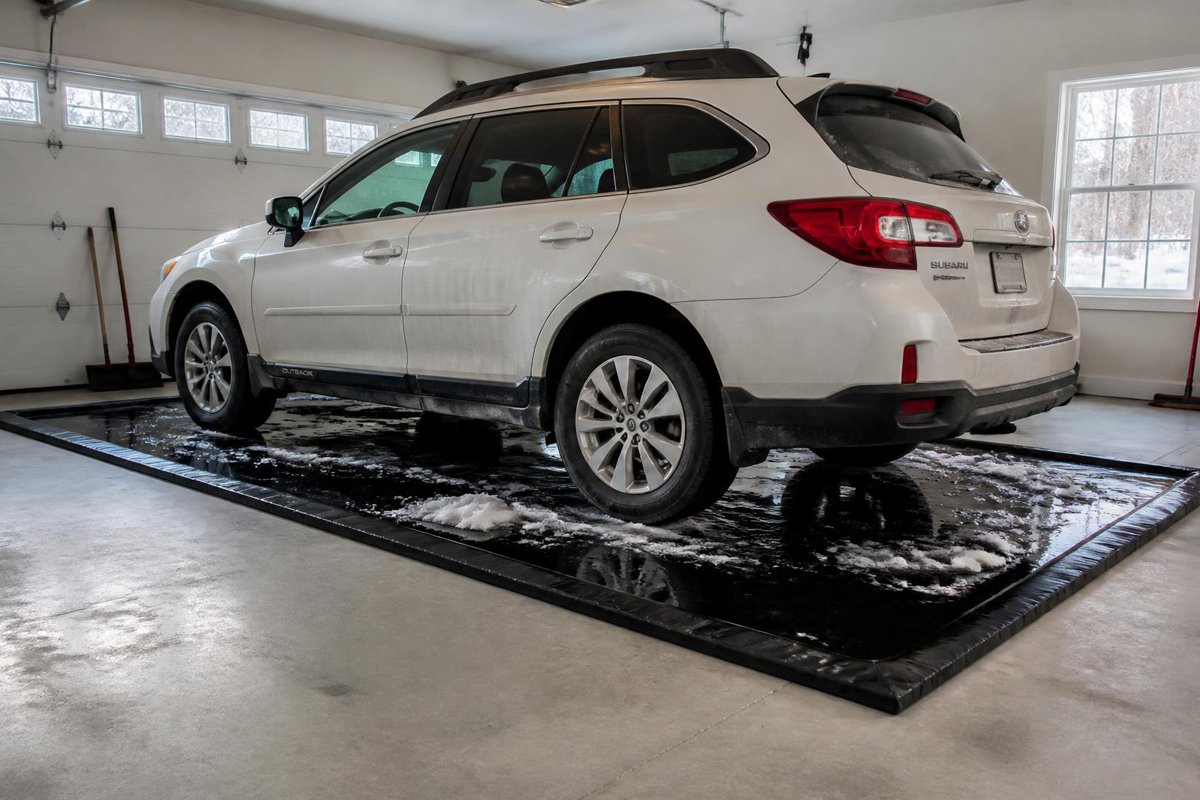
Add drip pans under vehicles: Especially for older cars that tend to leak. A simple drip pan catches oil and makes cleanup trivial.
Install proper lighting: It sounds unrelated, but bright lighting (see our guide on garage door lights ideas) means you’ll actually see dirt, stains, and spills when they’re small — making them much easier to deal with.
Improve garage weatherproofing: Dirt, moisture, and debris blow in under poorly sealed garage doors. Our complete garage door weatherproofing guide shows you how to seal out the elements — which directly reduces how much cleaning your floor needs.
Fix the door bottom seal: A worn or damaged bottom seal lets in enormous amounts of dirt, water, and pests. Learn how to replace your garage door bottom seal in an afternoon.
Frequently Asked Questions
How do I get old black oil stains off a concrete garage floor?
Apply a commercial concrete degreaser directly to the stain, let it soak for 15 minutes, then scrub hard with a deck brush. For very old stains, you may need to repeat this 2–3 times. A pressure washer after degreasing dramatically improves results.
Can I use a pressure washer on my garage floor?
Yes, on bare or sealed concrete. Use 1,500–2,000 PSI with a 25-degree tip. Do not pressure wash painted or epoxy-coated floors — use a mop method instead.
How do I get rid of the musty smell in my garage?
The smell usually comes from mold, mildew, or moisture. Clean the floor with a bleach solution (1:10 bleach to water) in affected areas, improve ventilation, and check your garage door seal. A floor fan running for a few hours after cleaning helps a lot.
What’s the best cleaner for a concrete garage floor?
For general cleaning: TSP (Trisodium Phosphate) or a dedicated concrete cleaner. For oil and grease: a commercial degreaser like Purple Power or Zep. For mold: diluted bleach. For routine maintenance: dish soap and warm water works perfectly well.
How do I prevent my garage floor from getting dirty so fast?
Use entrance mats, seal the concrete to prevent absorption, fix your garage door weatherstripping to keep out debris, and do a quick weekly sweep. A sealed floor is dramatically easier to maintain than bare concrete.
Do I need to seal my garage floor after cleaning?
You don’t have to, but it’s highly recommended. A sealed floor resists stains, is much easier to clean, and looks significantly better. It’s a one-time investment that pays off for years.
Conclusion: A Clean Garage Floor Changes Everything
Cleaning your garage floor isn’t glamorous work, but the results are genuinely transformative. A clean, well-maintained floor makes your garage safer, more functional, and a place you actually want to spend time in.
The process is straightforward: clear the space, sweep and vacuum, pre-treat stains, deep clean with the right products, rinse thoroughly, and let it dry completely. Done right, it takes a few hours and the difference is night and day.
Once your floor is clean, think about taking it to the next level. An epoxy coating makes it nearly impervious to stains and incredibly easy to maintain. Good organization makes it a joy to use. Smart weatherproofing keeps it cleaner for longer.
For more garage improvement guides, check out:
- How to Epoxy Coat Your Garage Floor
- How to Pressure Wash Your Garage Floor and Driveway
- Ultimate Garage Organization Guide
- How to Set Up a Garage Workshop
- Complete Garage Door Weatherproofing Guide
Your garage floor is tougher than it looks — give it the care it deserves, and it will serve you reliably for decades.
Last Updated: June 2026 | GarageDaily.com