
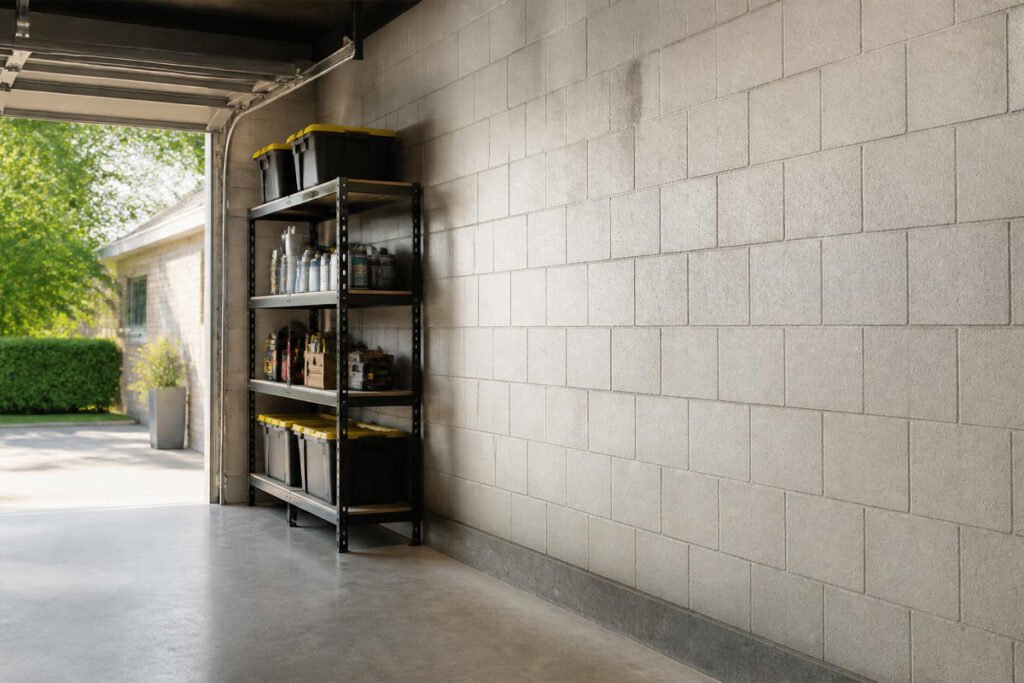
Garage floors get all the attention when it comes to cleaning, but walls quietly collect just as much grime — tire scuffs near the bumper zone, splattered paint from old projects, cobweb corners, and the faint gray haze that builds up on concrete block over the years. Because walls aren’t stepped on or driven over, most homeowners never think to clean them until they’re repainting or trying to sell the house.
The problem is that garage walls aren’t one uniform surface. Bare concrete block, painted drywall, exposed studs, and pegboard organizers all respond to cleaning differently, and using the wrong method can smear stains deeper into porous concrete or peel paint off drywall. This guide breaks down exactly how to clean every common garage wall type, what causes the most stubborn buildup, and the mistakes that make walls look worse instead of better. If your walls also have visible mold or mildew spots, start with our garage mold removal guide before attempting general cleaning.
Quick Answer
The best way to clean garage walls depends on the surface underneath. Bare or painted concrete block needs a stiff brush, a degreasing cleaner, and plenty of rinse water since the surface is porous and absorbs stains. Painted drywall should be cleaned gently with a mild soap solution to avoid stripping or streaking the paint. Exposed studs and wood-paneled walls clean best with a dry brush first, followed by a lightly damp cloth, since wood swells and warps if it gets too wet. Pegboard and slatwall organizational panels just need a vacuum pass and a damp wipe between tool changes. Whatever the surface, always work top to bottom and address grease or oil spots immediately — the longer they sit, the more permanently they stain.
Table of Contents
- Why Garage Walls Get So Dirty
- How to Choose the Right Cleaning Method
- Best Cleaning Methods by Wall Type
- Comparison Table
- Cleaning Walls for Different Garage Situations
- How to Clean Garage Walls Correctly (Step-by-Step)
- Common Mistakes
- Expert Tips
- Final Thoughts
- FAQ
Why Garage Walls Get So Dirty {#why-dirty}
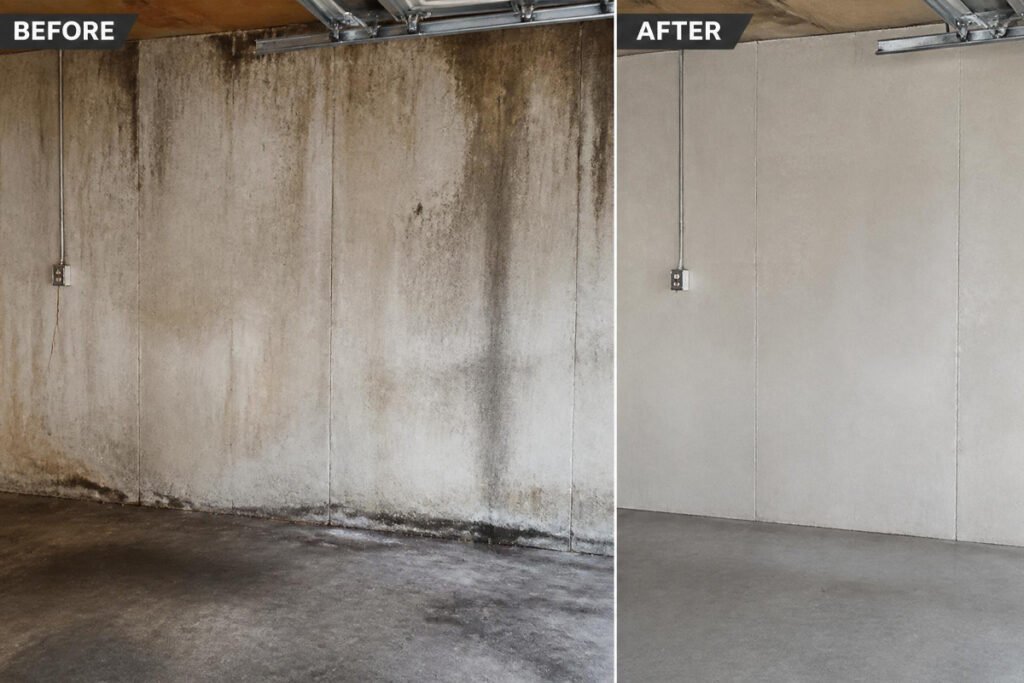
Garage walls sit exposed to everything that happens in the space without ever being wiped down as part of routine use, the way a floor or cabinet might be. Car exhaust settles as a fine gray film near the ceiling line. Splashes from mopping the floor or cleaning the garage door leave dirty water streaks at the baseboards. Tools brushing against pegboard leave metal scuffs, and any moisture problem in the space eventually shows up as a stain or mildew patch on the wall closest to the source.
Because concrete block and unfinished drywall are porous, they absorb whatever touches them rather than letting it sit on the surface — which is why a garage wall stain often looks far worse after a year than it did the week it happened. Left unaddressed, these same stains are usually the first sign of a larger moisture issue, which is worth checking against our garage ventilation guide if staining keeps returning in the same spot.
How to Choose the Right Cleaning Method {#choose-method}
Before scrubbing, take a minute to answer three questions:
Is the wall painted or bare? Bare concrete block can handle a stiffer brush and stronger cleaner than painted drywall, which scuffs and streaks under abrasive scrubbing.
Is the stain grease, mildew, or general dust? Grease needs a degreaser, mildew needs a mold-specific cleaner, and dust just needs a vacuum or dry brush. Using a degreaser on a mildew spot, or vice versa, wastes effort and can spread the problem.
Is the area well-ventilated while you clean? Scrubbing walls with any chemical cleaner in a closed garage builds up fumes fast. EPA guidance on mold cleanup recommends scrubbing hard surfaces with detergent and water and drying them completely, and the same ventilation principle applies to any wall cleaning that involves chemical products, not just mold-specific jobs.
Best Cleaning Methods by Wall Type {#best-methods}
Bare or Painted Concrete Block
Overview: Concrete block is the most common garage wall material in unfinished garages, and it’s also the most porous — which means it absorbs oil, grease, and moisture stains deeper than almost any other surface in the home.
Key Features:
- Highly porous, absorbs stains quickly
- Can handle stiff brushes and stronger degreasers
- Prone to a chalky white residue called efflorescence
- Common in unfinished or workshop-style garages
Best For: Unfinished garages and workshop spaces where durability matters more than appearance.
Pros: ✅ Handles strong cleaners well ✅ Very durable surface ✅ Easy to repaint if needed
Cons: ❌ Absorbs stains permanently if untreated ❌ Efflorescence can return after cleaning
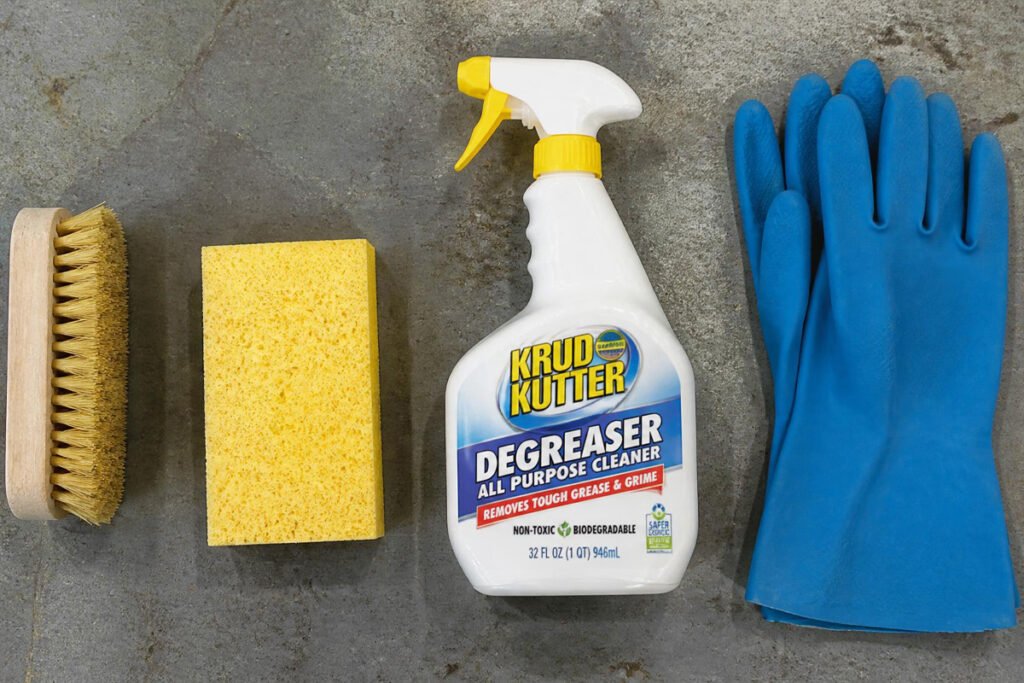
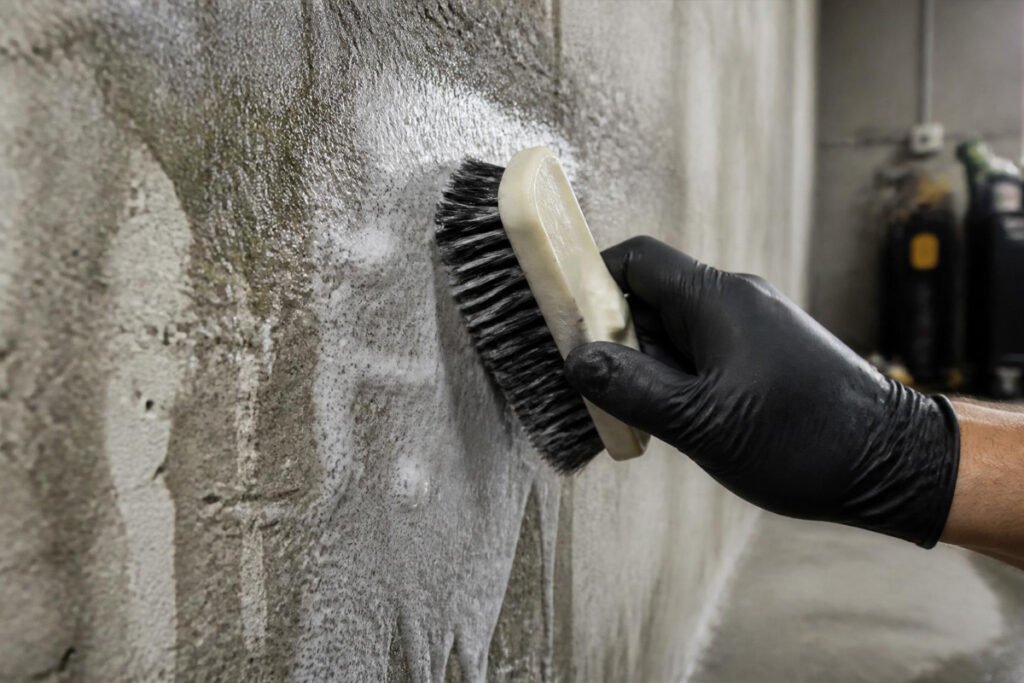
Our Verdict: Use a concrete-safe degreaser and a stiff nylon brush, working in small sections and rinsing thoroughly so residue doesn’t dry back into the pores. If you’re tackling wall stains at the same time as the floor, our garage floor cleaning guide uses a very similar process and the same class of cleaner.
Painted Drywall
Overview: Painted drywall is common in finished or converted garages — especially ones set up as a home gym or living space. It looks the most “finished” of any garage wall type but is also the most sensitive to moisture and abrasion.
Key Features:
- Smooth painted finish
- Damages easily with abrasive pads
- Vulnerable to bubbling if soaked
- Common in insulated, finished garages
Best For: Garages converted into living, workout, or hobby space.
Pros: ✅ Clean, finished appearance ✅ Easy to touch up with paint ✅ Simple soap-and-water cleaning
Cons: ❌ Streaks if scrubbed too hard ❌ Water damage risk if soaked
Our Verdict: A soft sponge, mild dish soap, and warm water handles almost everything short of deep stains. Wring the sponge out well before each pass, and never let water pool at the baseboard, which is where drywall damage usually starts.
Exposed Studs & Wood-Paneled Walls
Overview: Some garages, especially older or partially finished ones, have exposed wood framing or wood paneling instead of drywall or block. Wood is the most moisture-sensitive material on this list.
Key Features:
- Absorbs moisture quickly, risking warping
- Dust and cobwebs collect in grain and corners
- Should never be pressure washed or soaked
- Common in older or partially converted garages
Best For: Rustic or partially finished garage interiors.
Pros: ✅ Easy to dry-clean with a brush ✅ Natural look hides minor dust ✅ Low risk of chemical damage from mild cleaners
Cons: ❌ Warps or swells if overly wet ❌ Harder to fully disinfect
Our Verdict: Start with a dry brush or vacuum attachment to remove loose dust and cobwebs, then follow with a barely damp cloth for any remaining grime. If you’re insulating this type of garage as part of a larger project, see our garage insulation guide for how wall prep factors into the process.
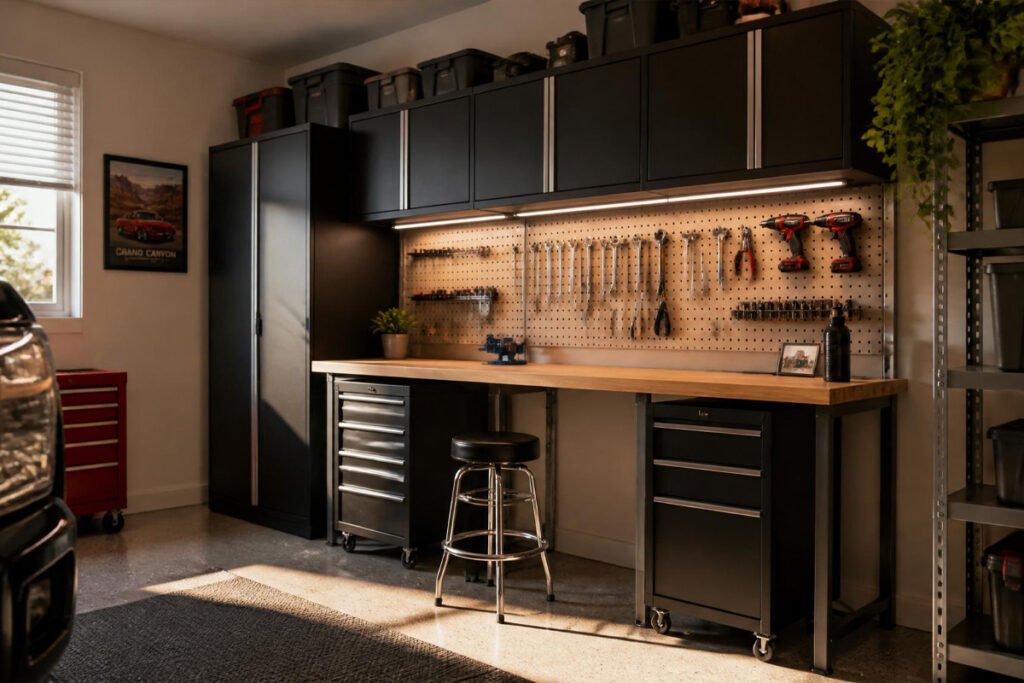
Pegboard & Slatwall Organizers
Overview: Pegboard and slatwall panels are mounted over the wall as a tool-organization system rather than a structural surface, and they collect dust differently since tools are constantly being moved on and off them.
Key Features:
- Open holes and grooves trap dust
- Metal hooks can scuff or scratch the panel
- Usually painted MDF, metal, or PVC
- Common in workshop-style garages
Best For: Tool-heavy workshop walls.
Pros: ✅ Fast to wipe down ✅ Doesn’t trap moisture like drywall ✅ Easy to spot-clean individual sections
Cons: ❌ Dust builds up in holes quickly ❌ Hooks and pegs need cleaning separately
Our Verdict: Vacuum the panel first with a brush attachment to clear dust from the holes, then wipe the surface with a lightly damp cloth. Clean hooks and pegs separately in a bowl of warm soapy water so grime doesn’t just transfer back onto the panel.
Comparison Table {#comparison}
| Wall Type | Best For | Cleaner Type | Moisture Risk | Difficulty |
|---|---|---|---|---|
| Bare/Painted Concrete Block | Unfinished/workshop garages | Concrete degreaser | Low (very porous but sturdy) | Moderate |
| Painted Drywall | Finished/converted garages | Mild soap & water | Medium (bubbling if soaked) | Easy |
| Exposed Studs/Wood Paneling | Rustic or partial garages | Dry brush + damp cloth | High (warping) | Easy |
| Pegboard/Slatwall | Workshop tool walls | Vacuum + damp wipe | Low | Very Easy |
Cleaning Walls for Different Garage Situations {#situations}
Oil, Grease & Tire Scuff Stains
Walls near where a car is parked pick up tire scuffs at bumper height and grease splatter lower down. These respond best to a degreaser applied directly to the stain and worked in with a brush before rinsing — the same approach used for garage floor degreaser stains, since both surfaces deal with the same source of grime.
Recurring Mildew or Musty Odor
If a wall stain keeps coming back in the same spot no matter how well you clean it, that’s usually a sign of an underlying moisture or ventilation issue rather than a one-time cleaning problem. Address any active mold first with our mold removal guide, and if a musty smell lingers after the stain is gone, our garage odor removal guide covers the next steps.
Workshop & DIY Overspray
Garages used for painting, sanding, or general DIY work end up with overspray and dust settled into every wall texture, especially concrete block and pegboard. Clean these walls more frequently than a typical garage — monthly rather than seasonally — and keep a dedicated brush just for this purpose so fine dust doesn’t get tracked elsewhere. If you’re setting up a dedicated project space, our garage workshop setup guide covers wall protection options that cut down on this buildup.
How to Clean Garage Walls Correctly (Step-by-Step) {#how-to}
Step 1: Prepare
Move anything stored against the wall out of the way, including totes or tarps leaning against it, and sweep or vacuum loose dust and cobwebs before applying any liquid cleaner.
Step 2: Clean/Setup
Open the garage door for ventilation and choose the right cleaner for your wall type based on the sections above. Test any new cleaner on a small hidden section first, especially on painted surfaces.
Step 3: Apply/Execute
Work top to bottom in manageable sections, using a brush for concrete block and a sponge or soft cloth for painted or wood surfaces. Focus extra effort on stained areas rather than scrubbing the entire wall at full intensity.
Step 4: Wait/Cure/Process
Let any degreaser or mold-specific cleaner sit for the dwell time listed on the label before rinsing or wiping away — this is what actually lifts the stain rather than just smearing it.
Step 5: Finish/Review
Rinse or wipe away cleaner residue completely, then let the wall air dry with the garage door open rather than closing everything up immediately. Trapped moisture behind stored items is one of the fastest ways a freshly cleaned wall develops a new mildew spot.
Common Mistakes {#mistakes}
Pressure washing painted or drywall surfaces. A pressure washer forces water behind paint and into drywall seams, causing bubbling and peeling that a hand cleaning never would. Save pressure washing for bare concrete block or exterior surfaces only.
Using bleach on porous concrete without ventilation. Bleach can help with surface mildew, but on porous block it needs proper airflow to avoid trapping fumes — the same ventilation principle covered in our garage ventilation guide applies directly here.
Cleaning walls but ignoring what’s stored against them. Bins, tools, and equipment pushed right up against a wall trap moisture and block airflow, which undoes a clean wall fast. Reorganizing with a bit of clearance, as covered in our garage organization guide, helps results last.
Expert Tips {#tips}
Treat stains the day you notice them. A fresh oil splatter wipes off a painted wall in seconds; the same stain after a month of curing may need a degreaser and real scrubbing. Speed matters more than the cleaner you use.
Keep a separate brush for concrete versus painted surfaces. A stiff brush that’s fine on bare block will scratch and streak painted drywall. Two brushes cost very little and prevent avoidable damage.
Pair wall cleaning with a seasonal storage check. Since most wall damage traces back to moisture or clutter pressed against it, checking storage loft and shelving setups at the same time keeps items off the walls entirely and cuts future cleaning way down.
Final Thoughts / Final Verdict {#final}
Best overall: A concrete-safe degreaser and stiff brush for bare block, switched to mild soap and water for any painted surface. Best for busy schedules: Pegboard and slatwall panels, which clean in minutes with a vacuum and damp cloth. Best for finished garages: Painted drywall, cleaned gently and dried with the door open to avoid moisture buildup.
Clean walls make the rest of the garage look finished, even when the floor and cabinets still need work. Once the walls are done, check out our garage floor cleaning guide or our garage safety guide to round out the space while everything’s already cleared out.
Frequently Asked Questions {#faq}
Do I need a special cleaner for garage walls, or will regular household cleaner work? Regular household cleaners work fine on light dust and painted drywall. Bare concrete block and stubborn grease stains usually need a dedicated concrete degreaser to actually lift the buildup instead of just moving it around.
How often should I clean my garage walls? Once or twice a year is enough for most garages, with spot-cleaning of fresh stains as they happen. Workshop garages with regular painting, sanding, or engine work benefit from monthly wall checks.
Can I pressure wash my garage walls? Only if the wall is bare, unpainted concrete block. Pressure washing painted drywall or wood paneling forces water behind the surface and causes peeling or warping.
Why does the same spot on my wall keep staining even after I clean it? A recurring stain in the same location almost always points to an underlying moisture or ventilation issue rather than a cleaning problem. Check nearby plumbing, grading outside the wall, and airflow before cleaning again.
Is it safe to use bleach on garage walls? Diluted bleach can help with surface mildew on non-porous painted surfaces, but it needs good ventilation and shouldn’t be used on porous, unsealed concrete without adequate airflow, since fumes can concentrate in an enclosed space.
What’s the best way to remove tire scuff marks from a wall? A degreaser applied directly to the mark and worked in with a brush usually removes tire scuffs completely. For deeper marks on concrete block, a second application after the first dries may be needed.
Should I seal my concrete block walls after cleaning? Sealing isn’t required, but it does make future cleaning easier since sealed concrete absorbs far less oil and moisture than bare block. It’s worth considering if the same stains keep recurring.
Can I use the same cleaner on walls that I use on my garage floor? Often yes, especially concrete-safe degreasers, since bare block walls and concrete floors are similar porous surfaces. Painted walls need a gentler cleaner than most floor products, though.
My garage walls smell musty even though I don’t see visible mold — what should I do? A musty smell without visible mold usually means moisture is trapped somewhere nearby, sometimes behind stored items or paneling. Improve airflow first, and if the smell persists, treat it as an early mold sign rather than waiting for visible growth.
Do pegboard and slatwall panels need to be taken down to clean properly? Not usually — a vacuum with a brush attachment reaches most trapped dust in the holes and grooves without removal. Full removal is only necessary for a deep annual clean or if hooks and pegs need separate washing.
Author: Danial Marquez Last Updated: July 2026