A garage is usually the least-watched entry point on a house, even though it often holds a car, power tools, bikes, and whatever overflow from the house ends up out there. Most homeowners lock the side door and call it done, but an unmonitored garage is exactly the kind of low-effort, low-risk target that opportunistic break-ins go after — no windows facing the street, no neighbor glancing over, and often a door that gets left cracked open longer than anyone would admit.
A dedicated security camera closes that gap without much effort. Modern options mount in minutes, run on Wi-Fi or battery power, and send a phone alert the second something moves in a spot where nothing should be moving. Pair one with a solid garage door security setup and you’ve covered the two weakest points most garages have.
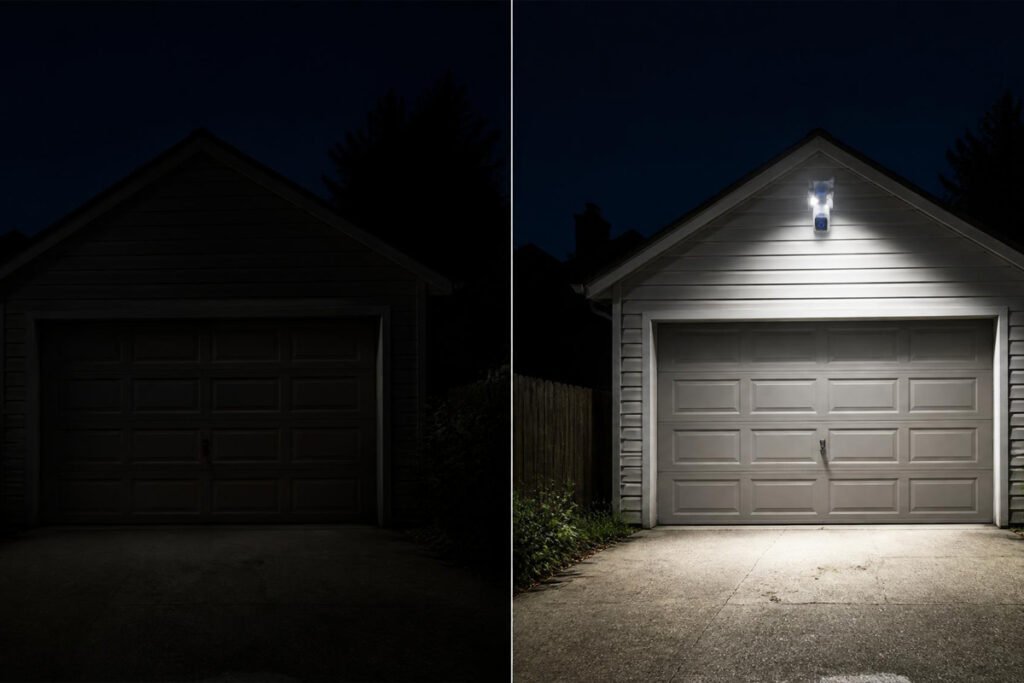
This guide compares five cameras that hold up specifically in garage conditions — temperature swings, dust, and often no nearby outlet — and breaks down which one fits which situation.
Quick Answer
The best garage security camera depends on how your garage is set up. If it’s attached to the house with power and Wi-Fi nearby, a wired or plug-in model like the Google Nest Cam gives the most reliable, always-on coverage. If you want zero wiring and don’t mind charging a battery every few months, the Arlo Pro 5S is the strongest all-around wireless pick. For a detached garage with no power run to it, a solar-powered, subscription-free option like the Eufy SoloCam S340 solves that problem outright. Budget shoppers do well with the Blink Outdoor 4, and anyone who wants built-in smart home integration and a visible deterrent leans toward the Ring Spotlight Cam Plus. Whichever you pick, the biggest single factor in actually catching something useful on camera is mounting height and angle, not the spec sheet.
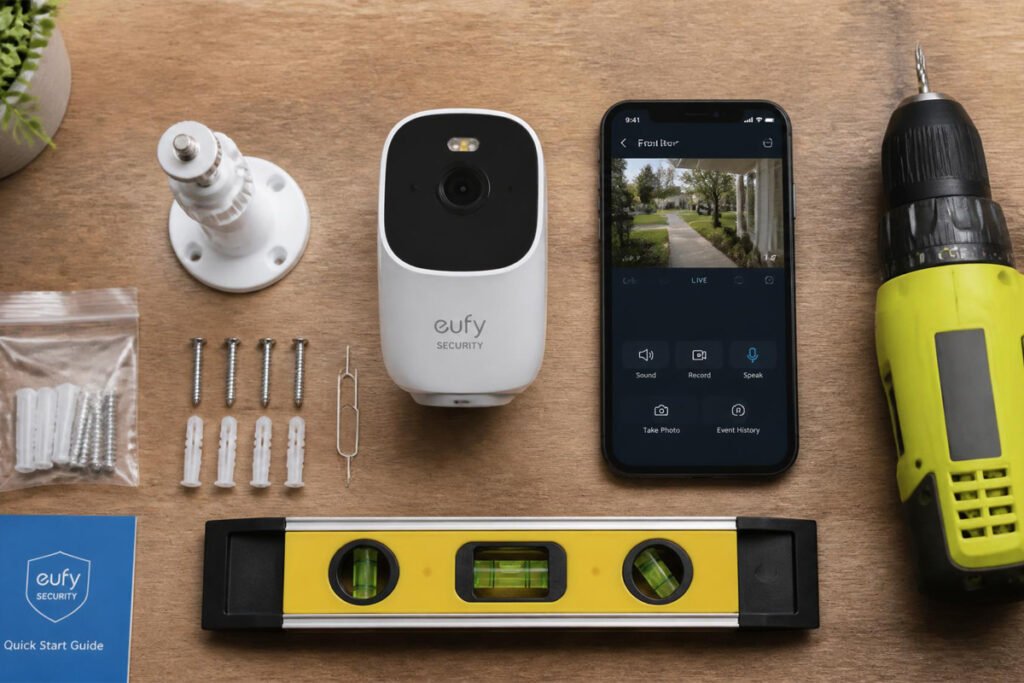
Table of Contents
- How Garage Security Cameras Work
- How to Choose the Right Camera
- Best Garage Security Cameras Available
- Comparison Table
- Best Cameras for Different Garage Setups
- How to Install a Garage Security Camera Correctly
- Common Mistakes
- Expert Tips
- Final Thoughts
- Frequently Asked Questions
How Garage Security Cameras Work
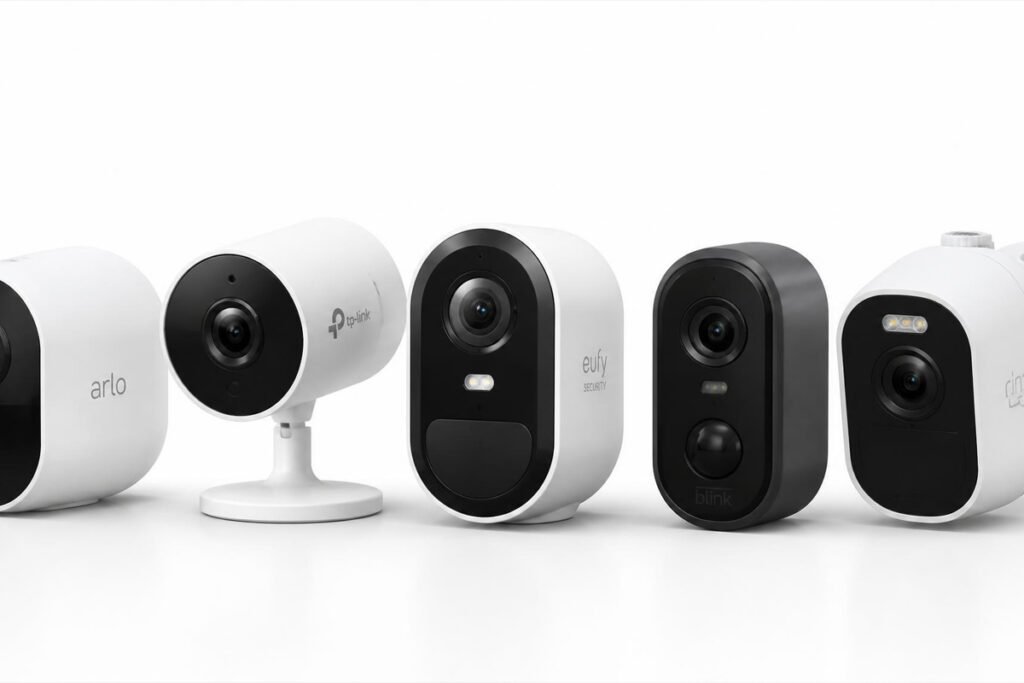
A garage security camera is built around three parts working together: a motion or person-detection sensor, a video feed you can view live or after the fact, and a way to store that footage — either locally on a memory card or in the cloud through a subscription. When the sensor trips, the camera starts recording, pushes a notification to your phone, and in many models turns on a spotlight or plays a warning sound at the same time.
For a garage specifically, two features matter more than they would on a front porch. First is smart detection that tells the difference between a person, a car pulling in, and a raccoon knocking over a trash can — without that, a garage camera facing a driveway will send more false alerts than useful ones. Second is a wide operating temperature range, since an unheated garage can swing from well below freezing to well over 100°F depending on the season, and cheaper indoor-rated cameras aren’t built for that.
Most current models connect over home Wi-Fi and are controlled through a phone app, though a few — useful for a detached garage or workshop far from the router — run on cellular data instead. If you’re setting up a full garage workshop, it’s worth planning camera placement at the same time as the rest of the layout rather than adding it as an afterthought.
How to Choose the Right Camera
Before comparing specific models, work through three questions:
Is the garage attached or detached? An attached garage usually has power and a strong Wi-Fi signal nearby, which opens up wired and plug-in options. A detached garage or shed often needs a battery or solar camera, or one with cellular backup.
Do you want to pay for cloud storage? Some cameras include a small amount of free local storage; most of the better detection features (person vs. vehicle vs. animal) sit behind a monthly subscription. Decide up front whether that’s worth it for your situation.
What’s actually worth watching? A camera aimed at the driveway and door catches break-in attempts; one aimed at the workbench catches theft of tools or gear once someone’s already inside. Most homeowners are better served covering the entry point first.
For general guidance on securing entry points around the home, the Federal Trade Commission’s guidance on home security devices is a useful, non-commercial reference point when comparing marketing claims against what a device actually delivers.
Best Garage Security Cameras Available
1. Google Nest Cam (Battery) — Best Overall
Overview: The Nest Cam is a battery or wired outdoor camera that leans on Google’s detection software to tell people, animals, vehicles, and packages apart, cutting down on the false alerts that plague cheaper cameras pointed at a driveway. It pairs naturally with a Google Home speaker, so a garage alert can trigger an announcement inside the house or let you pull up the live feed on a TV.
Key Features:
- On-device person, animal, vehicle, and package detection
- Works battery-powered or wired for continuous power
- Familiar-face recognition and extended video history with a Nest Aware subscription
- Integrates with Google Assistant and Google Home speakers/displays
Best For: Attached garages where a strong Wi-Fi signal and occasional outlet access are available, and households already using Google Home devices.
Pros: ✅ Strong, accurate detection reduces false alerts ✅ Flexible power options (battery or wired) ✅ Deep smart home integration with Google Assistant
Cons: ❌ Best features require a Nest Aware subscription ❌ No official battery-extending accessories like a solar panel
Our Verdict: For most attached garages, this is the camera to default to — the detection accuracy alone cuts down on the number of alerts you’ll actually bother checking. Pair it with a carbon monoxide detector and you’ve covered both the security and air-quality blind spots most garages have.
2. Arlo Pro 5S — Best Wireless All-Rounder
Overview: Arlo’s Pro line is fully wireless, weatherproof, and built specifically with driveway and garage placement in mind — the company’s own materials highlight garage-facing coverage as a core use case. It shoots in 2K HDR with color night vision and a wide field of view, wide enough to cover most of a driveway from a single mount above the garage door.
Key Features:
- 2K HDR video with color night vision
- Wide field of view suited to driveway/garage coverage
- Fully wireless, rechargeable battery design
- Optional Arlo Secure subscription adds custom detection zones and extended cloud storage
Best For: Homeowners who don’t want to run any wiring and are willing to recharge a battery every few months.
Pros: ✅ No wiring required — mounts almost anywhere ✅ Strong video quality with a wide field of view ✅ Custom detection zones available through the subscription
Cons: ❌ Battery needs periodic recharging (interval varies with activity level) ❌ Full feature set is subscription-gated
Our Verdict: This is the pick when running an outlet to the mounting spot isn’t practical. The trade-off is a recurring battery-charging chore, which is a fair price for a genuinely wire-free install.
3. Eufy SoloCam S340 — Best for Detached Garages (No Subscription)
Overview: The SoloCam S340 pairs a built-in solar panel with dual lenses and on-device storage, which means it can run indefinitely on a detached garage or shed with no nearby outlet and no monthly cloud fee. Footage stays local by default, an appealing option for anyone wary of subscription creep or cloud storage in general.
Key Features:
- Built-in solar panel for continuous charging in most climates
- Dual-lens design for wide coverage plus zoomed detail
- On-device storage with no subscription required for basic use
- Optional paid cloud plan if you want off-site backup
Best For: Detached garages, workshops, or barns with no power run to them and decent sun exposure.
Pros: ✅ No subscription needed for core recording and alerts ✅ Solar charging removes the battery-swapping chore entirely ✅ Works well in locations far from a power outlet
Cons: ❌ Solar charging is weather- and orientation-dependent — a shaded or north-facing mount won’t keep up ❌ Local storage is convenient but you’re responsible for the memory card, not a cloud backup
Our Verdict: If your garage is detached and unwired, this solves the actual problem — power — better than any camera that assumes you’re near an outlet. Just mount it somewhere the panel actually gets sun.
4. Blink Outdoor 4 — Best Budget Pick
Overview: The Blink Outdoor 4 keeps things simple: two AA batteries that last roughly a year or more depending on activity, a small base station for Wi-Fi communication, and straightforward person detection, all for a fraction of the cost of the premium options on this list. It won’t match the video quality of the Nest or Arlo picks, but it covers the basics reliably.
Key Features:
- Battery-powered with long battery life on standard AA cells
- Person detection included without a subscription
- Local video storage option via USB, avoiding recurring fees
- Wide field of view for a budget camera
Best For: Anyone who wants reliable basic coverage without spending much, or who’s outfitting several garage/shed locations at once.
Pros: ✅ Low upfront cost, especially for multi-camera setups ✅ Long battery life reduces maintenance ✅ Local storage avoids mandatory subscription costs
Cons: ❌ Lower video resolution than premium picks ❌ Detection is less accurate — more false alerts from cars, shadows, or animals
Our Verdict: Not the sharpest picture on this list, but for the price it’s the easiest way to put a working camera on a garage that currently has none at all.
5. Ring Spotlight Cam Plus — Best for Smart Home & Visible Deterrence
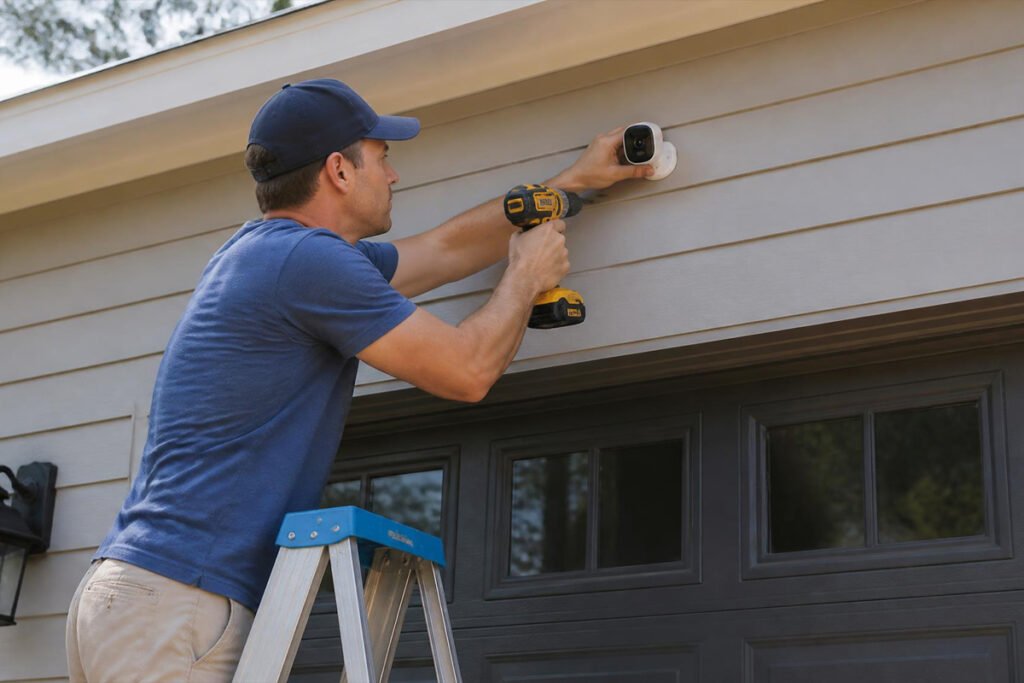
Overview: Ring’s Spotlight Cam Plus combines a bright built-in spotlight, a loud siren, and two-way audio, making it as much a deterrent as a recording device — someone approaching a dark garage at night gets lit up and, if needed, spoken to directly through the app. It integrates tightly with Alexa and the broader Ring ecosystem if you already use Ring elsewhere on the property.
Key Features:
- Built-in spotlight and adjustable siren
- Two-way talk through the mobile app
- Color night vision
- Deep Alexa and Ring ecosystem integration
Best For: Households already using Ring doorbells or alarm systems, and anyone who wants an active deterrent, not just passive recording.
Pros: ✅ Spotlight and siren actively deter, not just document ✅ Two-way audio lets you respond in real time ✅ Fits neatly into an existing Ring/Alexa setup
Cons: ❌ Most advanced features sit behind a Ring Protect subscription ❌ Less flexible for non-Alexa smart home setups
Our Verdict: If deterrence matters as much as documentation, this is the pick — a spotlight and a voice coming from the garage tends to end a prowling situation before it becomes anything worse.
Comparison Table
| Product | Best For | Power | Subscription Needed for Core Features | Approx. Price |
|---|---|---|---|---|
| Google Nest Cam (Battery) | Best Overall | Battery or wired | Optional, recommended | $130–$180 |
| Arlo Pro 5S | Best Wireless All-Rounder | Battery | Optional | $180–$220 |
| Eufy SoloCam S340 | Best for Detached Garages | Solar + battery | No | $130–$160 |
| Blink Outdoor 4 | Best Budget Pick | 2x AA battery | No | $80–$110 |
| Ring Spotlight Cam Plus | Best Smart Home/Deterrence | Battery or wired | Optional | $170–$200 |
Prices are approximate and vary by retailer and bundle — confirm current pricing before you buy.
Best Cameras for Different Garage Setups
Attached Garage With Power Nearby
If there’s an outlet within reach of your mounting spot, a wired or plug-in option like the Nest Cam removes battery maintenance entirely and tends to deliver the most consistent uptime. This is also the easiest setup to combine with a broader garage safety guide checklist, since you’re not constrained by battery placement.
Detached Garage, Shed, or Barn
Without power or reliable Wi-Fi, look at solar-charged models like the SoloCam S340, or a cellular-backed camera if Wi-Fi doesn’t reach that far from the house. This is also a good moment to double-check your garage door security more broadly, since a detached structure typically has fewer secondary deterrents than an attached garage does.
Multi-Car or Workshop Garage
A single wide-angle camera often can’t cover a large workshop and its driveway at once. Consider a second, lower-cost camera like the Blink Outdoor 4 aimed at a specific tool storage or workbench area — especially if you’ve already invested in a tool chest or storage cabinet setup worth protecting.
How to Install a Garage Security Camera Correctly
For general mounting-height and placement guidance beyond a single manufacturer’s recommendations, the National Crime Prevention Council offers independent guidance on positioning outdoor cameras for maximum deterrent effect.
Step 1: Prepare
Check your Wi-Fi signal strength at the intended mounting spot before drilling anything — a weak signal is the most common reason a garage camera drops offline.
Step 2: Choose the Mounting Height
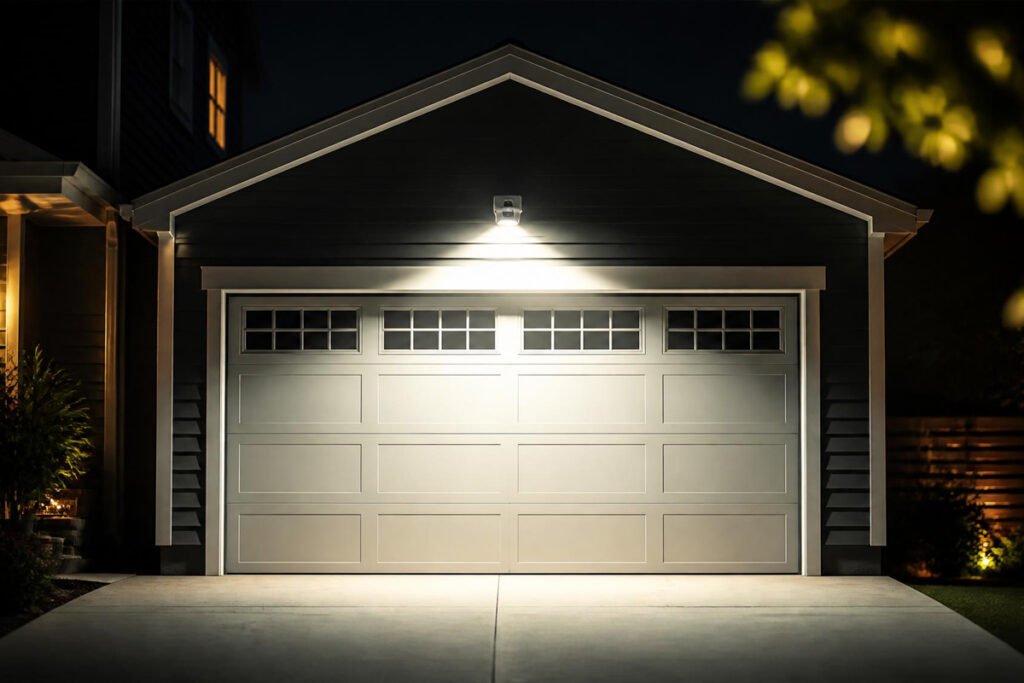
Aim for roughly 8–10 feet up. High enough to be out of easy reach, low enough to still capture a usable, identifiable image of a face rather than just the top of someone’s head.
Step 3: Set the Angle
Angle the camera to cover the driveway approach and the door itself, not just a wide empty sky-and-pavement shot. A slight downward tilt usually captures more useful detail than a level, straight-out view.
Step 4: Configure Detection Zones
Use the app’s activity zone settings to exclude the street or sidewalk if foot traffic there is triggering constant alerts you don’t care about.
Step 5: Test at Night
Motion detection and night vision both behave differently after dark. Walk the driveway at night after setup to confirm the camera catches you clearly before you rely on it.
Common Mistakes
Mounting too low. A camera at eye level gets an easy target for tampering and often captures a foreshortened, less useful angle. Go higher than feels necessary.
Ignoring the operating temperature range. Some budget cameras aren’t rated for genuinely cold winters or hot summers, and can shut down or behave erratically outside their spec range — worth checking against your climate before buying, and something to double check alongside your garage’s ventilation setup if the space runs especially hot.
Skipping the free trial period on detection features. Smart detection quality varies more between models than most spec sheets suggest. Use any free subscription trial to confirm the camera doesn’t flood you with false alerts before committing to a paid plan long-term.
Expert Tips
Combine a camera with a smart garage door sensor. A camera tells you something happened; a door sensor tells you the door itself was opened. Together they close more of the gap than either does alone, particularly if you’re already working through a broader garage door maintenance checklist.
Don’t rely on the camera as your only fire or CO safeguard. A security camera is not a substitute for a dedicated heat detector or carbon monoxide alarm — those solve a different, faster-moving problem than an after-the-fact recording can.
Re-check placement after any storage changes. Adding shelving, a workbench, or bike storage can block a camera’s field of view without you noticing until you actually need the footage.
Final Thoughts
Best Overall: The Google Nest Cam earns the top spot for its detection accuracy and flexible power options — it’s the camera most attached garages should start with.
Best Budget: The Blink Outdoor 4 gets a working camera on the garage for the least money, which matters more than a perfect spec sheet if the alternative is no camera at all.
Best for Detached Garages: The Eufy SoloCam S340’s solar charging solves the power problem that trips up most other options in that situation.
Whichever camera you choose, treat it as one layer of a broader setup rather than a complete solution on its own — paired with solid garage door security and the basics covered in a general garage safety guide, it closes most of the realistic gaps a garage has.
Frequently Asked Questions
Do I need a subscription for a garage security camera? Not strictly — most models record and alert on basic motion without one. A subscription typically unlocks smarter detection (person vs. animal vs. vehicle), longer cloud video history, and custom detection zones, which cuts down on false alerts but isn’t required for basic protection.
How much does a garage security camera cost? Budget models start around $80–$100, while premium options with better detection and video quality run $150–$220. Ongoing subscription costs, if you choose one, typically add $3–$10 per month per camera.
Wired vs. wireless — which is better for a garage? Wired or plug-in cameras avoid battery maintenance and tend to have more consistent uptime, making them the better choice when an outlet is nearby. Wireless models are more flexible for awkward mounting spots or detached structures with no power run to them.
My camera keeps sending false alerts — how do I fix it? Adjust the activity zones in the app to exclude the street, sidewalk, or anything with regular non-threatening motion, and check whether the camera’s sensitivity setting is set too high for its position. Models with dedicated person/vehicle detection (rather than generic motion detection) cut down on this significantly.
Can I use a garage security camera in a detached garage with no Wi-Fi? Yes, though your options narrow to solar or battery cameras with a strong enough signal to reach the house router, or a cellular-backed model that doesn’t depend on Wi-Fi at all. Check signal strength at the actual mounting spot before buying.
Will a security camera actually deter a break-in, or just record one? Visible cameras, especially ones with a spotlight or audible siren, do measurably discourage opportunistic break-ins — most burglars prioritize speed and low risk, and a lit-up, actively-responding camera works against both. It’s not a guarantee, but it shifts the odds.
Does cold weather affect battery-powered cameras? Yes — battery life drops noticeably in freezing temperatures, and very cheap cameras may not be rated for extreme cold at all. Check the manufacturer’s operating temperature range against your climate before relying on a battery model through a hard winter.
Should the camera face the driveway or the garage door itself? Ideally both — a mounting spot above or beside the garage door that captures the driveway approach as well as anyone standing at the door itself gives the most complete picture of an incident.
Can I add a second camera later instead of buying a multi-camera kit upfront? In most cases, yes — nearly every brand on this list supports adding additional cameras to the same app and account later, so starting with one camera at the main entry point and expanding later is a reasonable way to spread out the cost.
Is a garage security camera worth it if I already have a garage door opener with a camera built in? It depends on coverage — a camera built into a garage door opener typically only sees straight down into the garage interior, not the driveway or exterior approach. A separate exterior camera covers the part of the garage that a built-in opener camera usually misses.
Author: Danial Marquez Last Updated: September 2026