Choosing among the best garage heaters is harder than it looks, because the right one depends on your garage size, insulation, fuel access and how you use the space. A heater that works great in a tight single-bay workshop can struggle in a drafty three-car garage, and the wrong fuel type can mean an expensive rewiring or gas line you never planned for.
We compared specs, safety features, installation requirements and owner feedback to narrow the market to five garage heaters that cover the most common situations. Whether you want a permanent whole-garage solution or a portable heater for weekend projects, this guide shows you which one fits and what to check before you buy. Prices and availability change often, so always confirm the current price on the retailer page.
Quick Picks: Best Garage Heaters at a Glance
- Best overall (electric, hardwired): Dr. Infrared DR-975
- Best natural gas garage heater: Modine Hot Dawg HD45AS0111
- Best portable propane heater: Mr. Heater Big Buddy MH18B
- Best plug-in (120V) garage heater: Dr. Infrared DR-968
- Best electric heater with digital controls: Comfort Zone CZ230ERBK
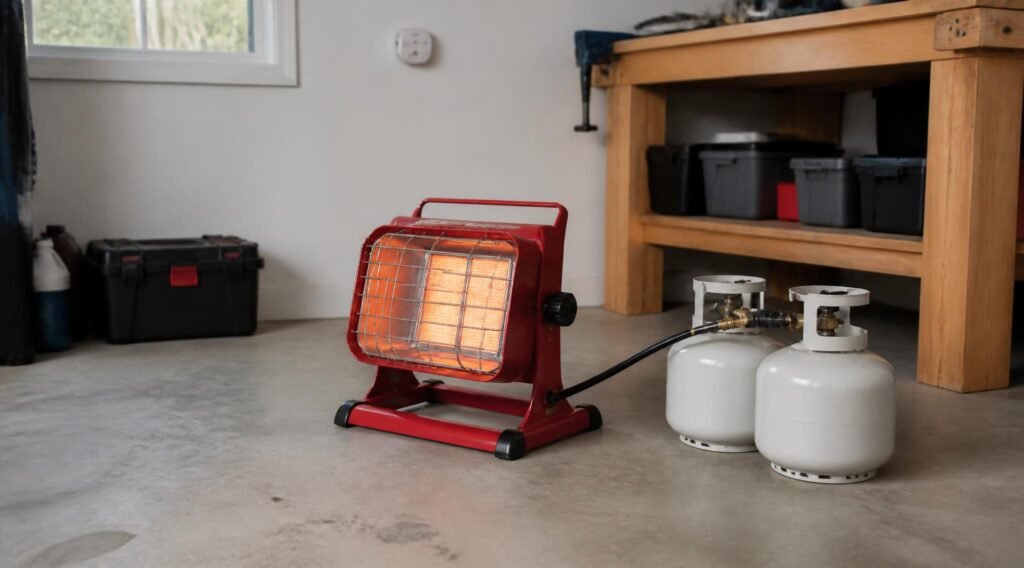
Table of Contents
- Comparison table
- How we picked these garage heaters
- The 5 best garage heaters in detail
- How to choose the right garage heater
- Electric vs propane vs natural gas
- Garage heater safety checklist
- Common mistakes to avoid
- Frequently asked questions
- Final verdict
Garage Heaters Comparison Table
| Heater | Type | Output | Power / Fuel | Best for | Approx. price* |
|---|---|---|---|---|---|
| Dr. Infrared DR-975 | Electric, hardwired | 4,700W / 7,500W (about 25,600 BTU) | 240V | Most 2-car garages and shops | $240–$360 |
| Modine Hot Dawg HD45AS0111 | Natural gas, power vented | 45,000 BTU input | Natural gas + 115V | Permanent, regular use | About $1,300 (unit only) |
| Mr. Heater Big Buddy MH18B | Portable propane | 4,000 / 9,000 / 18,000 BTU | Propane | Outages, no wiring, spot heat | $165–$250 |
| Dr. Infrared DR-968 | Electric, portable | 1,500W | 120V plug-in | Workbench zone, single bay | $130–$160 |
| Comfort Zone CZ230ERBK | Electric, hardwired | 7,500W (about 25,600 BTU) | 240V | Digital thermostat, remote, timer | Check current price |
*Prices are approximate ranges seen in October 2026 and vary by retailer and variant. Heater cost does not include installation.
How We Picked These Garage Heaters
We did not choose by brand name. Each of the garage heaters below had to meet these standards:
- Safety first: recognized safety certifications (UL or CSA) and built-in protections such as overheat shut-off, tip-over switches or oxygen depletion sensors.
- Realistic real-world fit: the heater has to match a common garage situation, from a small single-bay to a large insulated two-car garage.
- Clear installation path: we favor models where the wiring, venting or fuel setup is well documented by the manufacturer.
- Owner feedback: we looked for repeated praise or complaints across retailer and review pages, not single opinions.
- Value over time: purchase price, installation cost and running cost all matter.
We built this list from manufacturer specifications, retailer listings and published reviews. Always follow the manufacturer’s manual for your exact model, and have a licensed electrician or gas fitter handle any permanent installation.
The 5 Best Garage Heaters in Detail
1. Dr. Infrared DR-975: Best Overall Garage Heater
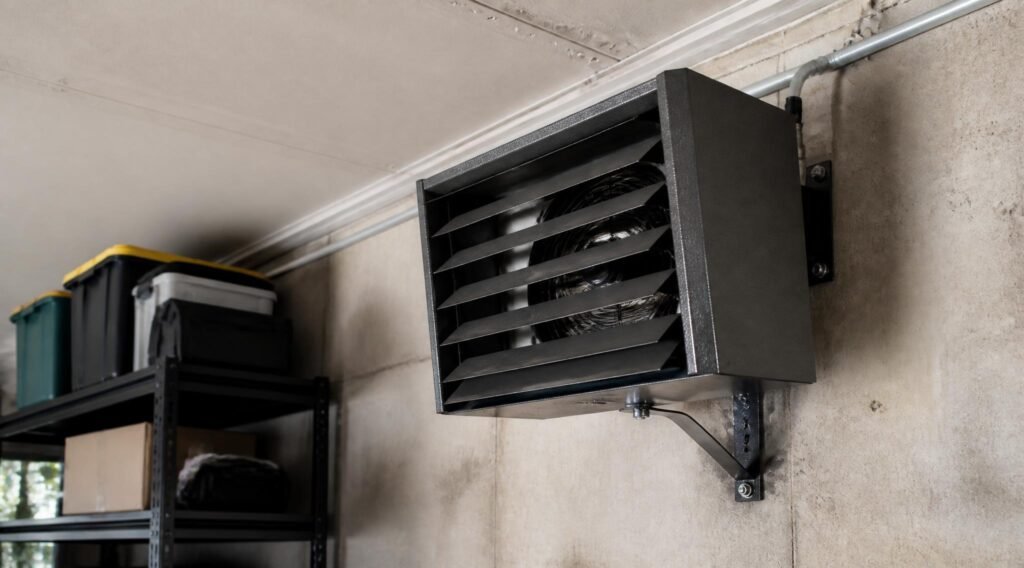
The Dr. Infrared DR-975 is a hardwired 240V electric heater that mounts on a wall or ceiling. It runs at 4,700W or 7,500W, which works out to roughly 25,600 BTU at full output. Retailers rate it for about 470 to 750 square feet, which covers a typical insulated two-car garage.
Because it is electric, there is no combustion, no venting and no fuel to store. That makes it one of the simplest garage heaters to live with once it is installed. It is fan-forced, so warm air moves through the space instead of just warming whatever is directly in front of it, and an enclosed motor design keeps noise reasonable. It includes a remote and a digital control panel, and the unit is UL-listed.
Key specs
- Power: 4,700W / 7,500W, 240V single phase, hardwired
- Output: about 25,600 BTU at 7,500W
- Mounting: wall or ceiling bracket included
- Controls: remote and digital panel
- Approximate price: $240–$360 depending on seller
Pros
- No fuel, fumes or venting to manage
- Strong enough for a well-insulated two-car garage
- Remote control and simple scheduling
- Reasonable price compared with gas heaters
Cons
- Requires a dedicated 240V circuit and professional installation
- High electricity use at full output
- Not a fit for renters or panels that are already near capacity
Who it is for: homeowners with an insulated garage who want a set-it-and-forget-it heater without running a gas line. If your garage has an unused 240V circuit, this is usually the cheapest permanent route.
Installation note: the manual calls for connection to an individual branch circuit with a proper disconnect, so have a licensed electrician size the wiring for your panel. Owners also report that if you add a wall thermostat, mounting it away from the heater’s direct airflow gives more accurate temperature control.
2. Modine Hot Dawg HD45AS0111: Best Natural Gas Garage Heater
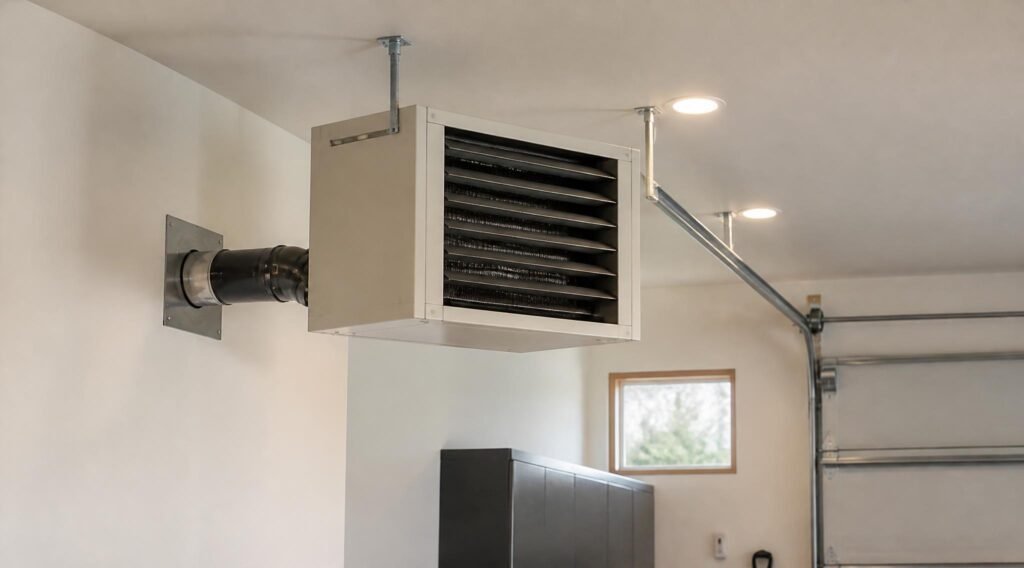
If you heat your garage often and already have natural gas at the house, the Modine Hot Dawg HD45 is the long-term answer. It is a power-vented unit heater designed for a two to two-and-a-half car garage, with 45,000 BTU per hour of input and roughly 36,900 BTU of output at about 82 percent thermal efficiency.
It hangs from the ceiling with just two brackets and mounts about an inch from the ceiling, so it does not eat up usable space. The power venter lets you vent through a side wall or roof using a small 3-inch vent pipe, and the heat exchanger carries a 10-year warranty (parts are covered for 2 years). Modine lists the unit at about 57 dBA at five feet, which is quiet for a heater this size. One owner of a mostly insulated two-and-a-half car garage reported the temperature rising from 42°F to 65°F in about fifteen minutes. Your results will depend on insulation and climate.
Key specs
- Input / output: 45,000 / about 36,900 BTU per hour
- Fuel: natural gas (convertible to propane with Modine kit #53079)
- Power: 115V, direct spark ignition
- Venting: power vent, 3-inch vent pipe
- Max mounting height: 10 feet
- Approximate price: about $1,300 for the unit at one major supplier; installation is extra
Pros
- Lowest running cost for frequent use in many areas
- Quiet for its output
- Compact, ceiling-mounted design saves floor and wall space
- Long heat exchanger warranty
Cons
- Highest upfront cost once the gas line, venting and labor are included
- Requires professional installation and venting through the wall or roof
- Overkill for occasional use
Who it is for: people who work in the garage through the winter and want permanent, whole-garage heat. If you only use the space on a few weekends, a cheaper option will pay off faster.
3. Mr. Heater Big Buddy MH18B: Best Portable Propane Garage Heater
The Mr. Heater Big Buddy is the go-to portable propane heater for garages without a convenient electrical or gas source. It has three heat settings of 4,000, 9,000 and 18,000 BTU per hour and is rated for up to about 450 square feet. It connects directly to two 1-pound propane cylinders, or to a 20-pound tank using an optional hose.
With two 1-pound cylinders, Mr. Heater lists roughly 11 hours on low, about 4.8 hours on medium and about 2.8 hours on high. It carries an oxygen depletion sensor and an accidental tip-over shut-off, and it is certified for indoor use in most of the United States. That portability also makes it useful during winter power outages.
Key specs
- Output: 4,000 / 9,000 / 18,000 BTU per hour
- Coverage: up to about 450 sq ft
- Fuel: propane (1 lb cylinders or 20 lb tank with hose)
- Safety: oxygen depletion sensor and tip-over shut-off
- Approximate price: $165–$250 depending on version and seller
Pros
- No installation or wiring
- Works during power outages
- Three heat levels and a decent runtime on a 20 lb tank
- Easy to move around the garage
Cons
- Burns propane indoors, so ventilation is required
- The unit is a radiant heater, so heat is strongest near the front
- Fuel cost adds up with heavy use
Buyer alert: Mr. Heater notes that, because of import tariffs, it removed the fan on some Big Buddy models, so check whether the version you are ordering includes one. The Massachusetts and Canada versions are certified for outdoor use only. The oxygen sensor also prevents use at altitudes of about 7,000 feet or higher, according to the manufacturer. See the Mr. Heater Big Buddy product page for current details.
Who it is for: occasional garage users, people who want a backup heat source, and anyone who cannot run a 240V circuit or gas line.
4. Dr. Infrared DR-968: Best Plug-In Garage Heater
Not every garage needs 7,500 watts. If you only want to take the chill off a workbench or a single parking bay, the Dr. Infrared DR-968 is a 1,500W portable heater that plugs into a standard 120V outlet. Published reviews describe a dual infrared and PTC design with a quiet blower and a 12-hour auto shut-off timer.
Think of this heater as a spot heater for the area where you stand and work, not a whole-garage solution. That makes it a smart option for renters, small spaces, or a garage that is already warm enough on most days. It also pairs well with the weather-sealing and insulation upgrades in our garage insulation guide, which can make a small heater go much further.
Key specs
- Power: 1,500W, 120V plug-in
- Type: infrared with a PTC element and blower (per published reviews)
- Timer: 12-hour auto shut-off
- Approximate price: $130–$160
Pros
- No installation required
- Lower purchase price than permanent heaters
- Quiet enough to run while you work
- Easy to move between rooms
Cons
- Not strong enough for a large or poorly insulated garage
- Shares a circuit, so avoid running it with other high-draw tools
- Heats the area near you more than the whole space
Who it is for: workbench heating, small single-bay garages, and anyone who wants a no-install solution. Double-check the exact specifications on the product page before buying, since retailers list coverage figures differently.
5. Comfort Zone CZ230ERBK: Best Electric Garage Heater With Digital Controls
The Comfort Zone CZ230ERBK is a hardwired 240V electric heater with 7,500W of output, roughly 25,600 BTU. It is the pick for people who want a similar level of power to the DR-975 with a digital thermostat, remote control and a 12-hour timer. Published reviews also highlight its overheat protection.
Retailer listings claim coverage up to 1,250 square feet, but treat that as a best-case number for a well-insulated space. A more realistic target is a two-car garage, the same as other 7,500W electric garage heaters.
Key specs
- Power: 7,500W, 240V hardwired
- Output: about 25,600 BTU
- Controls: digital thermostat, remote, 12-hour timer
- Safety: overheat protection
Pros
- Digital thermostat and remote for easy temperature control
- Fuel-free, vent-free electric heat
- Strong output for a two-car garage
Cons
- Needs a dedicated 240V circuit and professional wiring
- Running costs are higher than natural gas in many regions
- Coverage claims are optimistic for drafty garages
Who it is for: buyers who prefer a smart-feeling thermostat and timer and are comfortable with a licensed electrician running the circuit. Compare the CZ230ERBK directly with the DR-975 before buying, since both are close in power.
How to Choose the Right Garage Heater
Size the heater to your garage
A common rule of thumb is about 10 watts per square foot for electric garage heaters and about 45 BTU per square foot for gas heaters. A standard two-car garage is roughly 400 to 600 square feet, so an electric unit in the 4,000 to 6,000 watt range or a gas unit around 18,000 to 27,000 BTU is a reasonable starting point for an insulated space.
If your garage is poorly insulated, has a lot of door area or sits in a very cold climate, size up. Better yet, fix the heat loss first. Our complete garage insulation guide shows where the biggest gains are, and most owners find that insulating the garage door and sealing gaps makes any heater more effective.
Pick the fuel type that fits your setup
Electric garage heaters are the simplest to operate, with no combustion byproducts and no venting. Natural gas is usually the cheapest way to run a heater for long hours, but it needs a gas line and a vent. Propane sits in the middle, with the flexibility of portability but a recurring fuel cost and ventilation needs.
Consider how often you will use it
A permanent heater is worth the investment if you spend winter weekends in the garage. If you only heat the space a few times a season, a portable heater or a plug-in model will save you money upfront.
Check the electrical or gas requirements
Hardwired electric heaters need a dedicated 240V circuit and available capacity in your panel. Gas heaters need a gas line and proper venting. Get a quote from an electrician or gas fitter before buying, because installation can cost as much as the heater itself.
Look at controls and noise
A thermostat prevents overheating and wasted energy. A timer and remote make it easy to warm the garage before you walk in. Fan-forced heaters are louder than radiant ones, so check the decibel rating if you will be working near the unit for long periods.
Estimate the running cost
For electric heaters, multiply the kilowatts by your electricity rate. For example, a 7,500W (7.5 kW) heater at an assumed rate of $0.16 per kWh costs about $1.20 per hour at full output. Thermostats cycle the heater, so real usage is lower. For gas heaters, compare the cost per therm or per gallon with the BTU output. If you want exact numbers, use your own utility rates.
Electric vs Propane vs Natural Gas Garage Heaters
| Factor | Electric | Propane | Natural gas |
|---|---|---|---|
| Upfront cost | Low to moderate | Low | High (with installation) |
| Installation | 240V circuit for large units | None for portables | Gas line plus venting |
| Running cost | Higher in many areas | Moderate to high | Often lowest for heavy use |
| Ventilation | None required | Required | Vented outdoors |
| Portability | Plug-in models only | Excellent | Fixed |
| Best for | Insulated garages, no fuel handling | Occasional use, outages | Frequent winter use |
Garage Heater Safety Checklist
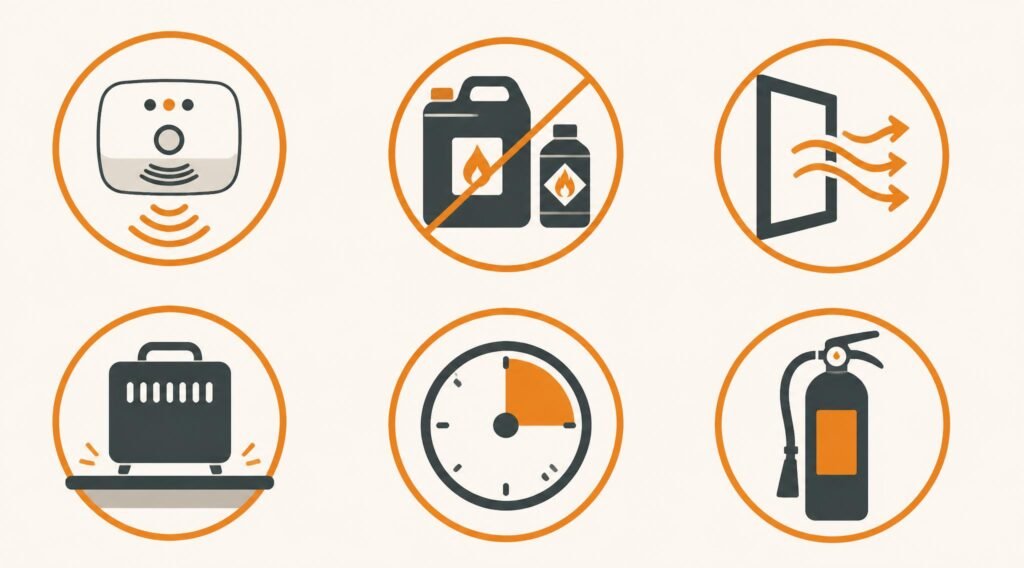
Garages store gasoline, solvents, paint and other flammables, so heater safety matters more here than in most rooms.
- Keep flammables away: store gasoline, paint thinner and aerosol cans well away from the heater, and follow the clearance distances in the manual.
- Ventilate fuel-burning heaters: propane and gas heaters need fresh air. Use a carbon monoxide alarm in or near the garage.
- Choose a heater rated for indoor use: some jobsite-style forced-air propane heaters are outdoor-rated, so do not use them in an enclosed garage unless the manufacturer says they are approved for it.
- Place on a stable surface: portable heaters need a flat, sturdy base and clear space on all sides.
- Never leave heaters running unattended: use a timer, and turn the heater off when you leave.
- Check for recalls: search your model on the CPSC recalls page before you buy and after you install.
- Use a licensed pro for hardwired and gas units: wiring and venting mistakes are the most serious risks with permanent heaters.
If you also run a workshop, our garage workshop setup guide covers ventilation and layout so your heater, tools and storage work together. Good lighting makes a cold garage easier to work in as well, so see the garage lighting guide.
Common Mistakes When Buying Garage Heaters
- Buying by the largest number on the box. Coverage claims assume ideal insulation. Size to your real garage.
- Ignoring installation cost. A cheap hardwired heater plus a new circuit can cost more than a mid-range portable.
- Skipping insulation. Heat escapes through an uninsulated door and walls, which makes any garage heater work harder.
- Using a heater in a closed garage without ventilation. Fuel-burning heaters need airflow and a carbon monoxide alarm.
- Forgetting the floor. A cold concrete slab keeps the room feeling cold. If you are planning a floor upgrade, see our garage floor epoxy guide and keep heat and moisture in mind when you plan the coating.
- Putting the heater where tools or storage block airflow. Plan the layout with your wall storage in mind.
Frequently Asked Questions About Garage Heaters
What is the best garage heater for a two-car garage?
For most insulated two-car garages, a 240V hardwired electric heater in the 5,000 to 7,500 watt range, such as the Dr. Infrared DR-975, is a strong choice. If you have natural gas and use the garage heavily, the Modine Hot Dawg HD45 is the better long-term option.
Are propane garage heaters safe?
Propane heaters that are certified for indoor use and include an oxygen depletion sensor and tip-over shut-off, like the Mr. Heater Big Buddy, can be used in a garage when you follow the manual. Ventilation and a carbon monoxide alarm are still essential.
What is the cheapest way to heat a garage?
The lowest purchase price is usually a plug-in electric or a portable propane heater. For heavy winter use, a natural gas unit heater often has the lowest running cost, though it costs more to install.
Do I need a 240V outlet for an electric garage heater?
Large electric garage heaters, such as the DR-975 and the CZ230ERBK, are 240V hardwired units and need a dedicated circuit. Smaller models, such as the DR-968, run on a standard 120V outlet.
How many BTUs do I need to heat a garage?
A simple rule is about 45 BTU per square foot for gas heaters. A 500 square foot insulated garage would need roughly 22,500 BTU, and more if the garage is poorly insulated or you live in a very cold area.
Can I leave a garage heater on overnight?
We do not recommend running any garage heater unattended overnight. Use a thermostat and timer, and keep flammable materials away from the unit. If you need to protect pipes or stored items from freezing, ask a professional about a permanent solution with a thermostat.
Will a heater work if my garage is not insulated?
It will warm the space, but it will use more energy and struggle to keep up in cold weather. Insulating the door, walls and ceiling lowers the size of heater you need and cuts running costs.
Final Verdict: Which Garage Heater Should You Buy?
The best garage heaters depend on how you use the space:
- For most insulated two-car garages, the Dr. Infrared DR-975 offers the best balance of power, price and ease of use, as long as you can add a 240V circuit.
- For frequent winter use with a gas line, the Modine Hot Dawg HD45 is the long-term investment.
- For outages, occasional use or no wiring, the Mr. Heater Big Buddy is the practical choice.
- For a workbench or small bay, the Dr. Infrared DR-968 is the simplest plug-in option.
- For digital controls on a 240V heater, the Comfort Zone CZ230ERBK is worth comparing against the DR-975.
Before you buy any of these garage heaters, measure your garage, check your electrical or gas options, and fix the biggest insulation gaps. A well-sealed garage with the right heater stays comfortable for less money all winter long.
Disclosure: Product details are based on manufacturer and retailer information available in October 2026. Prices change, so confirm the latest price, specifications and safety certifications before you buy. This article is for general information and does not replace professional installation advice.