You open the garage door and it hits you before you even step inside — a musty, stale, sometimes sharp smell that seems to live in the walls no matter how many times you sweep the floor. Garage odor removal is one of the most overlooked parts of garage upkeep, mostly because the space doesn’t get the airflow, natural light, or daily foot traffic that keeps smells from settling in.
Most garage odors come down to a handful of repeat offenders: trapped moisture, old spills, poor ventilation, and stored items that were never fully dry when they went on the shelf. The good news is that almost every garage smell is fixable without professional help or expensive equipment.
This guide walks through why garage odors happen, the best methods to eliminate them for good, and how to keep the space smelling clean year-round. If your garage floor itself is part of the problem, our guide on how to clean a garage floor is a good companion piece, and if airflow is the root cause, our garage ventilation guide covers the mechanics in more depth.
Quick Answer
The best fix for garage odor removal depends on the source. A musty, mildew smell usually means trapped moisture — a dehumidifier and better ventilation solve it fastest. A gas or chemical smell points to leaking containers or old fuel and needs to be addressed immediately for safety reasons, not just comfort. A general stale smell with no obvious cause is often just poor air circulation combined with absorbent surfaces like concrete and cardboard holding onto odor molecules. In nearly every case, the fix is a combination of removing the source, deep-cleaning surfaces, and improving airflow — air fresheners alone only mask the problem temporarily.
Table of Contents
- Why Garages Develop Odors
- How to Identify the Source Before You Treat It
- Best Garage Odor Removal Methods
- Comparison Table
- Best Odor Fixes for Different Causes
- How to Deodorize a Garage Step by Step
- Common Mistakes
- Expert Tips
- Final Thoughts
- Frequently Asked Questions
Why Garages Develop Odors {#why-garages-develop-odors}
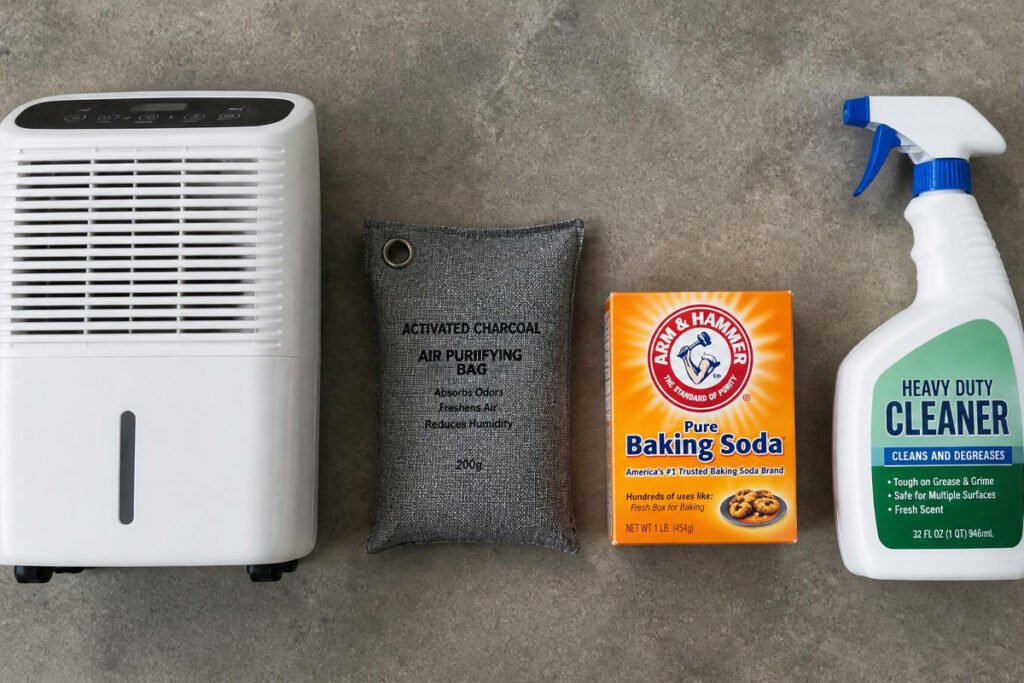
Garages are built differently than the rest of your home, and that’s exactly why they hold onto smells so easily. Concrete floors are porous and absorb oil, gasoline, and moisture rather than letting it evaporate. Most garages also have limited airflow — a single door that opens briefly a few times a day isn’t enough to cycle out trapped air, especially in an attached garage with no windows.
Add to that the typical contents of a garage — paint cans, fertilizer bags, damp sports equipment, trash and recycling bins, pet supplies, and vehicles that track in road grime — and you have a space that’s constantly introducing new odor sources while having almost no way to clear them out naturally.
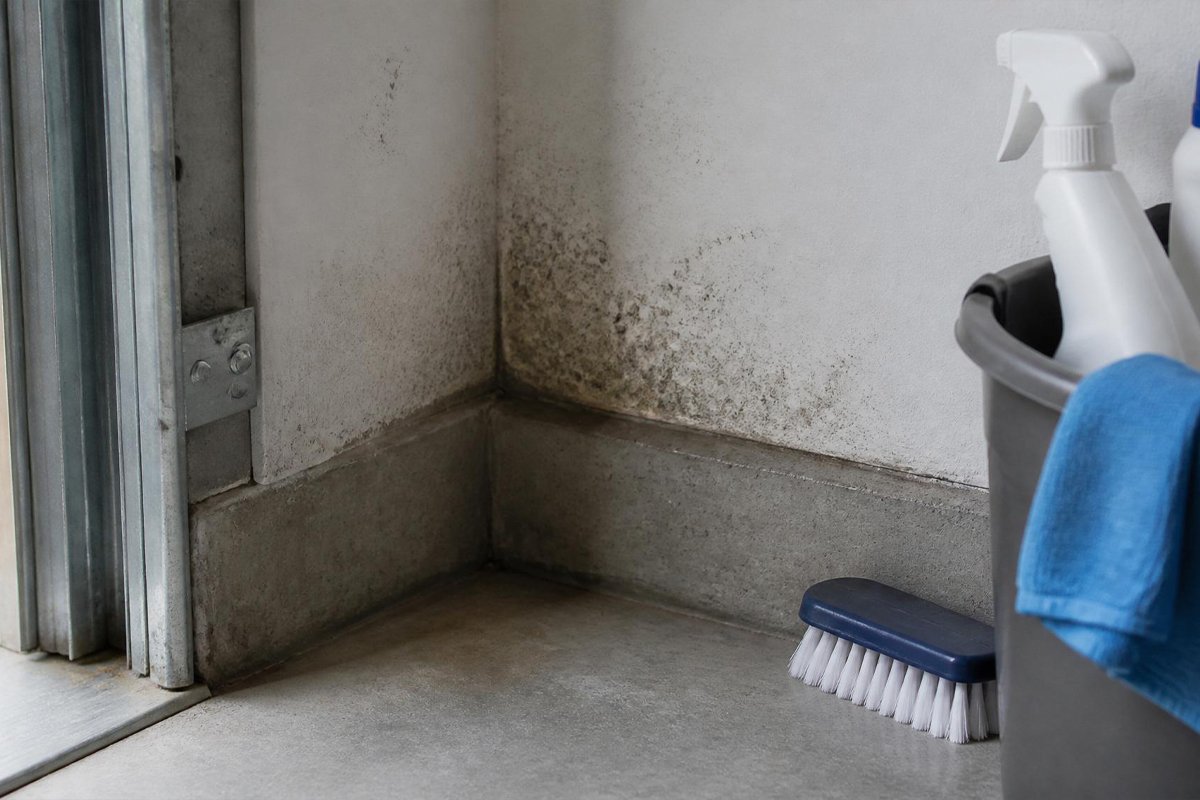
Humidity plays an outsized role here too. Garages tend to run more humid than living spaces because they’re less insulated and less climate-controlled. That humidity soaks into cardboard boxes, wood shelving, and drywall, creating the ideal environment for the mold and mildew that cause that classic “musty garage” smell. If your garage runs hot in summer and cold in winter, the temperature swings can also cause condensation to form on cold surfaces like pipes and metal shelving, adding even more moisture to the mix — something covered in more detail in our guide on how to insulate a garage.
How to Identify the Source Before You Treat It {#how-to-identify-the-source}
Before reaching for an air freshener or ozone machine, ask yourself three questions:
Is the smell new or has it always been there? A sudden new smell — especially gas, sewage, or a chemical odor — usually means something specific just happened (a leak, a spill, a dead pest) and needs to be found and removed, not masked.
Where is it strongest? Walk the garage and note where the smell intensifies. Near the floor drain, it’s likely moisture or sewage gas. Near stored chemicals or the lawn mower, it’s likely fuel. Near cardboard boxes or drywall, it’s likely mildew.
Does it change with the weather? If the smell gets worse on humid or rainy days, moisture is almost certainly the root cause, and no amount of scrubbing will fully fix it until humidity control is addressed. For a deeper look at safety-related smells like gas or exhaust fumes, our garage safety guide covers warning signs worth taking seriously.
Best Garage Odor Removal Methods {#best-methods}
1. Deep Clean the Floor and Walls
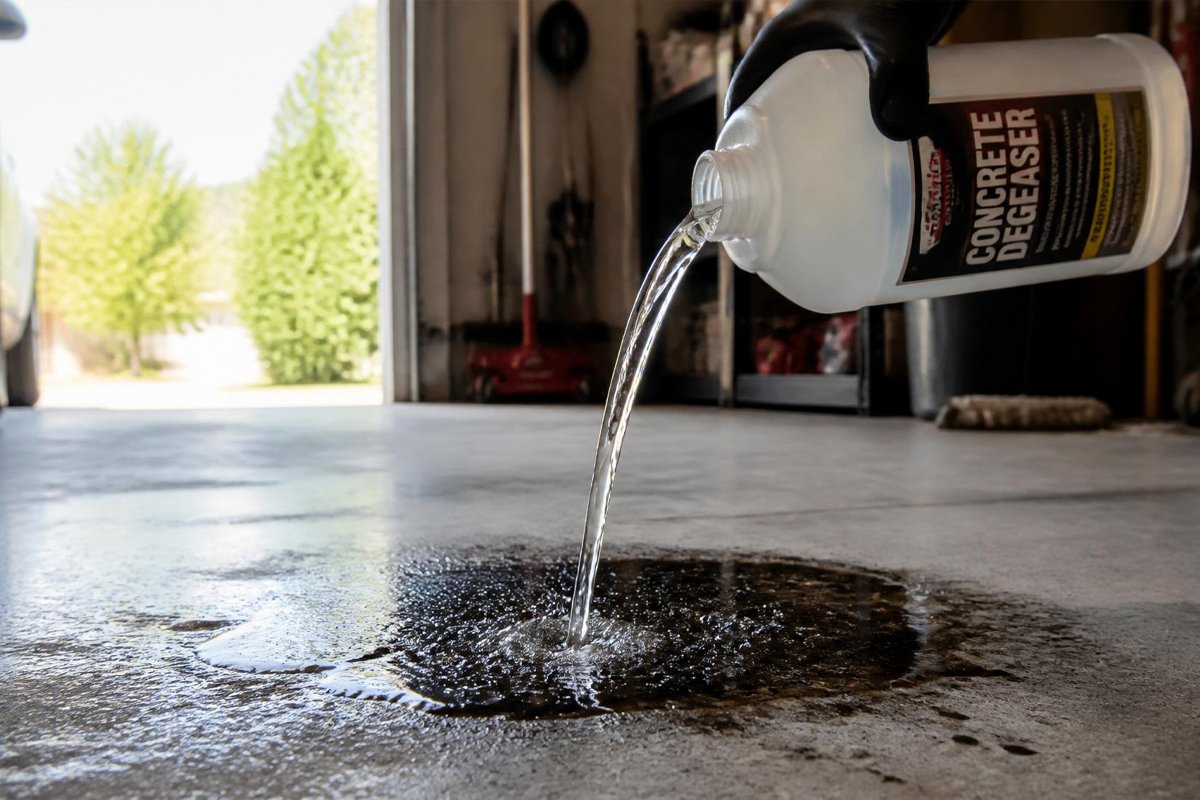
Overview: Concrete absorbs odors the same way it absorbs stains, so surface sweeping rarely solves a smell problem. A proper degreasing and scrubbing pass — especially over any visible stains — pulls out the source material trapped in the pores of the concrete.
Key Features:
- Removes oil, fuel, and organic residue at the source
- Works on both sealed and unsealed concrete
- Pairs well with an enzyme cleaner for organic odors (pet accidents, spoiled food, mildew)
Best For: Garages with visible floor stains or a general “stale” smell with no obvious single cause.
Pros: ✅ Addresses the actual source ✅ Inexpensive ✅ Improves appearance at the same time
Cons: ❌ Labor-intensive ❌ Doesn’t fix moisture or ventilation issues on its own
Our Verdict: This is the starting point for almost every odor problem, even if it’s not the full solution. See our full walkthrough in how to clean a garage floor for the exact products and technique.
2. Activated Charcoal or Charcoal Bags
Overview: Activated charcoal absorbs odor molecules from the air rather than masking them, making it one of the few passive solutions that actually removes smell instead of covering it up.
Key Features:
- No electricity or maintenance required
- Reusable after periodic sun exposure to “recharge” the charcoal
- Available in bags, bins, or loose granules
Best For: Ongoing maintenance in a garage that’s already been deep cleaned, or smaller enclosed spaces like a storage closet within the garage.
Pros: ✅ Passive, no upkeep ✅ Safe around pets and kids ✅ Long-lasting
Cons: ❌ Slow-acting on strong odors ❌ Won’t fix an active moisture or leak problem
Our Verdict: A solid maintenance tool once the underlying cause is handled — not a fix for an active problem on its own.
3. Dehumidifier
Overview: Since moisture is behind most persistent musty smells, a dehumidifier attacks the root cause rather than the symptom. Running one consistently keeps humidity low enough that mold and mildew can’t establish themselves in the first place.
Key Features:
- Available in portable and whole-garage sizes
- Many models include an auto-shutoff and drain hose for hands-off operation
- Most effective in enclosed, less-ventilated garages
Best For: Garages that consistently smell musty, especially in humid climates or basement-level garages.
Pros: ✅ Fixes the root cause, not just the smell ✅ Also protects tools and stored items from rust and mildew
Cons: ❌ Uses electricity continuously ❌ Requires occasional draining or a drain hose setup
Our Verdict: If your garage runs humid year-round, this is one of the highest-impact fixes on this list.
4. Improved Ventilation (Fans or Vents)
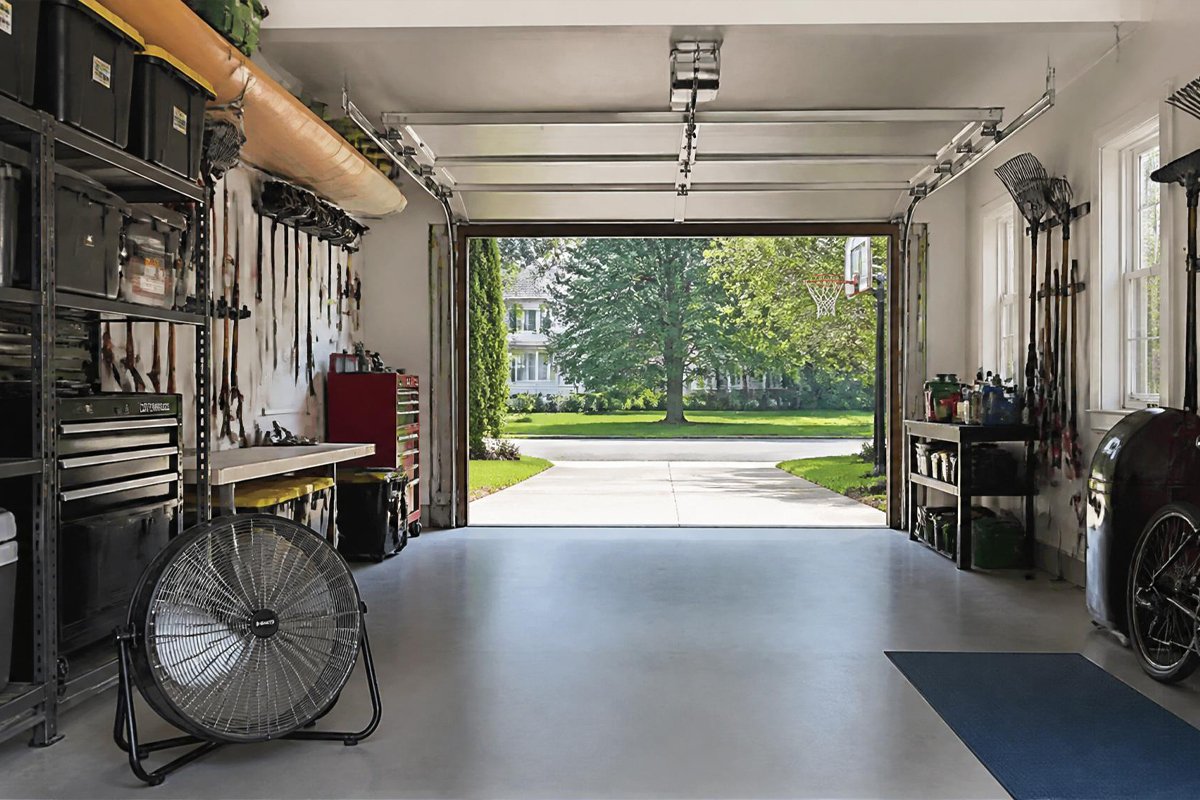
Overview: Static air is one of the biggest reasons odors linger. Adding a vent fan, cracking windows if you have them, or running a box fan for an hour after closing the garage door keeps air moving instead of settling.
Key Features:
- Can be as simple as a box fan or as permanent as an installed exhaust vent
- Reduces both odor and humidity buildup
- Works especially well paired with a dehumidifier
Best For: Garages with no windows or a single door as the only airflow source.
Pros: ✅ Low cost for basic setups ✅ Addresses humidity and odor simultaneously
Cons: ❌ Permanent vent installation requires some construction work
Our Verdict: Full details on fan types, vent placement, and airflow calculations are in our dedicated garage ventilation guide — essential reading if odor keeps coming back.
5. Baking Soda for Spot Treatment
Overview: A low-cost, low-effort option for smaller odor pockets — inside a trash bin, a gym bag left in the corner, or a small storage cabinet. Baking soda absorbs odor on contact but works best on a smaller, contained scale.
Key Features:
- Extremely cheap and always available
- Safe for use directly on fabric, carpet remnants, or inside bins
- No fumes or chemical residue
Best For: Small, localized smells rather than whole-garage odor problems.
Pros: ✅ Nearly free ✅ Instant application ✅ Safe around everything
Cons: ❌ Not effective on large spaces ❌ Needs to be reapplied regularly
Our Verdict: A helpful supplement to the bigger fixes above, but not a standalone solution for a whole-garage odor problem.
Comparison Table {#comparison-table}
| Method | Best For | Cost | Effort | Fixes Root Cause? |
|---|---|---|---|---|
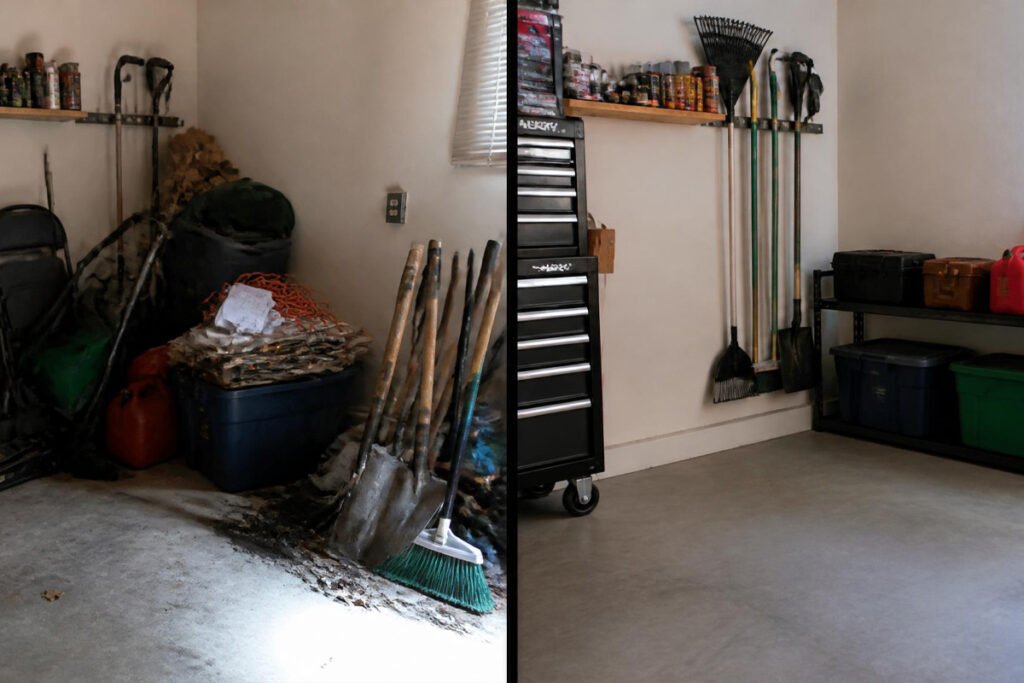
| Deep clean floor/walls | Stains, general stale smell | Low | High | Yes |
| Activated charcoal | Maintenance, small spaces | Low | Low | No (passive) |
| Dehumidifier | Musty/mildew smell | Medium-High | Low (after setup) | Yes |
| Improved ventilation | No-window garages | Low-Medium | Medium | Yes |
| Baking soda | Localized odors (bins, bags) | Very Low | Low | No (spot fix) |
Best Odor Fixes for Different Causes {#different-causes}
Musty or Mildew Smell
This is the most common complaint and almost always traces back to trapped humidity. Start with a dehumidifier and improved airflow rather than scrubbing alone — cleaning without addressing moisture just means the smell returns within a few weeks. Check for hidden leaks around the garage door weather stripping and bottom seal, since a worn seal is a common, overlooked entry point for both water and humid outside air.
Gas or Chemical Smell
Treat this one differently from the others — it’s a safety issue first, odor issue second. Check for leaking fuel containers, a car with a small fuel leak, or improperly sealed paint and solvent cans. Store fuel and chemicals in approved, sealed containers away from any heat source, and ventilate the space immediately if the smell is strong. Our garage safety guide covers proper chemical storage in more detail.
Pet or Animal Smell
Garages are common entry points for stray animals or pests, and a lingering animal odor sometimes means something got in and didn’t get out. If you’ve dealt with unwanted wildlife before, our guides on removing snakes from the garage and keeping spiders out of the garage are useful starting points. For lingering odor after the animal is gone, an enzyme-based cleaner works far better than standard soap, since it breaks down the organic compounds causing the smell rather than just masking them.
How to Deodorize a Garage Step by Step {#step-by-step}
Step 1: Clear and Sort
Remove everything from the garage floor and shelving temporarily. This lets you inspect for the actual source — a forgotten damp towel, a leaking container, or a moldy cardboard box — that’s easy to miss when everything is stacked in place.
Step 2: Identify and Remove the Source
Toss anything water-damaged beyond saving (cardboard, particle board, old carpet remnants) and relocate chemicals or fuel to proper sealed, approved containers.
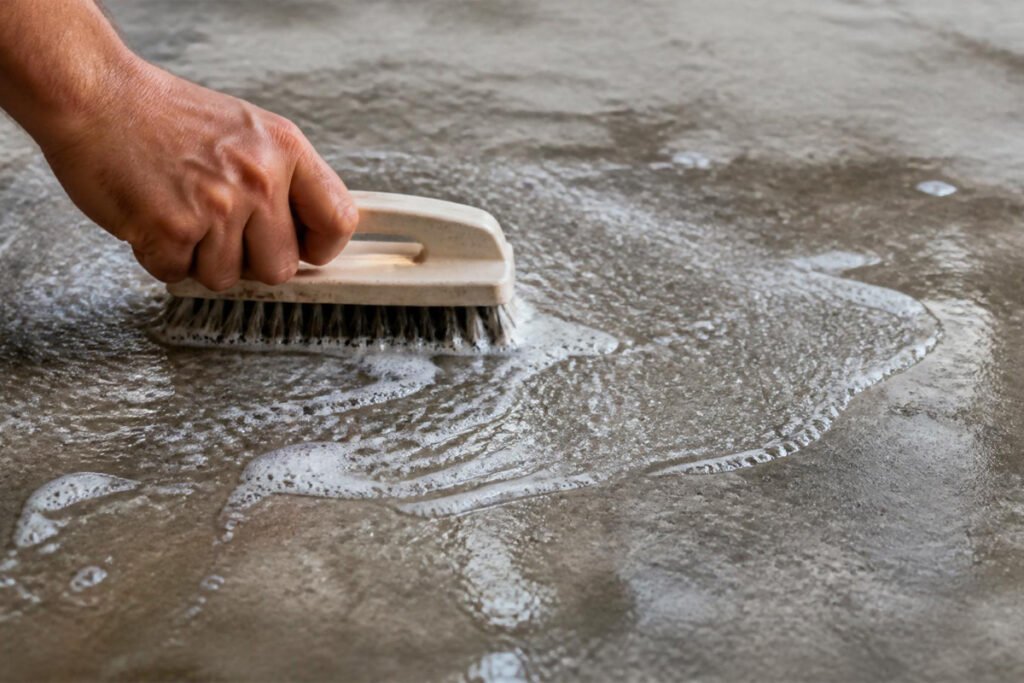
Step 3: Deep Clean Floors and Surfaces
Degrease and scrub the floor, wipe down shelving, and treat any visible mold spots with an appropriate cleaner. See our full garage floor cleaning guide for product recommendations and technique.
Step 4: Address Humidity
Run a dehumidifier for several days, especially if the space felt damp during the clear-out. This step matters more than any single cleaning product for long-term results.
Step 5: Improve Airflow
Add or run a fan, crack a window if available, or consider a permanent vent if the garage has none. Keep the door open for at least 20–30 minutes daily when weather allows.
Step 6: Reorganize With Odor Prevention in Mind
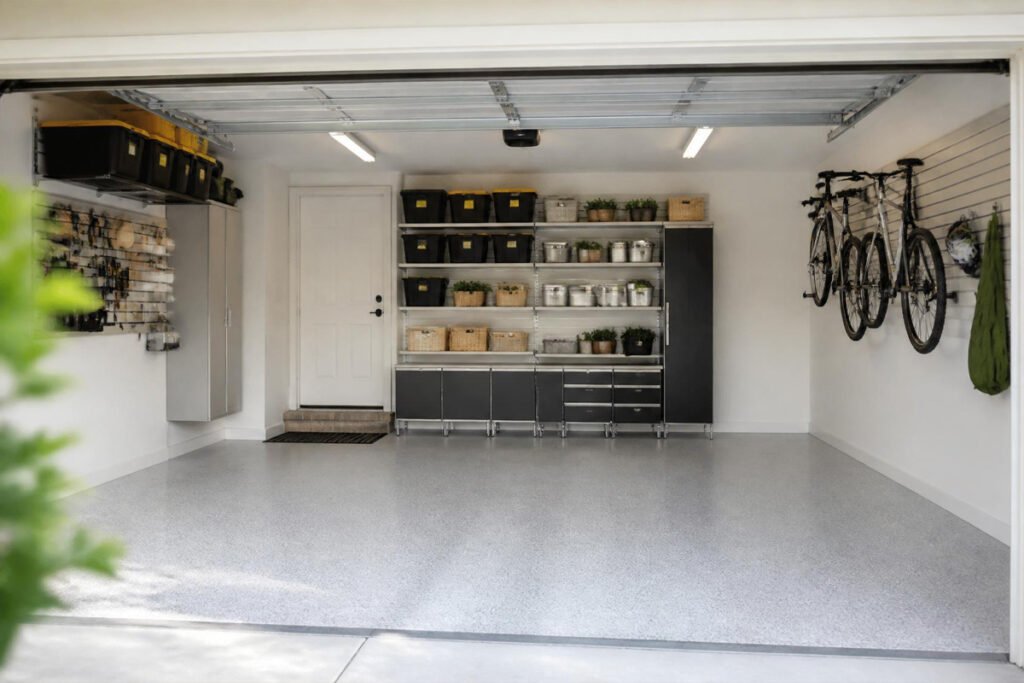
As you put items back, keep them off the floor using shelving or bins, and avoid storing anything damp. This is a good opportunity to revisit your overall layout — our garage organization guide has practical storage ideas that also help airflow reach every corner of the space.
Common Mistakes {#common-mistakes}
Masking instead of removing. Air fresheners and scented sprays cover odor temporarily but do nothing for the moisture or residue causing it — the smell always comes back, often stronger. Related troubleshooting on lingering issues can be found in our garage door maintenance troubleshooting guide.
Ignoring the humidity problem. Cleaning the floor while skipping ventilation or dehumidifying is the most common reason odor “comes back” within a few weeks — the root cause was never actually addressed.
Storing damp items right after cleaning. Putting cardboard boxes, damp sports gear, or wet tools back into a freshly cleaned garage undoes the work almost immediately. Let everything dry fully before it goes back into storage, and consider swapping cardboard for sealed tote storage going forward.
Expert Tips {#expert-tips}
Check the floor drain if you have one. A dry floor drain trap can let sewer gas seep into the garage, producing a smell that has nothing to do with anything you’re storing. Running water down the drain periodically keeps the trap sealed.
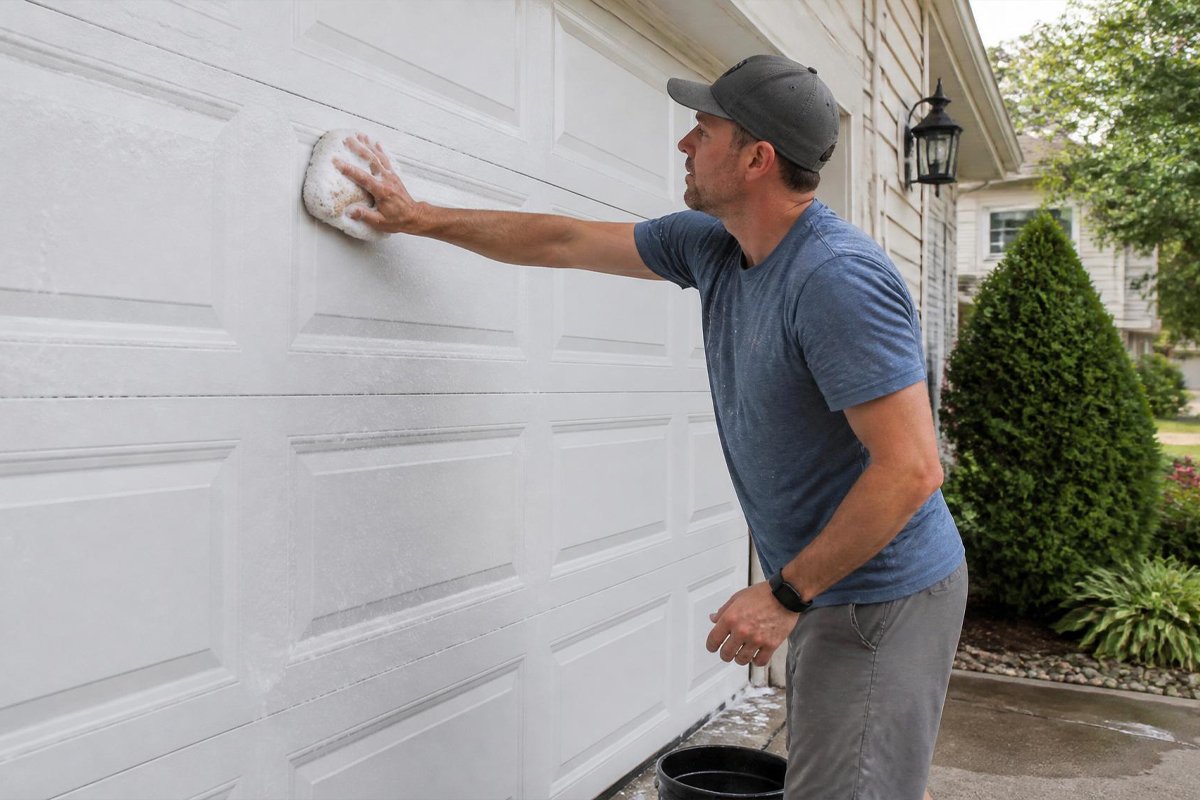
Don’t overlook the garage door itself as an entry point. Gaps around a worn seal don’t just let in dust and pests — they let in humid outside air that contributes directly to a musty smell. If your seals are older than a few years, our weather stripping replacement guide is worth a look.
Time your deep clean with the seasons. Late spring or early fall — after winter dampness and before peak summer humidity — is the most effective time to do a full odor-removal pass, since you’re addressing the problem before the next humid season sets in.
Final Thoughts {#final-thoughts}
Best overall fix: a combination of deep cleaning plus a dehumidifier — this addresses both the residue and the moisture that causes most garage odors. Best budget fix: improved ventilation using an existing fan and an open door schedule, paired with baking soda for smaller spots. Best for persistent musty smells: a dedicated garage dehumidifier run consistently, not just occasionally. Best for beginners: start with the step-by-step process above — clearing, identifying the source, and cleaning before investing in any equipment.
Garage odor removal isn’t usually about one product — it’s about removing the source, controlling moisture, and keeping air moving. Once those three things are handled, most garages stay fresh with only occasional maintenance. For more on keeping the rest of the garage in shape, see our garage maintenance checklist and garage organization guide.
Frequently Asked Questions {#faq}
Do I need a dehumidifier for my garage, or will a fan be enough? It depends on your climate and how enclosed the garage is. In humid regions or garages with little airflow, a dehumidifier addresses the root moisture problem directly, while a fan alone mainly helps circulate air. Many garages benefit from using both together.
How long does it take to get rid of a musty garage smell? Surface odors often improve within a day or two of deep cleaning, but a truly musty smell caused by trapped humidity can take one to two weeks of consistent dehumidifying and ventilation to fully clear.
Garage odor removal vs. just using air fresheners — what’s the difference? Air fresheners mask smell temporarily by adding a stronger scent on top, but they don’t remove the moisture, residue, or mold causing the underlying odor. The smell typically returns, sometimes worse, once the fresheners wear off.
Why does my garage still smell musty after I cleaned it? This almost always means the moisture source wasn’t addressed — either ongoing humidity, a small leak, or damp items that went back into storage before fully drying. Cleaning without controlling humidity is a temporary fix at best.
Is a gas smell in the garage dangerous? Yes — treat any persistent gas or fuel smell as a safety issue, not just an odor problem. Ventilate the space immediately, avoid open flames or sparks, check for leaking containers or vehicle fuel lines, and don’t rely on odor-removal methods alone to solve it.
Can mold in the garage make the whole house smell? Yes, especially in attached garages where air can move between the garage and living space through shared walls, doors, or ductwork. Sealing gaps around the connecting door and addressing garage humidity often improves smell throughout the house.
What’s the best natural odor remover for a garage? Activated charcoal and baking soda are the most effective natural options for ongoing maintenance, though neither replaces the need to clean and address moisture at the source for a strong existing smell.
How often should I deep clean my garage to prevent odor buildup? Twice a year is a reasonable baseline for most garages — once in spring to address winter dampness and once in fall before the next humid season — with spot cleaning as needed in between.
Will sealing my garage floor help with odor? Yes, indirectly. A sealed floor is far less absorbent than bare concrete, which means spills and moisture sit on the surface instead of soaking in, making them much easier to clean before they cause a lingering smell. Our epoxy coating guide covers the process in detail.
Can an ozone generator remove garage odor? Ozone generators can be effective on strong, stubborn odors, but they should be used with caution — ozone is a respiratory irritant, so the garage needs to be unoccupied during treatment and ventilated afterward before spending time inside.
Author: Danial Marquez Last Updated: July 2026