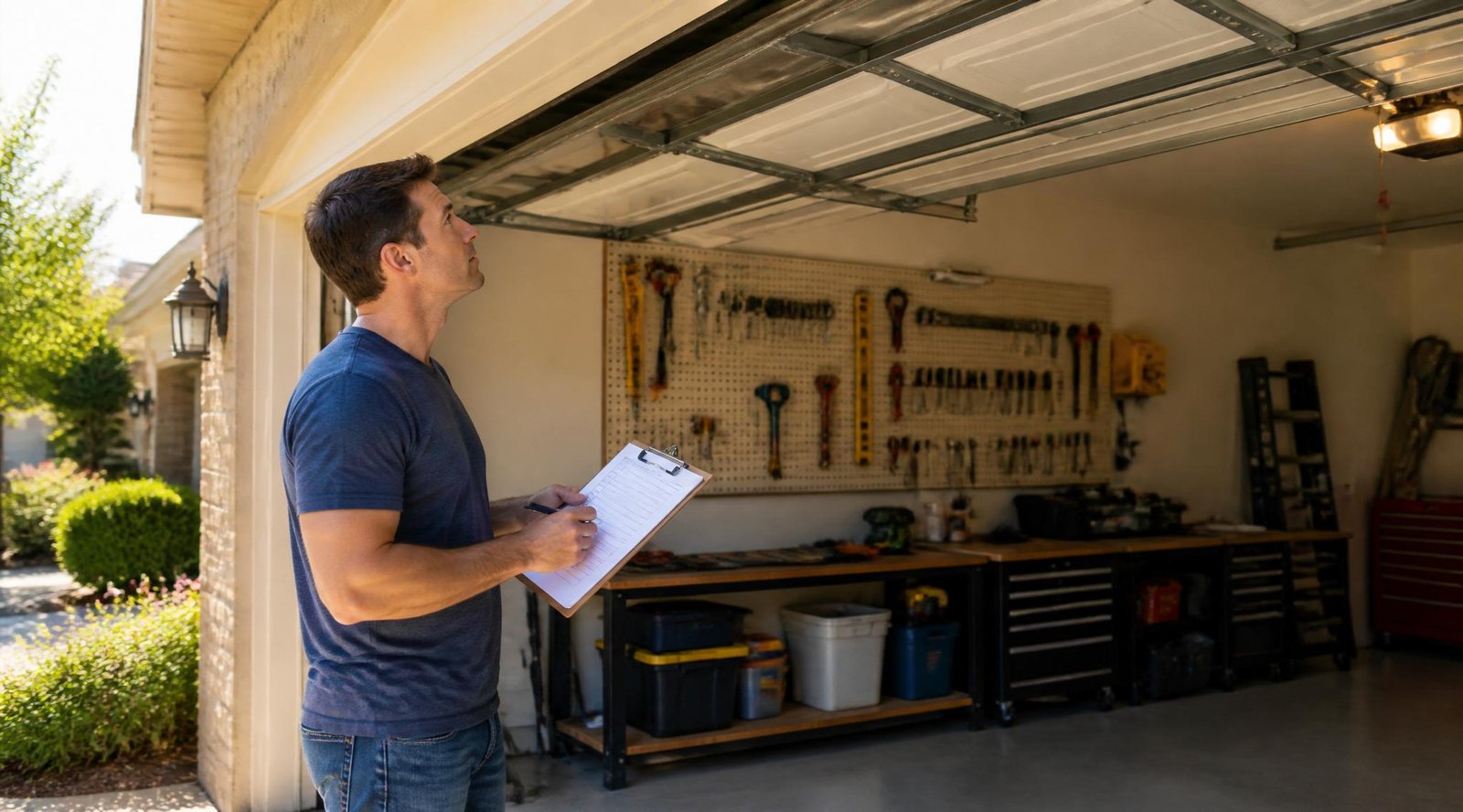
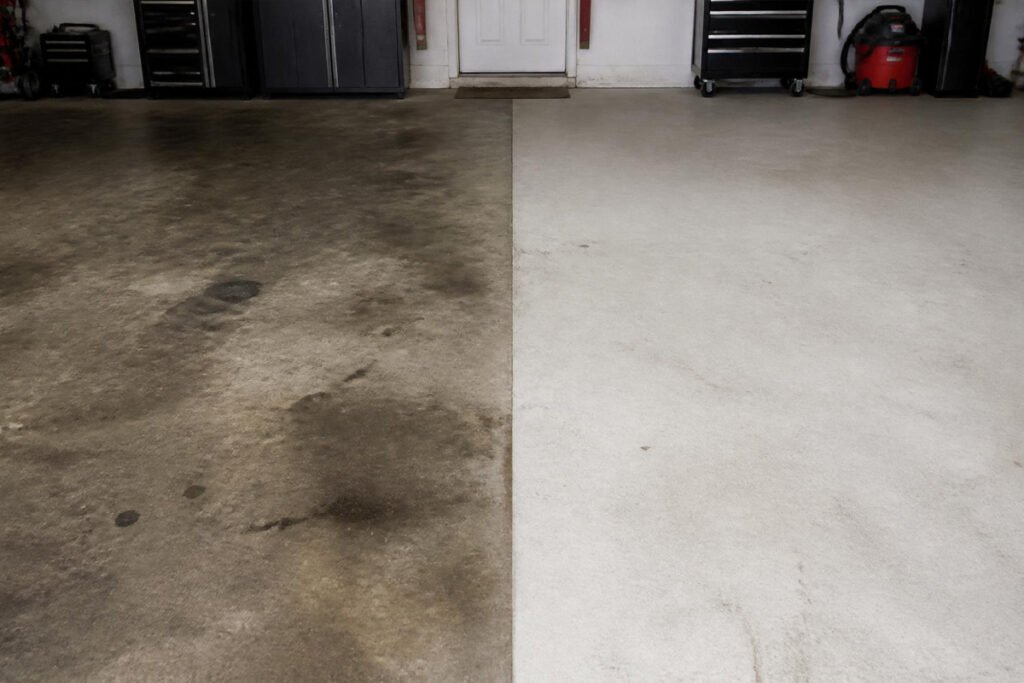
If you’ve ever pulled into your garage and noticed a dark, sticky patch spreading across the concrete under your car, you already know that plain water and a push broom aren’t going to touch it. Motor oil, transmission fluid, and grease don’t sit on concrete — they soak into it, binding to the porous surface in a way that regular soap can’t break down. That’s why so many DIY cleaning attempts leave a faint shadow behind no matter how hard you scrub.
The fix isn’t more elbow grease — it’s the right degreaser. A concrete-safe degreaser is formulated to break the chemical bond between oil and porous concrete, lifting the stain instead of just pushing it around. Once you’ve got the floor clean, you can take it further with a full garage floor cleaning routine or even prep the surface for an epoxy coating that resists future stains altogether.
This guide breaks down the best garage floor degreasers on the market in 2026, how to pick the right one for your situation, and exactly how to apply it for the best results.
Quick Answer
The best garage floor degreaser depends on how bad the stain is and what surface you’re working with. For fresh oil spots, an enzyme-based degreaser is gentle and effective. For old, set-in grease stains, you’ll want a stronger alkaline degreaser or a dedicated citrus-based solvent cleaner. If your garage has a sealed, polyaspartic, or epoxy floor, stick to pH-neutral, coating-safe formulas — harsh alkaline cleaners can dull or damage the finish. As a general rule: match the degreaser’s strength to the stain’s age, and always test a small area first.
Table of Contents
- What Is a Garage Floor Degreaser? How It Works
- How to Choose the Right Degreaser
- Best Garage Floor Degreasers Available
- Comparison Table
- Best Degreasers for Different Floor Types
- How to Degrease a Garage Floor Correctly
- Common Mistakes
- Expert Tips
- Final Thoughts
- Frequently Asked Questions
What Is a Garage Floor Degreaser? How It Works {#what-is}
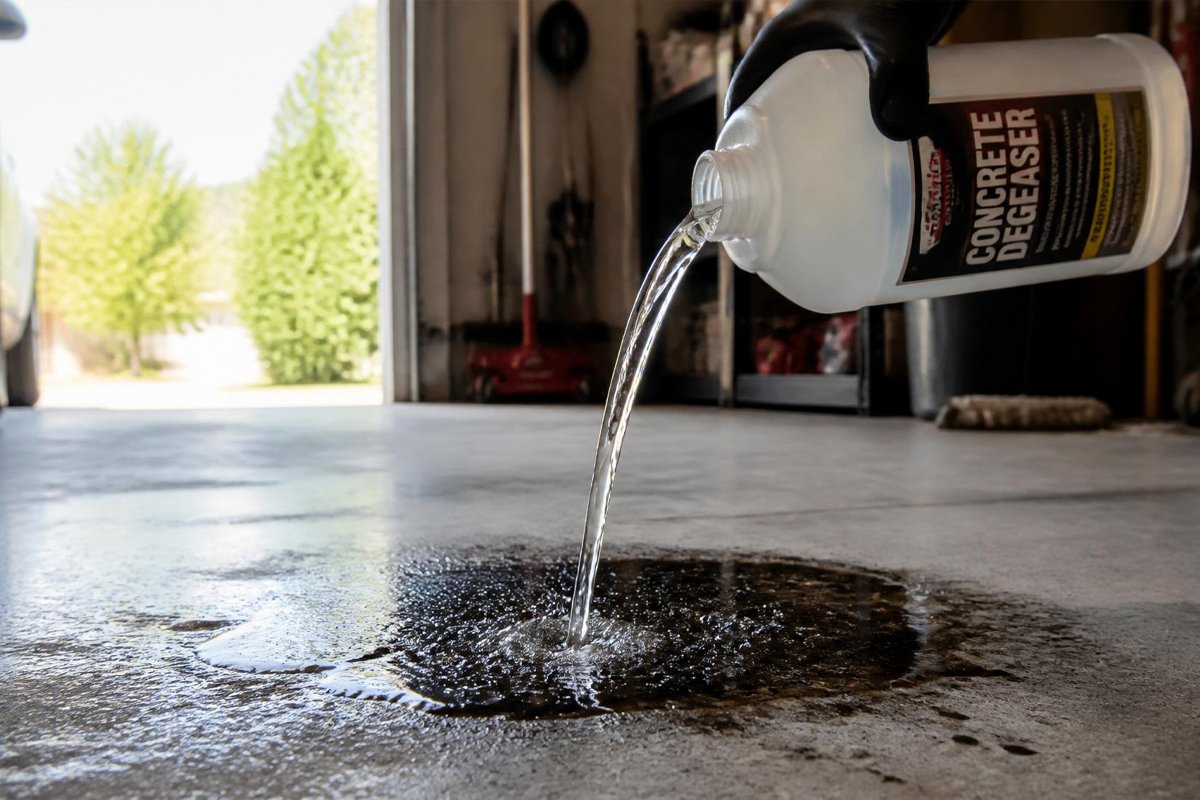
A garage floor degreaser is a cleaning solution formulated specifically to break down petroleum-based residue — motor oil, grease, brake fluid, transmission fluid — that has penetrated concrete or coated flooring. Unlike all-purpose cleaners, degreasers use surfactants (and sometimes enzymes or solvents) that attach to oil molecules and lift them away from the surface so they can be rinsed or absorbed off.
Concrete is porous, which is exactly why oil stains are so stubborn in the first place. Once oil seeps below the surface, a standard detergent just cleans the top layer while the stain underneath stays put. A good garage floor degreaser is designed to penetrate to roughly the same depth the oil did, breaking the bond at the source rather than masking it.
There are three broad categories of degreaser chemistry:
- Enzyme/bio-based degreasers – Use bacteria or enzymes that “digest” oil molecules. Slower-acting but gentle and safe for sealed floors.
- Alkaline degreasers – High-pH cleaners that saponify (convert oil into a soap-like compound). Fast and powerful, but can be harsh on some coatings.
- Citrus/solvent degreasers – Use d-limonene or similar solvents to dissolve grease. Strong-smelling but effective on old, hardened stains.
If your garage doubles as a home gym or workshop, keeping the floor grease-free also matters for safety — a slick spot near your equipment is a slip hazard, something covered in more detail in the site’s garage safety guide.
How to Choose the Right Garage Floor Degreaser {#how-to-choose}
Before buying, ask yourself these three questions:
- How old is the stain? Fresh spills respond to almost anything. Stains that have set for months or years need a stronger alkaline or solvent-based product, often combined with a poultice.
- What’s your floor’s surface? Bare concrete can handle stronger chemicals than a sealed, polyaspartic, or epoxy-coated floor. Always check the coating manufacturer’s cleaning guidelines first — this matters even more if you recently invested in a coated floor.
- Do you need it to be pet- or plant-safe? If runoff drains toward a lawn, garden bed, or your dog’s favorite napping spot, an enzyme-based, biodegradable degreaser is the safer call.
According to the U.S. Environmental Protection Agency’s Safer Choice program, cleaning products can be certified for reduced environmental and health impact while still performing effectively — worth checking for if you’re picking a degreaser for a garage that connects to living space, like a converted home gym or workshop.
Best Garage Floor Degreasers Available {#best-degreasers}
1. Heavy-Duty Alkaline Concrete Degreaser
Overview: This is the workhorse category for garages that see regular vehicle maintenance. Alkaline degreasers convert oil into a soap-like emulsion that lifts away with water, making them effective on both fresh spills and moderately old stains.
Key Features:
- High-pH formula breaks down petroleum-based stains fast
- Concentrated — usually diluted before use
- Works on driveways, garage floors, and workshop concrete
- Often biodegradable despite the strength
Best For: Bare or unsealed concrete with heavy, regular oil traffic (mechanics’ garages, workshops).
Pros: ✅ Fast-acting on tough stains ✅ Cost-effective when diluted ✅ Widely available at hardware stores
Cons: ❌ Can be too harsh for epoxy or polyaspartic coatings ❌ Requires gloves and eye protection during use
Our Verdict: If your garage floor is bare concrete and sees frequent oil changes or tool maintenance, this is the category to reach for first. Just pair it with the ventilation tips in this garage ventilation guide since alkaline cleaners can have strong fumes in an enclosed space.
2. Enzyme-Based Bio-Degreaser
Overview: Enzyme degreasers use living microbes or plant-derived enzymes to break down oil at a molecular level over time. They’re slower than alkaline cleaners but far gentler on sealed or coated surfaces.
Key Features:
- Safe on epoxy, polyaspartic, and sealed concrete
- Continues working after initial application (some formulas need to sit for hours)
- Low odor, pet- and plant-safe formulas available
- Minimal rinsing required
Best For: Coated or sealed floors, garages near living spaces, pet owners.
Pros: ✅ Won’t dull or strip floor coatings ✅ Safer for households with kids or pets ✅ Good for maintenance cleaning, not just deep stains
Cons: ❌ Slower results — often needs to dwell for several hours ❌ Less effective on very old, hardened stains without repeat treatment
Our Verdict: If you recently finished a garage floor epoxy project, this is the safest long-term choice for routine touch-ups without risking the coating.
3. Citrus/Solvent-Based Degreaser
Overview: Built around d-limonene (a citrus-derived solvent), these degreasers dissolve grease on contact and are especially effective on old, hardened stains that alkaline cleaners struggle to fully lift.
Key Features:
- Strong solvent action cuts through set-in grease
- Pleasant citrus scent versus harsh chemical smell
- Works well as a pre-treatment before pressure washing
- Often safe for a wider range of surfaces than alkaline options
Best For: Old, hardened stains; garages with mixed surfaces (concrete plus painted trim, tool chests, etc.).
Pros: ✅ Excellent on stubborn, aged stains ✅ More pleasant to work with than harsh alkaline cleaners ✅ Multi-surface safe
Cons: ❌ Pricier per ounce than basic alkaline degreasers ❌ Can leave a slight residue if not rinsed thoroughly
Our Verdict: Keep a bottle of this on hand specifically for the stains that other cleaners couldn’t fully remove — it’s the best second-pass option, and it pairs well if you’re also working through the tips in cleaning a garage floor without a pressure washer.
4. Powdered Absorbent + Degreaser Combo
Overview: These products combine an oil-absorbing powder (like clay or diatomaceous earth) with a degreasing agent, designed to pull oil out of concrete rather than just cleaning the surface.
Key Features:
- Absorbs oil from deep within porous concrete
- Left to sit as a poultice, then swept away
- No rinsing or scrubbing required for light stains
- Great for spot-treating fresh spills immediately
Best For: Fresh spills, spot treatments, quick cleanup between deeper cleaning sessions.
Pros: ✅ Extremely simple — pour, wait, sweep ✅ No water or scrubbing needed ✅ Great to keep near parking spots for immediate spill response
Cons: ❌ Not effective on set-in, older stains ❌ Needs to be paired with a liquid degreaser for full stain removal
Our Verdict: Every garage should keep a bag of this near the workbench — it’s the fastest way to stop a fresh spill from becoming a permanent stain, especially useful if you’re setting up a dedicated garage workshop.
Comparison Table {#comparison-table}
| Product Type | Best For | Speed | Coating-Safe | Odor |
|---|---|---|---|---|
| Alkaline Degreaser | Bare concrete, heavy stains | Fast | No | Strong |
| Enzyme Bio-Degreaser | Coated/sealed floors | Slow | Yes | Low |
| Citrus/Solvent Degreaser | Old, hardened stains | Medium | Mostly | Citrus |
| Powdered Absorbent Combo | Fresh spills | Fast (light stains only) | Yes | None |
Best Degreasers for Different Garage Floor Types {#floor-types}
Bare Concrete Garages
Bare, unsealed concrete can handle the strongest degreasers without risk of damaging a coating. Alkaline degreasers are usually the go-to here, especially for garages that double as workshops. If you’re storing gear like a lawn mower or workbench tools nearby, keep the powdered absorbent option handy for quick spill control.
Epoxy-Coated Floors
Epoxy coatings are durable but can be dulled by harsh alkaline chemicals over time. Stick to enzyme-based or pH-neutral degreasers, and always spot-test in a corner first. If you’re just about to coat your floor, review the full epoxy coating guide before you start — cleaning the surface properly beforehand affects how well the coating bonds.
Polyaspartic-Coated Floors
Polyaspartic coatings are chemically similar to epoxy but cure faster and are slightly more chemical-resistant. Even so, the site’s own guide on cleaning a polyaspartic garage floor recommends gentler cleaners for routine maintenance, saving stronger degreasers for rare deep-clean sessions.
How to Degrease a Garage Floor Correctly {#how-to}
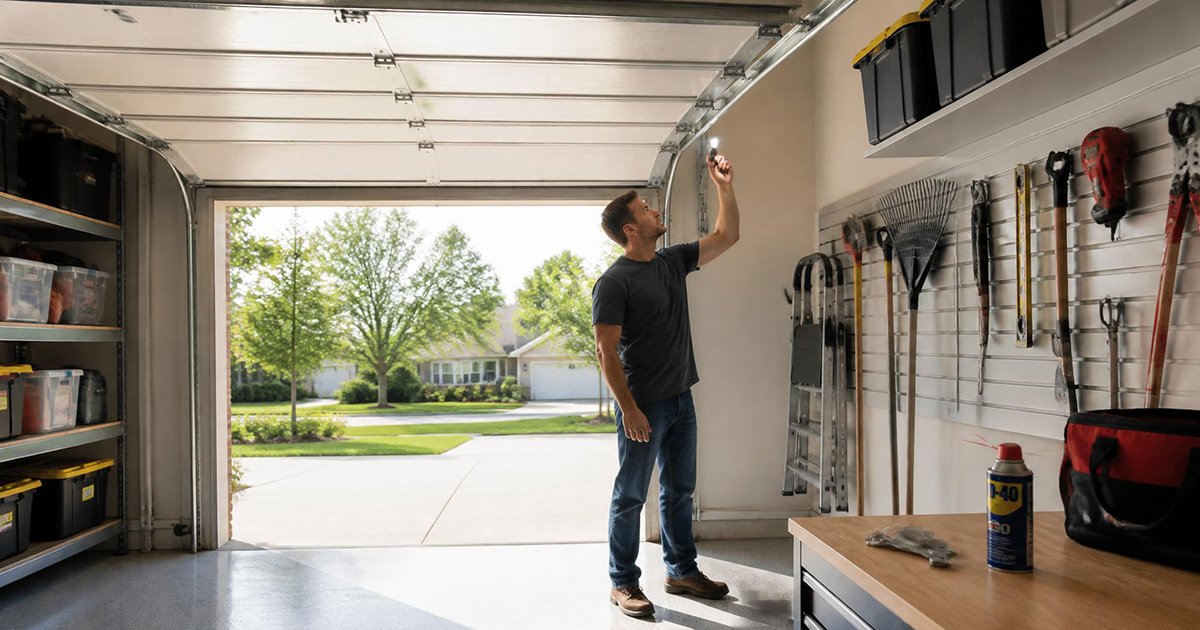
Proper ventilation matters here — the Occupational Safety and Health Administration (OSHA) notes that many cleaning chemicals require adequate airflow to avoid fume buildup in enclosed spaces, so prop the garage door open and, if you have one, run a fan before you start.
Step 1: Prepare the Area
Clear the space, remove any items or vehicles, and sweep away loose debris and dust.
Step 2: Apply the Absorbent (If Needed)
For fresh spills, cover the stain with an absorbent powder and let it sit for 15–20 minutes before sweeping away.
Step 3: Apply the Degreaser
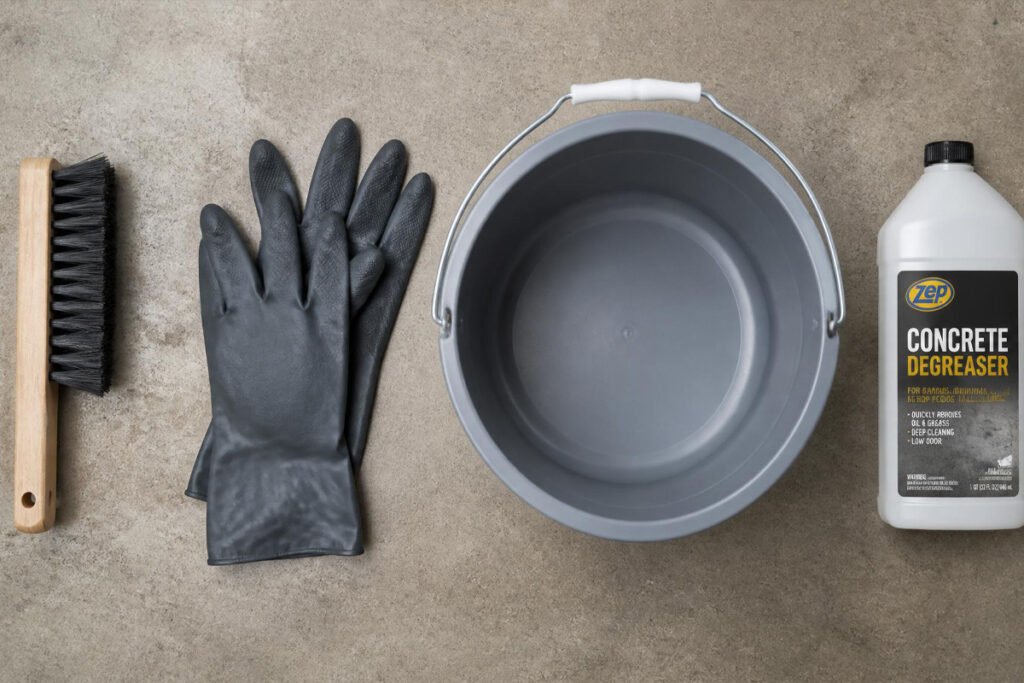
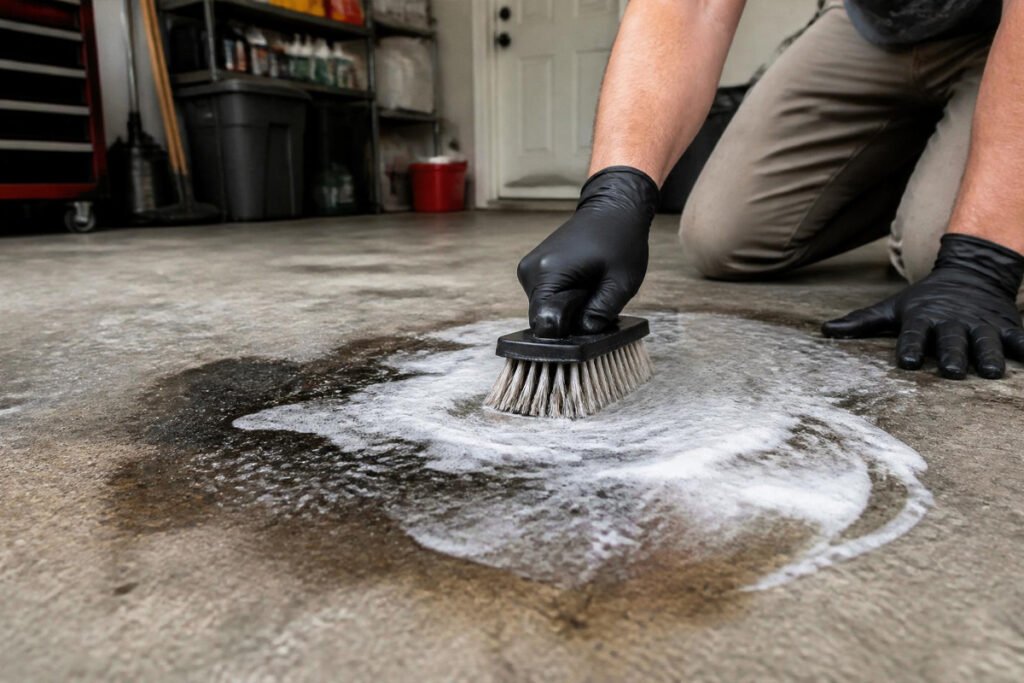
Follow the product’s dilution instructions and apply generously to the stained area, working it in with a stiff-bristle brush.
Step 4: Let It Dwell
Allow the degreaser to sit for the time recommended on the label — this ranges from 5 minutes for strong alkaline formulas to several hours for enzyme-based products.
Step 5: Rinse and Inspect
Rinse thoroughly with water, then inspect the area once dry. Repeat for stubborn stains, and consider a second pass with a citrus/solvent degreaser if any residue remains.
Common Mistakes {#mistakes}
Using the wrong chemistry for your floor type. Applying a harsh alkaline degreaser to a coated floor can dull the finish permanently — always check compatibility first, especially if you’ve recently completed floor maintenance or resealing work.
Skipping the dwell time. Rinsing off a degreaser too early is one of the most common reasons stains don’t fully lift — patience matters more than scrubbing pressure.
Ignoring ventilation. Strong degreasers can produce fumes that build up quickly in an enclosed garage, particularly relevant if your garage connects directly to living space, as covered in the guide on converting a garage into living space.
Expert Tips {#tips}
Treat spills immediately. The longer oil sits, the deeper it penetrates the concrete — a fresh spill treated within an hour is dramatically easier to remove than one left for a week.
Layer your approach on old stains. For years-old stains, don’t expect one application to fully clear it. Start with a poultice absorbent, follow with an alkaline or citrus degreaser, and repeat as needed.
Reseal after deep cleaning. If your bare concrete floor has been through a heavy degreasing session, consider applying a concrete sealer afterward to make future spills easier to clean and to protect against new staining — something worth planning around if you’re also thinking about insulating the garage or upgrading it into a more finished space.
Final Thoughts {#final-thoughts}
Best Overall: A heavy-duty alkaline degreaser for bare concrete garages with regular oil traffic. Best for Coated Floors: An enzyme-based bio-degreaser that won’t dull epoxy or polyaspartic finishes. Best for Old Stains: A citrus/solvent degreaser as a second-pass treatment. Best for Fresh Spills: A powdered absorbent combo kept on hand near your workbench.
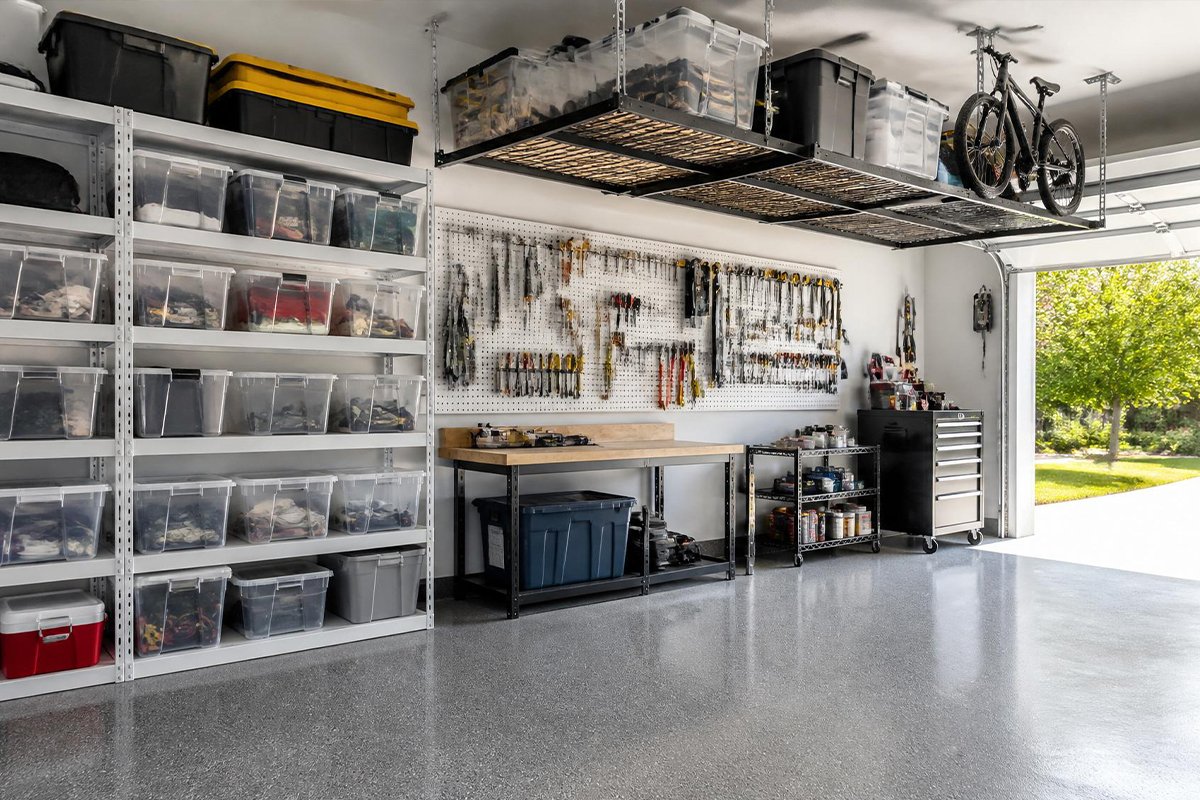
Once your floor is degreased, it’s a great time to tackle the rest of the space — whether that’s finishing up organization and storage, reviewing your garage security setup, or finally getting around to that storage loft build you’ve been putting off.
Frequently Asked Questions {#faq}
Do I need a special degreaser, or will dish soap work? Dish soap can help with very fresh, light spills, but it lacks the surfactant strength to break down oil that has penetrated concrete. For anything beyond a light spill, a dedicated degreaser will perform significantly better.
How long should I let a degreaser sit on the floor? This varies by product — alkaline degreasers often only need 5–10 minutes, while enzyme-based formulas can require several hours. Always check the label, since dwell time is one of the biggest factors in how well the stain lifts.
Is degreaser safe for epoxy or polyaspartic garage floors? Not all degreasers are. Strong alkaline formulas can dull these coatings over time, so stick to pH-neutral or enzyme-based products designed for coated surfaces, and always spot-test first.
How much degreaser do I need for a two-car garage? For general maintenance cleaning, a gallon of concentrated degreaser (diluted per instructions) typically covers a standard two-car garage floor. Heavily stained floors may need more for spot treatments.
Can I use a degreaser and then pressure wash the floor? Yes — in fact, applying a degreaser before pressure washing is one of the most effective combinations for older stains, since the degreaser loosens the oil bond and the pressure washer flushes it away.
Why does my stain keep coming back after cleaning? This usually means the oil wasn’t fully broken down at depth, just cleaned off the surface. Old or deep stains often need repeat treatments, or a poultice absorbent to pull the oil out from within the concrete.
Is it safe to use degreaser if I have pets? Choose an enzyme-based, pet-safe, biodegradable formula and make sure the area is fully rinsed and dry before pets are allowed back in the garage.
Do I need to ventilate the garage while degreasing? Yes. Keep the garage door open and use a fan if possible, especially with alkaline or solvent-based degreasers, which can produce strong fumes in an enclosed space.
What’s the difference between a degreaser and a concrete cleaner? General concrete cleaners are designed for dirt, dust, and light grime. Degreasers are formulated specifically to break down oil and grease, which require a different chemical approach than surface dirt.
Can I make my own garage floor degreaser? Homemade mixes (like baking soda and dish soap) can help with light, fresh stains, but they won’t match the performance of a commercial degreaser on set-in oil stains, especially on porous, unsealed concrete.
Author: Danial Marquez Last Updated: July 2026