Garage Fishing Rod Storage Ideas: Organize Your Gear With Ease
Imagine a garage that’s not just a place to park your car but also a haven for your fishing gear. Let’s think about a space where your fishing rods are neatly stored, ready for your next angling moment. In this article, we’ll dive into the world of Garage Fishing Rod Storage Ideas, ensuring that your prized equipment is not only well-organized but also easily accessible.
Table of Contents
Garage Fishing Rod Storage Ideas: Importance Of Proper Storage
Before we explore the various storage solutions, let’s understand why it’s crucial to store your fishing rods correctly. Well-maintained equipment not only ensures a longer lifespan but also makes your fishing experience more enjoyable.
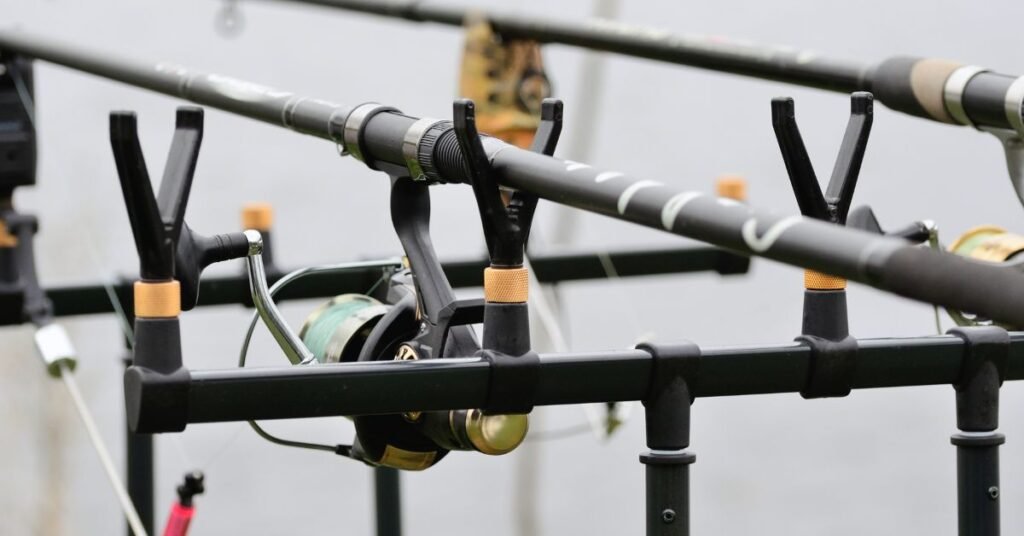
Here’s Why Proper Storage Matters
Prevent Damage: Storing your rods adequately protects them from damage. Broken guides, bent tips, or even snapped rod blanks can be avoided with the proper storage.
Maintain Performance: When your fishing rods are stored correctly, they maintain their original action and sensitivity, ensuring peak performance on the water.
Easy Access: An organized storage system allows for quick and easy access to your rods. Say goodbye to the hassle of untangling a web of fishing lines.
Long Lifespan: Proper storage ensures your rods last longer, which means you don’t have to replace them as frequently. Garage Fishing Rod Storage Ideas: Rod Racks: Space-Efficient Elegance Imagine a wall in your garage adorned with wall-mounted rod racks. These elegant and space-efficient solutions securely hold your fishing rods in place. This not only saves valuable floor space but also turns your garage into a showcase for your prized equipment. With your fishing rods neatly aligned on the wall, you can easily select the one you need for the day’s fishing adventure. It’s a convenient and visually pleasing way to store your gear.
Garage Fishing Rod Storage Ideas: Rod Racks: Space-Efficient Elegance
Imagine a wall in your garage adorned with wall-mounted rod racks. These elegant and space-efficient solutions securely hold your fishing rods in place. This not only saves valuable floor space but also turns your garage into a showcase for your prized equipment. With your fishing rods neatly aligned on the wall, you can easily select the one you need for the day’s fishing adventure. It’s a convenient and visually pleasing way to store your gear.
Ceiling Rod Storage: Overhead Efficiency
Look up, and you’ll discover a world of storage opportunities on your garage ceiling. Ceiling rod storage systems provide a practical and efficient way to keep your fishing rods out of the way while ensuring they’re easily accessible. As you extend your hand to retrieve a rod from the overhead storage, you’ll appreciate the intelligent use of your garage’s vertical space. The ceiling has become a new frontier for your fishing rod storage needs.
Fishing Rod Tubes: Portable Protection
Visualize a row of fishing rod tubes within your garage. These portable and protective cases are perfect for anglers on the move. They keep your rods safe from bumps and scrapes, making them an ideal choice for transporting your gear to different fishing locations. With your fishing rods safely enclosed in these tubes, you’re ready for your next fishing expedition. The convenience of these portable cases is hard to beat.
PVC Fishing Rod Holders: DIY Delight
Imagine a DIY project in your garage where you create fishing rod holders from PVC pipes. This cost-effective and customizable solution allows you to design storage that perfectly fits your available space and the number of rods you own. As you stand back to admire your handiwork, you’ll feel a sense of accomplishment. Your garage has become a hub of creativity, and your fishing rods have found a home tailored to your needs.
Fishing Rod Cabinets: A Touch Of Elegance
In your mind’s eye, you open a fishing rod cabinet in your garage. These stylish storage units offer a combination of functionality and aesthetics. They keep your fishing rods protected and well-organized, while the cabinet’s design adds a touch of elegance to your garage. Each time you open the cabinet’s door, you’re reminded of the luxury and care you’ve invested in your fishing gear. Your garage has become a space showcasing your passion for fishing and your eye for style.
Garage Door Rod Holders: Clever Use Of Space
Visualize your garage door equipped with fishing rod holders. This clever use of space takes advantage of the often-overlooked area on the backside of your garage door. It’s a convenient solution that keeps your fishing rods well-organized and easily accessible. Every time you open your garage door, you’re greeted by your neatly stored fishing rods. It’s an efficient use of space that maximizes your garage’s potential.
Magnetic Rod Holders: Space-Saving Simplicity
Imagine magnetic rod holders adorning the walls of your garage. These ingenious and space-saving solutions securely hold your fishing rods in place without needing elaborate racks or cabinets. The magnets provide a firm grip while allowing easy access to your rods. With magnetic rod holders, your garage exudes simplicity and efficiency. Your fishing rods are displayed like works of art, ready for your next fishing outing.
DIY Pegboard Rod Storage: Customizable Organization
Imagine a section of your garage with a pegboard dedicated to fishing rod storage. This DIY solution is highly customizable. You can arrange pegs and hooks in various configurations to fit the exact number and types of rods you own. As you personalize your pegboard, you’ll appreciate the flexibility it offers. Your garage becomes a space of creativity and functionality, and your fishing rods are neatly organized according to your preferences.
Multipurpose Tackle Boxes: Combine Storage
Visualize tackle boxes with built-in fishing rod storage compartments. These multipurpose solutions are perfect for anglers who want to keep their rods, reels, and tackle together in one place. They’re compact, portable, and provide all-in-one storage for your fishing gear. Each time you open a tackle box, you’re reminded of its convenience. Your garage becomes where all your fishing essentials are within reach, ready for your next fishing escapade.
Fishing Rod Sleeves: Protective Simplicity
Envision fishing rod sleeves neatly hanging in your garage. These protective covers are designed to keep your fishing rods safe from scratches and damage. They’re a simple and effective solution, particularly if you have limited space for more extensive storage options. With your fishing rod sleeves in place, you can quickly identify and access the rod you need. Your garage remains organized, and your rods are safeguarded from harm.
Pegboard Reel Storage: Reel And Rod Together
Consider a pegboard in your garage with designated sections for your fishing rods and reels. This intelligent storage solution lets you keep your rods and reels together, ensuring a quick setup for your fishing trips. As you reach for a rod and reel combo, you’ll appreciate the convenience of having everything in one place. Your garage has become an efficient hub for your angling adventures.
Custom-Built Fishing Rod Rack: Ready To Meet Your Needs
Imagine a custom-built fishing rod rack in your garage, meticulously designed to meet your unique storage requirements. Whether you have a diverse collection of rods or specific space constraints, a tailor-made frame offers a perfect fit. With your custom-built rack, you have the satisfaction of knowing that your garage reflects your needs and preferences. Your fishing rods are stored with precision and care, ready for your next fishing outing.
Garage Fishing Rod Storage Ideas: Angler’s Delight
A well-organized garage with efficient fishing rod storage solutions can transform your angling experience. Whether you prefer wall-mounted rod racks, ceiling storage, fishing rod tubes, PVC holders, fishing rod cabinets, garage door rod holders, magnetic rod holders, DIY pegboard storage, tackle boxes, rod sleeves, pegboard reel storage, or custom-built racks, the key is to keep your fishing rods safe and accessible. Now, every time you look at your garage, you’re welcomed by an angler’s delight—a heaven where your fishing gear is well-organized, protected, and ready for action. Your garage is no longer just a space for your car; it’s a fishing oasis that showcases your passion for the sport.
Final Thought: A Well-Organized Fishing Oasis
In conclusion, properly storing your fishing rods is essential to ensure they remain in excellent condition and ready for your next angling expedition. The garage offers an ideal space to achieve this, and the storage solutions discussed here can help you transform your garage into a well-organized fishing oasis. In this article, you have a variety of options to choose from our Garage Fishing Rod Storage Ideas. Select the one that best fits your garage space and the number of fishing rods you own. Garage Fishing Rod Storage is a testament to your love for fishing and your dedication to keeping your equipment in top shape.
Your fishing gear is no longer a source of clutter; it’s a well-organized, accessible collection ready to accompany you on countless fishing adventures.




![A standard smoke detector is the wrong tool for a garage — dust, vehicle exhaust, and temperature swings trigger enough false alarms that most people eventually just disable the unit, which defeats the purpose entirely. A heat detector solves that by responding to actual temperature change instead of airborne particles. For related garage fire and safety context, see our carbon monoxide and garage safety guide. This roundup focuses specifically on which heat detector to buy. Quick answer: for most attached garages, a hardwired, interconnectable unit like the First Alert HD6135FB is the most reliable choice, since it ties into your home's existing smoke/CO alarm system rather than operating as an isolated device. If wiring isn't an option or you want app alerts when you're not home, a smart or wireless model further down this list covers that instead. We compared products on detection method (fixed temperature vs. rate-of-rise), operating temperature range, interconnection capability, installation type, and price — specifically for garage use, where dust, exhaust, and wide temperature swings rule out options that work fine in a bedroom or hallway. [IMAGE 1 — THUMBNAIL: heat detector mounted on garage ceiling with LED indicator visible — full professional photo brief in SEO package] Quick Comparison Product Best For Detection Type Approx. Price First Alert HD6135FB Best Overall 135°F fixed + rate-of-rise ~$25–$35 Kidde HD135F Best for Whole-Home Interconnection 135°F fixed only ~$25–$35 X-Sense XH02-M Best Smart/App-Connected Heat + app alerts (needs base station) ~$30–$40 + base station RiSol Commercial Heat Detector Best for Large or Extreme-Range Garages Dual fixed + rate-of-rise, –4°F to 135°F ~$50–$80 Honeywell 5809SS Best Wireless (No Hardwiring) Fixed + rate-of-rise, 345MHz wireless ~$40–$55 Note: prices are approximate and based on typical current listings — confirm exact specs and compatibility before you buy. 1. First Alert HD6135FB — Best Overall ⭐ Best Overall 135°F fixed temperature + rate-of-rise (15°F/min) | Hardwired 120VAC with 9V battery backup | 85dB horn | UL539 compliant | ~$25–$35 [IMAGE 2 — First Alert HD6135FB mounted on garage ceiling, white housing visible — full professional photo brief in SEO package] This is the most widely stocked and referenced heat detector for exactly this use case, and the dual-sensing approach is the reason why: it triggers either when the temperature hits a fixed 135°F or when it rises more than 15°F in a single minute, whichever comes first. That rate-of-rise sensing catches a fast-developing fire earlier than a fixed-temperature-only unit would, without the false-alarm sensitivity of a smoke detector. Why buy it • Dual detection (fixed + rate-of-rise) catches fast-developing fires earlier than fixed-only units • Microprocessor control specifically reduces nuisance alarms from dust and temperature swings • Interconnects with other First Alert/BRK hardwired alarms so a garage fire triggers alarms throughout the house Worth knowing • Requires hardwiring into a 120V circuit — not a simple battery-only install • Not rated for extreme cold below –20°F or heat above 115°F, which covers the vast majority of garages but is worth checking for extreme climates Verdict: the safest default pick if your garage is already wired or you're comfortable having an electrician add the circuit — the interconnection with the rest of your home's alarm system is the real value here. 2. Kidde HD135F — Best for Whole-Home Interconnection 🔗 Best for Interconnection 135°F fixed temperature only | Hardwired with 9V battery backup | Interconnects up to 24 Kidde devices | 2 status LEDs | ~$25–$35 [IMAGE 3 — Kidde HD135F heat detector on ceiling with visible LED status lights — full professional photo brief in SEO package] If your home already runs on Kidde smoke and CO alarms, this is the natural fit — it interconnects with up to 24 other Kidde AC-interconnect devices, meaning a garage fire trips every alarm in the house, not just the one nearest the fire. The trade-off against the First Alert pick above is that this unit is fixed-temperature only, without rate-of-rise sensing, which means it won't catch a fast-developing fire quite as early. Pair it with our carbon monoxide safety guide if you're building out a full Kidde-based alarm ecosystem across the house. Why buy it • Seamless interconnection if the rest of your home already runs Kidde alarms • Two LED indicators make status checking simple at a glance • UL 539 certified with a straightforward, well-documented hardwired install Worth knowing • Fixed temperature only — no rate-of-rise detection, so it triggers slightly later on a fast-developing fire • Only interconnects with other Kidde AC-interconnect devices, not mixed brands Verdict: the right choice specifically if you're standardizing on Kidde across the house — otherwise the First Alert's rate-of-rise sensing is the stronger technical pick. 3. X-Sense XH02-M — Best Smart/App-Connected 📱 Best Smart Option Heat sensing + WiFi app alerts | Requires SBS50 base station (sold separately) | Push notifications, battery status alerts | ~$30–$40 + base station [IMAGE 4 — X-Sense XH02-M heat detector with smartphone showing app alert notification — full professional photo brief in SEO package] This is the pick if you want to know about a problem while you're at work or on vacation, not just when you're standing in the garage. It connects to X-Sense's SBS50 base station over 2.4GHz WiFi and pushes alerts, battery status, and incident updates straight to your phone through the X-Sense Home Security app — genuinely useful for anyone who travels or has a detached garage/workshop they don't check daily. Why buy it • Remote push notifications mean you find out about a problem even when you're away from home • Battery status alerts prevent the detector from silently going dead without your knowledge • Straightforward app setup compared to a full hardwired interconnect system Worth knowing • Requires the separate SBS50 base station to function — factor that cost into the total price • Depends on home WiFi and the manufacturer's app/cloud service staying online to deliver remote alerts Verdict: worth the added cost and setup if remote monitoring genuinely matters to your situation — skip it if you're rarely away from the property for long stretches. 4. RiSol Commercial-Grade Heat Detector — Best for Large or Extreme-Range Garages 🌡️ Best for Extreme Ranges Dual fixed + rate-of-rise thermistor sensing | Operating range –4°F to 135°F | Covers up to 900 sq ft | 85dB alarm | ~$50–$80 [IMAGE 5 — RiSol commercial heat detector mounted in a large workshop-style garage — full professional photo brief in SEO package] Built with commercial and industrial spaces in mind, this steps up both the coverage area and the operating temperature range compared to standard residential units — rated down to –4°F, which matters for an uninsulated garage in a genuinely cold climate. The wider 900 sq ft coverage also means a large two-car garage or combined garage/workshop can often get by with fewer total units than standard residential detectors would require. Why buy it • Wide operating range handles genuinely extreme cold better than standard residential units • Larger 900 sq ft coverage area reduces the total number of units needed for a big space • Dual-sensor design matches the fixed + rate-of-rise approach of the best residential picks Worth knowing • Costs more than standard residential heat detectors, reflecting the commercial-grade build • Overkill for a small single-car garage — sized for larger spaces specifically Verdict: the right pick for a large garage, detached workshop, or genuinely harsh climate where standard residential units are pushed past their comfortable operating range. 5. Honeywell 5809SS — Best Wireless (No Hardwiring) 📡 Best Wireless Fixed + rate-of-rise detection | 345MHz wireless | Requires a compatible security panel/receiver | ~$40–$55 [IMAGE 6 — Honeywell 5809SS wireless heat detector mounted with no visible wiring — full professional photo brief in SEO package] For a garage that isn't wired and where running new electrical isn't practical, this is a genuine wireless alternative — it communicates over 345MHz radio to a compatible security system receiver rather than needing a hardwired connection. The catch is real and worth stating plainly: this only works if you already have, or are willing to add, a compatible security panel. It's not a fully standalone battery unit that works on its own out of the box. Why buy it • No electrical work required — genuinely useful for an unwired detached garage or workshop • Same fixed + rate-of-rise dual detection as the best hardwired picks on this list • Integrates with an existing home security system if you already have compatible Honeywell/Resideo equipment Worth knowing • Requires a compatible 345MHz security panel or receiver — it will not function as a true standalone device • Adds an ongoing dependency on your security system staying powered and functional Verdict: the right pick only if you already have, or plan to add, a compatible security system — otherwise the hardwiring cost for a First Alert or Kidde unit is usually simpler. Which Heat Detector Fits Your Garage? • Standard attached garage, already wired: the First Alert HD6135FB is the safest, most tested default. • Home already runs Kidde smoke/CO alarms: the Kidde HD135F keeps the whole system on one interconnected brand. • You travel often or have a detached workshop you don't check daily: the X-Sense XH02-M's app alerts are worth the extra setup. • Large two-car garage, workshop, or genuinely cold climate: the RiSol commercial unit's wider range and coverage area earn the higher price. • Garage isn't wired and running new electrical isn't practical: the Honeywell 5809SS is the realistic wireless option, provided you have or plan to add a compatible security panel. If you're installing a detector alongside other garage upgrades — an EV charger, new overhead storage, or a full workshop build-out — it's worth planning detector placement at the same time rather than as an afterthought once everything else is installed. A Quick Reality Check on “Battery-Only” Heat Detectors If you've searched for a simple, standalone battery-powered heat detector with no wiring and no base station required, you've likely noticed there aren't many well-established options from major brands — that's not an oversight on this list, it reflects the actual market. Most “battery operated” heat detectors marketed online are either wireless units requiring a compatible security panel (like the Honeywell above) or generic, unbranded products without established testing history. If a fully standalone, no-ecosystem battery unit is a hard requirement, expect to do extra due diligence on UL listing and brand reputation before buying, since this is a thinner and less-regulated part of the market than hardwired or panel-based options. Common Mistakes When Buying a Garage Heat Detector Installing a smoke detector instead This is the single most common mistake, and the reason this guide exists — a standard smoke detector in a garage will false-alarm from dust and exhaust often enough that most people eventually disconnect it, leaving the garage with no working fire detection at all. Assuming any heat detector interconnects with any brand Interconnection is almost always brand-specific — a Kidde heat detector won't trip a First Alert smoke alarm elsewhere in the house, and vice versa. If whole-home interconnection matters to you, match the brand to what's already installed. Skipping the operating temperature range Standard residential units are typically rated for roughly –20°F to 115°F. An uninsulated garage in a genuinely extreme climate can exceed that range, which is exactly the gap a wider-range commercial unit like the RiSol pick is built to cover. Forgetting it's not a substitute for a CO detector A heat detector responds to fire risk, not carbon monoxide. Both belong in or near a garage, but they're solving different problems — see our carbon monoxide safety guide for the CO side of garage safety. Fast Buying Guide Fixed temperature vs. rate-of-rise Fixed-temperature detectors trigger at a set threshold, typically 135°F. Rate-of-rise detectors trigger when temperature climbs quickly, regardless of the absolute number, which catches a fast-developing fire earlier. Dual-sensor units combine both and are the stronger choice whenever the price difference is small. Where to mount it Ceiling-mounted, centered in the garage or near the highest-risk area (workbench, electrical panel), away from HVAC vents and garage door tracks that could cause airflow interference. If your garage doubles as a workshop, position it to cover the hot-work or highest-risk station specifically rather than just the geometric center of the room. Interconnected vs. standalone An interconnected unit (hardwired or app-based) alerts the rest of the house when the garage detector trips, buying more time to react. A standalone unit only sounds locally in the garage, which is a real limitation if no one is nearby to hear it. Interconnection is worth the small added cost or setup effort for most attached garages. How many detectors does a garage need A single-car garage under about 500 sq ft typically needs just one unit, centered on the ceiling. A two-car garage or workshop over that size may need two, especially if there's a distinct high-risk zone like a hot-work station on one side of the room. Frequently Asked Questions Why not just use a smoke detector in the garage? Dust, vehicle exhaust, and temperature swings cause frequent false alarms in a standard smoke detector, which tends to end with the unit being disabled entirely — the opposite of what you want. A heat detector responds to actual temperature change instead, avoiding that false-alarm problem. Do I need a hardwired or battery-powered heat detector? Hardwired units are generally more reliable for a garage that already has wiring nearby, and interconnect with the rest of the home's alarm system. If wiring isn't practical, a wireless option paired with a compatible security panel is the realistic alternative — true standalone battery-only heat detectors from major brands are uncommon. What temperature should a garage heat detector trigger at? 135°F is the standard fixed-temperature threshold used by most residential heat detectors, paired with rate-of-rise sensing (commonly 15°F per minute) on better units to catch fast-developing fires earlier. Can a heat detector replace a smoke detector everywhere in my house? No — heat detectors are specifically recommended for spaces where smoke detectors perform poorly, like garages, attics, and crawl spaces. Living areas and bedrooms should still use smoke detectors, which respond faster to smoldering fires that a heat detector wouldn't catch until much later. How often should I test or replace a garage heat detector? Test monthly using the built-in test button, and replace the unit every 10 years regardless of apparent condition, consistent with standard smoke/heat alarm replacement guidance — sensors degrade with age even when a unit still appears to power on correctly. The Bottom Line If you buy just one thing from this list, make it a hardwired dual-sensor unit like the First Alert HD6135FB — it solves the actual problem (a garage with no reliable fire detection) for most households without complicated setup. Go wireless only if hardwiring genuinely isn't an option, and step up to a commercial-grade unit only if your garage is unusually large or exposed to genuinely extreme temperatures. Last Updated: July 2026](https://garagedaily.com/wp-content/uploads/2026/08/Best-Heat-Detectors-for-the-Garage-Top-5-Picks-Buying-Guide-1.jpg)