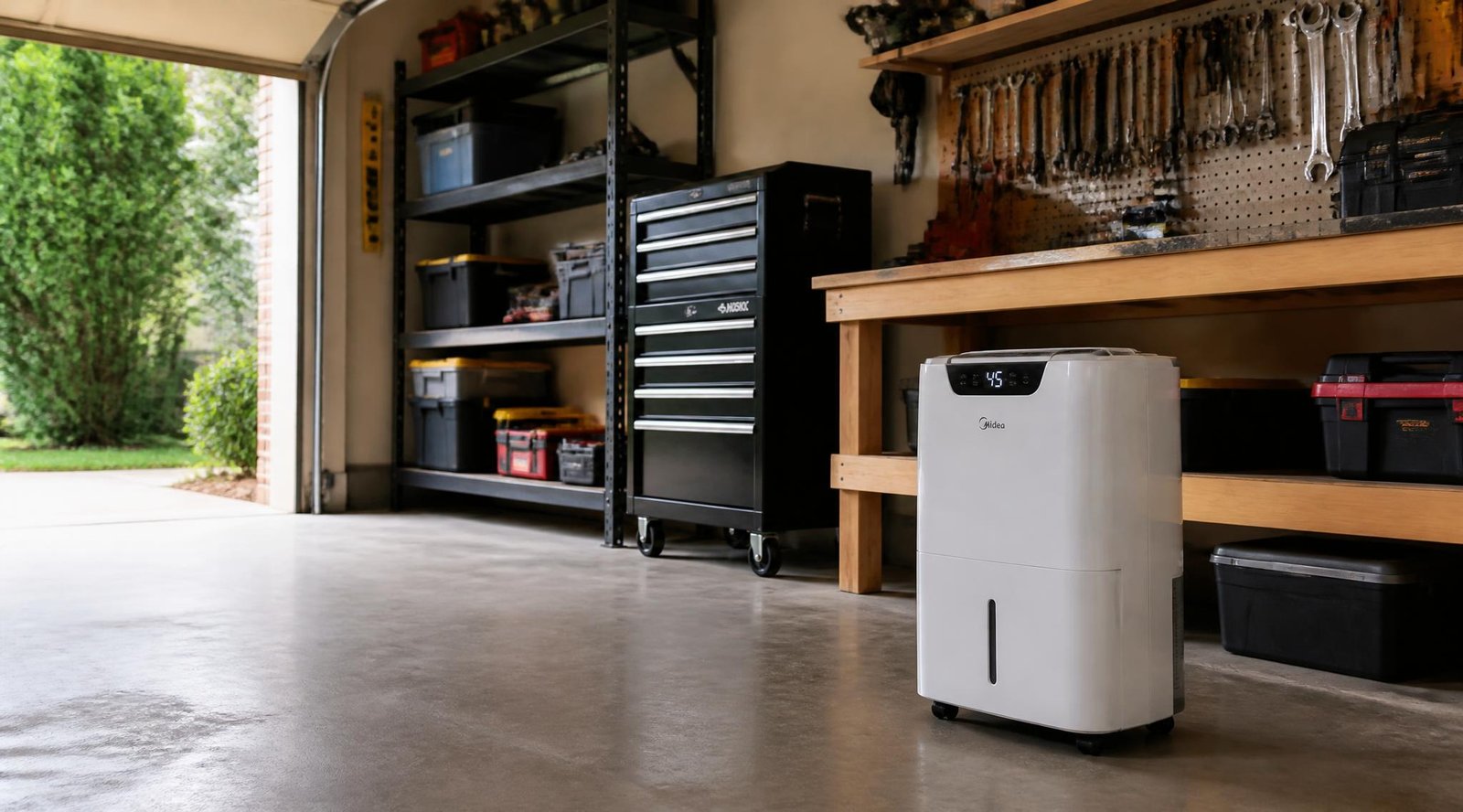
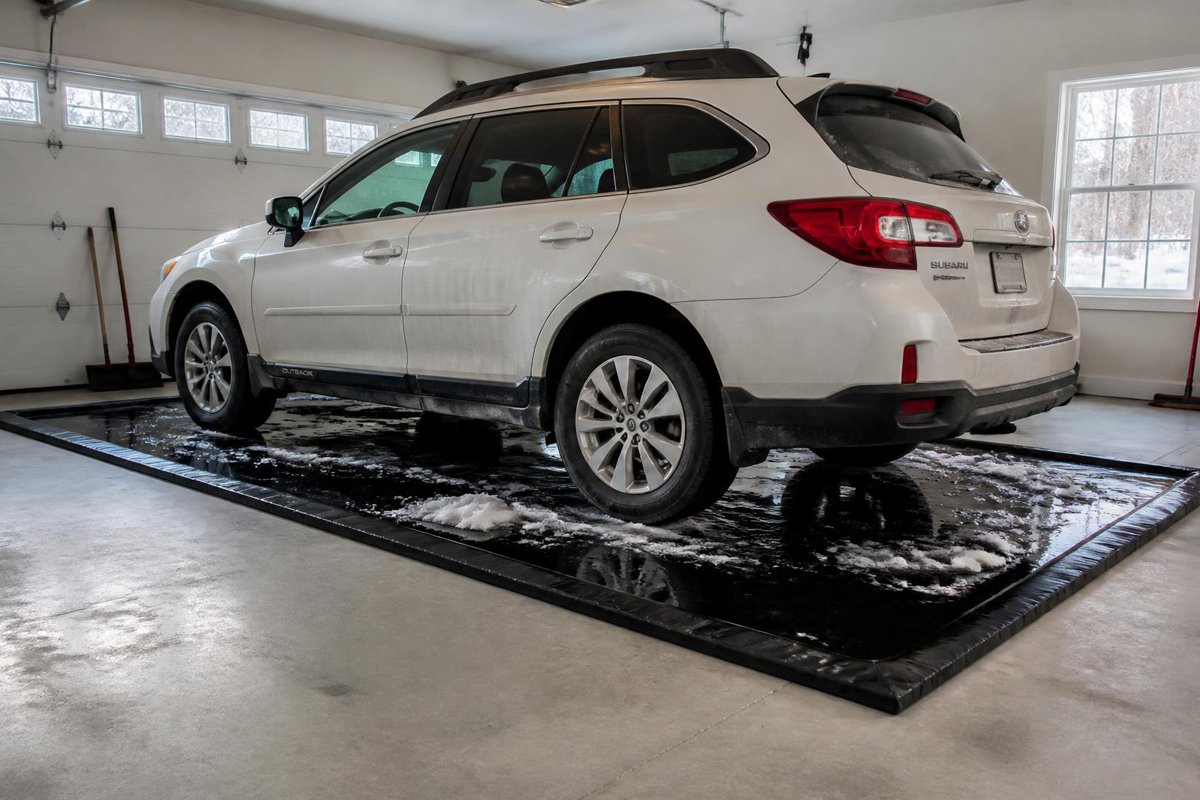
A running car, a gas heater, a generator during a power outage — an attached garage produces more carbon monoxide than almost any other space in a home, and it’s completely odorless, colorless, and undetectable without the right equipment. Most homeowners know they need a smoke detector. Far fewer have given real thought to CO protection, until something goes wrong.
The good news is that solving this doesn’t take much: a single, correctly placed carbon monoxide detector closes one of the most overlooked safety gaps in the average home. This guide breaks down the best carbon monoxide detectors for garage use, what actually separates a good one from a bad one, and where to install it for real protection. For the full picture on why this matters, our guide on garage carbon monoxide safety covers the risks in more depth.
Quick Answer
The best carbon monoxide detector for a garage depends on where you’re placing it. For the garage itself, a plug-in or hardwired detector rated for wider temperature swings holds up best. For the door connecting the garage to the house, a combo smoke and CO alarm covers both risks in one device. For anyone wanting phone alerts while away, a smart CO detector with app notifications adds real value. As a general rule, most safety guidelines recommend placing the primary detector near the house-side entry rather than deep inside the garage itself, to avoid false alarms from vehicle exhaust.
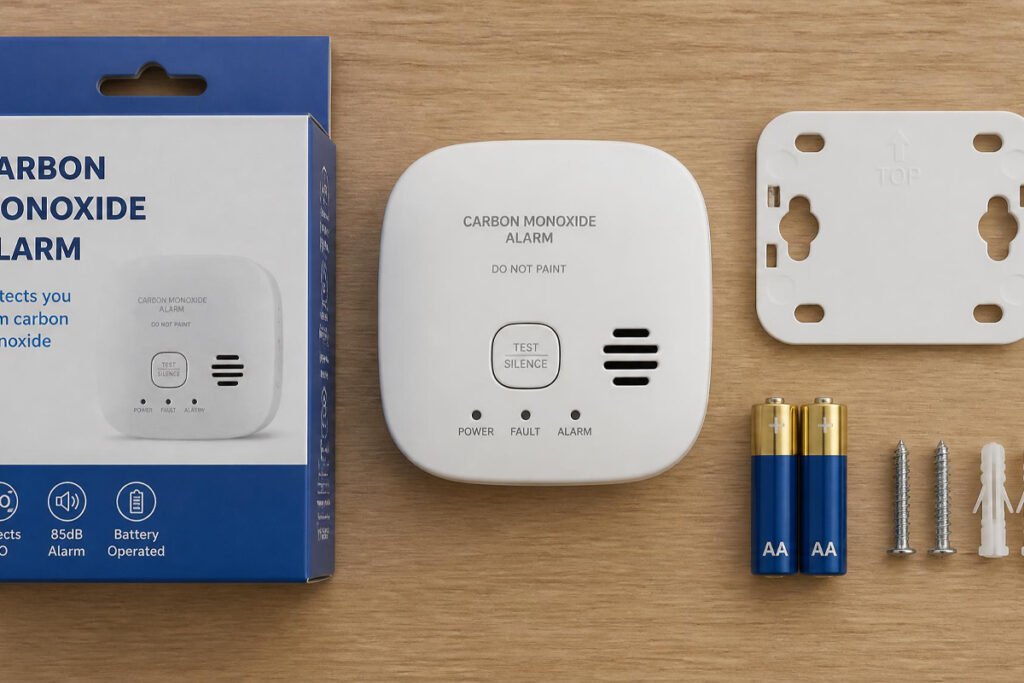
Table of Contents
- Why Garages Need Carbon Monoxide Protection
- How to Choose the Right CO Detector
- Best Carbon Monoxide Detectors Available
- Comparison Table
- Best Detector Placement for Different Garage Setups
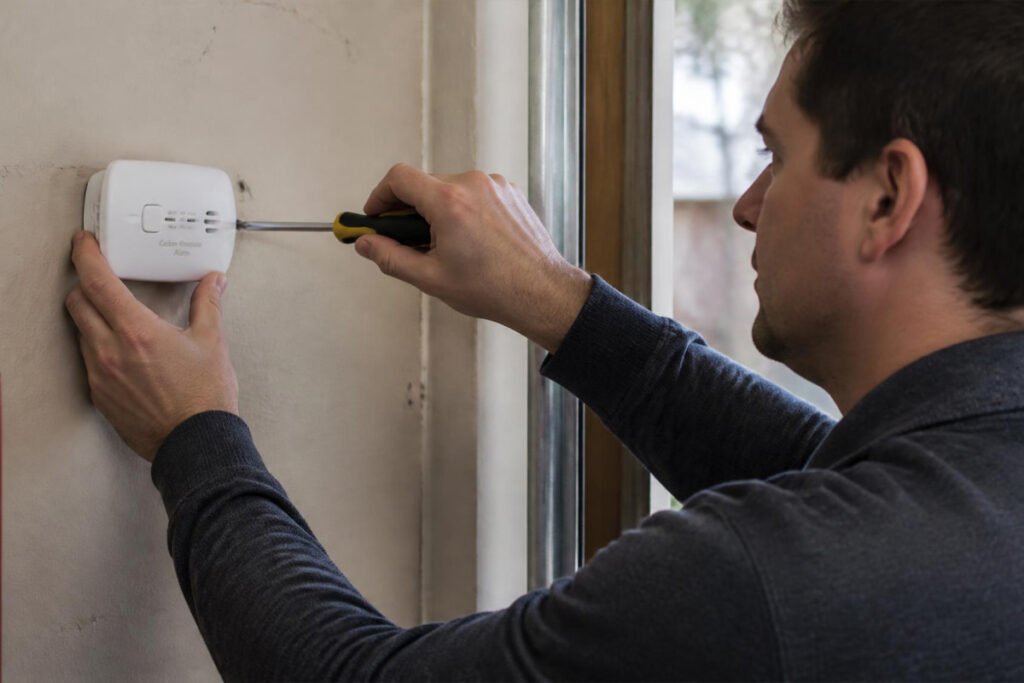
- How to Install a CO Detector Correctly
- Common Mistakes
- Expert Tips
- Final Thoughts
- FAQ
Why Garages Need Carbon Monoxide Protection {#why-you-need}
Carbon monoxide forms whenever fuel burns incompletely — a car engine warming up, a gas-powered generator during a storm, a propane heater in a workshop garage. In an enclosed space with limited airflow, CO concentrations can build to dangerous levels within minutes, and because it’s undetectable by smell or sight, the only real defense is a working detector. This risk has grown alongside home trends like EV charging and garage-based generators — our guide on installing an EV charger in your garage touches on some of the electrical safety considerations that go hand in hand with this.
Good ventilation reduces the risk but doesn’t eliminate it — see our garage ventilation guide for airflow improvements that work alongside, not instead of, a detector.
How to Choose the Right CO Detector {#how-to-choose}
Before buying, ask three questions:
- Where exactly will it be installed? A detector rated for the temperature swings and exhaust exposure of a garage differs from one meant for a living room.
- Do I want it combined with smoke detection? Combo alarms save on hardware and mounting points, especially near a garage-to-house entry door.
- Do I want remote alerts? Smart detectors send a phone notification if CO is detected while you’re away, which matters most for anyone who works or travels frequently.
For placement guidance that goes beyond manufacturer instructions, the U.S. Consumer Product Safety Commission’s carbon monoxide guidance is a solid, non-commercial reference worth reviewing before you install anything.
Best Carbon Monoxide Detectors Available {#best-tools}
1. Plug-In CO Detector with Digital Display
Overview: Plug-in detectors draw continuous power from a wall outlet, which means no battery to forget about, paired with a digital display that shows live CO readings instead of just an alarm state. Many include a battery backup for outages.
Key Features:
- Continuous power via wall outlet
- Digital PPM display for live readings
- Battery backup for power outages
- Loud, distinct alarm tone separate from smoke alarms
Best For: Garage entryways, workshop areas with a nearby outlet
Pros: ✅ Never forget to replace a battery ✅ Live digital readout shows trends, not just alarms ✅ Battery backup covers outages Cons: ❌ Requires a free outlet at the right height ❌ Some models still draw a small amount of standby power
Our Verdict: A strong first choice for garages with an accessible outlet near the house-side door — pair it with our garage safety guide for a full room-by-room safety check.
2. Battery-Powered Portable CO Detector
Overview: For garages without a convenient outlet, a battery-powered unit can mount anywhere, including on a wall well away from vehicle exhaust paths. Long-life sealed batteries (7–10 years) remove the “did I replace the battery” problem that plagues older smoke detectors.
Key Features:
- Sealed, long-life battery (7–10 years typical)
- Mounts anywhere, no outlet required
- End-of-life alert built into most models
- Compact, low-profile design
Best For: Detached or standalone garages, workshops without nearby outlets
Pros: ✅ Installs anywhere regardless of outlets ✅ Long battery life reduces maintenance ✅ Simple, tool-free mounting Cons: ❌ Still requires eventual battery replacement ❌ No live digital readout on most budget models
Our Verdict: The most flexible option for garages that aren’t wired for a convenient outlet placement, especially in detached structures.
3. Combination Smoke and CO Alarm
Overview: For the door connecting an attached garage to the house, a combo alarm covers both major risks with a single unit and a single mounting point, simplifying both installation and battery maintenance.
Key Features:
- Dual smoke and CO sensing in one unit
- Distinct alarm patterns for each hazard type
- Interconnect capability with other alarms in some models
- 10-year sealed battery options available
Best For: The interior door between an attached garage and the home
Pros: ✅ Covers two hazards with one device ✅ Reduces total number of alarms to maintain ✅ Ideal for the garage-to-house transition point Cons: ❌ Combined alarms can occasionally make it harder to identify which hazard triggered ❌ Slightly higher price than single-purpose units
Our Verdict: This is the right choice for the door itself, while a dedicated CO-only unit still covers the garage interior — a layered approach beats relying on just one device.
4. Smart CO Detector with App Alerts
Overview: Smart detectors connect to home Wi-Fi and push a phone notification the moment CO is detected, which matters most if you’re often away from home or want alerts sent to multiple household members at once.
Key Features:
- Wi-Fi connectivity with smartphone app alerts
- Historical CO level tracking over time
- Multi-user notification support
- Self-test diagnostics reported to the app
Best For: Homeowners who travel frequently or want remote monitoring
Pros: ✅ Alerts reach you even when you’re not home ✅ App-based self-test diagnostics catch failures early ✅ Useful data logging over time Cons: ❌ Requires stable home Wi-Fi to function remotely ❌ Higher price point than basic detectors
Our Verdict: Worth the upgrade if your garage is part of a broader smart-home security setup — see our garage door security guide for how this fits into a wider connected-home approach.
5. Low-Level CO Monitor for Workshop Garages
Overview: Standard consumer CO detectors are required by safety standards to have some delay before alarming at low concentrations, to avoid nuisance alarms. Low-level monitors, by contrast, detect and display smaller CO fluctuations sooner, which matters in garages used heavily for welding, engine work, or running small engines indoors.
Key Features:
- Detects lower CO thresholds than standard consumer units
- Continuous digital PPM display
- Designed for workshop and heavy-use environments
- Often used alongside, not instead of, a standard alarm
Best For: Active workshop garages, frequent engine or generator use indoors
Pros: ✅ Catches problems before standard alarms would trigger ✅ Useful diagnostic tool for workshop environments ✅ Complements rather than replaces standard detectors Cons: ❌ More expensive and specialized than consumer units ❌ Not a replacement for a standard UL-listed alarm
Our Verdict: A smart add-on for a serious workshop garage — pair it with strong airflow from our garage ventilation guide rather than relying on detection alone.
Comparison Table {#comparison-table}
| Detector Type | Best For | Power Source | Approx. Price Range | Remote Alerts |
|---|---|---|---|---|
| Plug-In with Digital Display | Garage entryways with outlet access | Wall outlet + battery backup | $25–$50 | No |
| Battery-Powered Portable | Detached garages, no outlet | Sealed long-life battery | $20–$40 | No |
| Combo Smoke and CO Alarm | Garage-to-house entry door | Battery or hardwired | $30–$60 | Varies by model |
| Smart CO Detector | Homeowners wanting remote monitoring | Battery or wired + Wi-Fi | $50–$120 | Yes |
| Low-Level Workshop Monitor | Heavy workshop use | Wall outlet or battery | $80–$200 | Varies by model |
Best Detector Placement for Different Garage Setups {#different-setups}
Attached Garages
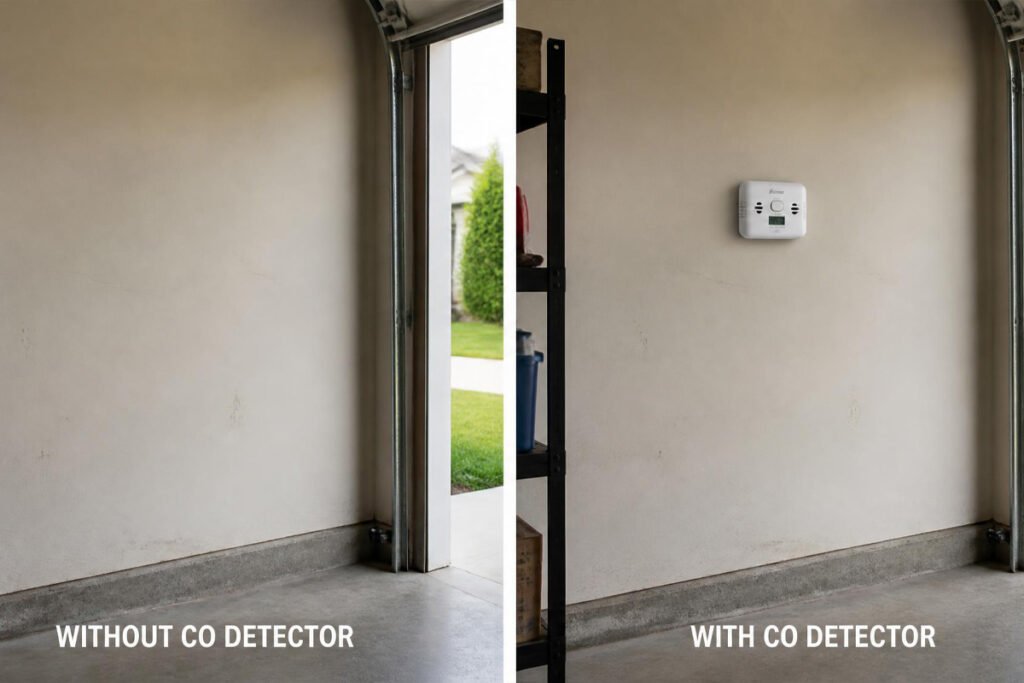
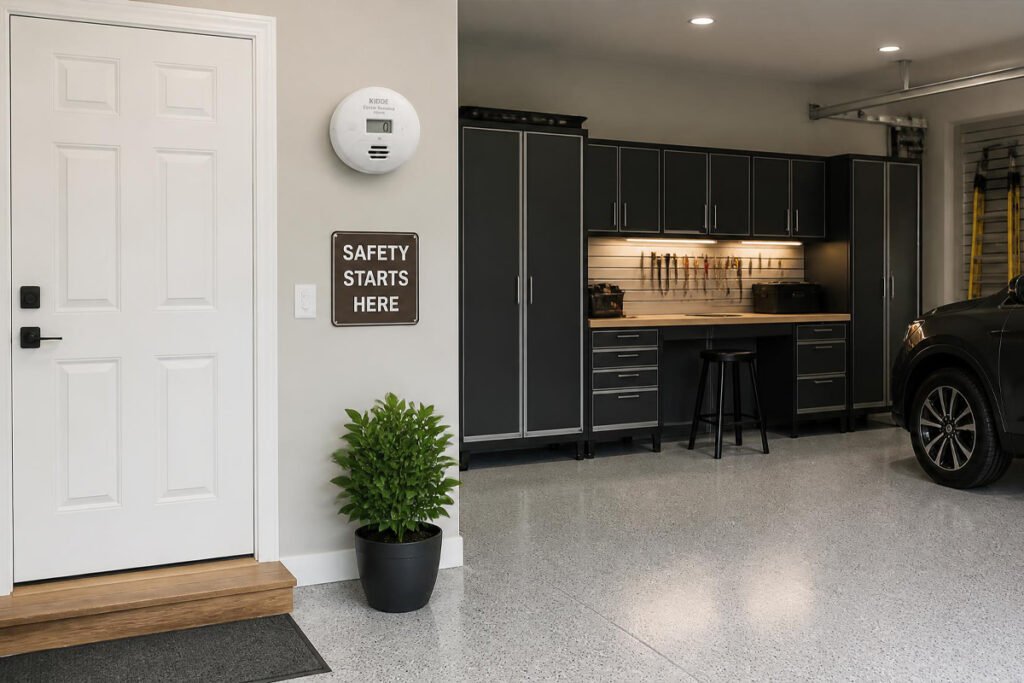
Place a combo smoke/CO alarm on the house side of the connecting door, and a dedicated CO detector inside the garage itself, positioned away from direct vehicle exhaust paths to avoid nuisance alarms.
Detached Garages
A battery-powered portable detector is usually the simplest choice here, since running an outlet specifically for this purpose may not be practical. Combine it with good airflow — see our garage ventilation guide — since detached structures often have less natural air exchange than attached ones.
Workshop and Converted Garages
If your garage functions as a workshop or has been converted for other use, layer a standard detector with a low-level monitor for earlier warning during heavy engine work or welding. This pairs well with our guide on setting up a garage workshop, which covers broader safety planning for active workspaces.
How to Install a CO Detector Correctly {#how-to-install}
Step 1: Choose the Right Height
Most manufacturers recommend mounting at least 5 feet off the ground, though ceiling mounting is also acceptable for many models.
Step 2: Avoid Direct Exhaust Paths
Keep the detector at least 15 feet from any fuel-burning appliance or typical vehicle exhaust path to reduce nuisance alarms.
Step 3: Mount Securely
Use the provided screws and anchors rather than adhesive strips alone, since garage temperature swings can weaken adhesive over time.
Step 4: Test Immediately After Installation
Use the test button to confirm the alarm sounds correctly before relying on it.
Step 5: Set a Recurring Replacement Reminder
Even long-life sealed battery units have an expiration date — mark it on a calendar so the unit doesn’t silently age out of usefulness.
Common Mistakes {#common-mistakes}
Installing the detector too close to vehicle exhaust paths. This causes frequent nuisance alarms, which often leads homeowners to disable the unit entirely — the opposite of the intended safety benefit.
Relying on a smoke detector alone. Smoke and CO require different sensors; a smoke-only alarm will not detect a carbon monoxide buildup.
Ignoring end-of-life alerts. A chirping “replace me” signal is easy to dismiss as a low-battery smoke alarm, but CO detectors have a hard expiration date regardless of battery type — check your garage safety guide for a broader seasonal safety check routine.
Expert Tips {#expert-tips}
Layer detection, don’t rely on a single unit. A combo alarm at the entry door plus a dedicated detector inside the garage catches more scenarios than either alone.
Keep the garage door open briefly after starting a car in cold weather. This is a simple habit that reduces CO buildup during the minute or two engines run richest, right after starting.
Check detector placement any time you change how the garage is used. Converting to a workshop, adding a generator, or installing a gas heater all shift where and how you should position detection — revisit your setup rather than assuming the original placement still applies.
Final Thoughts {#final-thoughts}
Best Overall: A plug-in detector with a digital display for the garage itself, paired with a combo smoke/CO alarm at the house-side entry. Best for Detached Garages: A battery-powered portable unit, since outlet access often isn’t practical. Best for Workshop Garages: A standard detector layered with a low-level monitor for earlier warning during heavy engine or fuel-burning activity.
Carbon monoxide protection is one part of a much bigger safety picture — for the full room-by-room approach, see our garage safety guide and garage ventilation guide to make sure the rest of your garage is just as protected.
Frequently Asked Questions {#faq}
Do I really need a CO detector in my garage if I already have one in the house? Yes. A detector inside the living space may not trigger fast enough if CO is building up specifically in the garage — a dedicated unit near the connecting door and inside the garage itself gives much faster warning.
How long do carbon monoxide detectors last? Most units have a functional lifespan of 5–10 years, after which the sensor itself degrades regardless of battery condition. Check the manufacture date printed on the unit, not just the battery status.
Battery-powered vs. plug-in — which is actually better? Neither is universally better; plug-in units remove battery maintenance but need outlet access, while battery-powered units mount anywhere but need periodic battery checks (or a long-life sealed battery model).
Can running my car in the garage with the door open cause CO buildup? It’s much safer than a fully closed garage, but CO can still accumulate, especially if the door is only partially open or airflow is limited — a working detector is still the right safeguard.
What should I do if my CO detector goes off? Get everyone out of the enclosed space immediately, open the garage door and any connecting doors for ventilation, and don’t re-enter until the alarm clears and you’ve identified the source.
Is a combo smoke/CO alarm as effective as two separate units? Yes, quality combo units use separate sensors internally for each hazard and distinct alarm patterns — the combination is a convenience, not a compromise in detection.
Do I need a CO detector if my garage doesn’t have a car in it? If it houses any fuel-burning appliance — a generator, gas heater, or gas-powered tools — yes, a detector is still worth having regardless of vehicle use.
Where exactly should a CO detector NOT be placed? Avoid placing it directly above or right next to a car’s exhaust path, near vents, or right next to windows and doors where outdoor air might dilute readings unpredictably.
Are smart CO detectors worth the extra cost? If you travel often or want alerts sent to multiple people at once, yes — the remote notification feature is the main added value over a standard unit.
Author: Danial Marquez Last Updated: August 2026