
Illuminate Your Space: Creative Garage Door Lights Ideas
As we transform our garages from mere storage spaces to multifunctional areas, we will need Garage Door Lights Ideas. The importance of proper lighting is unavoidable. Beyond functionality, well-placed and thoughtfully chosen garage door lights can enhance security, curb appeal, and the overall ambiance of your space. In this exploration, we dive into the world of Garage Door Lights Ideas, insights, and tips to brighten up your garage.
Table of Contents
Understanding Lighting Needs
Before diving into ideas, it’s essential to understand the different lighting needs of a garage. The right mix is critical, from task lighting for workspaces to ambient lighting for overall visibility.
Natural Lighting with Windows
Integrate natural lighting into your garage by incorporating windows. This reduces the need for artificial lighting during the day and enhances the overall atmosphere.
Color Temperature Considerations
Understand the importance of color temperature in garage lighting. Cool white (4000-5000 Kelvin) suits task-oriented areas, while warm white (2700-3000 Kelvin) creates a more comfortable and inviting environment.
Adjustable Lighting for Versatility
Go for fixtures with adjustable brightness and directionality. This versatility allows you to customize the lighting according to specific tasks or activities, providing flexibility for different garage uses.
High CRI (Color Rendering Index) Lighting
Choose lights with a high Color Rendering Index (CRI) for accurate color representation. This is particularly beneficial if you use your garage for hobbies or tasks that require precise color distinction.
Task Lighting for Specific Areas
Identify key areas in your garage, such as a workbench or tool storage, and install dedicated task lighting. This ensures that these areas receive focused and adequate illumination for efficient work.
Smart Lighting Controls
Embrace intelligent lighting controls for enhanced energy efficiency and convenience. Innovative systems allow you to adjust brightness, set schedules, and even integrate with other smart home devices for seamless automation.
Indirect Lighting for Ambient Glow
Create a subtle and inviting ambiance by incorporating indirect lighting. This can be achieved through recessed lighting or fixtures that bounce light off walls and ceilings, reducing harsh shadows.
Weatherproof Fixtures for Exterior Lighting
If your garage has exterior spaces, such as the driveway or entryway, ensure that the chosen fixtures are weatherproof. This guarantees durability and longevity in varying weather conditions.
Layered Lighting Design
Implement a layered lighting design that combines ambient, task, and accent lighting. This comprehensive approach ensures a well-lit and aesthetically pleasing garage environment.
Energy-Efficient Lighting Upgrades
Consider upgrading older lighting fixtures to energy-efficient alternatives. This reduces electricity consumption and aligns with sustainable practices, contributing to a greener home.
Lighting Layout and Fixture Placement
Plan the layout and placement of fixtures strategically. Ensure even light distribution throughout the garage, avoiding dark corners and optimizing visibility in every area.
Emergency Lighting Systems
For added safety, install emergency lighting systems. These can include battery-powered lights or backup lighting sources that activate during power outages, ensuring continued functionality and security.
Understanding these diverse aspects of garage lighting allows you to make informed decisions when selecting fixtures and designing the lighting layout. Shortening the lighting to meet specific needs enhances the functionality and aesthetics of your garage, creating a well-lit and inviting space.
What Type of Lighting is Best for a Garage?
LED vs. Fluorescent vs. Incandescent: Explore the pros and cons of various lighting options. LED lights are energy-efficient and long-lasting, while fluorescent lamps offer a cost-effective solution. Incandescent lights, though less common today, still have their applications.
Motion-Activated Lights for Security: Consider the benefits of motion-activated lights for added security. These lights deter potential intruders and provide convenience when entering the garage.
Garage Door Lights Ideas
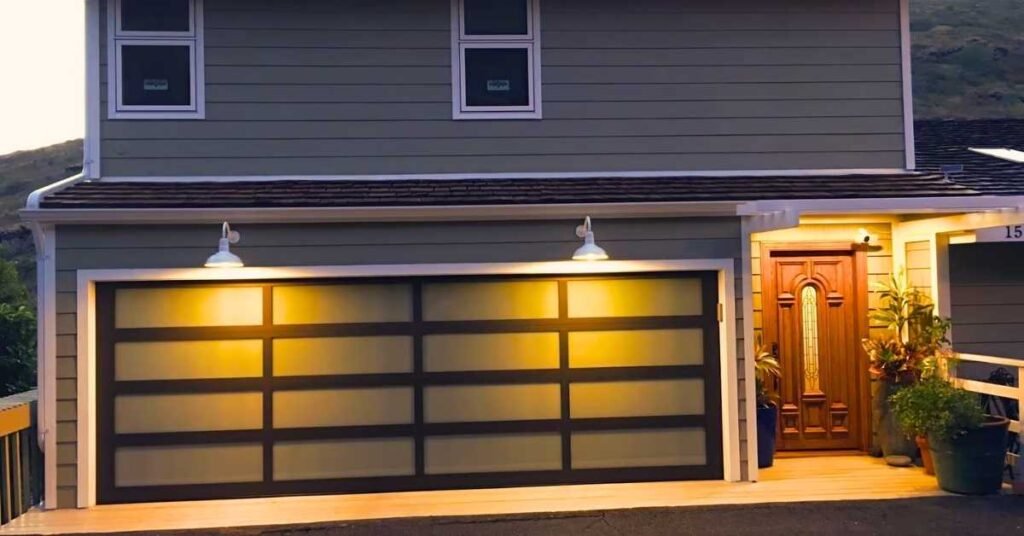
Overhead Door Lighting: Illuminate the immediate surroundings of your garage door with overhead lights. Recessed or surface-mounted fixtures can enhance visibility and create a welcoming entrance.
Sconces and Wall-Mounted Lights: Add a touch of style with wall-mounted lights or sconces flanking the garage door. These fixtures not only provide functional light but also contribute to the aesthetics of your exterior.
String Lights for Ambiance: Create a cozy and inviting atmosphere by incorporating string lights. These can be draped along the garage’s perimeter or around doors and windows for a charming effect.
Intelligent Lighting Systems: Embrace the future with innovative lighting systems. These allow you to control the intensity, color, and even schedule of your garage lights through a smartphone app, adding a layer of convenience.
Under-Cabinet Lighting for Workspaces: Ensure well-lit workspaces with under-cabinet lighting. These lights are perfect for illuminating workbenches, tool areas, and other functional spaces within the garage.
Floor Lighting for Safety: Enhance safety with subtle floor lighting along pathways and the garage perimeter. This guides movement and adds a modern touch to your garage exterior.
Where is the Best Place to Put Lights in a Garage?
Above Garage Doors: Illuminate the garage door for a visually appealing entrance. Consider fixtures that complement the architectural style of your home.
Along Pathways: Ensure safety and aesthetics by placing lights along pathways leading to and from the garage. This is especially important for navigating in the dark.
Near Workspaces: Direct light toward workspaces, such as workbenches or tool areas, to enhance visibility and create a conducive environment for DIY projects.
At Entry Points: Strategically place lights at entry points, such as side doors, to improve security and make these areas well-lit and welcoming.
Inside the Garage: Remember the interior of the garage. Install lights on the ceiling or walls to brighten up the entire space, making it more functional.
How to Maintain the Lighted Decorations of Your Garage
Enhancing your garage with lighted decorations can bring a festive and inviting atmosphere to your home. However, ensuring that these decorations remain in top-notch condition requires regular maintenance.
Let’s explore practical ways to preserve and care for the illuminated elements adorning your garage
Weather-Resistant Decor Choices: Selecting Durable Materials and UV-Protected Finishes
Go for lighted decorations crafted from weather-resistant materials. This initial choice sets the foundation for long-lasting, resilient decorations that withstand various weather conditions. Look for decorations with UV-protected finishes. This feature helps prevent fading caused by prolonged exposure to sunlight, ensuring vibrant and eye-catching displays year-round.
Inspection and Cleaning Routine: Regular Checkups and Cleaning Tips
Establish a routine for inspecting your lighted decorations. Regular checkups allow you to identify and address issues promptly before they escalate. Gently clean the decorations to remove dirt, dust, and debris. Use a soft cloth or sponge, avoiding abrasive materials that could scratch surfaces or damage delicate features.
Secure Installation Practices: Sturdy Mounting Systems and Avoid Overloading Electrical Outlets
Ensure that your lighted decorations are securely mounted. Use sturdy and reliable mounting systems to prevent accidental falls or damage during adverse weather conditions. Practice safe electrical use by avoiding overloading outlets. Distribute your decorations across multiple outlets and use extension cords rated for outdoor use to prevent electrical hazards.
Storage Solutions for Off-Season: Proper Disassembly and Organized Storage Containers
When it’s time to take down your lighted decorations after the festive season, disassemble them carefully. Follow manufacturer guidelines for disassembly to avoid damage. Invest in dedicated storage containers for your decorations. These containers should protect against moisture and pests, ensuring that your decorations emerge from storage in excellent condition.
Inspect Wiring and Electrical Components
Regularly inspect the wiring and electrical components of your lighted decorations. Look for signs of wear and tear, such as frayed wires or damaged plugs, and address these issues promptly. If any components are faulty or damaged, replace them immediately. Avoid using decorations with compromised electrical elements to prevent safety hazards.
Timely Repairs and Replacements
If you notice any damage during inspections, address it promptly. Delaying repairs can lead to further deterioration and may compromise the functionality of your lighted decorations. For intricate or complex decorations, consider professional repairs. Experts can assess and fix issues, restoring your decorations to their original glory. Preserving the beauty of your lighted garage decorations involves a combination of thoughtful choices, regular maintenance, and timely repairs.
By following these strategies, you can ensure that your garage remains adorned with captivating and well-maintained lighted decorations throughout the seasons. Whether it’s festive lights or decorative motifs, a little care goes a long way in sustaining the charm of your illuminated garage decor.

FAQ: Garage Door Lights Ideas
What is the ideal brightness for garage lights?
The ideal brightness depends on the garage’s purpose. Task areas may require higher lumens than general ambient lighting. Aim for 50-75 lumens per square foot as a general guideline.
Can I install garage lights myself?
Many lighting installations are DIY-friendly, such as adding wall-mounted or string lights. However, it’s advisable to consult a professional for complex systems or electrical work.
How can I improve energy efficiency with garage lighting?
Plan for LED lights, use motion sensors to control when lights are on and consider installing timers or intelligent lighting systems for better energy management.
Finishing Stroke
In conclusion, Garage Door Lights Ideas go beyond mere illumination; they transform your space. From enhancing security to creating a welcoming ambiance, the choices are diverse. Whether you crave modern, bright lighting or classic sconces, let your garage doors shine bright, adding functionality and style to your home’s exterior. Experiment with different ideas, mix and match, and discover the perfect lighting solution for your garage’s unique needs. Illuminate your space and elevate your garage’s overall aesthetics and functionality with well-thought-out lighting choices.


![A standard smoke detector is the wrong tool for a garage — dust, vehicle exhaust, and temperature swings trigger enough false alarms that most people eventually just disable the unit, which defeats the purpose entirely. A heat detector solves that by responding to actual temperature change instead of airborne particles. For related garage fire and safety context, see our carbon monoxide and garage safety guide. This roundup focuses specifically on which heat detector to buy. Quick answer: for most attached garages, a hardwired, interconnectable unit like the First Alert HD6135FB is the most reliable choice, since it ties into your home's existing smoke/CO alarm system rather than operating as an isolated device. If wiring isn't an option or you want app alerts when you're not home, a smart or wireless model further down this list covers that instead. We compared products on detection method (fixed temperature vs. rate-of-rise), operating temperature range, interconnection capability, installation type, and price — specifically for garage use, where dust, exhaust, and wide temperature swings rule out options that work fine in a bedroom or hallway. [IMAGE 1 — THUMBNAIL: heat detector mounted on garage ceiling with LED indicator visible — full professional photo brief in SEO package] Quick Comparison Product Best For Detection Type Approx. Price First Alert HD6135FB Best Overall 135°F fixed + rate-of-rise ~$25–$35 Kidde HD135F Best for Whole-Home Interconnection 135°F fixed only ~$25–$35 X-Sense XH02-M Best Smart/App-Connected Heat + app alerts (needs base station) ~$30–$40 + base station RiSol Commercial Heat Detector Best for Large or Extreme-Range Garages Dual fixed + rate-of-rise, –4°F to 135°F ~$50–$80 Honeywell 5809SS Best Wireless (No Hardwiring) Fixed + rate-of-rise, 345MHz wireless ~$40–$55 Note: prices are approximate and based on typical current listings — confirm exact specs and compatibility before you buy. 1. First Alert HD6135FB — Best Overall ⭐ Best Overall 135°F fixed temperature + rate-of-rise (15°F/min) | Hardwired 120VAC with 9V battery backup | 85dB horn | UL539 compliant | ~$25–$35 [IMAGE 2 — First Alert HD6135FB mounted on garage ceiling, white housing visible — full professional photo brief in SEO package] This is the most widely stocked and referenced heat detector for exactly this use case, and the dual-sensing approach is the reason why: it triggers either when the temperature hits a fixed 135°F or when it rises more than 15°F in a single minute, whichever comes first. That rate-of-rise sensing catches a fast-developing fire earlier than a fixed-temperature-only unit would, without the false-alarm sensitivity of a smoke detector. Why buy it • Dual detection (fixed + rate-of-rise) catches fast-developing fires earlier than fixed-only units • Microprocessor control specifically reduces nuisance alarms from dust and temperature swings • Interconnects with other First Alert/BRK hardwired alarms so a garage fire triggers alarms throughout the house Worth knowing • Requires hardwiring into a 120V circuit — not a simple battery-only install • Not rated for extreme cold below –20°F or heat above 115°F, which covers the vast majority of garages but is worth checking for extreme climates Verdict: the safest default pick if your garage is already wired or you're comfortable having an electrician add the circuit — the interconnection with the rest of your home's alarm system is the real value here. 2. Kidde HD135F — Best for Whole-Home Interconnection 🔗 Best for Interconnection 135°F fixed temperature only | Hardwired with 9V battery backup | Interconnects up to 24 Kidde devices | 2 status LEDs | ~$25–$35 [IMAGE 3 — Kidde HD135F heat detector on ceiling with visible LED status lights — full professional photo brief in SEO package] If your home already runs on Kidde smoke and CO alarms, this is the natural fit — it interconnects with up to 24 other Kidde AC-interconnect devices, meaning a garage fire trips every alarm in the house, not just the one nearest the fire. The trade-off against the First Alert pick above is that this unit is fixed-temperature only, without rate-of-rise sensing, which means it won't catch a fast-developing fire quite as early. Pair it with our carbon monoxide safety guide if you're building out a full Kidde-based alarm ecosystem across the house. Why buy it • Seamless interconnection if the rest of your home already runs Kidde alarms • Two LED indicators make status checking simple at a glance • UL 539 certified with a straightforward, well-documented hardwired install Worth knowing • Fixed temperature only — no rate-of-rise detection, so it triggers slightly later on a fast-developing fire • Only interconnects with other Kidde AC-interconnect devices, not mixed brands Verdict: the right choice specifically if you're standardizing on Kidde across the house — otherwise the First Alert's rate-of-rise sensing is the stronger technical pick. 3. X-Sense XH02-M — Best Smart/App-Connected 📱 Best Smart Option Heat sensing + WiFi app alerts | Requires SBS50 base station (sold separately) | Push notifications, battery status alerts | ~$30–$40 + base station [IMAGE 4 — X-Sense XH02-M heat detector with smartphone showing app alert notification — full professional photo brief in SEO package] This is the pick if you want to know about a problem while you're at work or on vacation, not just when you're standing in the garage. It connects to X-Sense's SBS50 base station over 2.4GHz WiFi and pushes alerts, battery status, and incident updates straight to your phone through the X-Sense Home Security app — genuinely useful for anyone who travels or has a detached garage/workshop they don't check daily. Why buy it • Remote push notifications mean you find out about a problem even when you're away from home • Battery status alerts prevent the detector from silently going dead without your knowledge • Straightforward app setup compared to a full hardwired interconnect system Worth knowing • Requires the separate SBS50 base station to function — factor that cost into the total price • Depends on home WiFi and the manufacturer's app/cloud service staying online to deliver remote alerts Verdict: worth the added cost and setup if remote monitoring genuinely matters to your situation — skip it if you're rarely away from the property for long stretches. 4. RiSol Commercial-Grade Heat Detector — Best for Large or Extreme-Range Garages 🌡️ Best for Extreme Ranges Dual fixed + rate-of-rise thermistor sensing | Operating range –4°F to 135°F | Covers up to 900 sq ft | 85dB alarm | ~$50–$80 [IMAGE 5 — RiSol commercial heat detector mounted in a large workshop-style garage — full professional photo brief in SEO package] Built with commercial and industrial spaces in mind, this steps up both the coverage area and the operating temperature range compared to standard residential units — rated down to –4°F, which matters for an uninsulated garage in a genuinely cold climate. The wider 900 sq ft coverage also means a large two-car garage or combined garage/workshop can often get by with fewer total units than standard residential detectors would require. Why buy it • Wide operating range handles genuinely extreme cold better than standard residential units • Larger 900 sq ft coverage area reduces the total number of units needed for a big space • Dual-sensor design matches the fixed + rate-of-rise approach of the best residential picks Worth knowing • Costs more than standard residential heat detectors, reflecting the commercial-grade build • Overkill for a small single-car garage — sized for larger spaces specifically Verdict: the right pick for a large garage, detached workshop, or genuinely harsh climate where standard residential units are pushed past their comfortable operating range. 5. Honeywell 5809SS — Best Wireless (No Hardwiring) 📡 Best Wireless Fixed + rate-of-rise detection | 345MHz wireless | Requires a compatible security panel/receiver | ~$40–$55 [IMAGE 6 — Honeywell 5809SS wireless heat detector mounted with no visible wiring — full professional photo brief in SEO package] For a garage that isn't wired and where running new electrical isn't practical, this is a genuine wireless alternative — it communicates over 345MHz radio to a compatible security system receiver rather than needing a hardwired connection. The catch is real and worth stating plainly: this only works if you already have, or are willing to add, a compatible security panel. It's not a fully standalone battery unit that works on its own out of the box. Why buy it • No electrical work required — genuinely useful for an unwired detached garage or workshop • Same fixed + rate-of-rise dual detection as the best hardwired picks on this list • Integrates with an existing home security system if you already have compatible Honeywell/Resideo equipment Worth knowing • Requires a compatible 345MHz security panel or receiver — it will not function as a true standalone device • Adds an ongoing dependency on your security system staying powered and functional Verdict: the right pick only if you already have, or plan to add, a compatible security system — otherwise the hardwiring cost for a First Alert or Kidde unit is usually simpler. Which Heat Detector Fits Your Garage? • Standard attached garage, already wired: the First Alert HD6135FB is the safest, most tested default. • Home already runs Kidde smoke/CO alarms: the Kidde HD135F keeps the whole system on one interconnected brand. • You travel often or have a detached workshop you don't check daily: the X-Sense XH02-M's app alerts are worth the extra setup. • Large two-car garage, workshop, or genuinely cold climate: the RiSol commercial unit's wider range and coverage area earn the higher price. • Garage isn't wired and running new electrical isn't practical: the Honeywell 5809SS is the realistic wireless option, provided you have or plan to add a compatible security panel. If you're installing a detector alongside other garage upgrades — an EV charger, new overhead storage, or a full workshop build-out — it's worth planning detector placement at the same time rather than as an afterthought once everything else is installed. A Quick Reality Check on “Battery-Only” Heat Detectors If you've searched for a simple, standalone battery-powered heat detector with no wiring and no base station required, you've likely noticed there aren't many well-established options from major brands — that's not an oversight on this list, it reflects the actual market. Most “battery operated” heat detectors marketed online are either wireless units requiring a compatible security panel (like the Honeywell above) or generic, unbranded products without established testing history. If a fully standalone, no-ecosystem battery unit is a hard requirement, expect to do extra due diligence on UL listing and brand reputation before buying, since this is a thinner and less-regulated part of the market than hardwired or panel-based options. Common Mistakes When Buying a Garage Heat Detector Installing a smoke detector instead This is the single most common mistake, and the reason this guide exists — a standard smoke detector in a garage will false-alarm from dust and exhaust often enough that most people eventually disconnect it, leaving the garage with no working fire detection at all. Assuming any heat detector interconnects with any brand Interconnection is almost always brand-specific — a Kidde heat detector won't trip a First Alert smoke alarm elsewhere in the house, and vice versa. If whole-home interconnection matters to you, match the brand to what's already installed. Skipping the operating temperature range Standard residential units are typically rated for roughly –20°F to 115°F. An uninsulated garage in a genuinely extreme climate can exceed that range, which is exactly the gap a wider-range commercial unit like the RiSol pick is built to cover. Forgetting it's not a substitute for a CO detector A heat detector responds to fire risk, not carbon monoxide. Both belong in or near a garage, but they're solving different problems — see our carbon monoxide safety guide for the CO side of garage safety. Fast Buying Guide Fixed temperature vs. rate-of-rise Fixed-temperature detectors trigger at a set threshold, typically 135°F. Rate-of-rise detectors trigger when temperature climbs quickly, regardless of the absolute number, which catches a fast-developing fire earlier. Dual-sensor units combine both and are the stronger choice whenever the price difference is small. Where to mount it Ceiling-mounted, centered in the garage or near the highest-risk area (workbench, electrical panel), away from HVAC vents and garage door tracks that could cause airflow interference. If your garage doubles as a workshop, position it to cover the hot-work or highest-risk station specifically rather than just the geometric center of the room. Interconnected vs. standalone An interconnected unit (hardwired or app-based) alerts the rest of the house when the garage detector trips, buying more time to react. A standalone unit only sounds locally in the garage, which is a real limitation if no one is nearby to hear it. Interconnection is worth the small added cost or setup effort for most attached garages. How many detectors does a garage need A single-car garage under about 500 sq ft typically needs just one unit, centered on the ceiling. A two-car garage or workshop over that size may need two, especially if there's a distinct high-risk zone like a hot-work station on one side of the room. Frequently Asked Questions Why not just use a smoke detector in the garage? Dust, vehicle exhaust, and temperature swings cause frequent false alarms in a standard smoke detector, which tends to end with the unit being disabled entirely — the opposite of what you want. A heat detector responds to actual temperature change instead, avoiding that false-alarm problem. Do I need a hardwired or battery-powered heat detector? Hardwired units are generally more reliable for a garage that already has wiring nearby, and interconnect with the rest of the home's alarm system. If wiring isn't practical, a wireless option paired with a compatible security panel is the realistic alternative — true standalone battery-only heat detectors from major brands are uncommon. What temperature should a garage heat detector trigger at? 135°F is the standard fixed-temperature threshold used by most residential heat detectors, paired with rate-of-rise sensing (commonly 15°F per minute) on better units to catch fast-developing fires earlier. Can a heat detector replace a smoke detector everywhere in my house? No — heat detectors are specifically recommended for spaces where smoke detectors perform poorly, like garages, attics, and crawl spaces. Living areas and bedrooms should still use smoke detectors, which respond faster to smoldering fires that a heat detector wouldn't catch until much later. How often should I test or replace a garage heat detector? Test monthly using the built-in test button, and replace the unit every 10 years regardless of apparent condition, consistent with standard smoke/heat alarm replacement guidance — sensors degrade with age even when a unit still appears to power on correctly. The Bottom Line If you buy just one thing from this list, make it a hardwired dual-sensor unit like the First Alert HD6135FB — it solves the actual problem (a garage with no reliable fire detection) for most households without complicated setup. Go wireless only if hardwiring genuinely isn't an option, and step up to a commercial-grade unit only if your garage is unusually large or exposed to genuinely extreme temperatures. Last Updated: July 2026](https://garagedaily.com/wp-content/uploads/2026/08/Best-Heat-Detectors-for-the-Garage-Top-5-Picks-Buying-Guide-1.jpg)