By Danial Marquez | Maintenance | Updated June 2026
Few discoveries are more unsettling than opening your garage and finding evidence of unwanted visitors — droppings near a stored box, a spider web stretched across your tool bench, or the telltale chewed corner of a cardboard box that once held holiday decorations. If you have found yourself searching for how to get rid of garage pests, you are dealing with one of the most common, and most preventable, problems homeowners face with this part of their house.
Garages are uniquely vulnerable to pest infestations for reasons most homeowners never consider. They are rarely climate-controlled, often have gaps and openings that the rest of the house does not, are used for storage rather than daily living (meaning problems go unnoticed longer), and frequently connect directly to the outdoors through vehicle doors that, by design, cannot seal as tightly as a house door.
This complete guide covers everything you need to know about identifying, removing, and permanently preventing the most common garage pests — mice and rats, spiders, ants, and other common insects — using safe, effective, and largely non-toxic methods suitable for a space where children, pets, and stored belongings all coexist.
Why Garages Attract Pests in the First Place
Before tackling removal, it helps to understand exactly why garages are such an appealing target for pests in the first place. This understanding is what makes prevention strategies actually effective, rather than treating symptoms while the underlying attraction remains.
Shelter from weather. Garages offer protection from rain, wind, and temperature extremes — exactly what rodents and insects seek, particularly as outdoor temperatures drop in fall and winter.
Abundant hiding places. Stacked boxes, stored furniture, and cluttered shelving create countless dark, undisturbed spaces that are ideal nesting sites. This is one of the strongest arguments for the decluttering strategies covered in our guide on how to organize your garage — an organized garage with fewer hiding spots is dramatically less hospitable to pests than a cluttered one.
Easy entry points. Garage doors, by their mechanical nature, cannot seal as tightly as a standard exterior door. Gaps along the bottom seal, around the sides, and at vents and utility penetrations all provide entry opportunities that simply do not exist elsewhere in most homes.
Food and water sources (often unintentional). Stored pet food, birdseed, fertilizer, or even cardboard boxes (which some insects feed on) provide food sources. Standing water from a leaky hose connection or condensation adds the final element pests need to thrive.
Reduced human activity. Unlike living spaces where daily activity disturbs and discourages pests, garages are often visited only briefly each day, giving pests far more uninterrupted time to establish themselves before being noticed.
Mice and Rats: Identification and Removal
Rodents are the most common — and most damaging — garage pest problem homeowners face, capable of causing genuine structural and property damage beyond the simple nuisance factor.
Signs of a Rodent Problem
Droppings. Small, dark, rice-grain-sized droppings (mouse) or larger, capsule-shaped droppings (rat) near stored items, along walls, or in corners are the most definitive sign of an active infestation.
Chewed materials. Rodents gnaw constantly to manage their continuously growing teeth. Look for chewed cardboard, gnawed wood, frayed fabric, or — most concerning — chewed electrical wiring, which creates a genuine fire hazard.
Nesting material. Shredded paper, fabric, or insulation gathered into a nest-like clump, often tucked into an undisturbed corner or inside stored boxes.
Greasy rub marks. Rodents travel the same paths repeatedly, leaving subtle dark, greasy smudges along baseboards or wall edges where their fur repeatedly brushes the surface.
Unusual pet behavior. Dogs and cats often detect rodent activity well before humans notice visible signs, showing unusual interest in specific areas of the garage, particularly storage corners or wall bases.
Scratching or scurrying sounds. Especially noticeable in the evening or early morning when rodents are most active, sounds coming from walls, stored boxes, or ceiling spaces are a strong indicator.
How to Remove Existing Rodents
Snap traps. The most reliable, humane, and cost-effective removal method for active infestations. Place traps along walls and in corners where droppings or activity have been observed, baited with peanut butter (more effective and longer-lasting than cheese, contrary to popular belief). Check and reset traps regularly.
Live catch traps. An option for homeowners who prefer not to use lethal methods, though these require checking frequently (rodents can suffer if left too long) and releasing captured animals far enough away that they do not simply return.
Bait stations. Tamper-resistant bait stations containing rodenticide are effective for larger infestations but require careful placement away from children, pets, and stored food, and carry the risk of rodents dying in inaccessible locations within walls, creating odor issues. Many homeowners prefer trapping methods for garages specifically because of easier monitoring and disposal.
Professional pest control. For significant infestations, particularly with rats (which are larger, more destructive, and can be more dangerous to handle than mice), professional services offer more comprehensive solutions including inspection of entry points, commercial-grade exclusion methods, and follow-up monitoring.
How to Prevent Rodents From Returning
Seal entry points. Mice can squeeze through openings as small as a quarter-inch (about the diameter of a pencil), and rats through openings as small as half an inch. Inspect your garage door seal, wall penetrations for utilities, and any gaps where the foundation meets the wall, sealing with steel wool combined with caulk (rodents can chew through caulk alone, but not through steel wool) or with dedicated rodent-proofing mesh products.
Maintain your garage door seal. A worn, gapped, or improperly adjusted bottom seal on your garage door is one of the single largest entry points for rodents. Inspect this seal regularly and replace it when it shows wear, cracking, or gaps.
Eliminate food sources. Store pet food, birdseed, and any food items in airtight, rodent-proof containers — never in their original bags, which rodents can easily chew through.
Reduce clutter and nesting material. Cardboard boxes are particularly attractive nesting material for rodents. Transitioning stored items to sealed plastic bins, as covered in our guide on garage organization strategies, removes both hiding spaces and nesting material in a single step.
Trim vegetation near the garage. Bushes, woodpiles, and overgrown vegetation directly adjacent to your garage exterior provide cover that rodents use to approach undetected. Maintaining clearance around the structure removes this advantage.
Spiders: Identification and Removal
Spiders are extremely common in garages and, while most are harmless and even beneficial (since they consume other insects), certain species and the simple presence of webs can be unwelcome.
Why Garages Attract Spiders
Garages offer everything spiders seek: undisturbed corners for web-building, ample insect prey (since the insects spiders feed on are also drawn to garages), and the cooler, more stable temperatures spiders often prefer compared to direct outdoor exposure.
Identifying Dangerous vs. Harmless Spiders
Most garage spiders — common house spiders, cellar spiders, and orb weavers — are harmless to humans and actually provide a natural pest control benefit by consuming other insects. However, a small number of species found in North American garages warrant additional caution:
Black widow. Identifiable by its glossy black body and distinctive red hourglass marking on the underside of the abdomen. Black widows prefer dark, undisturbed spaces — exactly the conditions found behind stored boxes or under workbenches in cluttered garages.
Brown recluse. Light to medium brown with a distinctive darker violin or hourglass-shaped marking on its back, though this marking can be subtle and is not always reliable for identification. Brown recluses also favor dark, undisturbed clutter.
If you suspect either of these species, exercise additional caution when clearing storage areas — wearing gloves and using a long-handled tool to disturb potential hiding spots before reaching in by hand is a reasonable precaution, and seeking professional pest control for confirmed infestations of venomous species is advisable.
How to Remove Spiders
Vacuum webs, egg sacs, and spiders directly. A vacuum with a hose attachment effectively removes spiders, their webs, and especially their egg sacs (which, if left, will hatch dozens of new spiders). Dispose of the vacuum bag or empty the canister outdoors immediately afterward.
Reduce clutter. As with rodents, clutter is the single biggest factor supporting spider populations in garages. Fewer undisturbed hiding spots means fewer spiders establishing webs and egg sacs.
Reduce insect prey populations. Since spiders are present largely because of available insect prey, addressing the insect population (covered below) indirectly reduces spider activity as well.
Use targeted spider repellents if needed. Essential oil-based repellents (peppermint oil is commonly used) can discourage spiders from problem areas, though they are generally less effective than addressing the underlying clutter and insect food source.
How to Prevent Spiders From Returning
Reduce exterior lighting near garage doors. Outdoor lights attract flying insects, which in turn attract spiders. Switching to yellow “bug light” bulbs near garage entrances, or simply minimizing nighttime exterior lighting, reduces this attraction chain.
Seal gaps and cracks. The same entry point sealing recommended for rodents also reduces spider entry, since most garage spiders enter through small gaps rather than walking in through an open door.
Keep storage organized and elevated. Storing items in sealed bins on shelving rather than directly on the floor in cardboard boxes removes the dark, undisturbed conditions spiders prefer for both habitation and egg-laying.
Ants: Identification and Removal
Ants are among the most common garage pest complaints, particularly during spring and summer months when colonies are most active and expanding.
Signs of an Ant Problem
Visible trails of ants moving in a consistent line (often toward a food source or a colony entry point), small piles of displaced dirt or debris near foundation cracks (indicating a nearby colony), and, in the case of carpenter ants specifically, small piles of sawdust-like material near wood structures (indicating active wood damage, similar to termites though generally less severe).
How to Remove Ants
Identify and eliminate the food source. Ants are drawn to garages most often by accessible food — spilled pet food, sugary spills, or even sweet residue on stored recycling. Removing the attraction is often more effective long-term than treating the ants directly.
Use ant bait stations. Unlike sprays that kill only the ants present, bait stations allow worker ants to carry poisoned bait back to the colony, eventually eliminating the queen and the broader colony — a more complete solution than surface treatment alone.
Apply a perimeter treatment. Diatomaceous earth (a natural, non-toxic powder made from fossilized algae) applied along entry points and ant trails is effective and safe around children and pets, working by damaging the ants’ exoskeletons on contact.
Address carpenter ants promptly. Unlike most garage ant species, carpenter ants tunnel into wood structures, causing genuine structural damage over time if left unaddressed. If you observe sawdust-like debris near wooden structural elements, prompt professional assessment is warranted.
How to Prevent Ants From Returning
Clean up food residue promptly. Spilled pet food, sugary drink residue, or food waste in garage trash or recycling bins should be cleaned up and disposed of promptly rather than left to accumulate.
Seal cracks in flooring and foundation. Concrete floor cracks provide both entry points and, in many cases, the exact conditions ants use to establish colonies directly beneath your garage floor.
Trim vegetation touching the structure. Branches, vines, or shrubs that physically touch your garage exterior provide a direct bridge for ants (and other insects) to access the structure without crossing exposed ground.
Other Common Garage Pests
Cockroaches
Cockroaches are drawn to garages by similar conditions to other pests — shelter, food residue, and moisture. Reducing moisture (addressing any leaks or excess humidity) and food sources, combined with gel bait stations placed along walls and in corners, are the most effective control methods.
Crickets
While less destructive than other pests, crickets can become a nuisance both for their noise and their tendency to chew on stored fabric and paper goods. Reducing exterior lighting (which attracts them, similar to the mechanism affecting spiders) and sealing entry points are the primary prevention strategies.
Wasps and Hornets
Garages with rafters, eaves, or undisturbed corners are common nesting sites for wasps, particularly in spring as new colonies establish. Small, early-stage nests can sometimes be removed with appropriate aerosol wasp spray and significant caution; larger or established nests are best handled by pest control professionals given the genuine sting risk involved, particularly for anyone with allergies.
Silverfish
These pests are drawn to damp, humid conditions and feed on paper, cardboard, and fabric — making stored documents and clothing boxes particularly vulnerable. Reducing humidity (addressing moisture sources, potentially using a dehumidifier in persistently damp garages) is the most effective long-term control.
Building a Pest-Proof Garage: The Complete Prevention Strategy
While species-specific removal methods matter, the most effective long-term approach to garage pest control is addressing the underlying conditions that attract pests in the first place. This integrated strategy works across nearly all common garage pests simultaneously.
1. Seal Every Entry Point
Conduct a thorough inspection of your garage’s exterior, looking specifically for:
- Gaps around the garage door bottom seal and side seals
- Openings where utility lines (electrical, water, gas) penetrate exterior walls
- Cracks in the foundation or where the foundation meets the wall
- Gaps around windows and any service doors
- Vents lacking proper mesh screening
Seal small gaps with caulk, and for gaps large enough for rodent entry, combine steel wool with caulk for a barrier that resists both moisture and chewing.
2. Eliminate Clutter Systematically
Pests of nearly every type thrive in cluttered, undisturbed storage conditions. Transitioning your garage to an organized system with clear floor space, elevated storage, and sealed containers — covered comprehensively in our guide on [how to organize your garage](https://garagedaily.com/how-to organize-your-garage-2026/) — removes the hiding spaces, nesting material, and undisturbed conditions that pests of all kinds depend on.
3. Switch to Sealed, Non-Organic Storage Containers
Cardboard boxes are simultaneously a food source for some insects, nesting material for rodents, and a hiding spot for spiders. Transitioning stored items to sealed plastic or metal containers removes all three attractions in a single change.
4. Manage Moisture
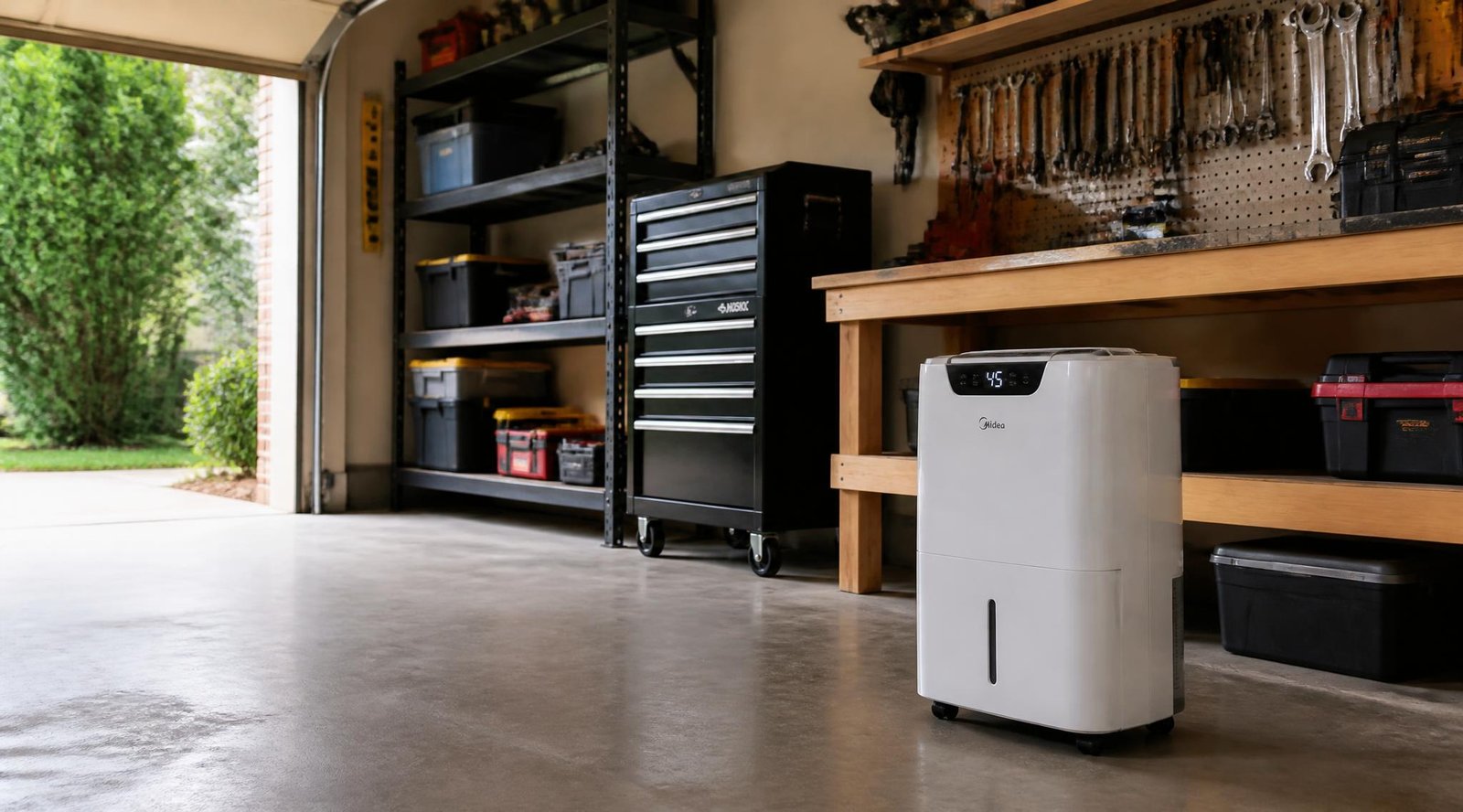
Excess moisture — from leaks, condensation, or poor drainage — attracts a wide range of pests and also damages stored items independently of any pest issue. Address any plumbing leaks promptly, ensure proper exterior grading directs water away from the garage, and consider a dehumidifier in persistently damp climates. For garages prone to humidity or temperature extremes more broadly, our guide on how to insulate a garage addresses related moisture and temperature management strategies.
5. Maintain a Clean Floor and Surfaces
Regular sweeping and cleaning removes food residue, organic debris, and the general grime that supports insect populations. Our complete guide to cleaning a garage floor provides a systematic approach that, beyond improving appearance, directly supports pest prevention.
6. Manage Exterior Lighting Thoughtfully
Bright white exterior lighting near garage entrances attracts flying insects, which in turn attract spiders and other predatory pests. Switching to yellow-spectrum “bug lights” or simply reducing unnecessary nighttime illumination breaks this attraction chain at its source.
7. Store Food Items Properly
Pet food, birdseed, fertilizer, and any other consumable items stored in the garage should always be in airtight, chew-resistant containers — never left in their original paper or thin plastic packaging.
8. Conduct Seasonal Inspections
Pest pressure varies seasonally — rodents seek shelter more aggressively as outdoor temperatures drop in fall, while ants and many insects peak in spring and summer. A seasonal walkthrough inspection, checking entry points and storage areas, catches developing problems before they become established infestations.
When to Call a Professional Pest Control Service
While many garage pest problems can be effectively managed through the DIY methods outlined above, certain situations warrant professional involvement:
Confirmed rat infestations. Rats are larger, more destructive, and can present greater health risks than mice, making professional-grade exclusion and removal more reliable for established infestations.
Suspected venomous spider populations. Confirmed black widow or brown recluse populations, particularly in households with children or pets, benefit from professional treatment and more thorough inspection than typical DIY measures provide.
Carpenter ant activity affecting structural wood. Given the potential for genuine structural damage, professional assessment helps determine the extent of any damage and the appropriate treatment approach.
Wasp or hornet nests in inaccessible or large established locations. The sting risk from disturbing a large, established nest is significant enough that professional removal is the safer choice for most homeowners.
Recurring infestations despite consistent prevention efforts. If you have implemented sealing, decluttering, and moisture management consistently but continue experiencing pest problems, a professional inspection may identify entry points or conditions not visible during a typical homeowner inspection.
Natural and Non-Toxic Pest Deterrents
For homeowners preferring to minimize chemical pesticide use, particularly in garages where children or pets frequently spend time, several natural deterrents offer reasonable effectiveness as part of a broader prevention strategy.
Peppermint oil. A well-documented natural deterrent for spiders, ants, and mice. Diluted with water in a spray bottle and applied around entry points, storage areas, and along baseboards, peppermint oil’s strong scent disrupts pest navigation and feeding behavior without posing toxicity risks to humans or pets.
Diatomaceous earth. Effective against ants, cockroaches, and various crawling insects through a physical (rather than chemical) mode of action — it damages the exoskeleton of insects that crawl through it, causing dehydration. Food-grade diatomaceous earth is safe to use in areas accessible to pets.
Cedar. Cedar blocks, chips, or cedar-lined storage are a traditional deterrent against various insects, including moths, and many people find the scent more pleasant than chemical alternatives, though effectiveness against rodents specifically is more limited than against insects.
White vinegar. An effective, accessible cleaning agent that also disrupts ant scent trails when used to wipe down surfaces where activity has been observed, interrupting the chemical communication ants use to navigate.
Steel wool (for rodent exclusion specifically). While not a repellent in the traditional sense, steel wool packed into gaps and openings is genuinely effective at preventing rodent entry because, unlike caulk or foam alone, rodents cannot chew through it.
Garage Pest Control Calendar: Seasonal Strategy
| Season | Primary Pest Concerns | Recommended Actions |
|---|---|---|
| Spring | Ants, wasps, spiders (egg-laying season) | Inspect for new nests, seal winter-formed gaps, begin regular cleaning routine |
| Summer | Ants, crickets, increased insect activity overall | Manage exterior lighting, monitor for wasp nest establishment, maintain food storage discipline |
| Fall | Rodents seeking winter shelter (peak entry season) | Inspect and seal all entry points before temperatures drop, set preventive traps |
| Winter | Rodents (established), reduced insect activity | Monitor existing traps, address any condensation/moisture issues, plan spring decluttering |
Frequently Asked Questions About Garage Pest Control
Q: What is the single most effective thing I can do to prevent garage pests? Sealing entry points combined with reducing clutter addresses the root causes that attract nearly every common garage pest. If you can only prioritize one or two actions, focus here before considering traps, baits, or repellents, which treat symptoms rather than underlying attraction.
Q: Are mothballs effective for garage pest control? Mothballs contain naphthalene or paradichlorobenzene, both of which are somewhat effective against certain insects in sealed containers but pose toxicity risks to children and pets in open garage spaces, and their effectiveness against rodents is minimal despite common belief. Safer, more targeted methods are generally preferable for garage use.
Q: How do I know if I have a rodent problem if I haven’t seen droppings? Other early indicators include unusual pet interest in specific areas, faint scratching sounds (especially at night), a musty odor developing in storage areas, and small chew marks on stored cardboard or fabric items. Catching these early signs before droppings accumulate allows for faster, easier resolution.
Q: Is it safe to use rodenticide bait stations if I have pets? Tamper-resistant bait stations are designed to prevent pet access, but the safest approach for households with curious pets is often snap traps placed in pet-inaccessible locations, or professional pest control services that can recommend pet-safe placement and products specific to your situation.
Q: How often should I inspect my garage for pest activity? A monthly visual check of storage areas, corners, and entry points catches most developing problems early. Additionally, a more thorough seasonal inspection — particularly in fall before rodents seek winter shelter — helps address entry points before they become active problems.
Q: Can a clean garage still have a pest problem? Yes, particularly with entry-point-driven pests like rodents and spiders, which can establish a presence even in a relatively clean, organized garage if exterior gaps remain unsealed. Cleanliness and organization significantly reduce risk but do not replace the need for proper exterior sealing.
Final Thoughts: A Pest-Free Garage Is an Achievable Goal
Learning how to get rid of garage pests — and more importantly, how to prevent them from establishing a presence in the first place — comes down to understanding what attracts them and systematically removing those conditions. Shelter, food, water, and undisturbed hiding spaces are the foundation of every garage pest problem, whether you are dealing with mice, spiders, ants, or any other common invader.
The combination of sealing entry points, maintaining an organized and decluttered space, managing moisture, and storing food items properly addresses the root causes shared by nearly every common garage pest, making your prevention efforts efficient and comprehensive rather than a constant species-by-species battle.
With consistent attention to these fundamentals, your garage can remain the functional, pest-free extension of your home it is meant to be — protecting your stored belongings, your vehicle, and your peace of mind.
Continue protecting and improving your garage with these related guides:
- How to Organize Your Garage: The Ultimate Step-by-Step Guide
- Garage Safety Guide: 20 Essential Tips to Keep Your Garage Safe
- How to Clean a Garage Floor: Step by Step Guide
- How to Insulate a Garage: The Complete Step-by-Step Guide
- 25 Best Garage Wall Storage Ideas: The Complete Guide
- Garage Floor Epoxy Coating: The Complete DIY Guide
- Garage Door Spring Replacement: Complete DIY & Safety Guide