A garage door opener is one of those parts of the house nobody thinks about until it starts grinding, sticking, or refusing to respond to the remote at all. By then, most homeowners are stuck choosing a replacement under pressure, with a car half-parked outside and a dozen unfamiliar terms — belt drive, screw drive, horsepower rating — thrown at them all at once.
Picking the right opener before that happens saves money, noise, and a lot of frustration down the line. This guide breaks down the best garage door openers available right now, what actually separates a good one from a bad one, and how to match an opener to your specific door and garage setup. If your current opener is already showing warning signs, our guide on garage door maintenance and troubleshooting is worth checking first — sometimes a repair is all that’s needed.
Quick Answer
The best garage door opener depends on your door type and how much noise matters to you. For most attached garages, a belt drive opener is the best overall choice — quiet, reliable, and reasonably priced. For heavier doors or detached garages where noise is less of a concern, a chain drive opener offers strong lifting power at a lower cost. For homes with limited ceiling clearance, a wall-mount (jackshaft) opener frees up overhead space entirely. And for anyone who wants remote monitoring and smartphone control, a smart Wi-Fi opener adds real convenience on top of any drive type.
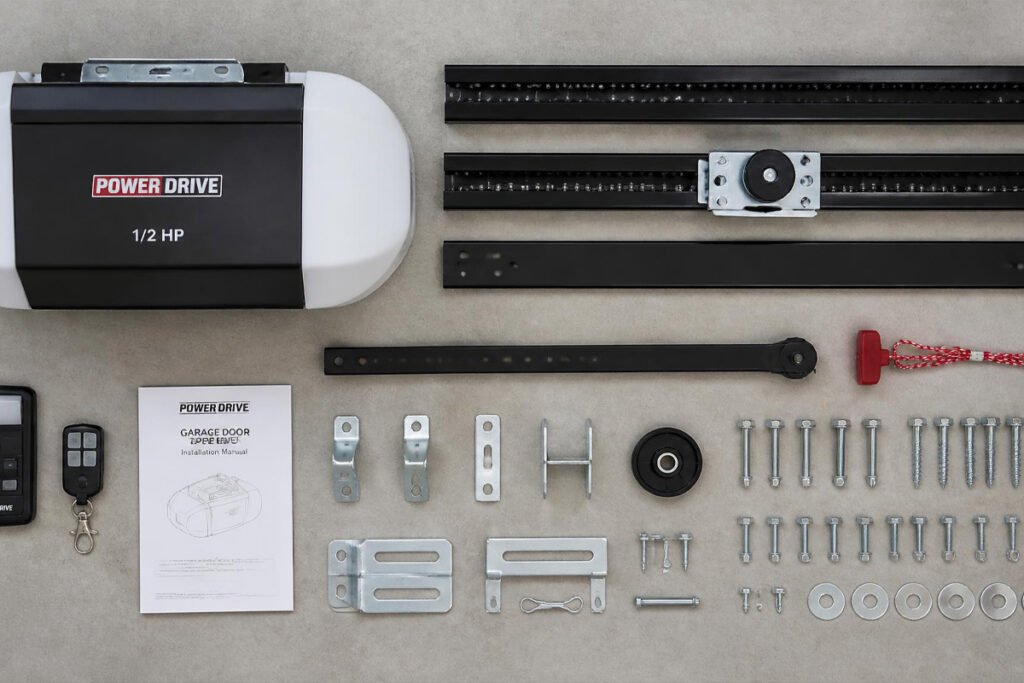
Table of Contents
- What Makes a Garage Door Opener Different From the Rest
- How to Choose the Right Garage Door Opener
- Best Garage Door Openers Available
- Comparison Table
- Best Openers for Different Garage Setups
- How to Install a Garage Door Opener Correctly
- Common Mistakes
- Expert Tips
- Final Thoughts
- Frequently Asked Questions
What Makes a Garage Door Opener Different From the Rest {#what-you-need}
Garage door openers aren’t a one-size-fits-all purchase. Drive type, motor horsepower, and rail length all need to match your specific door’s weight, size, and material — a heavy insulated double door needs meaningfully more lifting power than a single lightweight door. Get the match wrong and you end up with an opener that strains, wears out early, or simply can’t lift the door smoothly.
The right opener category depends on three things: drive mechanism (chain, belt, screw, or direct drive), mounting style (traditional ceiling-mounted rail vs. wall-mounted jackshaft), and smart features (Wi-Fi connectivity, battery backup, integrated camera or lighting). If your existing opener setup is due for a full refresh, pairing a new opener with our garage door maintenance checklist keeps the rest of the system in sync with the upgrade.
How to Choose the Right Garage Door Opener {#how-to-choose}
Before buying, ask three questions:
- How heavy and what size is my door? A single lightweight door needs far less horsepower than a heavy insulated double door — check your door’s weight rating before choosing a motor size.
- How much does noise matter to me? If your garage sits under or beside a bedroom, a belt or direct drive opener is worth the extra cost over a chain drive.
- Do I have full ceiling clearance? Garages with low ceilings or extra storage overhead often do better with a wall-mounted jackshaft opener instead of a traditional rail-mounted unit.
For general safety standards on automatic garage door opener sensors and entrapment protection, the U.S. Consumer Product Safety Commission’s garage door opener safety guidance is a useful, non-commercial reference before you buy or install anything.
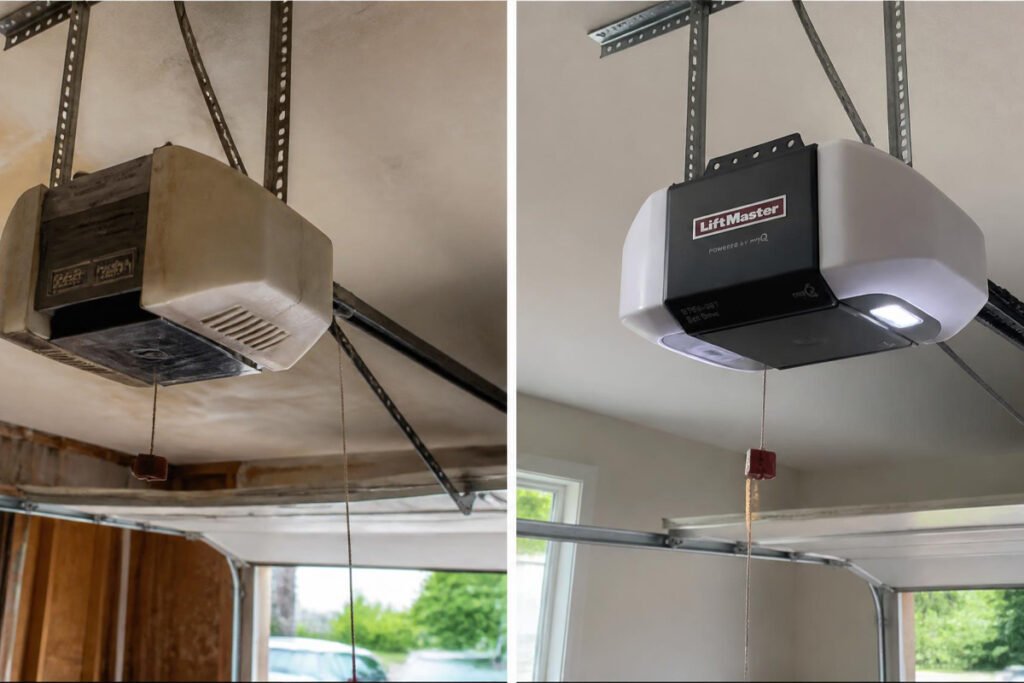
Best Garage Door Openers Available {#best-tools}
1. Belt Drive Opener
Overview: Belt drive openers use a reinforced rubber belt instead of a metal chain, which makes them the quietest traditional rail-mounted option on the market. They’re the go-to choice for attached garages, especially with a bedroom nearby.
Key Features:
- Reinforced steel-belted rubber drive belt
- Whisper-quiet operation compared to chain drive
- Available in a wide range of horsepower ratings
- Most models include Wi-Fi and battery backup options
Best For: Attached garages, bedrooms located near or above the garage
Pros: ✅ Significantly quieter than chain drive ✅ Smooth, low-vibration operation ✅ Long lifespan with minimal maintenance Cons: ❌ More expensive than a comparable chain drive model ❌ Belt requires occasional tension checks over time
Our Verdict: For most homeowners, this is the best overall pick. Pair it with our garage door sensor troubleshooting guide so the safety sensors are dialed in correctly from day one.
2. Chain Drive Opener
Overview: Chain drive openers use a metal chain to lift and lower the door, making them the most affordable and widely available option. They’re a strong choice for detached garages or households less concerned with noise.
Key Features:
- Metal chain drive mechanism
- Strong lifting capacity for heavier doors
- Lower price point than belt or direct drive
- Widely compatible replacement parts
Best For: Detached garages, budget-conscious replacements, heavier double doors
Pros: ✅ Most affordable option available ✅ High lifting capacity for heavy doors ✅ Widely available replacement parts Cons: ❌ Noticeably louder than belt or direct drive ❌ Requires periodic chain lubrication
Our Verdict: A solid, no-frills choice when budget and lifting power matter more than noise — see our guide on garage door spring replacement since heavier doors paired with a chain drive put extra demand on your spring system too.
3. Screw Drive Opener
Overview: Screw drive openers use a threaded steel rod to move the door, resulting in fewer moving parts than chain or belt systems. They perform smoothly in stable temperatures but can be sensitive to extreme heat or cold.
Key Features:
- Threaded steel rod drive mechanism
- Fewer moving parts than chain or belt systems
- Smooth, consistent motion under normal conditions
- Lower long-term maintenance in stable climates
Best For: Garages in moderate, stable climates without extreme temperature swings
Pros: ✅ Fewer parts to wear out over time ✅ Smooth, consistent lifting motion ✅ Less frequent maintenance than chain drive Cons: ❌ Performance can suffer in extreme temperature swings ❌ Less common, so replacement parts can be harder to find
Our Verdict: Worth considering if you’re in a climate without harsh winters or summers, but most homeowners in variable climates are better served by a belt drive instead.
4. Smart Wi-Fi Garage Door Opener
Overview: Smart openers add Wi-Fi connectivity to any drive type, letting you check door status, open or close it remotely, and receive alerts if it’s left open, all from a smartphone app.
Key Features:
- Wi-Fi connectivity with smartphone app control
- Remote open/close and real-time status alerts
- Often includes an integrated camera or motion light
- Compatible with voice assistants on many models
Best For: Homeowners who want remote monitoring, frequent travelers, package delivery management
Pros: ✅ Remote control and monitoring from anywhere ✅ Alerts if the door is accidentally left open ✅ Often bundles useful extras like a camera or light Cons: ❌ Requires stable home Wi-Fi to function remotely ❌ Higher price point than a basic non-connected opener
Our Verdict: A meaningful upgrade if security and convenience matter to you — pair it with our garage door security guide for a full connected-home approach to garage protection.
5. Wall-Mount (Jackshaft) Opener
Overview: Instead of a traditional overhead rail, a jackshaft opener mounts to the wall beside the door and drives the torsion bar directly. This frees up the entire ceiling, which matters for garages with limited headroom or overhead storage.
Key Features:
- Mounts to the wall beside the door, not the ceiling
- Frees up full overhead clearance
- Compact footprint compared to rail-mounted units
- Compatible with most torsion spring door systems
Best For: Low-ceiling garages, garages using overhead storage racks or workshop space
Pros: ✅ Frees up the entire ceiling for storage or workshop use ✅ Compact, space-saving footprint ✅ Strong option for tall vehicles needing extra clearance Cons: ❌ Higher price than most rail-mounted openers ❌ Requires a torsion spring system, not compatible with all doors
Our Verdict: The clear choice if you’ve set up — or plan to set up — overhead garage storage or a full garage workshop, since a traditional rail opener would otherwise sit right in the way.
Comparison Table {#comparison-table}
| Opener Type | Best For | Noise Level | Approx. Price Range | Ceiling Clearance Needed |
|---|---|---|---|---|
| Belt Drive | Attached garages, quiet operation | Low | $200–$400 | Yes |
| Chain Drive | Budget replacements, heavy doors | High | $150–$300 | Yes |
| Screw Drive | Stable climates, low maintenance | Medium | $180–$350 | Yes |
| Smart Wi-Fi (any drive) | Remote monitoring, security-focused homes | Varies by drive type | $250–$500+ | Depends on drive type |
| Wall-Mount (Jackshaft) | Low-ceiling or storage-heavy garages | Low–Medium | $350–$600 | No |
Best Openers for Different Garage Setups {#different-setups}
Attached Garages Near Living Spaces
Prioritize a belt or direct drive opener here — the noise difference compared to chain drive is significant enough to notice every single use, especially at night.
Detached Garages and Workshops
Noise matters less here, so a chain drive opener often delivers the best value. If your garage doubles as an active workshop, see our garage workshop setup guide for how opener placement fits into the bigger layout.
Garages With Overhead Storage or Low Ceilings
A wall-mount jackshaft opener is the clear winner, freeing up ceiling space for storage racks or tall vehicles. Pair it with our garage storage bins and shelving guide to plan the reclaimed overhead space.
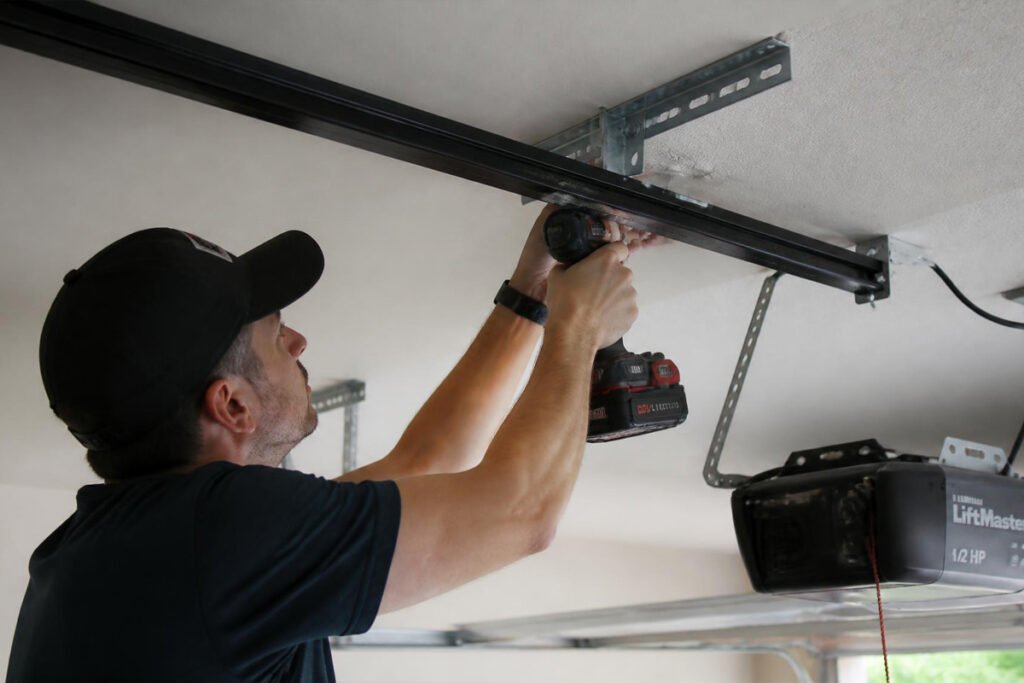
How to Install a Garage Door Opener Correctly {#how-to-install}
Step 1: Confirm Door Compatibility
Check your door’s weight and spring type against the opener’s rated capacity before starting installation.
Step 2: Mount the Rail or Wall Bracket
Secure the rail (or jackshaft bracket, for wall-mount units) according to the manufacturer’s spacing and support requirements.
Step 3: Install and Align Safety Sensors
Photo-eye sensors must sit at the same height on both sides of the door and be free of obstruction — misalignment is the most common cause of a non-responsive opener.
Step 4: Connect and Test the Motor Unit
Wire or plug in the motor unit, then run a full open/close cycle to confirm smooth operation before setting the travel limits.
Step 5: Set Force and Travel Limits
Adjust the opener’s force and travel limit settings so the door reverses properly on obstruction, per the manufacturer’s safety instructions.
Common Mistakes {#common-mistakes}
Choosing an opener based on price alone. An underpowered opener strains against a heavy door constantly, shortening its lifespan and increasing the odds of a costly failure — see our guide on garage door repair costs for a broken spring for what an overworked system can eventually cost you.
Skipping professional installation on heavier doors. DIY installation is realistic for many lighter doors, but misaligned torsion springs or tracks on a heavy door can be dangerous — if your track alignment is already off, address that first using our track alignment repair guide.
Ignoring the safety sensor alignment after installation. A blinking or unresponsive sensor light almost always traces back to alignment or obstruction — our sensor troubleshooting guide walks through the fix.
Expert Tips {#expert-tips}
Match horsepower to door weight, not just door size. A large but lightweight door may need less power than a smaller, heavily insulated one — check the door’s actual weight rating rather than guessing from dimensions alone.
Replace worn rollers before installing a new opener. A new motor working against old, sticking rollers won’t perform as advertised — our step-by-step roller replacement guide covers this quick upgrade.
Test the battery backup regularly, not just once at installation. Many smart openers include battery backup for outages, but batteries degrade — a quarterly manual test avoids an unpleasant surprise during an actual power outage.
Final Thoughts {#final-thoughts}
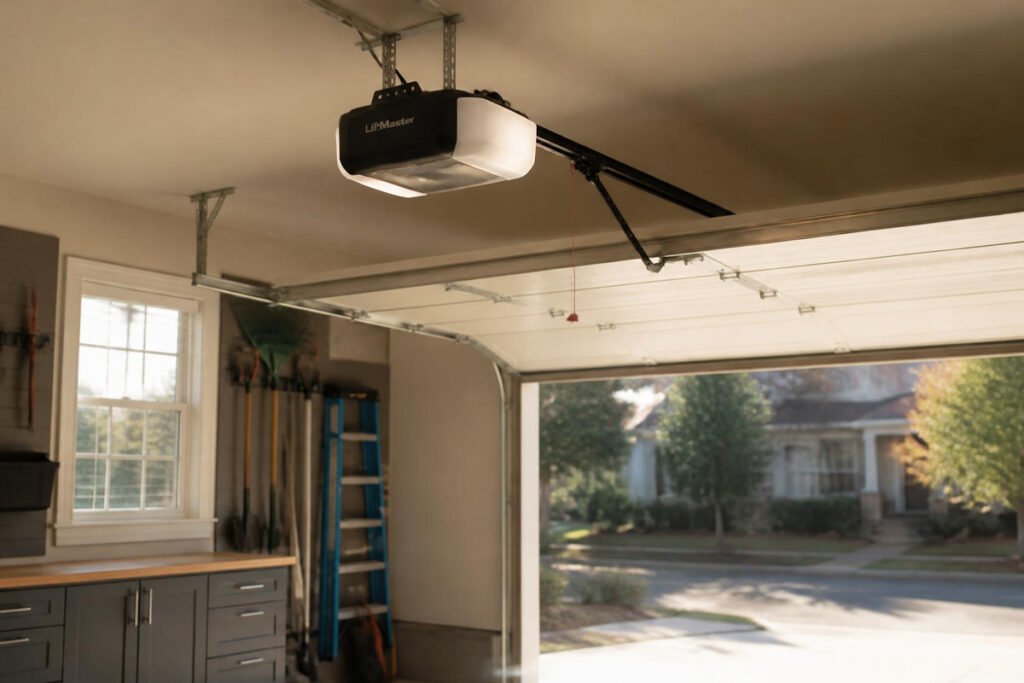
Best Overall: A belt drive opener, for the best balance of quiet operation, reliability, and price for most attached garages. Best Budget: A chain drive opener, especially for detached garages where noise isn’t a major concern. Best for Storage-Heavy Garages: A wall-mount jackshaft opener, which frees up the entire ceiling for racks or a workshop setup.
Whichever opener you choose, pair it with regular upkeep — see our garage door maintenance guide and garage safety guide to keep the whole system running smoothly for years.
Frequently Asked Questions {#faq}
How much horsepower do I need for my garage door opener? Most single doors do well with a 1/2 HP opener, while heavier double doors typically need 3/4 HP to 1.25 HP — always check your specific door’s weight rating rather than relying on general rules of thumb.
Belt drive vs. chain drive — which one should I actually buy? Belt drive is quieter and smoother, making it the better choice for attached garages near living spaces. Chain drive is more affordable and just as strong, making it a solid pick for detached garages or budget-focused replacements.
How long do garage door openers typically last? Most quality openers last 10–15 years with regular maintenance. Sudden strain from a heavy door, worn rollers, or misaligned tracks can shorten that significantly.
Can I install a garage door opener myself? Many lighter residential doors are DIY-friendly, but heavier doors or systems involving torsion springs carry real safety risk — when in doubt, professional installation is worth the cost.
Why does my garage door opener make grinding or straining noises? This is often a sign the opener is underpowered for the door’s weight, or that rollers and tracks need attention — see our track alignment guide before assuming the motor itself has failed.
Do smart garage door openers work during a power outage? Only if the unit includes battery backup, which most mid-range and premium smart openers do — always confirm this feature before buying if outages are a concern in your area.
What’s the difference between a wall-mount and ceiling-mount opener? A ceiling-mount (rail) opener is the traditional setup, running along the ceiling to the door. A wall-mount jackshaft opener mounts beside the door instead, freeing up the entire ceiling for storage or tall vehicles.
How often should I service my garage door opener? A basic inspection and lubrication every 6 months keeps most openers running smoothly — bundle it with your regular garage door maintenance checklist routine.
Is a smart opener worth the extra cost over a standard model? If remote monitoring, alerts, or integration with a broader smart-home security setup matter to you, yes — otherwise, a standard non-connected opener performs the core job just as reliably.
Author: Danial Marquez Last Updated: August 2026