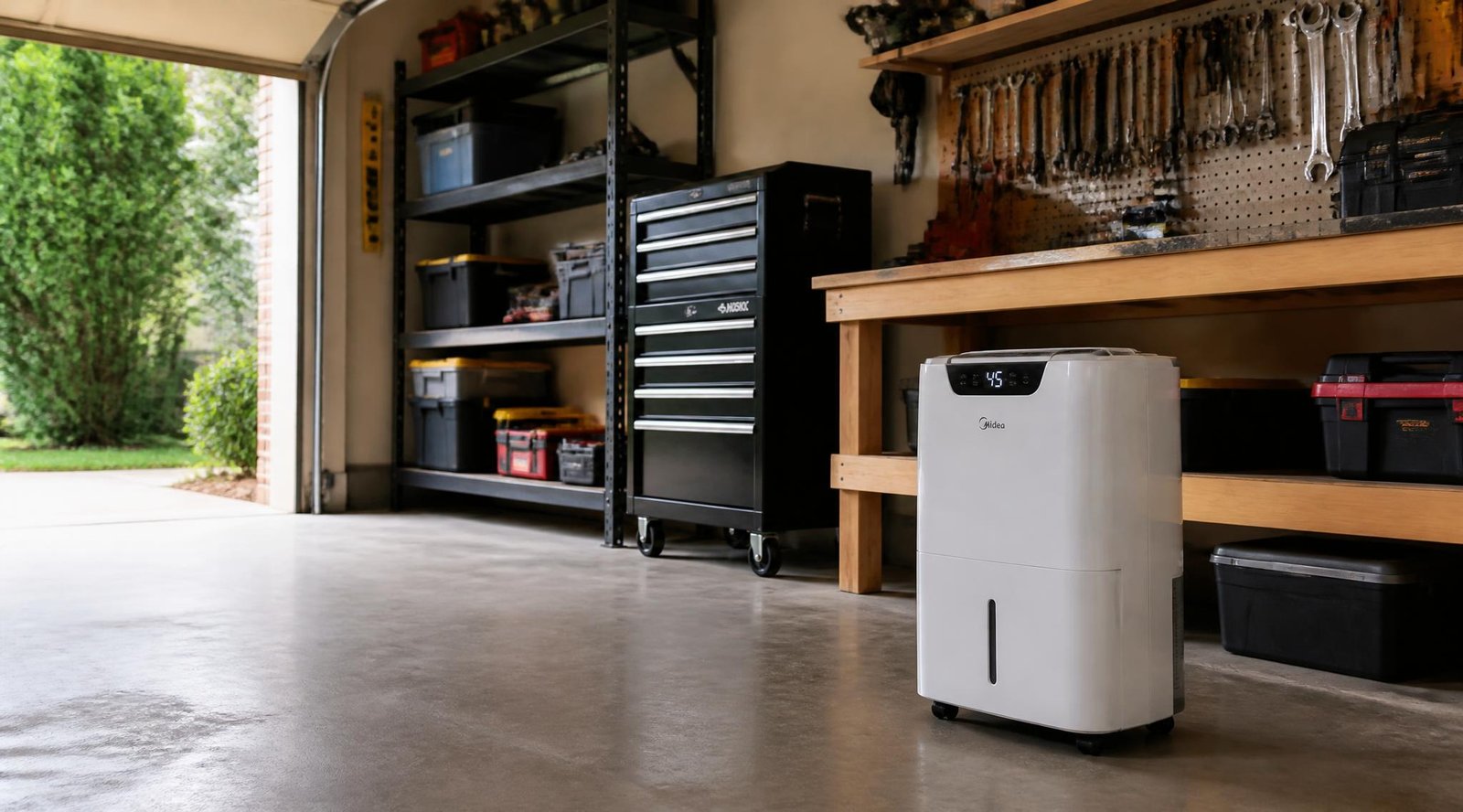
A cluttered garage isn’t just frustrating to look at — it makes everything harder. Finding tools takes twice as long. Parking the car becomes a puzzle. And starting a DIY project means clearing a path first.
If you have a small garage, the challenge is even more real. But here’s the thing: small garages don’t need more square footage. They need smarter strategies.
The right storage solutions use every dimension of your garage — walls, ceiling, corners, and floor — to dramatically increase usable space without adding a single square foot of floor area. In this guide, we’ll walk through 12 of the most effective, practical storage solutions for small garages, including exactly how to install or use each one.
Before You Organize: The Planning Phase
Jumping straight into buying shelves and hooks without a plan is how garages end up re-cluttered within three months. Before purchasing anything, spend 30 minutes on this:
Step 1 — Categorize what you’re storing:
- Everyday items (tools you use weekly, car supplies)
- Seasonal items (holiday decorations, lawn gear, snow equipment)
- Sports and outdoor equipment (bikes, camping gear, kayaks)
- Rarely used items (move these out if they haven’t been touched in a year)
Step 2 — Assign zones:
- High-access zone (walls at arm height): everyday tools and frequently used items
- Mid-access zone (overhead shelves, high wall storage): seasonal bins and occasional items
- Low-access zone (ceiling racks, pulley systems): bulky items used a few times per year
Step 3 — Declutter first: Every item you remove is storage space you don’t have to create. Donate, sell, or discard anything you haven’t used in 12+ months. This single step often frees up 20–30% of garage space before you install anything.
With zones defined, here are the 12 solutions that make the most impact.
1. Wall-Mounted Shelving — The Foundation of Garage Organization
Wall-mounted shelving is the single highest-impact storage upgrade in any garage. By moving storage off the floor and onto the walls, you free up valuable ground-level space for vehicles, work areas, and movement.
Why it works: In a standard two-car garage, a single wall can hold 40–80 linear feet of shelving — enough to completely clear a cluttered floor.
Installation tips:
- Use heavy-duty steel bracket shelving rated for 200+ lbs per shelf for tools and bins
- Mount brackets directly into wall studs — use a stud finder before drilling and never rely on drywall anchors for heavy loads
- Choose adjustable shelving systems so you can reconfigure height as your storage needs change
- Standard shelf depth: 12–16 inches for bins and boxes; 24 inches for larger items
What to store:
- Labeled plastic storage bins (clear is best — you can see contents without opening)
- Automotive supplies and fluids
- Power tools in their cases
- Gardening supplies and fertilizers
Pro Tip: Label both the bin lid AND the front face. When bins are stacked, you can only read the front.
Want to build custom shelves to fit your exact wall dimensions? Our guide on how to build storage shelves in your garage walks through the complete DIY process with measurements and materials.
2. Pegboard Tool Wall — Visible, Accessible, and Flexible
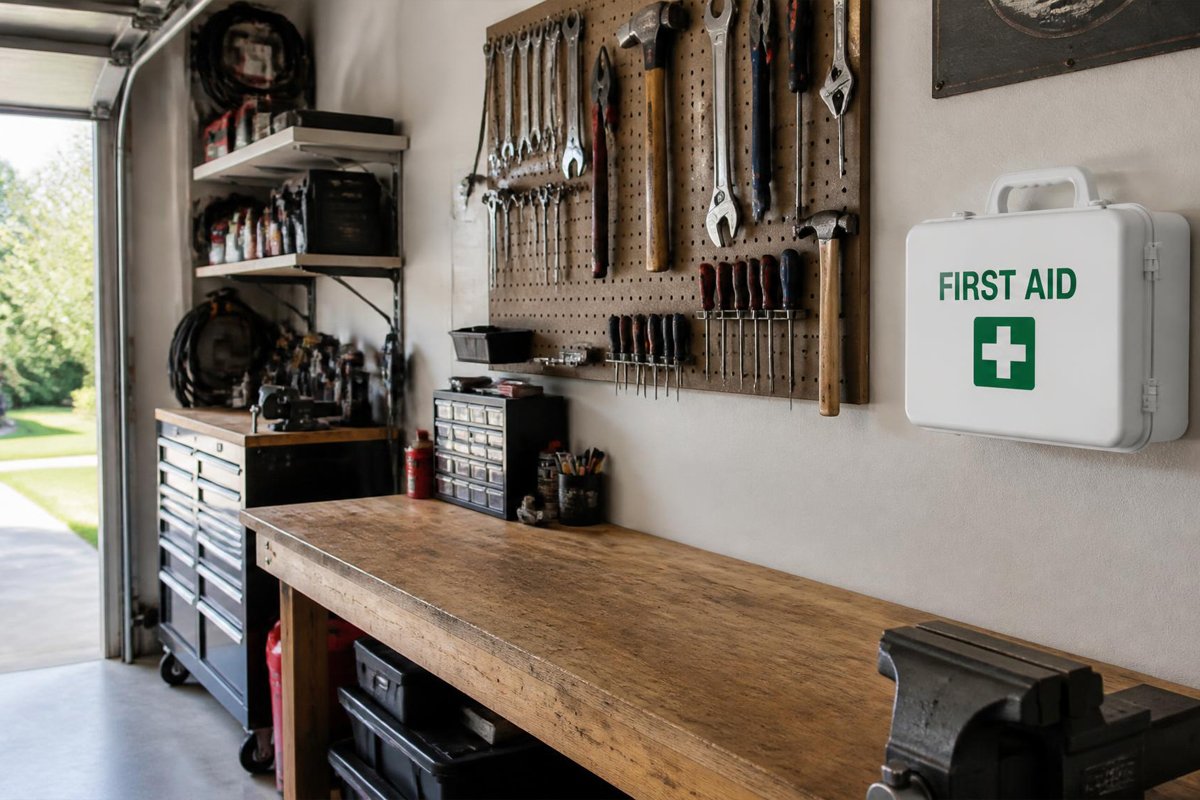
A pegboard system transforms a bare garage wall into a fully customizable tool organization station. Every tool is visible, within reach, and has a designated spot — which means you’ll actually put things back where they belong.
Installation:
- Mount ¼-inch tempered hardboard pegboard on 1×2 furring strips spaced every 16 inches — the strips create the gap that allows hooks to insert from behind
- Use ½-inch machine bolts to mount the furring strips into studs for a solid installation
- Standard pegboard comes in 4×8-foot sheets — cover an entire wall for maximum storage
Accessories to get:
- Single and double hooks — for hammers, mallets, and larger hand tools
- Plier racks and screwdriver holders — keep sets organized in size order
- Small baskets and bins — for fasteners, drill bits, and small parts
- Shelf brackets — mount small shelves directly on the pegboard for paint cans or spray cans
Organization tip: Arrange tools by task group — all measuring tools together, all cutting tools together, all fastening tools together. Use a marker or paint to outline each tool’s shadow on the board — this makes it immediately obvious when something is missing or misplaced.
3. Overhead Ceiling Storage Racks — Maximize the Most Underused Space
The ceiling is the most wasted space in most garages. Overhead storage racks put it to work for bulky, seasonal items that you only need a few times a year.
Best items for overhead storage:
- Holiday decoration bins
- Camping gear (tents, sleeping bags, camp chairs)
- Off-season sports equipment
- Luggage and travel bags
- Spare building materials (lumber, trim pieces, pipe)
Choosing the right system:
- Fixed ceiling platforms — welded steel grid platforms that bolt to ceiling joists; rated for 400–600 lbs; best for bins and boxes
- Rail-mounted slide-out racks — platforms on tracks that slide out from the ceiling for easier loading/unloading
- Individual ceiling hooks — for single bulky items like extension ladders or kayaks
Installation requirements:
- Always anchor into ceiling joists — never into drywall alone
- Locate joists with a stud finder before marking your installation points
- Check the door clearance — measure the height of your vehicle’s roof plus 6 inches of clearance before setting rack height
- Most systems require 10–12 inches of clearance from the top of the rack to the ceiling for proper airflow and lighting
⚠️ Safety note: Never exceed the weight rating of your rack system. Overloaded ceiling storage is a serious safety hazard. When in doubt, install a second rack rather than overloading one.
4. Rolling Tool Cabinets — Mobile Workshop Organization
A rolling tool cabinet (also called a tool chest or rollaway) is the workhorse of any serious garage workshop. Unlike wall-mounted storage, it brings your tools to you — wheel it next to your car, your workbench, or anywhere the project is happening.
Key features to look for:
- Ball-bearing drawer slides — drawers should open and close smoothly under full load
- Weight capacity per drawer — typically 50–100 lbs for quality cabinets
- Locking wheels — the casters should lock securely when stationary so the cabinet doesn’t roll during use
- Lockable lid — essential if you keep valuable tools in the garage
Organization system:
- Top drawer: most frequently used hand tools (measuring tape, pencil, utility knife)
- Middle drawers: grouped by tool type (all sockets together, all wrenches together)
- Bottom drawers (deepest): larger tools, extension cords, or power tool accessories
- Cabinet top: power tools in current use, parts being worked on
Size guidance: For a one-car or small two-car garage, a 26-inch wide 6-drawer cabinet is usually sufficient. Serious DIYers and mechanics typically want a 41-inch or larger combo unit with a chest stacked on a rollaway.
5. Magnetic Strips for Small Metal Tools
Magnetic tool strips are one of the cheapest, most space-efficient storage solutions in any garage — and one of the most commonly overlooked.
A strong rare-earth magnetic strip mounted on the wall or along the back of a workbench keeps screwdrivers, wrenches, pliers, Allen keys, and drill bits immediately visible and accessible — no drawer digging required.
Installation:
- Mount on the wall directly above your workbench at eye height
- Use manufacturer-provided screws into studs or use appropriate wall anchors
- For workbenches, mount on the back wall or under upper cabinets
Best magnetic strips:
- Look for neodymium (rare earth) magnets — significantly stronger than standard ceramic magnets
- Choose strips rated for at least 30–40 lbs for tool storage
- Widths from 12–24 inches are the most useful for garage applications
What works well on magnetic strips: screwdrivers, hex keys, open-end wrenches, chisels, drill bits (in a block), pliers, scissors, utility knife blades.
What doesn’t work: Non-magnetic tools (aluminum, brass, most clamps), large heavy tools that might fall.
6. Heavy-Duty Hooks for Sports Equipment and Bikes
Bikes, skateboards, skis, surfboards, and kayaks are storage nightmares in small garages — they’re awkward shapes that take up disproportionate floor space when leaned against walls. Heavy-duty wall hooks solve this.
Hook options by use:
| Item | Recommended Hook Type |
| Bicycles | Horizontal wheel hook (mounts through spokes) or J-hook |
| Kayak / paddleboard | Two foam-padded J-hooks spaced 4 feet apart |
| Skis / snowboards | Ski rack with padding to protect base |
| Garden tools (rakes, shovels) | Spring clips or 2-hook tool holder |
| Ladders (extension) | Two large ceiling hooks with safety straps |
| Garden hose | Enclosed hose hanger (keeps hose from tangling) |
Installation tips:
- Mount bike hooks into studs, not drywall — a loaded bike can weigh 30–50 lbs with accessories
- For heavy items, use lag screws instead of standard wood screws
- Space hooks so items don’t interfere with each other when mounted — test the layout before drilling
7. Stackable Clear Storage Bins — The Backbone of Bin Storage
Not all storage bins are equal. Clear, heavy-duty, stackable bins with secure lids are dramatically more useful than opaque bins or cardboard boxes for garage storage.
Why clear wins: You can identify contents without opening or moving bins — critical when you’re looking for something specific and bins are stacked four high.
Bin sizing guide:
| Bin Size | Best For |
| Small (6–12 qt) | Hardware, fasteners, small tools, light bulbs |
| Medium (18–30 qt) | Automotive supplies, cleaning products, electrical |
| Large (40–70 qt) | Seasonal clothing, holiday décor, sports gear |
| Extra-large (100+ qt) | Camping equipment, blankets, bulky seasonal items |
Labeling system that actually works:
- Use a label maker on the short end of each bin so the label is visible when stacked
- Also label the lid so you can read it when bins are stored on overhead racks
- Color-code lids or use colored label tape: red for automotive, blue for holiday, green for garden, etc.
For detailed guidance on maximizing bin storage in your garage, our article on how to store totes in your garage covers the best organizational systems, stacking safety, and weight distribution.
8. Wall-Mounted Foldable Workbench
In a small garage, a fixed workbench can eat 20–30 square feet of floor space that’s largely unused except during active projects. A wall-mounted fold-down workbench gives you a full workspace when you need it and returns that floor space when you don’t.
Types of fold-down workbenches:
- Murphy-style wall-mount: Folds flat against the wall; opens to a full work surface supported by hinged legs
- Bracket-mounted drop-leaf: Simpler design with fold-down brackets supporting a solid work surface
- Storage-integrated fold-down: Combines folding work surface with cabinet storage above — the most space-efficient option
What to look for:
- Work surface depth of at least 24 inches for comfortable working
- Weight rating of 200+ lbs for the work surface
- Steel or hardwood surface — avoid MDF, which deteriorates quickly in garage humidity
DIY or buy: Fold-down workbench kits are widely available at home improvement stores for $150–$400. If you’re handy, building a custom one from 2×4 lumber and a solid core door costs $80–$150 and gives you a heavier-duty result.
9. Wall-Mounted Cabinet Systems
Wall-mounted cabinets serve a different function from open shelving: they hide clutter, protect contents from dust, and — critically — allow you to lock away chemicals, sharp tools, and hazardous materials away from children and pets.
When to choose cabinets over open shelves:
- Storing paints, solvents, pesticides, or automotive chemicals
- Storing power tools that need protection from dust
- Creating a clean, finished look in a garage that doubles as a living space
- Any garage with children or pets
Cabinet types for garages:
- Steel garage cabinets — most durable, moisture-resistant, and lockable; available in full modular systems
- Polymer/resin cabinets — lightweight, moisture-proof, and lower cost; good for lighter items
- Wood cabinets — best appearance but require sealing to resist garage humidity
Modular systems: The biggest advantage of modular garage cabinet systems (like Gladiator, NewAge, or Husky) is the ability to mix and match base cabinets, wall cabinets, and workbench surfaces into a custom-configured layout for your specific garage. These systems mount to wall tracks so you can rearrange without re-drilling.
10. Vertical Sliding Panels for Long Tools
Brooms, mops, rakes, shovels, and level bars are among the most awkward items to store — too long for most shelves, too wide to hang efficiently on hooks without taking up excessive wall space.
Vertical sliding storage panels — mounted inside a cabinet or on a dedicated wall section — solve this elegantly by storing long tools in a narrow vertical column that slides out for access.
Simple DIY version:
- Mount two parallel vertical rails to the wall, spaced 4–6 inches apart
- Slide long tool handles between the rails vertically
- Tools stand upright, take minimal wall space, and slide out for access
For brooms and mops specifically:
- Spring-loaded tool holders (available at any hardware store for $2–5 each) mount directly to the wall and grip tool handles securely
- Space them every 6 inches for a tidy tool wall
For rakes, shovels, and garden tools:
- A simple 2×6 lumber rack with holes drilled through it at 6-inch intervals — hang handles down through the holes so heads rest on the lumber
- Costs under $20 and holds 8–12 long-handled tools in about 18 inches of wall space
11. Ceiling Pulley Systems for Bikes and Heavy Items
For items that are used occasionally but too large and heavy to wall-mount easily — bikes, kayaks, ladders, and paddleboards — ceiling pulley systems offer the best combination of security, accessibility, and space savings.
How pulley systems work:
- Two (or four) straps with hooks or cradles attach to the item
- Straps run through ceiling-mounted pulleys to a rope that hangs down the wall
- One person can lift a 50–100 lb bike to ceiling height and lock the rope in place
Best pulley systems for small garages:
- Single-bike hoists — rated for 50–100 lbs; ideal for one bike per wall bay
- Quad-strap systems — four attachment points for better balance on kayaks and paddleboards
- Motorized systems — electric hoists for very heavy items or users who don’t want to hand-pull
Installation requirements:
- Must anchor into ceiling joists — this is critical for safety with heavy loads
- Use a stud finder and confirm joist location before drilling
- Use lag screws (minimum 3-inch length into solid wood) for pulley mounts
- Minimum ceiling height for bike hoisting: 9 feet with most systems
12. Corner Shelving Units — The Forgotten 10% of Your Garage
Corners are the most consistently wasted space in garage organization. Standard wall shelving doesn’t reach them. Floor space in corners is awkward to use. Yet corners can hold a surprising amount of storage when addressed properly.
Corner storage options:
L-shaped corner shelving: Custom or modular L-shaped shelf units fit snugly into corners and use the full wall area on both sides. Ideal for storing automotive supplies, paint cans, or seasonal items.
Triangular corner shelves: Pre-made triangular shelf brackets mount in the corner at multiple heights, creating a tiered storage tower in wasted space. Good for smaller items and frequently used supplies.
Tall corner cabinet units: Floor-to-ceiling corner cabinets (often used in kitchens and utility rooms) adapt well to garages. They provide maximum enclosed storage in a corner footprint as small as 24×24 inches.
DIY corner shelf: Mount a 2×8 or 2×10 board diagonally across a corner at shelf height, supported by L-brackets on each wall. Add multiple levels at 18-inch intervals for a quick, low-cost corner storage solution.
Bonus: Maintenance Tips to Keep Your Garage Organized Long-Term
Organizing a garage is a one-day project. Keeping it organized is a habit. These practices make the difference:
Seasonal reviews (twice a year):
- Spring: Clear out winter gear, assess what didn’t get used all season, donate or discard
- Fall: Bring in summer gear, pull out winter supplies, check that everything still has a home
The “one in, one out” rule: Every time you bring a new tool, bin, or item into the garage, something leaves. This prevents slow re-accumulation of clutter.
Reset weekly: Spend 10 minutes each weekend returning any items that drifted from their assigned spots. Small resets prevent large cleanups.
Keep floors clear: Make it a rule that nothing lives on the garage floor permanently. If it doesn’t have a home on a shelf, rack, or hook, it shouldn’t be in the garage.
For keeping your concrete floor clean alongside your new organization system, our article on how to clean oil off the garage floor covers the fastest methods for removing oil stains, grease, and tire marks from concrete.
And if you’re also looking to make your newly organized garage more comfortable year-round, see our complete guide to insulating your garage — a well-insulated space is far more pleasant to work and organize in regardless of the season.
Quick-Reference: Which Solution for Which Problem?
| Your Problem | Best Solution(s) |
| No room for the car | Ceiling racks + wall shelving to clear floor |
| Can’t find tools | Pegboard wall + magnetic strips |
| Too many bins | Stackable clear bins + overhead shelves |
| Bikes in the way | Ceiling pulley system or wall J-hooks |
| Wasted corner space | L-shaped or triangular corner shelves |
| Dangerous chemicals accessible | Lockable wall cabinet system |
| Need workspace but no room | Wall-mounted fold-down workbench |
| Long tools always falling over | Vertical sliding panels or spring clips |
Final Thoughts
A small garage doesn’t have to feel cramped. The key is thinking in three dimensions — using walls, ceiling, and corners — instead of just the floor.
Work through this list strategically: start with the highest-impact change for your specific situation (usually wall shelving or a pegboard), then add solutions progressively. You don’t need to implement all 12 at once. Each addition compounds the benefit of the last.
A well-organized garage makes every project faster, every search shorter, and every morning smoother. The weekend it takes to set this up pays dividends for years.
FAQs
How much does it cost to fully organize a small garage? A comprehensive garage organization project using these solutions typically costs $500–$2,000 depending on the size and quality of materials. Wall shelving and pegboard are the most cost-effective starting points. Modular cabinet systems are the most expensive but also the most durable.
What’s the best first upgrade for a small garage? Wall-mounted shelving is the single best starting point. It immediately frees floor space and creates a logical home for most stored items. Add pegboard for tools and a ceiling rack for seasonal bins, and most small garage storage problems are solved.
How do I find studs to mount shelving safely? Use a magnetic or electronic stud finder, available at any hardware store for under $25. Studs are typically spaced 16 inches apart. Always verify the stud location by driving a small nail before mounting heavy hardware.
Can I install overhead ceiling racks in my garage? Yes, if your ceiling joists are accessible and in good condition. Standard garage ceiling joists can support ceiling rack systems when properly anchored with lag screws. Most systems include detailed installation instructions and weight ratings.
How do I store hazardous materials safely in the garage? Paints, solvents, pesticides, and automotive chemicals should be stored in a locked, ventilated cabinet — away from heat sources and ignition points. Never store flammable liquids near a water heater or furnace. Check your local fire code for specific requirements.